




Do Red Cars Get Pulled Over More? Debunking the Myth with Data
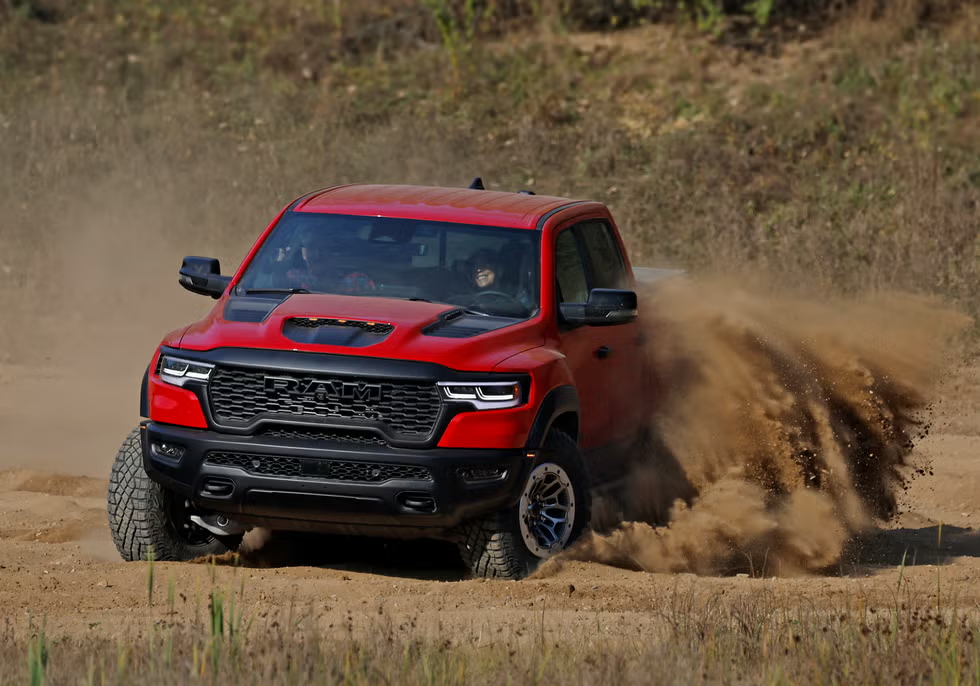
Red cars do not get pulled over more simply because they are red.
The simple answer is this: police stop drivers because of behavior, not paint color. Speeding, unsafe lane changes, expired tags, equipment violations, distracted driving, aggressive driving, and visible vehicle issues matter far more than whether the car is red, black, white, gray, or blue.
Progressive says there is no conclusive data proving red cars are pulled over more often, and that police stops are typically based on driver behavior rather than the vehicle itself. Progressive
Where the Red Car Myth Came From
The red car myth probably exists because red is a highly visible color.
A red sports car stands out in traffic. If someone sees a red coupe pulled over on the side of the road, they remember it. If they see a white sedan pulled over, it blends into the background. That creates a memory bias.
Red is also associated with speed, aggression, performance, and attention. That makes people assume red cars attract police attention, even when the evidence does not prove it.
The myth sounds believable. That is why it has lasted.
What the Data Actually Says
The available data does not prove that red cars are ticketed more than other colors.
Iowa State University’s Institute for Transportation cited 2014 ticket-color data showing white cars accounted for 19% of traffic citations, while red cars came second at 16%. Their conclusion was that there is no hard data proving red cars get more tickets than other vehicles. Iowa State University Institute for Transportation
That matters because white is also one of the most common vehicle colors on the road. If more white cars exist, more white cars are naturally likely to appear in ticket data.
Raw ticket totals do not prove color bias. You have to compare tickets against how many vehicles of each color are actually on the road.
White Cars Often Show Up More in Ticket Data
If a study says white cars receive more tickets, that does not automatically mean white cars are more “dangerous.”
It often means white cars are more common.
Fleet vehicles, work vehicles, sedans, SUVs, trucks, and commuter cars are frequently white, silver, gray, or black. These colors dominate the road. So it is not surprising that they may also dominate citation totals.
A fair study would need to adjust for:
How many cars of each color are registered.
How many miles those cars are driven.
Vehicle type.
Driver demographics.
Location.
Time of day.
Type of violation.
Without those adjustments, “most ticketed color” data can be misleading.
Do Red Cars Cost More to Insure?
No. Red cars do not cost more to insure just because they are red.
The Insurance Information Institute says vehicle color does not determine auto insurance price. Insurers care about factors like vehicle type, body style, engine size, driver age, driving record, sticker price, repair cost, safety record, and theft likelihood. Insurance Information Institute
The Insurance Bureau of Canada also directly states that red cars do not cost more to insure. Insurance Bureau of Canada
So if you want a red car, do not avoid it because of insurance myths.
What Actually Gets Drivers Pulled Over?
Police usually stop vehicles because of observable violations.
Common reasons include:
Speeding.
Running red lights.
Rolling through stop signs.
Unsafe lane changes.
Following too closely.
Distracted driving.
Expired registration.
Broken lights.
Illegal tint.
Loud exhaust.
Missing plates.
Reckless driving.
Equipment defects.
The car’s color may make it more noticeable visually, but the violation is what creates the stop.
Red Sports Cars May Confuse the Issue
There is one important nuance.
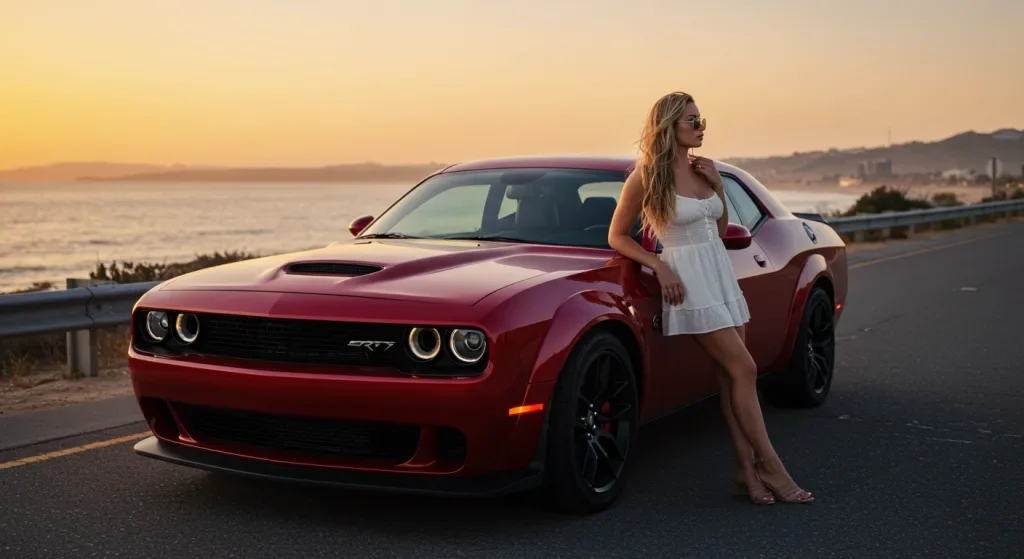
A red economy car and a red high-performance car are not the same risk profile. If a red Dodge Charger, Corvette, Mustang, Challenger, Camaro, or sports car gets more attention, it may not be because it is red. It may be because the vehicle itself is loud, modified, fast, aggressively driven, or more visible in traffic.
That is where people confuse color with vehicle type.
A red minivan is not usually treated like a red sports car. The car’s behavior, sound, modifications, and speed matter more.
Does Car Color Affect Resale Value?
Color can affect resale value, but not usually because of tickets.
Neutral colors like white, black, gray, and silver often appeal to the broadest buyer pool. Red can be very desirable on sports cars, performance cars, Jeeps, and certain enthusiast vehicles, but it may narrow the buyer pool on conservative sedans or luxury vehicles.
So color can affect value, but that is a market-demand issue, not a police issue.
Should You Avoid Buying a Red Car?
No. Do not avoid a red car because you think it will get pulled over more.
Buy based on condition, price, mileage, safety features, service history, insurance quote, and whether you actually like the color.
If the car is clean, fairly priced, properly maintained, and fits your needs, red paint should not scare you away.
For shoppers comparing used vehicles, check used inventory by mileage, condition, accident history, and value instead of worrying about paint-color myths. If you are shopping new, compare available new inventory and choose the color you actually want.
Final Answer
Red cars do not get pulled over more just because they are red.
The data does not prove the myth. White cars often show up more in ticket totals because white is one of the most common vehicle colors. Insurance companies also do not charge more simply because a car is red.
The real factors are driver behavior, speed, vehicle condition, location, visibility, and enforcement patterns. If you drive responsibly, a red car is not automatically a ticket magnet.