





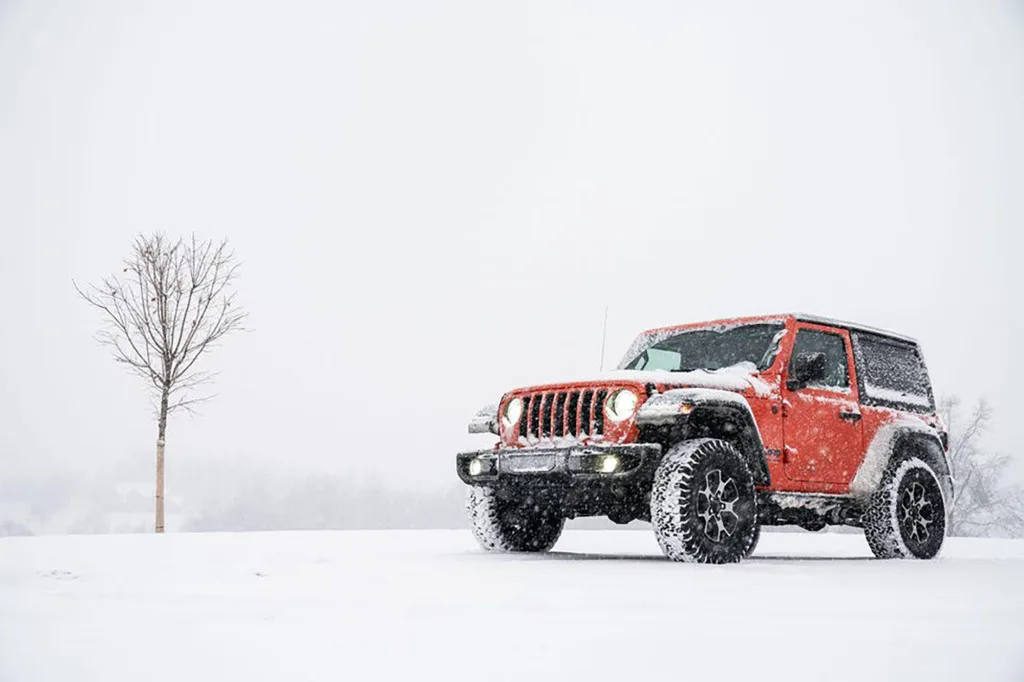
Are Jeep Wranglers Better Than Other Vehicles in Winter Snow?
Jeep Wranglers can be excellent in winter snow, but they are not automatically better than every other vehicle. The real answer is this: a Wrangler is better than many cars and crossovers in deep snow, unplowed roads, steep driveways, trails, and rough winter conditions, but a good AWD crossover with winter tires can be better for everyday icy-road commuting.
The Wrangler’s biggest winter advantage is its real 4×4 hardware. Jeep describes the Command-Trac 4×4 system as delivering torque to all four wheels with a 2.72:1 low range, while Jeep Canada explains that Selec-Trac can automatically switch between 2WD and 4WD based on driving conditions. That makes the Wrangler very capable when snow gets deep or roads are poorly cleared.
But here is the part many people miss: 4×4 helps you move, but tires help you stop. Consumer Reports found that stopping distance in snow can be extremely long on all-season tires and that an AWD vehicle with winter tires will be far more capable. So a Wrangler on weak all-season tires may not stop or turn as well as a lighter crossover on proper winter tires.
Why the Wrangler Is Good in Snow
The Jeep Wrangler is good in snow because it has ground clearance, available 4×4, strong traction hardware, and a rugged body-on-frame layout.
That matters when snow gets deep. A low sedan may scrape, drag, or get stuck. A Wrangler can clear deeper snow more easily, especially with the right tires. It also gives drivers better confidence on rough winter roads, cottage roads, mountain roads, trails, and unplowed areas.
A Wrangler is especially strong in:
Deep snow.
Unplowed roads.
Steep driveways.
Rutted winter trails.
Snowy rural roads.
Slushy parking lots.
Mountain access roads.
Winter camping routes.
This is where the Wrangler feels more capable than many normal cars and crossovers.
Where the Wrangler Is Not Automatically Better
The Wrangler is not automatically better on ice.
Ice is different from snow. On ice, traction is limited no matter what badge is on the grille. A Wrangler’s 4×4 system can help it get moving, but it cannot magically shorten braking distance if the tires do not grip.
A Wrangler is also taller, heavier, and less aerodynamic than many commuter cars. It can feel more truck-like in emergency maneuvers. The short-wheelbase two-door Wrangler can also feel twitchier than a longer crossover if the road is slick.
That does not make the Wrangler bad in winter. It simply means the driver still needs proper tires, slower speeds, and realistic expectations.
4×4 vs AWD in Winter
Wrangler 4×4 and crossover AWD are not the same thing.
A traditional Wrangler 4×4 system is built for traction and low-speed capability. It is excellent when you need extra grip in snow, mud, loose surfaces, or rough terrain. Some Wrangler trims use part-time 4WD, which should be used in slippery conditions and not on dry pavement.
Many crossovers use AWD systems designed for daily driving. They automatically send power to the wheels that need it and are easier for most drivers to use on mixed winter roads.
In simple terms: Wrangler 4×4 is better for deep snow and rough conditions. AWD crossovers are often easier for normal winter commuting.
Tires Matter More Than the Jeep Badge
The biggest winter upgrade for any vehicle is tires.
A Wrangler with proper winter tires will be much better in snow and ice than a Wrangler on worn all-seasons. A small AWD SUV with good winter tires can outperform a Wrangler with the wrong tires in braking and turning.
Consumer Reports says winter tires provide optimum grip for stopping, going, and turning on snow or icy roads. Tire Rack has also tested winter tires against all-season tires and shown why winter-specific rubber matters when temperatures drop.
If you live somewhere with real snow, winter tires are not just a nice upgrade. They are one of the most important safety choices you can make.
Wrangler Two-Door vs Four-Door in Snow
The four-door Wrangler Unlimited is usually easier to drive in winter than the two-door Wrangler.
The reason is wheelbase. A longer wheelbase can feel more stable on slick roads, especially at highway speeds. The two-door Wrangler is lighter and shorter, which can be fun off-road, but it may feel more sensitive on icy pavement.
If you want a Wrangler mostly for daily winter commuting, the four-door Wrangler is usually the better choice. If you want a trail-focused winter toy, the two-door still has advantages in tight terrain.
Is Rubicon Better in Snow?
The Wrangler Rubicon is excellent off-road, but it is not always the best winter road trim.
The Rubicon has serious trail equipment, including off-road tires, locking differentials, stronger axle hardware, and a more aggressive 4×4 system. That is great for trails and deep snow.
But on normal icy roads, lockers are not something you use casually. Aggressive off-road tires may also be worse on ice than dedicated winter tires.
For everyday snow driving, a Sahara, Sport S, or Willys with the right winter tires can be more practical than a Rubicon on mud-terrain tires.
Is Wrangler 4xe Good in Snow?
Yes, the Wrangler 4xe can be good in snow.
The plug-in hybrid system gives strong torque, and the Wrangler platform still has real 4×4 capability. But like any Wrangler, the tires matter. The 4xe is also heavier because of the hybrid battery system, so braking and tire grip still need attention.
If you drive a 4xe in winter, charge it regularly, use the right driving mode, keep winter tires in mind, and remember that electric torque can come on quickly. Smooth throttle inputs are important on slippery roads.
Wrangler vs Subaru in Snow
A Subaru may be better for everyday winter commuting. A Wrangler may be better for deeper snow and rougher winter terrain.
Subaru AWD systems are easy to use, automatic, and well-suited to normal snowy roads. Vehicles like the Outback and Forester are lower, more car-like, and often more comfortable for highway winter driving.
The Wrangler is better when snow gets deep, the road is unplowed, or you need more ground clearance and true 4×4 capability.
For city and highway snow, Subaru with winter tires is hard to beat. For trails, rural roads, and deeper snow, Wrangler has the advantage.
Wrangler vs Pickup Truck in Snow
A Wrangler can be better than many pickup trucks in snow because it has a shorter body, better maneuverability, and more balanced traction.
Pickup trucks can be tricky in winter when unloaded because the rear end is light. A 4×4 truck with winter tires and some weight over the rear axle can be very capable, but a Wrangler often feels easier to manage in tight snowy areas.
That said, trucks have their own advantage for towing, hauling, plowing, and carrying gear. If you need work capability, a Ram 1500 or heavy-duty truck may make more sense.
Wrangler vs Regular SUV in Snow
A Wrangler is usually better than a regular SUV in deep snow and off-road winter conditions.
But a modern AWD SUV may be better for smooth, quiet, daily commuting. Vehicles like the Toyota RAV4 Hybrid, Honda CR-V, Subaru Forester, Mazda CX-5, Jeep Grand Cherokee, or Dodge Durango can be easier to live with on highways and city roads.
The Wrangler wins when the road gets worse. The crossover wins when the road is plowed and comfort matters more.
How to Drive a Wrangler in Snow
Driving a Wrangler in snow is about smooth control.
Do not accelerate aggressively. Do not brake late. Do not make sharp steering inputs. Leave more distance than usual. Use 4H when roads are slippery and conditions call for it. Use 4L only for low-speed deep snow, steep terrain, or recovery situations.
If you have a part-time 4WD Wrangler, do not drive in 4H on dry pavement. That can cause drivetrain binding. Use 4WD when the surface is slippery enough to allow tire slip.
Always read your owner’s manual for your exact Wrangler system.
Best Winter Setup for a Jeep Wrangler
The best winter Wrangler setup is simple:
Good winter tires or severe snow-rated all-terrain tires.
Proper tire pressure.
Working 4×4 system.
Good battery.
Fresh wiper blades.
Full washer fluid.
Healthy brakes.
Good coolant protection.
Emergency kit.
Tow strap and recovery gear if you drive remote roads.
A Wrangler can be excellent in snow when it is prepared properly. It can also feel disappointing if it has the wrong tires, bad alignment, weak brakes, or worn suspension parts.
Should You Buy a Wrangler for Winter?
Yes, buy a Wrangler for winter if you deal with deep snow, rough roads, rural routes, steep driveways, trails, or outdoor winter activities.
Do not buy a Wrangler only because you think it will automatically be safest on icy city roads. For that use, a modern AWD SUV with winter tires may be smoother, quieter, and easier to control.
For Southern California shoppers who want snow capability for mountain trips, off-road weekends, or winter travel, compare new Jeep inventory and check trim, tires, drivetrain, and 4×4 system. If you are shopping used, review used Jeep inventory and inspect tire condition, suspension, brakes, and 4×4 operation carefully.
FAQs About Jeep Wranglers in Snow
Are Jeep Wranglers good in snow?
Yes, Jeep Wranglers are good in snow, especially deep snow and unplowed roads. They have strong 4×4 systems, good ground clearance, and rugged construction.
Are Wranglers better than AWD cars in snow?
Wranglers can be better in deep snow and rough winter conditions. AWD cars and crossovers may be better for normal plowed roads, ice, and daily commuting, especially with winter tires.
Do Jeep Wranglers need snow tires?
They do not always need them, but snow tires make a major difference. Winter tires improve stopping, turning, and grip in snow and ice.
Is the Rubicon best for snow?
The Rubicon is excellent for off-road snow, but it is not automatically the best for icy roads. Tire choice matters more than trim.
Should I use 4H in snow?
Use 4H when roads are slippery and you need extra traction. Do not use part-time 4H on dry pavement.
Is a Wrangler safe on ice?
A Wrangler can handle icy roads with the right tires and careful driving, but 4×4 does not eliminate ice risk. Braking and steering still depend heavily on tire grip.
Final Thoughts: Wrangler Is Great in Snow, But Tires Decide Everything
Jeep Wranglers are better than many vehicles in deep snow, unplowed roads, and rough winter conditions. Their 4×4 systems, ground clearance, and rugged construction make them genuinely capable when winter gets ugly.
But they are not magic. On ice and packed snow, tires matter more than the Jeep badge. A Wrangler with winter tires is a strong winter vehicle. A Wrangler on worn all-seasons can still slide, skid, and take too long to stop.
The best answer is simple: a Wrangler is better for deep snow and tough winter terrain, but a good AWD vehicle with proper winter tires may be better for everyday winter commuting.
Connect with us


