






75W-90 vs. 80W-90 Gear Oil: Decoding the Viscosity Numbers for Optimal Performance
The simple answer is this: 75W-90 and 80W-90 are both SAE 90 gear oils at operating temperature, but 75W-90 flows better in cold weather. That makes 75W-90 the better choice for colder climates, modern vehicles, synthetic gear oil applications, and drivers who want easier cold-start protection. 80W-90 is usually a conventional, heavier-cold-flow gear oil that still works well in many older trucks, axles, and differentials when the owner’s manual calls for it.
Petro-Canada Lubricants explains that an 80W-90 oil must meet the low-temperature fluidity requirements of an 80W grade and the high-temperature viscosity requirements of a 90 grade. That same logic applies to 75W-90: the first number tells you cold-flow behavior, while the second number tells you high-temperature viscosity.
What Do the Numbers Mean?
The “W” stands for winter, not weight.
In 75W-90, the 75W describes how the oil flows in cold temperatures. The 90 describes the oil’s viscosity at higher operating temperature.
In 80W-90, the 80W means it is thicker in cold conditions than a 75W oil. The 90 still means it falls into the same high-temperature SAE gear oil range.
So both oils are similar when fully hot, but they behave differently when cold.
That is the whole difference most drivers actually feel.
75W-90 Gear Oil Explained
75W-90 gear oil is usually the more modern and versatile choice.
It flows better when cold, which can help gears, bearings, and synchronizers receive lubrication sooner after startup. This is especially useful in cold climates, short-trip driving, and vehicles that sit outside overnight.
Many 75W-90 gear oils are full synthetic. For example, Mobil 1 Synthetic Gear Lubricant LS 75W-90 meets API GL-5 requirements and lists a pour point of -39°C, showing why synthetic 75W-90 is commonly chosen for cold-flow performance.
Use 75W-90 when your owner’s manual calls for it, when you drive in colder weather, or when you want a synthetic gear oil with strong temperature stability.
80W-90 Gear Oil Explained
80W-90 gear oil is an older, common, and still useful viscosity.
It is often found in conventional gear oils and is commonly used in older differentials, manual gearboxes, transfer cases, and axles where the manufacturer specifies it.
80W-90 can work perfectly well in warm climates and older trucks. It may also be cheaper than synthetic 75W-90. But in cold weather, it is thicker at startup, so it may not flow as quickly as 75W-90.
That does not automatically make 80W-90 bad. It simply means it is less cold-weather friendly.
75W-90 vs 80W-90: The Real Difference
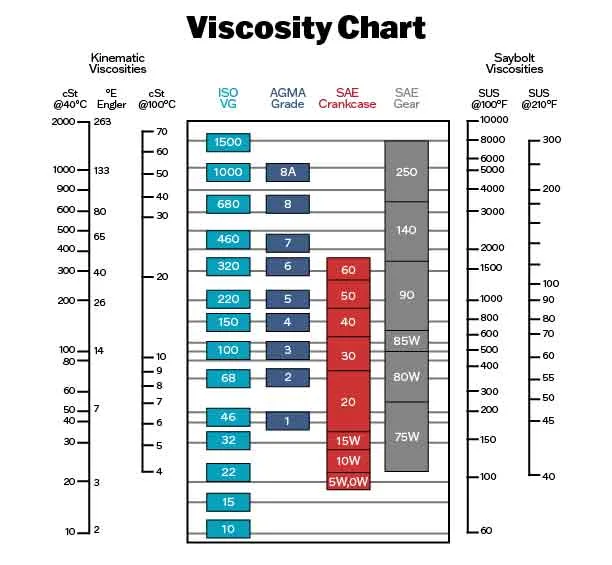
The real difference is cold-temperature flow.
Both oils are SAE 90 gear oils once hot. But 75W-90 has better low-temperature performance. That means it can circulate faster during cold starts and may reduce cold shifting stiffness in some manual transmissions or gearboxes.
80W-90 is thicker when cold. That may be fine in warm climates, older differentials, or equipment that does not see freezing temperatures.
In plain English:
75W-90: better cold flow, often synthetic, better for modern use.
80W-90: thicker cold flow, often conventional, good for older vehicles and warm climates.
Is 75W-90 Thicker Than 80W-90?
Not in the way most people think.
At operating temperature, both are 90-grade gear oils. One 75W-90 product may even be slightly thicker or thinner than one 80W-90 product depending on the brand, base oil, viscosity index, and formulation.
The important point is not “which one is thicker overall.” The important point is: 75W-90 flows better when cold.
Always compare the product data sheet if you want exact viscosity numbers.
Can You Use 75W-90 Instead of 80W-90?
Sometimes, yes, but only if the product meets the vehicle’s required specification.
In many differentials, 75W-90 synthetic can be a suitable upgrade from 80W-90 because both are 90-grade oils when hot, and 75W-90 improves cold flow. But you must verify the required API rating, such as GL-4 or GL-5, and any limited-slip additive requirement.
Do not substitute blindly in a manual transmission. Some manual gearboxes need a specific GL-4 fluid because certain GL-5 gear oils may not shift properly or may not be recommended for synchronizer materials.
The viscosity is only one part of the decision. The specification matters just as much.
Can You Use 80W-90 Instead of 75W-90?
Sometimes, but it is usually not the best move if the vehicle specifically calls for 75W-90.
Using 80W-90 instead of 75W-90 may cause thicker cold operation, slower flow in winter, and stiffer shifting in some applications. In a warm climate and older differential, it may work fine if the manufacturer allows it.
But if the manual calls for 75W-90 synthetic, use 75W-90 synthetic.
The safest rule is simple: match the owner’s manual first, then choose the best-quality oil within that spec.
API GL-4 vs GL-5 Matters
Do not choose gear oil by viscosity alone.
The API service rating matters. GL-5 gear oil is commonly used in hypoid differentials because it has extreme-pressure additives for high gear loads. GL-4 is commonly used in some manual transmissions and transaxles because it balances gear protection with synchronizer compatibility.
Petro-Canada Lubricants explains gear oil classification systems and API service designations, which is important because the wrong performance category can matter more than the difference between 75W-90 and 80W-90.
If your manual says GL-4, do not automatically pour in GL-5 unless the product clearly says it is safe for that application.
Limited-Slip Differential Additive
If your vehicle has a limited-slip differential, you may need friction modifier.
Some gear oils already include limited-slip additive. Others do not. If the differential chatters, binds, or clunks during tight turns after a fluid change, it may need the correct friction modifier.
Many products will say “LS” or “limited slip” on the bottle if the additive is included. For example, Mobil 1 75W-90 LS is a limited-slip synthetic gear lubricant and meets API GL-5.
Check your owner’s manual before adding extra modifier. Too much can reduce limited-slip performance.
Which Is Better for Cold Weather?
75W-90 is better for cold weather.
Its lower winter rating means it flows better at low temperatures than 80W-90. That helps lubrication during startup and can make cold operation feel smoother.
If you live somewhere with freezing winters, mountain driving, snow, or cold overnight temperatures, 75W-90 is usually the better choice when it meets the required spec.
Which Is Better for Hot Weather?
Both can work in hot weather because both are 90-grade oils when hot.
In very hot or heavy-duty applications, the bigger question may not be 75W-90 vs 80W-90. It may be whether the vehicle needs 75W-140, 80W-140, 85W-140, or a specific synthetic gear oil for towing or severe service.
For normal differentials calling for SAE 90 gear oil, either 75W-90 or 80W-90 may work if approved. For heavy towing or high-load use, follow the manufacturer’s severe-service recommendation.
Which Is Better for Towing?
Use the viscosity and specification listed in the owner’s manual.
For towing, heat is the enemy. A high-quality synthetic 75W-90 can handle heat well in many applications, but some trucks require a heavier oil for towing or severe service.
Do not assume thicker is always better. Too thick can reduce efficiency and may not flow properly in some designs. Too thin can reduce film strength under load.
If your truck manual says 75W-90 synthetic, use it. If it says 75W-140 for towing, use that instead.
75W-90 vs 80W-90 for Differentials
For differentials, 75W-90 is often the better modern choice if it meets the required API GL-5 spec.
It gives better cold flow and often better oxidation stability when synthetic. 80W-90 is still fine for many older differentials, especially in mild or warm climates.
If the differential is in a Jeep, Ram, Dodge, Ford, GM, Toyota, Nissan, or Mazda, do not guess. Check the exact axle and fluid requirement.
75W-90 vs 80W-90 for Manual Transmissions
Be more careful with manual transmissions.
Manual transmissions can be sensitive to synchronizer friction, gear oil additives, and viscosity. A fluid that works perfectly in a differential may shift poorly in a manual gearbox.
If your manual transmission calls for a specific GL-4 fluid, Synchromesh fluid, ATF, or manufacturer-specific fluid, do not replace it with random 75W-90 or 80W-90.
Manual transmission fluid choice should be exact.
Synthetic vs Conventional Gear Oil
75W-90 is often synthetic. 80W-90 is often conventional.
Synthetic gear oil usually has better cold flow, better heat resistance, better oxidation stability, and longer service potential. Conventional gear oil can still work well in older applications and may cost less.
For most modern vehicles, synthetic 75W-90 is the better all-around choice if it meets the required spec.
For older vehicles that specifically call for 80W-90 and are driven in warm conditions, conventional 80W-90 may be perfectly acceptable.
Does 75W-90 Improve Fuel Economy?
It may help slightly, especially in cold weather.
Because 75W-90 flows better when cold, it can reduce drag compared with 80W-90 during warm-up. But do not expect a dramatic MPG change. Gear oil choice affects efficiency, but tire pressure, driving style, vehicle weight, and axle ratio matter much more.
The main benefit is protection and proper operation, not huge fuel savings.
What Happens If You Use the Wrong Gear Oil?
Using the wrong gear oil can cause noise, poor shifting, overheating, wear, chatter, leaks, or component damage.
Too thick can make cold shifting difficult and reduce lubrication speed. Too thin can reduce protection under load. The wrong API rating can affect synchronizers or fail to protect hypoid gears. Missing limited-slip additive can cause chatter.
Gear oil is cheaper than a differential rebuild. Use the correct fluid.
Best Practical Recommendation
For most modern cars, trucks, SUVs, and Jeeps, 75W-90 synthetic is the better choice when approved.
For older trucks, older differentials, warm climates, and applications that specifically call for it, 80W-90 still works well.
The best answer is not based only on internet preference. It is based on the owner’s manual, axle type, transmission type, API rating, limited-slip requirement, climate, towing use, and whether synthetic is required.
Final Answer
75W-90 and 80W-90 are both 90-grade gear oils at operating temperature.
The difference is cold flow.
75W-90 flows better when cold, is often synthetic, and is usually better for modern vehicles, cold climates, and wider temperature ranges.
80W-90 is thicker when cold, often conventional, and still works well in many older vehicles, axles, and warm-climate applications.
Use the viscosity, API rating, and limited-slip requirement listed in your owner’s manual. If both are allowed, 75W-90 synthetic is usually the stronger all-around choice.
Connect with us


