





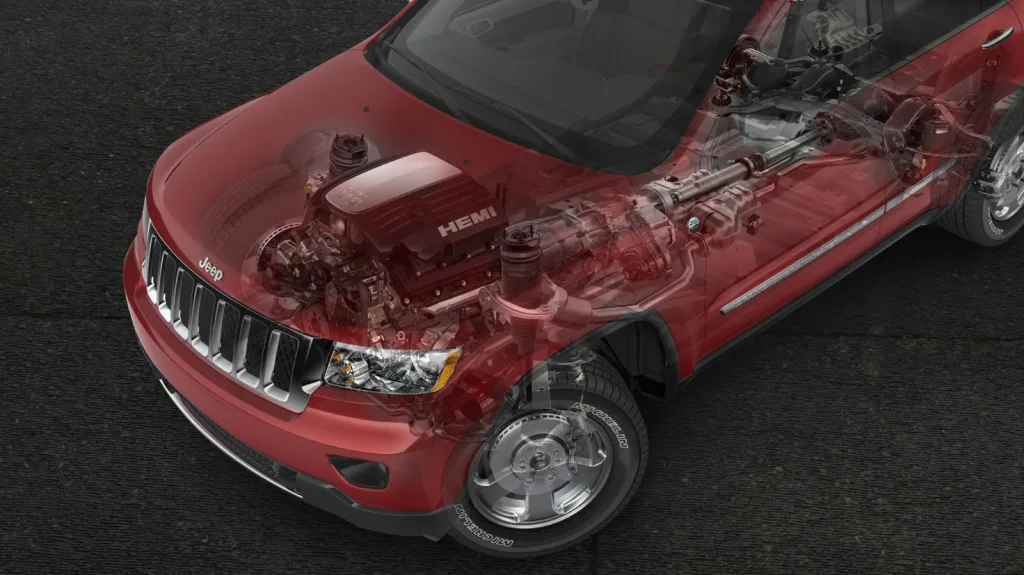
If you want the blunt answer first, the 3.6 Pentastar years that deserve the most caution are 2011, 2012, and 2013. Those are the years most closely tied to the Pentastar’s best-known early defect: left-cylinder-head/cylinder-leakage-related misfires, serious enough that FCA issued an extended-warranty bulletin covering many 2011–2013 applications, including the 2012–2013 Jeep Wrangler and multiple Chrysler, Dodge, and Jeep models. In that bulletin, FCA specifically tied the issue to misfire codes such as P0300, P0302, P0304, and P0306 and instructed dealers to check for excessive cylinder leakage and replace the cylinder head if necessary.
That does not mean every 2011–2013 Pentastar is a guaranteed problem. It does mean that if you are shopping used, those are the years where you should be the most skeptical, the most documentation-focused, and the least willing to buy a vague “runs great” example with no proof of repairs. Later Pentastar years are generally safer bets, but later engines are not flawless either. FCA service information shows later pain points including oil filter housing / oil filter adapter leak diagnosis on early 2014 ERB engines, a narrow 2016 camshaft issue on certain Grand Cherokee and Durango builds, and even a 2022 customer-satisfaction campaign for a small number of 3.6 vehicles requiring left-side cylinder-head replacement due to engine misfire.
So the smartest version of this article is not “avoid all Pentastars” and not “they are all fine.” It is this: avoid or heavily scrutinize the early 2011–2013 engines first, be careful with some 2014–2016 examples if records are weak, and judge every later engine by VIN history, service history, and symptoms rather than model year alone.
If you are comparing used Jeep inventory or want a newer model with service support behind it, start with the Simi Valley Chrysler Dodge Jeep Ram homepage, browse the used inventory, or check the service department.
Why the 3.6 Pentastar Has This Reputation
The Pentastar is not a one-year engine or a one-vehicle engine. It has been used across a huge number of Chrysler, Dodge, Jeep, and Ram products. That makes internet advice messy, because people often talk about “the Pentastar” as if a 2011 Wrangler, a 2014 Ram 1500, a 2016 Grand Cherokee, and a 2022 Wrangler all share exactly the same risk profile. They do not.
What gave the engine its reputation early on was not some vague forum rumor. FCA’s own bulletin for the X56 warranty extension explicitly covered a long list of 2011–2013 vehicles with the 3.6L ERB engine and described a repair path for misfire-related cylinder-head problems. The included applications span multiple brands and body styles, which is why the early Pentastar reputation became so widespread.
The important takeaway is that the Pentastar’s bad name mostly comes from specific clusters of issues, not from a blanket official finding that every year was defective. That distinction matters when you are buying used, because the right question is not “Is the Pentastar bad?” The right question is “Which Pentastar years and sub-groups had the most documented headaches, and has this specific vehicle already had the relevant repair?”
The Main 3.6 Pentastar Years to Avoid
2011 to 2013: the real caution zone
If you only remember one range from this article, make it this one. 2011, 2012, and 2013 are the Pentastar years I would treat with the most caution. FCA’s extended-warranty bulletin is the strongest official reason why. It covered 2011–2013 model-year applications and told dealers to diagnose excessive cylinder leakage and replace the cylinder head when needed on affected vehicles showing misfire symptoms. The bulletin specifically included vehicles such as the 2012–2013 Jeep Wrangler, 2011–2013 Grand Cherokee, 2011–2013 Charger, 2011–2013 Challenger, 2011–2013 300, 2011–2013 Durango, and others equipped with the 3.6L ERB.
This is why so many buyers and technicians still tell people to be wary of the earliest Pentastar years. The concern was not hypothetical. It was serious enough to generate official diagnostic and repair guidance tied to specific misfire fault codes.
If you are looking at one of these early engines, here is the first thing that matters: Has the cylinder-head issue already been repaired? If the seller cannot answer that, or gives you a fuzzy “I think so,” you should assume you need proof before paying real money.
2014: not automatic avoid, but not carefree either
I would not put all 2014 Pentastars in the same danger tier as 2011–2013, but I would still treat 2014 as a careful buy, especially early-build vehicles with poor maintenance records. FCA issued a 2015 technical bulletin for certain 2014 ERB vehicles built on or before January 20, 2014, including the 2014 Jeep Wrangler, 2014 Grand Cherokee, 2014 Durango, 2014 Ram 1500, and other models, because oil could pool in the valley under the intake and the oil filter housing may need to be replaced.
FCA also issued a 2013 bulletin explaining that the oil filter adapter changed for 2014 model-year vehicles, that the two designs were not interchangeable, and that installing the wrong filter could result in permanent engine damage.
That does not mean 2014 is a disaster year. It means 2014 is a year where sloppiness matters more than usual. A well-kept 2014 with the right parts, no leak history, and solid service records can still be fine. A neglected early-build 2014 with mystery oil seepage is the kind of vehicle that turns “cheap purchase” into “expensive ownership.”
2015 to 2016: usually better than the earliest years, but not immune
By this point, the Pentastar’s reputation had improved versus the earliest launch years, but I still would not call these “buy blindly” years. The big official example is a 2016 service bulletin for certain Grand Cherokee and Durango vehicles built within narrow date ranges that required left and right intake camshaft replacement because of a missing feature on the nose of the camshaft. That issue was not a full-family condemnation of all 2016 Pentastars, but it is a reminder that “later than 2013” does not mean “problem-free.”
For 2015–2016, the more practical concern in the used market is not just factory bulletins. It is whether the vehicle has been maintained carefully enough to avoid the common age-and-heat-related issues these engines can develop around the oil filter housing / cooler area, seals, and top-end noise complaints. Official service material shows how seriously FCA treated the oil-loss/oil-pooling concern in early 2014 ERB applications, and later bulletins show the manufacturer still dealing with oil-filter-area leak diagnosis on newer 3.6 applications as recently as 2025.
So if you are shopping a 2015 or 2016 Pentastar, I would not say “avoid,” but I would say inspect thoroughly and buy records, not promises.
Later Pentastar Years: Better, But Still Not Perfect
One of the biggest mistakes buyers make is swinging from one extreme to another. They hear that early Pentastars had cylinder-head trouble, then assume everything after that is bulletproof. The official record does not support that.
In February 2023, FCA issued Customer Satisfaction Notification ZD2 for a small number of 2022 vehicles equipped with the 3.6 engine, including the Jeep Wrangler, Jeep Gladiator, Ram 1500, Pacifica/Voyager, and Grand Cherokee, because the MIL could illuminate due to a cylinder misfire and the remedy was to replace the left-side cylinder head. FCA said the campaign affected only about 56 vehicles, which is a very different scale from the early-2010s reputation problem, but it proves a useful point: even later Pentastar years are not immune to batch-specific defects. (NHTSA)
Likewise, a 2025 Stellantis technical bulletin covering 2022–2025 3.6L ERC applications, including the Jeep Wrangler, Gladiator, Durango, Grand Cherokee, Ram 1500, and others, states that oil filter assemblies were being replaced at high rates and instructs dealers to properly diagnose oil leaks around the oil-filter area, cap O-ring, valve cover, and OFA-to-block mating surfaces before replacing parts. (NHTSA)
That is not the same as saying “avoid 2022–2025.” It is saying something more useful: later Pentastars are usually safer buys than 2011–2013, but they still need inspection.
The Best Way to Think About “Years to Avoid”
A smarter buyer frames the Pentastar like this:
- Highest-risk years: 2011–2013. These are the ones most directly tied to the official cylinder-head / cylinder-leakage misfire issue.
- Careful-buy years: 2014 and some 2015–2016 examples, especially if records are weak, because oil-loss/oil-pooling and some production-specific issues show up in official service material.
- Generally safer years: later Pentastars, especially when well maintained, but still check VIN-specific campaigns and leak history because later cylinders-head and oil-filter-area issues did not disappear entirely. (NHTSA)
That is much more accurate than a simplistic “all Pentastars are junk” or “only 2011 is bad” take.
Symptoms That Matter More Than Year Alone
Even if you already know which years are riskier, the vehicle in front of you still matters more than the internet’s favorite year chart. On any used Pentastar, I would pay close attention to:
Misfire history
If the vehicle has a history of P0300, P0302, P0304, or P0306-type misfire problems, that deserves real investigation, especially on early ERB engines because those are the exact kinds of codes mentioned in the FCA cylinder-head warranty-extension bulletin.
Oil smell or visible oil in the valley
On affected early-2014 ERB applications, FCA told technicians to check for oil pooling in the engine valley because the area could hold almost a quart of oil without obvious external weeping. That is not a theoretical concern; it is straight from the manufacturer’s own diagnostic aid.
Evidence of incorrect oil-filter service
FCA explicitly warned that for the 2014 model-year change, the wrong oil-filter application could result in permanent engine damage. On a used Pentastar, that means a sloppy maintenance history matters more than usual.
Top-end noise or valvetrain concern
The 2016 camshaft bulletin was narrow, but it reinforces a broader point: unusual top-end noise on a Pentastar should never be brushed off as “they all do that.”
VIN-specific campaign history
Because later issues can be very narrow and VIN-specific, always run the VIN through manufacturer and NHTSA recall/campaign resources before buying. The 2022 ZD2 campaign is a perfect example of why that matters. (NHTSA)
If you want a dealer-backed inspection instead of gambling on a private-party guess, the service department at Simi Valley Chrysler Dodge Jeep Ram is the right kind of place to start.
Which 3.6 Pentastar Years Are Usually Better?
The official material I reviewed supports a cautious but fair conclusion: the earliest 2011–2013 engines are the ones to fear most, while later years are generally better provided the vehicle has been maintained and inspected properly.
That does not mean you should automatically buy any 2017, 2018, 2019, 2020, or 2021 Pentastar. It means those years usually do not carry the same broad stigma as the launch-era engines. With later models, condition and service history become more important than online year rankings.
Should You Avoid the 3.6 Pentastar Entirely?
No. That is too broad. The Pentastar powered a huge number of Chrysler, Dodge, Jeep, and Ram vehicles for a reason. The better conclusion is:
- Avoid blind buys from 2011–2013
- Be extra careful with early 2014 and some 2015–2016 vehicles if maintenance history is weak
- Treat later engines as inspect-before-you-buy, not avoid-by-default
That is the balanced answer supported by the official bulletins.
Final Verdict
If you want the cleanest shortlist of 3.6 Pentastar years to avoid, it is this:
Avoid or heavily scrutinize 2011, 2012, and 2013 first. Those are the years most directly linked to the Pentastar’s best-known official cylinder-head / cylinder-leakage misfire problem.
After that, I would put 2014 in the “proceed carefully” category rather than the full avoid category, because official FCA service material shows early-2014 ERB engines had meaningful oil-loss / oil-pooling diagnostic concerns and a filter-adapter change that could lead to serious damage if serviced incorrectly.
2015–2016 are usually better than the earliest years, but they are still years where a weak service history, leak evidence, or top-end noise should make you walk away. The 2016 camshaft bulletin is a reminder that production-specific problems can still exist even after the early head issue period.
And for later Pentastars, the lesson is simple: better does not mean perfect. VIN-specific campaigns like the 2022 ZD2 left-cylinder-head replacement and recent 2022–2025 oil-filter-area leak bulletins prove that later engines still need real inspection. (NHTSA)
Connect with us


