





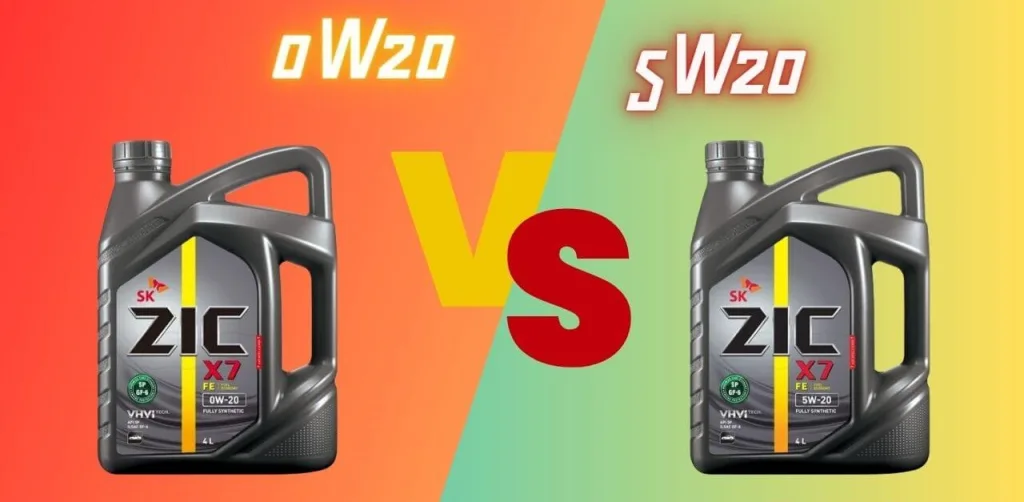
And Why Getting It Wrong Could Cost You Thousands)
Hidden Automotive DiscountsIf you’re deciding between 0W-20 and 5W-20 motor oil, the most important thing to know is this:
Your engine already has a correct answer.
These two oils are very similar when the engine is hot, but they behave differently during cold starts. Choosing the right one is not about preference or brand—it is about matching your engine’s design and operating conditions.
This guide breaks down the real difference, when each oil makes sense, and what happens if you choose the wrong one.
What Do 0W-20 and 5W-20 Actually Mean?
Motor oil ratings follow a standardized system.
- The first number (0W or 5W) represents cold-temperature performance
- The second number (20) represents viscosity at operating temperature
That means:
- 0W-20 flows better in cold temperatures
- 5W-20 is slightly thicker at startup
- Both perform similarly once the engine is fully warm
So the difference is not about high-temperature protection—it is about how quickly oil flows when the engine starts.
The Real Difference Between 0W-20 and 5W-20
Cold Start Performance
This is where the difference matters most.
- 0W-20 reaches engine components faster in cold conditions
- 5W-20 takes slightly longer to circulate
Since most engine wear happens during startup, faster oil flow can reduce long-term wear, especially in colder climates.
Fuel Efficiency
Thinner oil reduces internal friction.
- 0W-20 can slightly improve fuel economy
- 5W-20 may create marginally more resistance
The difference is small, but manufacturers often specify 0W-20 to meet fuel efficiency standards.
Engine Compatibility
This is the deciding factor.
Modern engines are designed with:
- tighter tolerances
- smaller oil passages
- more precise lubrication requirements
These engines are typically built specifically for 0W-20.
Older engines were designed around 5W-20, which provides slightly thicker protection during startup.
When You Should Use 0W-20
Use 0W-20 if:
- your owner’s manual specifies it
- you drive a newer vehicle
- your engine is turbocharged
- you live in a cold climate
- your car uses start-stop technology
These engines rely on fast oil circulation and precise lubrication, especially at startup.
When You Should Use 5W-20
Use 5W-20 if:
- your manual specifically recommends it
- your vehicle is older
- your engine was designed before widespread 0W-20 use
- you drive in moderate or warm climates
It is not “better” oil—it simply matches older engine designs.
What Happens If You Use the Wrong Oil?
Using 5W-20 Instead of 0W-20
- slower lubrication at startup
- reduced fuel efficiency
- possible long-term wear increase
- may not meet manufacturer requirements
Using 0W-20 Instead of 5W-20
- lower oil pressure in some engines
- increased oil consumption in worn engines
- thinner film than intended by original design
Neither scenario causes immediate failure, but long-term effects matter.
Oil Flow vs Oil Pressure (Common Misunderstanding)
Many people assume thicker oil equals better protection.
That is not how engines work.
- Oil flow lubricates components
- Oil pressure is just resistance to flow
A thinner oil like 0W-20 can deliver faster and more consistent lubrication, even if the pressure reading is slightly lower.
Can You Switch Between 0W-20 and 5W-20?
Only if the manufacturer allows it.
Some engines are designed to accept both, but many are not.
If your manual specifies one viscosity, switching without confirmation is not recommended.
Can You Mix 0W-20 and 5W-20?
In an emergency, yes.
But it creates:
- an unpredictable viscosity blend
- reduced additive performance
It is acceptable for topping off, but not as a long-term solution.
High-Mileage Engines: Should You Change Oil Type?
For high-mileage engines:
- stick with the recommended viscosity unless there is a clear reason not to
- avoid switching just to “fix” oil consumption
Changing viscosity does not solve underlying wear—it only masks symptoms.
Synthetic vs Conventional Oil (Quick Context)
Most 0W-20 oils are full synthetic.
Synthetic oil:
- performs better in extreme temperatures
- maintains viscosity longer
- provides better protection in modern engines
For most modern vehicles, full synthetic oil is no longer optional—it is expected.
How to Choose the Right Oil (Simple Process)
- Check your owner’s manual
- Match viscosity exactly
- Use a certified oil (API, ILSAC, etc.)
- Choose a reputable brand
- follow proper oil change intervals
This matters more than choosing between brands or marketing claims.
Final Verdict
So, 0W-20 vs 5W-20—which one does your engine need?
The one your manufacturer specifies.
- 0W-20 → better cold-start flow, used in modern engines
- 5W-20 → slightly thicker at startup, used in older designs
The difference is not about which oil is better overall. It is about which oil matches your engine’s design.
Use the correct one, and your engine will perform as intended.
Use the wrong one, and long-term wear becomes a risk.
Connect with us


