Simi Valley Chrysler Dodge Jeep Ram

Blog / Ram

Blog

All Ram Jeep General Dodge Questions Car Buying Guides Chrysler Simi Valley Chrysler Dealer Simi Valley Used Cars
What Does The RAM Truck Look Like Inside 2500

What Does The RAM Truck Look Like In side 2500

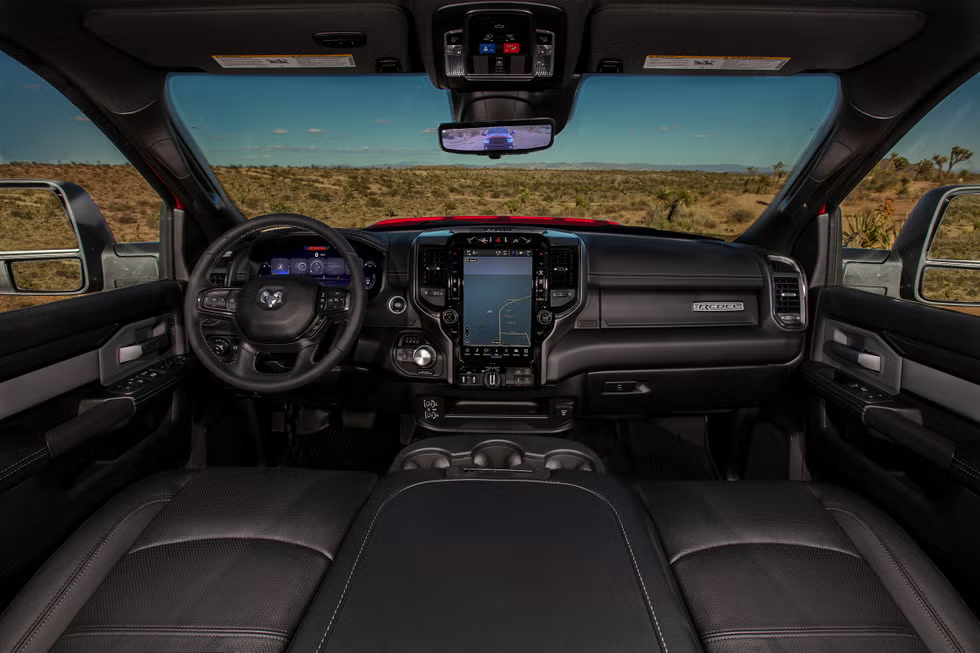
The RAM 2500 is renowned for its rugged performance, exceptional towing capabilities, and powerful engine options, but it’s not just about raw power. The interior of the RAM 2500 has been designed with just as much attention to detail, blending utility with luxury and comfort. Whether you use your truck for work, family trips, or off-roading adventures, the interior of the RAM 2500 is engineered to provide a comfortable and functional environment for both the driver and passengers. In this blog, we’ll take a detailed look at what you can expect from the RAM 2500’s interior, including seating, technology, storage, and overall design. Spacious and Versatile Interior The RAM 2500 comes with different cab configurations to suit different needs, whether you're looking for more passenger space or additional cargo room. The most common configurations include: Regular Cab: This option is ideal for those who need a truck primarily for work and storage. It has seating for two or three passengers and a more compact interior layout. Crew Cab: This configuration offers more space for passengers, with seating for up to five or six people. It's the preferred option for those who want both a roomy cab and a larger truck bed for hauling. Mega Cab: The Mega Cab provides the most interior space, offering extensive legroom and comfort for rear passengers. The Crew Cab and Mega Cab are especially popular for their passenger comfort, with ample legroom and a spacious, airy feel. Seating and Upholstery Options One of the standout features of the RAM 2500’s interior is its seating options. The truck strikes a balance between rugged durability and luxury, with various trims offering different levels of comfort. Upholstery: Depending on the trim, the seating in the RAM 2500 comes in a variety of materials, including cloth, leather-trimmed fabric, and full leather. Higher trims, such as the Laramie or Limited models, feature premium leather upholstery with fine stitching, adding a touch of luxury to the interior. Heated and Ventilated Seats: Many higher trims include heated and ventilated seats, offering additional comfort for all seasons. These features are particularly valuable in both cold and hot climates, ensuring that both the driver and passengers remain comfortable regardless of the weather. Power-Adjustable Seats: In most models, the front seats are power-adjustable, with memory settings available for the driver's seat, ensuring a customized seating position every time you enter the vehicle. For those who often drive long distances or with passengers, the Mega Cab provides the most rear-seat space, with rear seats that can recline for added comfort on longer journeys. Dashboard and Center Console Design The interior of the RAM 2500 features a well-organized dashboard and a user-friendly control layout, providing easy access to essential features. The center console, which is available in both standard and dual glovebox configurations, provides ample space for storing items like tools, paperwork, and other work essentials. Infotainment System: The Uconnect infotainment system is one of the truck's main highlights. It comes with a large 8.4-inch or 12-inch touchscreen, depending on the trim level. The system offers Apple CarPlay and Android Auto integration, allowing you to connect your smartphone to the truck seamlessly. It also provides access to navigation, music, hands-free calling, and more. Higher trims come with premium sound systems, ensuring excellent audio quality on every drive. Physical Controls: The RAM 2500 still retains traditional physical knobs and buttons for climate control, volume, and other functions, allowing the driver to make adjustments quickly and easily while driving. Interior Materials: The materials used in the RAM 2500 vary depending on the trim level. Soft-touch plastics, leather accents, and real wood trim are available in higher trims, creating a high-end, luxurious feel inside the cab. Storage Space and Utility RAM trucks are designed to be functional, with plenty of storage space for both personal items and tools. The RAM 2500 offers a variety of compartments and clever storage solutions throughout the cabin. Center Console Storage: One of the most notable features is the large center console that can accommodate a laptop, tablet, or other equipment. It also offers additional storage bins for smaller items such as pens, notepads, or gadgets. Under-Seat Storage: For those who need even more storage, the RAM 2500 features under-seat storage compartments in the Crew Cab and Mega Cab configurations. These compartments are perfect for stowing away tools, gear, or personal belongings when not in use. Cup Holders and Small Storage Compartments: The RAM 2500 also comes with multiple cup holders and small storage bins in the door panels, center armrest, and dashboard to keep your essentials organized and easily accessible. Technology and Connectivity Features In addition to its powerful engine options and rugged exterior, the RAM 2500 is loaded with advanced technology to enhance the driving experience. Here’s a look at the key technology features inside the truck: Uconnect System: As mentioned earlier, the Uconnect system is a central part of the RAM 2500’s technology. It’s one of the easiest and most intuitive systems available, with a responsive touchscreen interface that makes navigation and media controls straightforward. Driver Assistance Features: The RAM 2500 is equipped with a variety of driver assistance technologies, such as blind-spot monitoring, forward-collision warning, and adaptive cruise control. These features help make driving safer, especially when towing or navigating tricky situations. Multi-Function Display: The truck comes with a digital display in the instrument cluster, which provides important vehicle information like fuel efficiency, towing metrics, tire pressure, and more. This is especially useful for drivers who tow frequently, as it provides real-time data on load weights, temperatures, and other key metrics. Climate Control and Comfort Dual-Zone Climate Control: The RAM 2500 comes with dual-zone automatic climate control on most trims, allowing the driver and front passenger to set individual temperatures for maximum comfort. Heated Steering Wheel: On higher trims, the heated steering wheel adds to the comfort, especially during colder weather. Rear-Seat Air Vents: The Crew Cab and Mega Cab configurations also include rear-seat air vents, ensuring that passengers in the back row stay comfortable as well. Off-Road Capabilities (For Off-Road Models) If you're opting for the Power Wagon or Rebel trim, the RAM 2500 offers off-road-specific interior features that match its performance capabilities: Rubberized Floor Mats: These floor mats are easy to clean and protect the interior from mud, dirt, and debris during off-road adventures. Off-Road Gauges: Some off-road models come with dedicated off-road gauges to track wheel articulation, pitch/roll, and other key metrics while tackling rugged terrain. Final Thoughts: A Perfect Balance of Function and Luxury The RAM 2500 combines utility with comfort and technology in a way that few other heavy-duty trucks can match. Whether you're working hard on a job site, towing a heavy load, or enjoying a weekend off-roading adventure, the interior of the RAM 2500 is designed to keep you comfortable, organized, and connected. From premium upholstery and advanced technology to ample storage space and rugged features, the RAM 2500 proves that even the toughest trucks can offer a luxurious driving experience. With its well-designed cabin, functional storage, high-tech features, and off-road-ready capabilities, the RAM 2500 is the ideal choice for drivers who need a vehicle that can do it all—and look good doing it.

How Much can A RAM 2500 Tow

How Much can A RAM 2500 Tow

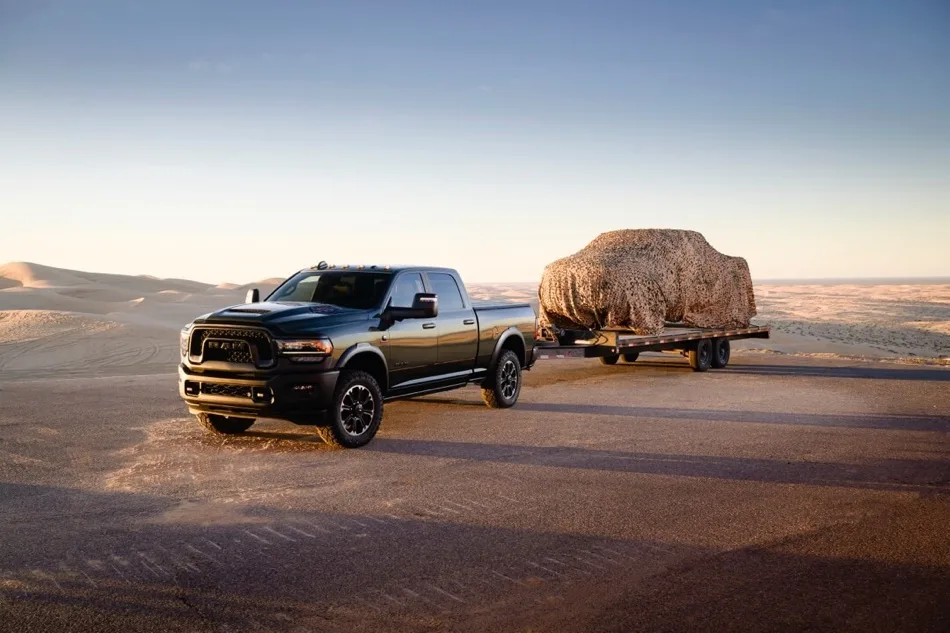
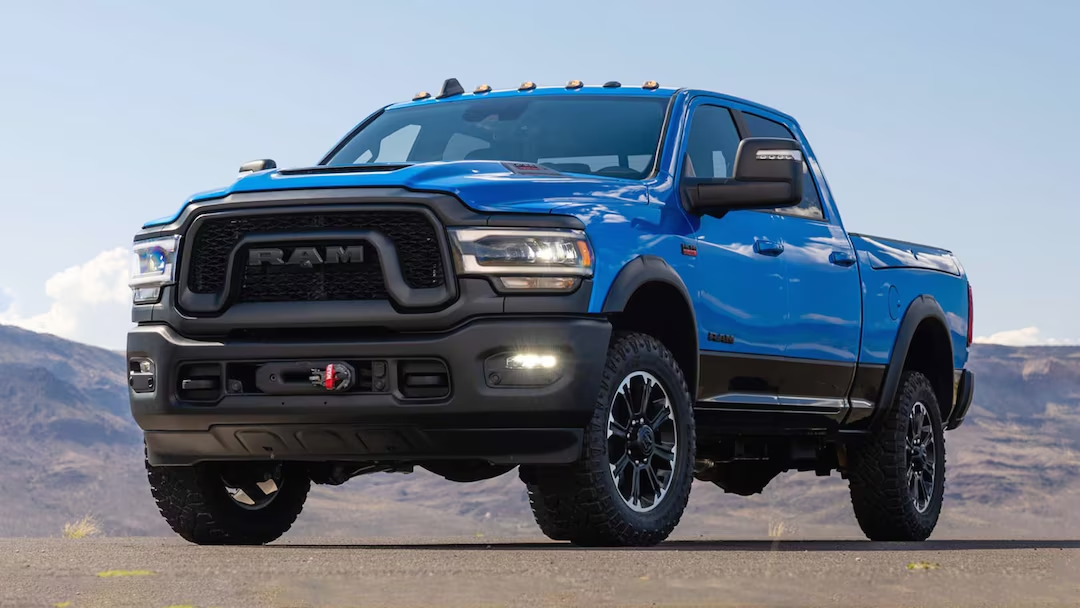
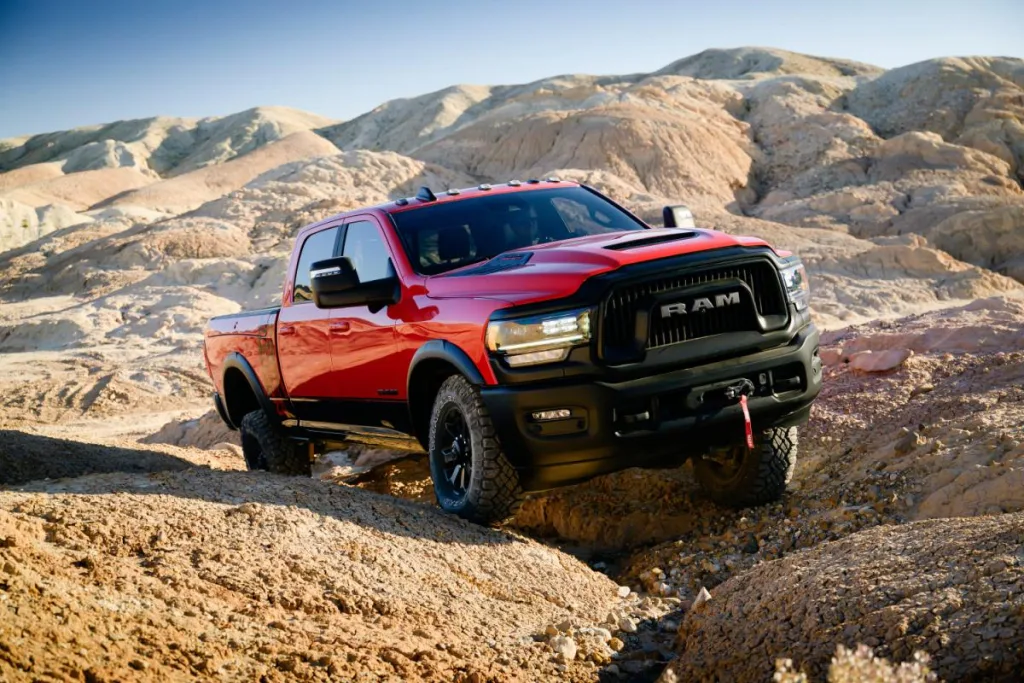
How Much Can a Ram 2500 Tow? A properly equipped Ram 2500 can tow up to 20,000 pounds with the available diesel engine and up to 17,750 pounds with the gas engine. That is the simple answer. But the exact Ram 2500 towing capacity depends on the model year, engine, drivetrain, cab style, bed length, axle ratio, hitch type, payload rating, and how the truck is equipped. For the current Ram 2500, Ram lists a maximum gas towing capacity of 17,750 pounds, a maximum gas payload of 3,930 pounds, a maximum diesel towing capacity of 20,000 pounds, and a maximum diesel payload of 3,600 pounds on its official Ram 2500 capability page. Ram also provides an official towing capacity guide for checking towing and payload by configuration. If you are shopping for a heavy-duty truck near Simi Valley, the safest move is to compare the exact VIN, payload sticker, engine, axle ratio, and hitch setup before assuming any Ram 2500 can tow the maximum number. Ram 2500 Towing Capacity: The Quick Answer The Ram 2500 is a heavy-duty pickup built for serious towing, but not every Ram 2500 has the same tow rating. A newer Ram 2500 with the 6.4L HEMI V8 can tow up to 17,750 pounds when properly equipped. A Ram 2500 with the 6.7L Cummins Turbo Diesel can tow up to 20,000 pounds when properly equipped. Those numbers are official current Ram figures, but they represent maximum ratings, not every truck on the lot. That distinction matters. A Ram 2500 Tradesman with the right setup may tow more than a heavily optioned luxury trim because added equipment can reduce payload. A Crew Cab, Mega Cab, 4x4 system, long bed, short bed, and optional features can all change the final number. Before towing, always check the truck’s door-jamb payload sticker, owner’s manual, official tow guide, and hitch rating. Ram 2500 Diesel Towing Capacity The Ram 2500 diesel towing capacity is one of the biggest reasons shoppers choose this truck. With the available 6.7L Cummins Turbo Diesel, the Ram 2500 can tow up to 20,000 pounds when properly equipped. Diesel torque is the key advantage. A diesel engine is especially useful for heavy trailers, steep grades, long-distance towing, and frequent hauling. The Cummins diesel is a strong choice if you plan to tow: Large travel trailers. Fifth-wheel campers. Horse trailers. Equipment trailers. Car haulers. Heavy work trailers. Long-distance recreational trailers. The diesel engine usually costs more up front, but it can make sense for buyers who tow often or tow heavy. If you only tow occasionally, the gas Ram 2500 may be the better value. Ram 2500 Gas Towing Capacity The Ram 2500 gas towing capacity is also strong. With the 6.4L HEMI V8, Ram lists a maximum gas towing capacity of 17,750 pounds when properly equipped. That is more than enough for many trailers, campers, boats, work trailers, and equipment loads. The HEMI gas engine may be the better choice if you want: Lower upfront cost. Simpler maintenance. Strong payload capability. Good towing for moderate-heavy trailers. A truck that works well for both jobsite use and daily driving. The gas Ram 2500 can also offer a higher maximum payload rating than the diesel version in some configurations. Ram lists the current gas model at up to 3,930 pounds of payload, compared with up to 3,600 pounds for the diesel model. That is why diesel is not automatically the right choice for every buyer. If payload matters more than maximum trailer weight, the gas engine may make more sense. Ram 2500 Payload: Why It Matters Payload is just as important as towing capacity. Ram 2500 payload refers to how much weight the truck can carry in the cab and bed. That includes passengers, tools, cargo, trailer tongue weight, accessories, and anything else added to the truck. Many towing mistakes happen because people focus only on the trailer weight and ignore payload. A truck may technically have a high tow rating but run out of payload once you add people, gear, cargo, and tongue weight. For current Ram 2500 models, Ram lists maximum payload at 3,930 pounds for gas models and 3,600 pounds for diesel models, depending on configuration. But again, those are maximum ratings. The payload sticker on the driver-side door jamb tells you the rating for that exact truck. If you are towing a heavy travel trailer or fifth-wheel, payload can become the limiting factor before the advertised tow rating does. Ram 2500 Tow Rating vs Real-World Towing The Ram 2500 tow rating is the maximum number the truck can tow when properly configured. Real-world towing depends on more than the advertised maximum. Before hitching up, you need to consider: Trailer weight. Loaded trailer weight. Tongue weight or pin weight. Payload capacity. GVWR. GCWR. Rear axle rating. Hitch rating. Tire rating. Brake controller. Trailer brakes. Cargo and passenger weight. The official Ram towing guide is useful because it helps match towing capacity to the actual configuration. But the best real-world answer is found by checking the VIN-specific rating and payload sticker. What Is GVWR on a Ram 2500? GVWR stands for Gross Vehicle Weight Rating. It is the maximum allowed weight of the truck itself when loaded. That includes the truck, passengers, cargo, fuel, accessories, and trailer tongue weight. GVWR is different from towing capacity. A truck can have a high towing number but still be limited by payload, axle rating, or GVWR. This is especially important for Ram 2500 diesel models because the diesel engine is heavier than the gas engine. The diesel gives you more towing strength, but the added engine weight can reduce available payload compared with some gas configurations. Ram 2500 Bed Capacity When people search for Ram 2500 bed capacity, they usually mean payload or how much weight the bed can carry. The answer depends on the exact truck. A Ram 2500 with a higher payload rating can carry more in the bed, but that rating must also include passengers and other cargo. If a truck has a payload rating of 3,000 pounds, that does not mean you can always put 3,000 pounds in the bed while also loading passengers and hitch weight. Everything added to the truck counts against payload. For construction, landscaping, towing, or farm use, this is one of the most important numbers to check before buying. Ram 2500 Cummins Towing Capacity The Ram 2500 Cummins towing capacity reaches up to 20,000 pounds when properly equipped. The 6.7L Cummins Turbo Diesel is built for buyers who tow heavy trailers regularly. Its strength is low-end torque, which helps the truck pull heavy loads from a stop and maintain confidence under load. A Cummins-powered Ram 2500 is ideal if you regularly tow large campers, enclosed trailers, livestock trailers, skid steers, or heavy work equipment. But buyers should also understand that diesel ownership comes with added costs. Diesel trucks can have higher maintenance costs, more expensive repairs, and emissions-system components that gas trucks do not have. If you do not need the extra towing confidence, the gas model may be easier and cheaper to own. Ram 2500 HEMI Towing Capacity The Ram 2500 HEMI towing capacity reaches up to 17,750 pounds in the current model when properly equipped. The 6.4L HEMI V8 is the standard heavy-duty gas engine and is a strong fit for buyers who need capability but do not necessarily need diesel torque. It is especially appealing for people who tow moderate loads, carry payload, use the truck locally, or want a lower upfront purchase price. The gas Ram 2500 can be the better everyday heavy-duty truck if you use it for: Local jobsite work. Weekend towing. Dump runs. Boat towing. Moderate RV towing. Bed cargo. Snow, dirt, and mountain-road use. The HEMI may not pull like the Cummins under the heaviest loads, but it is still a very capable heavy-duty engine. Power Wagon Towing Capacity The Ram 2500 Power Wagon is a special case. The Power Wagon is built more for off-road capability than maximum towing. It has unique suspension, off-road hardware, locking differentials, disconnecting front sway bar, skid plates, and other equipment that make it one of the most capable factory off-road heavy-duty trucks. But that off-road equipment affects towing and payload. Power Wagon towing capacity is usually lower than a more towing-focused Ram 2500 configuration. That does not make the Power Wagon weak. It simply means it is optimized for off-road performance, not maximum trailer weight. If you need the highest Ram 2500 towing capacity, look at other Ram 2500 trims and configurations. If you need trail capability, the Power Wagon is the more specialized choice. Ram 2500 Big Horn Towing Capacity The Ram 2500 Big Horn towing capacity depends on how the truck is configured. A Big Horn can be a strong towing choice because it often balances capability, price, comfort, and equipment. Depending on engine, cab style, drivetrain, bed length, axle ratio, and package selection, a Big Horn can be set up for serious towing without carrying the extra weight and cost of higher luxury trims. If you are shopping for a Ram 2500 Big Horn, check the exact towing guide or VIN-specific payload and tow rating. Do not assume two Big Horn trucks have the same capacity just because the trim name is the same. Ram 2500 Laramie Towing Capacity The Ram 2500 Laramie is popular because it adds more comfort and technology while still offering heavy-duty capability. A Laramie can tow serious weight when properly equipped, but luxury features, 4x4 systems, cab configuration, and added options can affect payload and tow rating. That means a Laramie may tow less than a lighter Tradesman or Big Horn configuration with the same engine. The Laramie is a good choice if you want a truck that can tow but also works well as a daily driver or long-distance road-trip truck. Older Ram 2500 Towing Capacity by Year Many shoppers search for older Ram 2500 towing capacity numbers, including 2005, 2006, 2007, 2010, 2012, 2015, 2016, 2017, and 2018 models. Those numbers vary widely because older Ram 2500 trucks came with different engines, axle ratios, transmissions, cab styles, drivetrains, and tow packages. For example, a 2015 Ram 2500 diesel may have a very different tow rating than a 2015 Ram 2500 5.7L HEMI. A 2018 Ram 2500 Cummins may tow more than a gas version, but exact capacity still depends on configuration. A 2006 Ram 2500 5.9 Cummins has a different rating structure than a newer 6.7 Cummins model. For older trucks, never rely on a generic number from a forum or listing. Check the owner’s manual, manufacturer towing chart, door-jamb sticker, axle ratio, and VIN-specific equipment. If you are buying used, ask the seller for: The engine. Transmission. Axle ratio. Cab and bed configuration. 4x2 or 4x4 drivetrain. Payload sticker photo. Trailer brake controller. Hitch rating. Service history. That information gives you a much better picture than the model year alone. Dodge Ram 2500 Towing Capacity vs Ram 2500 Towing Capacity Many people still search “Dodge Ram 2500 towing capacity,” especially for older trucks. That is because Ram trucks used to be sold under the Dodge brand. Today, Ram is its own truck brand, but older models are still commonly called Dodge Ram trucks. So if you are searching for a 2005 Dodge Ram 2500 towing capacity, 2012 Ram 2500 towing capacity, or 2018 Dodge Ram 2500 tow capacity, you are usually looking for the same general truck family across different naming eras. The important part is not whether someone says Dodge Ram or Ram. The important part is the exact year, engine, cab, axle ratio, drivetrain, and tow package. Ram 2500 vs Chevrolet Silverado 2500 Towing Capacity The Chevrolet Silverado 2500 is one of the Ram 2500’s main competitors. Both trucks are serious heavy-duty pickups built for towing, payload, jobsite work, RV use, and long-distance hauling. Which one is better depends on the exact configuration. Ram’s current 2500 maximum towing figure is 20,000 pounds with the diesel engine, while Chevrolet publishes its own towing numbers through official trailering guides for Silverado HD models. If you are comparing the two, do not compare one brand’s max number against a random truck on the lot. Compare similarly configured trucks with similar engines, cab layouts, drivetrains, and axle ratios. Ram’s advantage is often Cummins diesel reputation, interior quality, ride comfort, and strong heavy-duty capability. Chevrolet’s advantage may be availability, diesel powertrain preference, technology packages, or specific work-truck configurations. The right truck is the one that matches your trailer and payload needs safely. How to Find Your Exact Ram 2500 Towing Capacity To find your exact Ram 2500 towing capacity, use the VIN-specific data when available. Start with the official Ram towing guide. Then check the driver-side door sticker for payload. Then confirm hitch ratings, axle ratio, tire ratings, and trailer setup. You should also know the loaded weight of your trailer, not just the dry weight. A camper listed at 11,000 pounds dry can weigh much more once loaded with water, propane, batteries, cargo, food, tools, and passengers’ gear. For RVs and work trailers, always calculate based on loaded weight. Common Ram 2500 Towing Mistakes The biggest mistake is shopping by the maximum towing number only. A truck rated up to 20,000 pounds is not automatically safe for every 20,000-pound trailer. Payload, tongue weight, hitch type, and axle ratings still matter. Other common mistakes include: Ignoring payload. Using dry trailer weight instead of loaded weight. Forgetting passenger and cargo weight. Using an underrated hitch. Not checking tire ratings. Skipping trailer brakes. Not using a weight-distribution hitch when needed. Assuming all trims tow the same. Buying a diesel when payload matters more than torque. Buying a Power Wagon for maximum towing. A Ram 2500 is very capable, but only when matched properly to the trailer. Should You Buy a Ram 2500 for Towing? Yes, the Ram 2500 is a strong choice if you need more capability than a half-ton truck but do not need the full capacity of a Ram 3500. It makes sense for RV owners, contractors, horse owners, boaters, equipment haulers, and anyone who tows heavier loads regularly. The Ram 2500 is especially appealing if you want a heavy-duty truck that can still be comfortable enough for daily driving. It gives you strong towing, serious payload, available Cummins diesel power, and a wide range of trims. If you need maximum fifth-wheel or gooseneck capability above what the Ram 2500 can handle, then a Ram 3500 may be the better fit. But for many buyers, the Ram 2500 is the sweet spot between daily usability and heavy-duty strength. To compare available trucks, start with current new Ram inventory. If you want a lower purchase price, compare used heavy-duty options in the used truck inventory. For payment planning, you can also start with the dealership’s finance application. FAQs About Ram 2500 Towing Capacity How much can a Ram 2500 tow? A properly equipped current Ram 2500 can tow up to 20,000 pounds with the diesel engine and up to 17,750 pounds with the gas engine. What is the Ram 2500 diesel towing capacity? The Ram 2500 diesel towing capacity reaches up to 20,000 pounds when properly equipped with the available Cummins Turbo Diesel engine. What is the Ram 2500 gas towing capacity? The Ram 2500 gas towing capacity reaches up to 17,750 pounds when properly equipped with the 6.4L HEMI V8 engine. What is the Ram 2500 payload? Current Ram 2500 payload reaches up to 3,930 pounds for gas models and up to 3,600 pounds for diesel models, depending on configuration. What is the Power Wagon towing capacity? The Ram 2500 Power Wagon has a lower towing rating than some other Ram 2500 configurations because it is optimized for off-road capability. Check the exact model year and payload sticker before towing. Is the Ram 2500 Cummins better for towing? Yes, the Cummins diesel is usually better for frequent heavy towing because of its strong torque and towing confidence. However, the gas HEMI may be better for buyers who prioritize payload, lower upfront cost, and simpler ownership. How do I find my Ram 2500 tow rating? Use the official Ram towing guide, check your VIN-specific information, and read the payload sticker on the driver-side door jamb. The exact tow rating depends on engine, drivetrain, cab, bed, axle ratio, hitch, and options. Is a Ram 2500 good for fifth-wheel towing? Yes, the Ram 2500 can be a good fifth-wheel tow vehicle when properly equipped, but payload and pin weight are critical. For very heavy fifth-wheel trailers, a Ram 3500 may be the safer fit. Final Thoughts: Ram 2500 Towing Capacity Depends on the Exact Truck So, how much can a Ram 2500 tow? The current Ram 2500 can tow up to 20,000 pounds with the diesel engine and up to 17,750 pounds with the gas engine when properly equipped. But the maximum number is only the starting point. The real answer depends on the exact truck, payload sticker, engine, drivetrain, axle ratio, hitch type, and trailer setup. Diesel is excellent for heavy towing. Gas can be better for payload and lower-cost ownership. Power Wagon is great off-road, but not the max-tow choice. If you are shopping for a Ram 2500, do not buy by the badge alone. Match the truck to your trailer, check the official tow rating, confirm payload, and make sure the setup works safely in real-world use.


RAM 2500

What is The Input RAM 2500

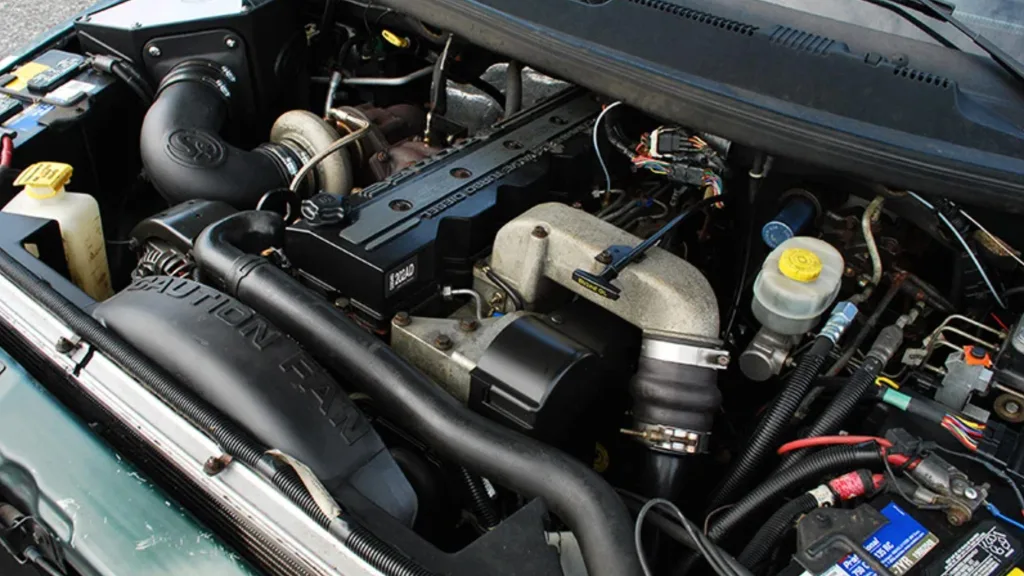
The input in the context of the RAM 2500 could refer to various features and components depending on the context. Generally, in automotive terms, "input" can refer to the inputs that drivers use to control and interact with the truck's systems or to the types of engines and drivetrains the vehicle can be equipped with. Here are a few ways "input" applies to the RAM 2500: 1. Engine and Drivetrain Input (Powertrain) The RAM 2500 is available with several powerful engine options, which deliver the necessary input (power) for towing, hauling, and off-road capabilities. Key engines include: 5.7-liter HEMI V8: Provides 383 horsepower and 400 lb-ft of torque. 6.4-liter HEMI V8: Offers 410 horsepower and 429 lb-ft of torque. 6.7-liter Cummins Turbo Diesel: Delivers 370 horsepower and 800 lb-ft of torque, making it ideal for heavy-duty towing and hauling. These engines serve as the primary input for power, which is then transferred through a 6-speed automatic transmission (or an optional manual in some configurations) to the drivetrain. 2. Driver Inputs (Controls and Interfaces) The truck’s interior features various input systems that allow the driver to control and interact with the vehicle: Infotainment System (Uconnect): This includes a touchscreen (usually 8.4 inches or optional 12 inches in higher trims) where the driver inputs commands for navigation, media, climate control, and vehicle settings. Climate Controls: Physical buttons and knobs to adjust temperature, fan speed, and airflow. Steering Wheel Controls: These buttons allow the driver to interact with the infotainment system, cruise control, and other vehicle settings without taking their hands off the wheel. Gear Shift and Pedal Inputs: The driver uses the gear shift and clutch (if applicable) to control the vehicle’s movement. In an automatic transmission, this is often a dial or lever input. 3. Towing Input The RAM 2500 is equipped with advanced towing and trailer management systems. Some models have a Towing Assist Input, where the truck allows the driver to input specific towing configurations, such as: Trailer brake controls: To adjust the braking force when towing heavy loads. Weight distribution and sway control: Inputs to ensure the truck’s stability when towing heavy trailers. 4. Off-Road Inputs (For Off-Road Trims) In off-road-focused trims like the Power Wagon or Rebel, the truck offers input systems for: 4WD controls: Switches and dials that allow the driver to select 4WD, locking differentials, and adjust off-road driving modes. Suspension height and other off-road features: Input options that allow the driver to control suspension settings for different terrains. 5. Vehicle Feedback and Sensor Inputs The RAM 2500 is equipped with various sensors that provide input to the truck’s safety and driver assistance systems: Parking sensors: Inputs that alert the driver to nearby obstacles when reversing or parking. Adaptive cruise control: This system receives inputs from radar and cameras to adjust the vehicle's speed based on traffic conditions. Conclusion In the RAM 2500, "input" can refer to several systems, from the engine’s powertrain inputs that provide performance to the controls and feedback systems that allow the driver to interact with the truck. Whether it's the way the truck's systems are controlled, how the power is delivered, or the data the truck gathers to improve performance and safety, these inputs work together to provide a robust and responsive driving experience.

How Fast Can A 2500 RAM 2018 Larium Go

How Fast Can A 2500 RAM 2018 Larium Go

The RAM 2500 Laramie 2018 is a truck designed to dominate the roads with its heavy-duty performance, power, and luxurious features. Built for both work and play, the RAM 2500 Laramie offers incredible towing capabilities, off-road prowess, and the comfort of a premium vehicle. But when it comes to performance, one common question arises: How fast can the 2018 RAM 2500 Laramie go? While this vehicle isn’t designed with speed as its main selling point, it’s still impressive in terms of its performance. Let’s break down what makes this heavy-duty truck tick, its performance specifications, and why it’s a perfect vehicle for those who need power, comfort, and utility. RAM 2500 Laramie: Built for Toughness The 2018 RAM 2500 Laramie is a workhorse, built to carry heavy loads and haul everything from construction equipment to RVs. This truck is part of RAM’s 2500-series lineup, which is known for its impressive towing and payload capabilities. The Laramie trim, in particular, offers a balance of rugged capability and luxurious interior features, making it one of the most popular models for drivers looking for both work and play. Performance Features: Engines and Powertrain The 2018 RAM 2500 Laramie offers several powerful engine options, which determine its overall performance capabilities, including speed. Let’s take a look at the key engines: 5.7-liter HEMI V8: This engine is the more traditional gasoline-powered option for the RAM 2500. It delivers 383 horsepower and 400 lb-ft of torque, providing more than enough power for heavy-duty tasks. This engine is paired with a 6-speed automatic transmission and can tow up to 13,890 pounds when properly equipped. The performance of the HEMI V8 engine gives the truck enough power for everyday tasks while still delivering a reasonable level of speed for a heavy-duty pickup. 6.7-liter Cummins Turbo Diesel Inline-6: For those looking for even more torque and pulling power, the 6.7-liter Cummins turbo diesel engine is a popular choice. It provides an impressive 370 horsepower and 800 lb-ft of torque, making it ideal for towing and hauling heavy loads. With this engine, the RAM 2500 Laramie can tow up to an astounding 17,980 pounds. This engine is typically paired with a 6-speed automatic or an optional 6-speed manual transmission. While the Cummins diesel engine is known for its pulling power, it’s not the best choice for speed, as it prioritizes low-end torque for towing performance. 6.4-liter HEMI V8: For those who need a balance of power and performance, the 6.4-liter HEMI V8 engine is another option that delivers 410 horsepower and 429 lb-ft of torque. It provides more torque than the 5.7-liter HEMI and offers superior towing capabilities, maxing out at 16,320 pounds. How Fast Can the 2018 RAM 2500 Laramie Go? While the 2018 RAM 2500 Laramie isn’t designed to compete with sports cars or performance sedans, it still has respectable performance in terms of top speed. The top speed of the RAM 2500 Laramie, depending on the engine and model configuration, is estimated to be between 110 mph and 120 mph (177 km/h and 193 km/h). This is pretty fast for a heavy-duty truck, especially when considering its size and purpose. However, speed isn’t the primary focus of the RAM 2500 Laramie. Its true strength lies in its towing capabilities, off-road ability, and overall durability. It’s a truck that’s made to work, and its performance is optimized for handling heavy payloads and rough terrain. Towing and Payload: A Workhorse in Every Sense One of the most notable features of the 2018 RAM 2500 Laramie is its towing and payload capabilities. It’s designed to handle massive loads, making it the perfect vehicle for anyone who needs to tow trailers, boats, or heavy equipment. Here's a breakdown of what you can expect: Maximum Towing Capacity: With the 6.7-liter Cummins Turbo Diesel engine, the 2018 RAM 2500 Laramie can tow up to 17,980 pounds, which is exceptional for a heavy-duty pickup. This makes it one of the top choices for people who need to haul large trailers, RVs, or construction equipment. Payload Capacity: The truck is also designed to carry heavy payloads. Depending on the configuration, the RAM 2500 Laramie can carry up to 3,990 pounds of payload, meaning it can handle a significant amount of gear and equipment in the truck bed. Whether you’re looking to haul a boat for the weekend or transport construction materials, the RAM 2500 Laramie’s towing and payload capabilities make it a top contender in the heavy-duty truck segment. Comfort and Interior Features: Luxury Meets Utility While the RAM 2500 Laramie is all about performance, RAM didn’t forget about comfort. This truck is part of the Laramie trim, which is known for its luxury features. The interior is equipped with high-quality materials and a range of advanced technology features, making long drives more comfortable. Some notable features include: Leather-trimmed seating: The Laramie trim features premium leather seats, offering a touch of luxury in this heavy-duty truck. Uconnect Infotainment System: The Uconnect system includes a large touchscreen, Bluetooth connectivity, navigation, and a premium sound system, ensuring you stay connected and entertained on the road. Heated and Ventilated Seats: For added comfort, especially on longer drives, the front seats are both heated and ventilated, allowing you to stay comfortable in any weather. Spacious Cabin: The RAM 2500 Laramie offers ample space for both the driver and passengers. The rear seats in the crew cab provide plenty of legroom, making it a great choice for families or those who regularly travel with passengers. Off-Road Capability: A Truck Built for Adventure For those who like to take their truck off the beaten path, the RAM 2500 Laramie offers excellent off-road performance. It’s equipped with features like an available 4WD system, locking rear differential, and off-road tires to ensure that it can tackle any terrain. The Rebel and Power Wagon trims offer even more advanced off-road features, including lifted suspensions, skid plates, and electronic sway bars. Whether you’re heading to the mountains, navigating rough construction sites, or exploring trails, the RAM 2500 Laramie can handle it all, making it an ideal choice for those who want a truck that can do double duty on the job site and in the great outdoors. Conclusion: The 2018 RAM 2500 Laramie – A Truck That Does It All The 2018 RAM 2500 Laramie is an exceptional heavy-duty pickup truck that combines power, performance, and luxury. With impressive towing capabilities, a comfortable and luxurious interior, and rugged off-road features, this truck is perfect for anyone who needs a workhorse that can also provide a smooth, comfortable ride. While its top speed might not be the main selling point, the RAM 2500 Laramie still impresses with its ability to reach speeds of up to 120 mph, making it an all-around performer in every way that matters. Whether you're hauling heavy loads, tackling rough terrain, or cruising down the highway, the RAM 2500 Laramie proves it can do it all. If you're in the market for a powerful, versatile truck that offers both performance and luxury, the 2018 RAM 2500 Laramie is a top choice.

ram 2500

How To Replace Clutch Safety Switch RAM 2500

How to Replace the Clutch Safety Switch on a RAM 2500 The clutch safety switch is an important component in your RAM 2500’s electrical system. This switch is designed to prevent the vehicle from starting unless the clutch pedal is fully depressed, ensuring the vehicle doesn’t accidentally lurch forward or backward when started in gear. Over time, the clutch safety switch can wear out or malfunction, leading to starting issues. If your RAM 2500 won’t start or experiences issues with starting in gear, replacing the clutch safety switch may solve the problem. In this blog, we’ll walk you through the steps to replace the clutch safety switch on a RAM 2500, so you can get your truck back on the road safely. What You’ll Need: Before you start the replacement process, make sure you have the following tools and materials: New clutch safety switch (compatible with RAM 2500) Wrench set or socket set Ratchet and extensions Flathead screwdriver Safety gloves and glasses Vehicle jack and jack stands (optional) Rags for cleanup Step-by-Step Guide to Replacing the Clutch Safety Switch 1. Disconnect the Battery As a safety precaution, always disconnect the vehicle’s battery before working on any electrical components. Use a wrench to remove the negative terminal (black) from the battery. This will ensure that you don’t accidentally cause any electrical short circuits while replacing the clutch safety switch. 2. Locate the Clutch Safety Switch The clutch safety switch is typically located near the clutch pedal assembly inside the cab of your RAM 2500. You'll need to remove the panels or cover beneath the dashboard to access the switch. In most cases, the clutch safety switch is attached to the clutch pedal bracket, just above the floorboard. If you have trouble finding it, refer to the owner’s manual for the exact location. 3. Remove the Old Clutch Safety Switch Once you have located the clutch safety switch, examine it to see how it’s secured in place. The switch may be held by screws, bolts, or clips, depending on the specific year and model of your RAM 2500. Use your wrench or socket set to remove the fasteners. After removing the fasteners, gently pull the switch off the pedal bracket. You may need to disconnect the electrical connector that links the switch to the vehicle’s wiring system. Use a flathead screwdriver to carefully release the clips and unplug the connector. 4. Install the New Clutch Safety Switch Take the new clutch safety switch and plug it into the wiring connector. Make sure it fits snugly and that the connector is secure. Position the switch into the bracket where the old one was located. Secure the switch in place with the fasteners you removed earlier, ensuring it’s firmly attached and aligned properly. 5. Test the New Switch Before reassembling everything, it’s important to test the new clutch safety switch. With the vehicle still off and the battery disconnected, depress the clutch pedal fully and check that the switch engages correctly. This is important for ensuring that the vehicle won’t start unless the pedal is fully pressed. Reattach the connector to the clutch pedal assembly if necessary, and make sure there is no interference with the pedal’s normal operation. 6. Reassemble and Reconnect the Battery Once you’ve confirmed that the new switch is working as it should, you can start reassembling the components you removed to access the switch. Replace any panels or covers under the dashboard that were taken off, and use a wrench to reconnect the negative battery terminal. 7. Test the Vehicle Finally, start the vehicle to make sure the new clutch safety switch is functioning properly. The vehicle should only start when the clutch pedal is depressed. If the truck starts correctly and you experience no further issues, you’ve successfully replaced the clutch safety switch! Troubleshooting If you continue to have issues after replacing the clutch safety switch, consider these troubleshooting tips: Check for Wiring Issues: Inspect the wiring harness and connectors for damage. If the wiring is frayed or loose, it could cause the clutch safety switch to malfunction. Verify Switch Alignment: Make sure the new clutch safety switch is properly aligned and secured in the correct position. Check the Clutch Pedal Travel: Ensure the clutch pedal is fully depressed when starting the vehicle. If the pedal is not fully engaging the switch, the vehicle won’t start. Conclusion Replacing the clutch safety switch on your RAM 2500 is a straightforward process that can save you from costly repairs and headaches down the road. By following these steps, you can ensure that your truck will only start when the clutch is engaged, making your driving experience safer and more reliable. Always remember to take the necessary safety precautions, such as disconnecting the battery, before working on your vehicle’s electrical system. If you’re ever unsure about replacing the clutch safety switch yourself, consider taking your RAM 2500 to a professional mechanic or service center for assistance. A well-maintained clutch safety switch can make a huge difference in the performance and safety of your truck!

ram pickup truck

Is RAM Discontinuing the 1500?

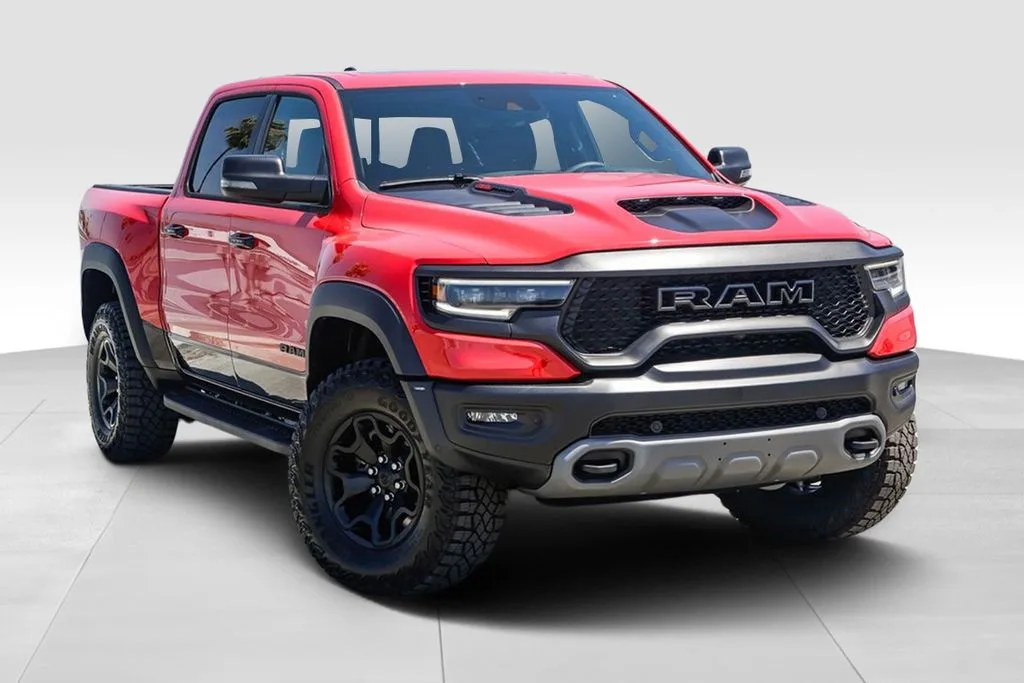
Is RAM Discontinuing the 1500? Here’s What We Know The RAM 1500 has long been a favorite in the full-size pickup truck market, offering a powerful blend of performance, luxury, and utility. As one of the top contenders in a highly competitive segment dominated by trucks like the Ford F-150 and Chevrolet Silverado, the RAM 1500 has earned its place as a staple on both job sites and city streets. But with so many rumors swirling around the automotive industry, many are left asking: Is RAM discontinuing the 1500? Let’s dive into the speculation and set the record straight. RAM 1500: A Legacy of Power and Performance Before we get into the rumor mill, it’s important to recognize just how iconic the RAM 1500 has become. Known for its exceptional towing capacity, smooth ride quality, and cutting-edge technology, the RAM 1500 has earned a reputation as a truck that can do it all. From hauling heavy loads to providing a comfortable ride for daily commuters, this truck has stood the test of time. The 1500 is also widely regarded for its diverse trim options, including the rugged Rebel, luxurious Limited, and the high-performance TRX, which offers an unmatched blend of off-road capability and power with its 702-horsepower supercharged V8 engine. These models make the RAM 1500 one of the most versatile trucks on the market, catering to both workhorse needs and high-end demands. Is RAM Really Discontinuing the 1500? While the rumors of RAM discontinuing the 1500 have stirred up some concern among truck enthusiasts, there’s no official confirmation that the 1500 is going anywhere. RAM has been making bold moves in the pickup truck segment, with the announcement of the RAM 1500 REV, an all-electric version of their beloved truck. However, this shift toward electrification doesn’t necessarily mean that the traditional gas-powered 1500 is going to be discontinued. Instead, the introduction of the electric RAM 1500 REV is more of an expansion of RAM's offerings in response to the growing demand for electric vehicles. With the automotive industry increasingly moving toward sustainability and EV adoption, RAM is clearly ensuring it remains competitive in this space. But that doesn’t mean they’re giving up on their flagship 1500 model, which continues to be one of the best-selling trucks in North America. The RAM 1500 REV: The Future of Pickup Trucks? The RAM 1500 REV, announced as the brand’s first all-electric pickup, certainly adds fuel to the fire of speculation. Many have wondered if the traditional gas-powered 1500 will eventually be phased out in favor of its electric counterpart. But here’s the key: RAM’s strategy seems to be one of offering choice, not eliminating options. With the 1500 REV, RAM is diving into the future of electric trucks, aiming to compete with the likes of the Ford F-150 Lightning and Rivian R1T. The REV is designed to meet the growing consumer demand for zero-emission vehicles while still delivering the power and utility that RAM trucks are known for. This new electric option gives buyers a sustainable alternative without forcing them to completely abandon their love for the rugged, gas-powered 1500. As a result, RAM seems committed to continuing both the traditional 1500 and its electric version, catering to a wider range of customers. For those who prefer the traditional, muscle-powered engine, the gas-powered 1500 will likely remain a mainstay in the lineup for the foreseeable future. Why RAM Is Likely to Keep the 1500 Around Here’s the reality: the RAM 1500 is one of the most popular trucks in the world. Discontinuing it would be a huge risk for the brand. The demand for pickups in North America remains extremely strong, with more consumers opting for trucks that offer both practicality and comfort. RAM's competitors, like the Ford F-150 and Chevrolet Silverado, continue to dominate the segment, and the 1500 is RAM’s answer to this competition. Removing such a cornerstone model would be a massive strategic misstep. Additionally, the 1500 continues to evolve with new features and technology, making it highly relevant in today’s market. From advanced driver-assistance systems (ADAS) to the latest in infotainment and connectivity, the 1500 remains a cutting-edge vehicle that offers both performance and luxury. In short, there’s little reason for RAM to retire the 1500 anytime soon. What Does This Mean for RAM Truck Enthusiasts? For RAM fans and truck enthusiasts, there’s no need to panic. While the industry is certainly shifting toward electric vehicles, RAM’s long-standing commitment to its 1500 lineup means that it will continue to be a fixture in their portfolio. In fact, the introduction of the 1500 REV only broadens the options available to consumers, providing more choices than ever before. If you’re someone who loves the rumble of a V8 engine or the towing power of a traditional gas-powered truck, rest assured: the RAM 1500 is here to stay. But if you’re looking to make the leap into the world of electric trucks, the RAM 1500 REV offers a thrilling new alternative that still embodies the same ruggedness and utility that RAM is known for. Conclusion: The RAM 1500’s Future Is Secure Is RAM discontinuing the 1500? The answer is clear: No, the RAM 1500 is not being discontinued. Instead, RAM is making a move into the future with the 1500 REV while keeping the gas-powered 1500 around for those who prefer traditional powertrains. With an eye on both sustainability and performance, RAM is positioning itself as a leader in the truck market for years to come. So, whether you’re a die-hard fan of the classic V8 or excited about the possibilities of an electric pickup, RAM has you covered. The future of the 1500 is bright, and with the introduction of the REV, RAM is ensuring it remains a major player in the evolving world of trucks. If you’re looking for a truck that can do it all, the RAM 1500 is still the one to beat—and it’s not going anywhere anytime soon.

Screenshot

Which Ram 2500 Engine is the Best For California?

Screenshot ===== BLOG: Which Ram 2500 Engine Is Best for California ===== The Ram 2500 remains a benchmark for capability and toughness, but choosing the right engine in California requires more than just horsepower bragging rights. From navigating LA’s stop-and-go traffic to hauling up the Grapevine or towing through the Sierras, your engine choice directly affects performance, fuel economy, and long-term cost of ownership. This guide breaks down the two primary powertrains — the 6.4L HEMI® V8 and the 6.7L Cummins® Turbo Diesel — and explains which is better suited for California’s unique terrain, emissions standards, and driving habits. Ram 2500 Engine Options in 2025 6.4L HEMI® V8 (Gas) — 410 hp / 429 lb-ft of torque, paired with an 8-speed automatic. Standard on all trims. 6.7L Cummins® Turbo Diesel (High-Output) — 430 hp / 1,075 lb-ft of torque, new 8-speed HD TorqueFlite automatic, optional on heavy-duty trims. Both engines meet California’s strict CARB emissions standards and feature technologies designed to balance power with environmental compliance. Performance Across California Conditions City Driving (Los Angeles, San Diego, Bay Area) For daily commutes with limited towing, the HEMI V8 delivers quicker throttle response, smoother low-speed operation, and fewer emissions-related maintenance tasks. It thrives in traffic and short-trip scenarios where diesels may struggle to reach ideal operating temperatures. Highway & Mountain Routes (I-5 Grapevine, Hwy 395, Sierra Nevada) Drivers who frequently tow campers or trailers through steep grades will appreciate the Cummins HO Diesel. Its immense torque allows steady climbs at low RPMs, excellent exhaust braking downhill, and improved fuel efficiency on long hauls. Coastal & Rural Areas Along Highway 1 or rural farmland routes, both engines perform admirably, but the diesel shines for owners regularly hauling boats, RVs, or farm equipment thanks to its superior range and pulling strength. Fuel Economy & Ownership Costs 6.4L HEMI V8: Averages ≈ 13–15 MPG city / 17–18 MPG highway (unladen). Lower upfront cost and simpler upkeep. 6.7L Cummins Diesel: ≈ 15–17 MPG city / 20–22 MPG highway. Requires DEF (Diesel Exhaust Fluid) and periodic DPF regeneration but benefits from superior towing efficiency and resale value. In California, diesel prices often run $0.70–$1.00 higher per gallon than gasoline, but the efficiency gain under load and long-term durability can offset the difference for frequent haulers. Emissions Compliance & Maintenance in California California’s Air Resources Board (CARB) mandates strict emissions controls. Both engines comply, but each demands unique upkeep: HEMI V8: Simpler catalytic-converter system, standard smog test every 2 years (except new vehicles ≤ 6 yrs). Diesel Cummins: Includes DPF and SCR after-treatment requiring DEF fills and occasional regeneration cycles. Diesel smog inspections apply at registration renewal. Comparative Use-Case Table Category 6.4L HEMI V8 6.7L Cummins Diesel (HO) Best for City commutes, light towing, jobsite payloads Heavy towing, long-distance hauling, mountain routes Max Towing ≈ 17,000 lb (config dependent) ≈ 20,000 lb (config dependent) Payload Higher payload capacity thanks to lighter engine Lower payload but greater towing torque Maintenance Oil every 6 months or 8k miles Oil every 10–12k miles + DEF service Expert Recommendation for California Drivers Choose the 6.4L HEMI V8 if your Ram 2500 is a daily driver in California traffic with occasional towing. It’s cleaner to maintain and complies easily with state smog regulations. Choose the 6.7L Cummins Diesel (HO) if you regularly haul trailers, fifth-wheels, boats, or construction loads across the state. The new 8-speed HD transmission improves drivability while maintaining legendary Cummins torque and longevity. Find Your Perfect Ram 2500 in California At Simi Valley Chrysler Dodge Jeep Ram, our team serves drivers from Los Angeles to Ventura and beyond. We can help you test-drive both the HEMI and Cummins models and determine which fits your budget and lifestyle. California & Simi Valley Maps Simi Valley Chrysler Dodge Jeep Ram 2350 1st Street, Simi Valley, CA 93065 | Sales: 805-387-9755 Frequently Asked Questions Which Ram 2500 engine has the highest towing capacity? The 6.7L Cummins Turbo Diesel High-Output offers up to 20,000 lb of towing capacity (depending on trim and axle ratio), making it California’s choice for serious towing and commercial use. Is the gasoline HEMI V8 better for short California drives? Yes. The HEMI V8 warms up faster and avoids diesel regeneration cycles that can be inconvenient for frequent short trips in cities like LA or San Francisco. Does California require extra smog tests for diesel trucks? Yes. California requires diesel vehicles to pass a biennial smog inspection after registration renewal under the Clean Truck Check program unless exempted by model year or weight. Can I buy a Ram 2500 diesel anywhere in California? Absolutely. All Cummins-equipped Ram 2500 models sold at California dealerships meet CARB certification standards and are 50-state legal. ===== SCHEMA =====

How To Remove Infotainment System On 2024 RAM 1500

The 2024 RAM 1500 is packed with advanced technology, and its infotainment system is one of the standout features, providing drivers with everything from navigation to media controls. However, whether you're looking to upgrade, replace, or repair the infotainment system, removing it can be a challenging task. If you're a DIY enthusiast or simply want to save on labor costs, this comprehensive guide will walk you through how to safely and effectively remove the infotainment system from your 2024 RAM 1500. Before You Begin: Key Considerations Removing the infotainment system in your RAM 1500 involves working with sensitive electronic components. It's important to take proper precautions to avoid damage to the unit or your vehicle’s interior. If you're not comfortable working with electronics or removing components, you may want to consider consulting a professional. Additionally, remember that modern vehicles like the 2024 RAM 1500 are designed with safety features, including airbags and electrical components that can be activated or damaged if mishandled. Therefore, always proceed with caution. Here’s everything you’ll need to know about how to remove your 2024 RAM 1500’s infotainment system: Tools and Materials Required Before you start the process of removing the infotainment system, it’s crucial to have the right tools to prevent damage to your vehicle’s interior and the infotainment system itself. Here’s a list of the tools you’ll need: Trim Removal Tool: This plastic tool helps you safely remove trim panels without scratching or damaging them. Socket Wrench or Torx Screwdriver: Depending on your vehicle, you’ll need either a socket wrench or a Torx screwdriver to remove screws that hold the infotainment system in place. Flat-Head Screwdriver: This can be useful for prying off stubborn trim panels if they don't come off easily with the trim tool. Safety Gloves: These will help protect your hands from sharp edges and electrical components. Pen or Marker: This will help you label connections if you plan to reconnect the system or install a new one. Multimeter (Optional): For checking the electrical connections before you disconnect them. Once you have these tools, you’re ready to get started! Step 1: Disconnect the Battery Before you begin removing any electronic components in your RAM 1500, it’s essential to disconnect the battery. This is a safety precaution that prevents any electrical shock or accidental deployment of airbags during the process. Here’s how to do it: Open the hood of your RAM 1500 and locate the battery. Use a wrench to loosen the nut on the negative terminal (marked with a “-” sign). Once the negative terminal is disconnected, ensure it is secured away from the battery, so it doesn’t accidentally touch the battery terminal during the process. Pro Tip: Always disconnect the negative terminal first and reconnect it last to avoid electrical issues. Step 2: Remove the Dashboard Trim Surrounding the Infotainment System The infotainment system on the 2024 RAM 1500 is housed within the dashboard, and the first step is to remove the trim that surrounds it. Here's how to do it: Locate the Trim: Identify all the trim pieces around the infotainment system, including any panels or covers that frame the screen and controls. Use the Trim Removal Tool: Insert the trim removal tool into the gap between the trim panel and the dashboard. Gently pry the trim away from the dashboard. Work around the edges slowly and carefully to avoid cracking the trim. Set the Trim Aside: Once the trim panel is removed, set it aside in a safe place to prevent scratching or damage. If there are any screws holding the trim in place, use the appropriate screwdriver to remove them first before pulling off the panel. Step 3: Remove Any Screws or Bolts Holding the Infotainment System With the trim removed, you’ll now need to remove any screws or bolts that are holding the infotainment system in place. This is where the socket wrench or Torx screwdriver comes into play. Locate the Screws: Depending on your truck's configuration, there may be screws along the edges of the infotainment system. These can usually be seen once the trim panels are removed. Remove the Screws: Using the appropriate tool, remove the screws holding the infotainment system in place. Make sure to keep track of these screws, as you will need them when reinstalling the system. Check for Other Fasteners: In some cases, there may be additional fasteners hidden underneath the trim or behind the display, so check thoroughly. Step 4: Pull the Infotainment System Forward Now that all screws and bolts have been removed, you can start pulling the infotainment system forward. Be careful, as there may still be wires and cables attached to the back of the unit. Gently Pull the Unit: Hold the edges of the infotainment system and gently pull it forward. Take your time to avoid putting too much pressure on the unit. Check for Cables: As you pull the system out, you will notice various cables and wiring connectors attached to the back of the unit. Be careful not to tug too hard on these cables, as this could damage them. Step 5: Disconnect the Wiring and Cables Once the infotainment system is partially out, it’s time to disconnect all of the cables attached to the back of the unit. These are typically plug-and-play connections, but it's still important to be gentle and cautious. Label the Cables: Before disconnecting any wires, use a pen or marker to label the cables. This will help you reconnect them correctly if you plan to reinstall the same unit or install a new one. Disconnect the Wiring: Press on the release tabs of each connector and gently pull the cables off. There may be a few different connectors depending on the model of your infotainment system (e.g., for the touchscreen, navigation, audio, and climate control). Remove the System: Once all cables are disconnected, you can fully remove the infotainment system from the dashboard. Set the unit on a soft surface to prevent scratches or damage. Step 6: Install the New Infotainment System (If Applicable) If you’re replacing the old system with a new one, the process for installation is essentially the reverse of removal. Here’s how to install the new infotainment system: Reconnect the Wiring: Take the new infotainment system and carefully reconnect all the cables, following the labels you made earlier. Secure the System: Slide the new system into the dashboard, ensuring it fits properly. Once it’s in place, screw in the fasteners that hold the unit in place. Reattach the Trim: Replace the dashboard trim around the infotainment system, securing it with screws and snapping it back into place. Reconnect the Battery: Finally, reconnect the negative terminal of the battery and tighten the nut. Start the engine to check that the infotainment system is functioning correctly. Step 7: Test the System Before closing everything up, it’s important to test the new or repaired infotainment system to make sure everything is working properly: Turn on the truck and check the functionality of the screen, audio system, navigation, and any other features tied to the infotainment system. Ensure that the system responds to touch or button inputs correctly. Check for any issues with connectivity, such as Bluetooth or Wi-Fi. Conclusion: Removing the Infotainment System on Your 2024 RAM 1500 Removing the infotainment system from your 2024 RAM 1500 can seem like a daunting task, but with the right tools, patience, and care, it’s entirely possible to do it yourself. Whether you’re upgrading to a better unit, making repairs, or simply exploring your vehicle’s internal components, this step-by-step guide has provided you with all the information you need to safely and effectively remove the infotainment system. Remember, if you’re not comfortable handling electronic components or working with your truck’s dashboard, don’t hesitate to consult a professional to ensure the job is done correctly. By following this guide, you’ll be well on your way to successfully removing and replacing your RAM 1500’s infotainment system.

Can You Add RAM 1500 Parking SensorsCan You Add RAM 1500 Parking Sensors

Can You Add RAM 1500 Parking Sensors

ad1 The Ram 1500 is a rugged and powerful truck, built to handle heavy-duty tasks with ease. However, when it comes to parking and maneuvering in tight spaces, even the most experienced drivers can appreciate a little extra help. This is where parking sensors come into play. If your Ram 1500 didn't come equipped with parking sensors from the factory, you might be wondering: Can you add RAM 1500 parking sensors? The answer is yes, and this blog will walk you through everything you need to know about upgrading your Ram 1500 with parking sensors. Parking sensors, also known as proximity sensors or sonar sensors, are designed to alert you to obstacles in your vehicle’s path, making parking in tight spaces safer and more convenient. They work by emitting ultrasonic waves that bounce back when they hit an object, alerting the driver with a beeping sound that intensifies as the vehicle gets closer to the object. In this article, we’ll cover the types of parking sensors, how to add them to your Ram 1500, the benefits, installation considerations, costs, and what to expect in terms of functionality. Types of Parking Sensors Before we dive into how you can add parking sensors to your Ram 1500, it’s important to understand the types of sensors available. The two most common types of parking sensors are ultrasonic sensors and electromagnetic sensors. 1. Ultrasonic Parking Sensors Ultrasonic sensors are the most popular choice for parking sensor systems in modern vehicles, including the Ram 1500. These sensors use sound waves to detect objects and measure the distance between the vehicle and the obstacle. The sensors emit ultrasonic waves, and when they bounce back from an object, the system calculates the distance and alerts the driver with audible or visual signals. Ultrasonic sensors are typically installed in the bumper and can detect objects in front, behind, and sometimes around the vehicle. ad1 Advantages: Accurate, widely available, works well in a variety of weather conditions. Disadvantages: Can be affected by extreme weather or icy conditions. 2. Electromagnetic Parking Sensors Electromagnetic parking sensors work by creating an electromagnetic field around the vehicle. When an object enters this field, the system detects the disturbance and alerts the driver. These sensors are typically installed inside the bumper or behind the vehicle’s body panels. Electromagnetic sensors don’t require drilling, which is a benefit if you’re concerned about damaging your vehicle’s exterior. Advantages: Easy installation with no drilling required, works well in all weather conditions. Disadvantages: May not be as precise as ultrasonic sensors. Both sensor types have their pros and cons, but ultrasonic sensors are by far the more popular choice for adding parking sensors to a Ram 1500, as they offer better accuracy and reliability for parking situations. How to Add Parking Sensors to a RAM 1500 If your Ram 1500 doesn’t already have parking sensors, you can certainly add them with a custom retrofit or aftermarket kit. Whether you want to install sensors in the front, rear, or both, there are a few different options available. Let's explore your choices for adding parking sensors to your truck. 1. Aftermarket Parking Sensor Kits Aftermarket parking sensor kits are a great way to upgrade your Ram 1500 without the high cost of a dealership-installed solution. These kits typically include ultrasonic sensors, a control module, a speaker, and all the wiring needed for installation. They also often come with instructions or videos to help you through the process. Cost: Aftermarket kits typically range from $100 to $500 depending on the quality of the sensors and the features offered. Installation: While some kits are designed for DIY installation, others may require professional help. Generally, installation involves mounting the sensors on the front or rear bumper, running wires to the control unit, and connecting the system to the truck’s electrical system. 2. Factory Retrofit Kits If you’re looking for a more seamless and factory-quality installation, you can opt for a Ram factory retrofit kit. Some dealerships offer parking sensor kits that are designed specifically for the Ram 1500. These kits are designed to integrate perfectly with your truck’s existing systems and typically come with a higher price tag. ad1 Cost: Factory retrofit kits are more expensive and can range from $400 to $1,000, depending on whether it’s a front or rear installation and the model year of your Ram 1500. Installation: While these kits are usually easier to install than aftermarket kits, professional installation is still recommended to ensure compatibility and proper function. 3. Custom Installation (Professional Service) If you're not comfortable with DIY installation or want the job done by professionals, you can have parking sensors installed by an experienced technician. This is the most expensive option, but it ensures the job is done correctly and seamlessly. Cost: Professional installation can cost between $300 and $600 or more, depending on the system and whether it involves adding sensors to both the front and rear bumpers. Installation: This will require drilling holes in the bumper to mount the sensors. The technician will wire everything up to the truck’s electrical system and ensure the sensors are calibrated properly. Benefits of Adding Parking Sensors to Your Ram 1500 There are numerous reasons to add parking sensors to your Ram 1500, and these benefits extend beyond just convenience: 1. Improved Safety Parking sensors are an excellent safety feature that can help you avoid accidents when reversing or parking in tight spaces. By providing you with audible warnings of obstacles behind or in front of your vehicle, parking sensors reduce the likelihood of accidentally hitting another vehicle, a pedestrian, or other objects. This can be particularly useful in crowded parking lots, residential areas, or when parking near obstacles like curbs. 2. Enhanced Convenience Parking in tight spots can be a challenge, especially with a large truck like the Ram 1500. Adding parking sensors helps you park more confidently, even in situations where visibility is limited. The sensors allow you to make small adjustments without having to get out of the truck to check your surroundings. 3. Increased Vehicle Resale Value Upgrading your Ram 1500 with parking sensors can also increase its resale value. Many potential buyers consider parking sensors an important convenience and safety feature, especially if they plan to use the truck for daily driving in urban areas. 4. Protect Your Bumpers ad1 Frequent parking in tight spaces can lead to scratches, dents, or even collisions with other vehicles. Parking sensors help you avoid these minor incidents by alerting you to obstacles early enough to prevent damage to your bumpers. Installation Considerations and Costs When deciding whether to install parking sensors in your Ram 1500, it's important to consider both the installation complexity and the costs involved. If you choose an aftermarket kit, DIY installation is often feasible if you’re comfortable with working on vehicles. However, for a more professional installation, or if you want to maintain a factory appearance and functionality, it’s worth opting for a professional service. The total cost will depend on the type of sensor system (aftermarket vs. factory) and whether you choose to install it yourself or hire a professional. On average, the cost of adding parking sensors to your Ram 1500 will fall between $100 and $1,000. Important Note: If you decide to add sensors yourself, ensure that the kit is compatible with your truck’s model year and bumper type (e.g., standard vs. off-road bumpers). Maximizing the Effectiveness of Your Parking Sensors After installation, it’s important to test the sensors and make sure they’re working properly. Here are a few tips to ensure your parking sensors function at their best: Proper Calibration: Ensure the sensors are properly calibrated, so they can accurately detect obstacles. Keep Sensors Clean: Regularly clean the sensors, as dirt, ice, or snow can interfere with their ability to detect objects. Check for Obstructions: Ensure that no items, such as dirt or debris, are obstructing the sensors, as this can lead to false alerts. Conclusion: Is Adding Parking Sensors to Your Ram 1500 Worth It? Incorporating parking sensors into your Ram 1500 is an excellent way to enhance safety, convenience, and the overall driving experience. Whether you choose to go for an aftermarket solution, a factory retrofit, or opt for professional installation, adding parking sensors is a valuable upgrade for your truck. The installation process can be as simple as plugging in an aftermarket kit, or you may prefer a more professional installation for a seamless, factory-quality result. With the affordability, improved safety, and enhanced convenience that parking sensors offer, they are a worthwhile investment for anyone who drives or parks their Ram 1500 regularly. ad1 For more details on adding parking sensors, check out trusted sources like RamForum and VehicleHistory for specific reviews and installation guides that are tailored to your Ram 1500’s model year and setup.

RAM DEALERSHIPS

Ram 1500 V6 Durability Test – Can It Outlast the Competition?

​Are you thinking how long does Ram 1500 last? We will get to know about that today. The Ram 1500 V6 is one of the most durable and reliable full-size trucks on the market. Known for its powerful performance and longevity, the V6 variant has become a popular choice for both work and daily driving. But how long can you realistically expect a Ram 1500 V6 to last? With proper maintenance and care, a well-maintained Ram 1500 V6 can last for many years and hundreds of thousands of miles. In this article, we’ll dive into the expected lifespan of the Ram 1500 V6, factors that influence its longevity, maintenance costs, reliability considerations, and tips for maximizing its lifespan. Expected Mileage of the Ram 1500 V6 A well-maintained Ram 1500 V6 can typically last between 200,000 and 300,000 miles. This impressive range is consistent with the durability of the Ram 1500 lineup as a whole, which is known for its solid construction and long-lasting performance. Some Ram 1500 owners have reported even higher mileage figures, surpassing the 300,000-mile mark, thanks to diligent care and regular maintenance. While specific data on the V6 variant is limited, it's helpful to look at the overall performance and lifespan of the Ram 1500 series to gauge expectations. The engine, transmission, and other key components of the Ram 1500 V6 are built to handle high-mileage driving when properly maintained, making it a long-term investment for many truck owners. Factors Affecting Longevity of the Ram 1500 V6 The lifespan of any vehicle, including the Ram 1500 V6, is influenced by several key factors. Let’s take a look at the most important elements that can impact the longevity of your truck: 1. Maintenance Regular maintenance is the single most crucial factor in determining how long your Ram 1500 V6 will last. Consistent oil changes, fluid checks, tire rotations, brake inspections, and following the manufacturer’s recommended maintenance schedule will keep your truck in top shape. Neglecting routine maintenance can lead to a series of issues that may reduce your truck’s lifespan. For the Ram 1500, the Pentastar 3.6L V6 engine is generally very reliable when serviced regularly. It’s also important to use high-quality fluids and parts during servicing. If you stick to the recommended service intervals, you’ll be giving your V6 engine the best chance at a long lifespan. 2. Driving Habits How you drive your truck plays a significant role in its longevity. Trucks that are used primarily for towing or heavy hauling may experience more wear and tear than those that are used for commuting or light-duty tasks. Aggressive driving, such as rapid acceleration, hard braking, or frequent high-speed driving, can strain the engine and transmission, reducing their overall lifespan. To maximize the life of your Ram 1500 V6, aim for smooth driving habits, avoiding unnecessary strain on the engine, transmission, and suspension systems. 3. Environmental Conditions Exposure to harsh environmental conditions can also shorten the lifespan of any vehicle, including the Ram 1500 V6. Salt on the roads, common in colder climates, can cause corrosion on the undercarriage and other metal components. Extreme temperatures can also put additional stress on the engine and battery. If you live in an area prone to severe weather conditions, regular cleaning and undercoating to protect against rust will help preserve your truck’s longevity. 4. Build Quality The overall quality of the vehicle’s construction has a big impact on how long it lasts. The Ram 1500 is known for its solid build and rugged design, making it a good choice for long-term durability. Additionally, the Pentastar V6 engine is widely regarded as a durable powerplant, known for its solid performance and reliability. The truck’s frame, suspension, and drivetrain are all engineered to endure years of tough use. Maintenance Costs of the Ram 1500 V6 One of the major factors that influence the longevity of the Ram 1500 V6 is the maintenance costs. Fortunately, the Ram 1500 is relatively affordable to maintain compared to many other trucks in its class. The average annual repair cost for a Ram 1500 is approximately $691, which is lower than many competitors, especially those in the full-size truck category. Regular maintenance costs, such as oil changes, tire rotations, brake pad replacement, and fluid checks, are generally manageable and contribute to the overall longevity of the vehicle. However, as the truck ages, certain components may require more expensive repairs, such as the transmission or suspension system. That being said, because the truck is built with durability in mind, it remains one of the more cost-effective options in terms of long-term maintenance. Reliability Considerations for the Ram 1500 V6 The Ram 1500 is generally considered to be a reliable vehicle, but like any truck, there are occasional issues that can arise. For example, some owners have reported issues with lifter problems in the Hemi V8 engine, which resulted in a class-action lawsuit. However, this specific issue does not directly apply to the V6 model, which has a good reputation for reliability. That said, early model years of the Ram 1500 may have had more issues compared to newer models. For example, some 2012-2013 Ram 1500 trucks experienced problems with the air suspension system, but these issues have been addressed in more recent models. As with any vehicle, it’s essential to stay on top of any potential recalls or service bulletins that may apply to your specific model year. The Pentastar V6 engine, found in most recent Ram 1500 V6 models, has been praised for its reliability and strength. It’s not uncommon for these engines to last for well over 200,000 miles with the proper care. Maximizing the Lifespan of Your Ram 1500 V6 To ensure that your Ram 1500 V6 lasts as long as possible, follow these expert tips: 1. Follow the Maintenance Schedule Adhere strictly to the manufacturer’s maintenance schedule. Regular oil changes, fluid checks, and tire rotations are critical to the health of your truck. 2. Address Issues Promptly If any problems arise, address them promptly. Ignoring small issues can cause them to escalate into larger, more expensive problems down the road. 3. Use Quality Parts Always use high-quality replacement parts and fluids during service. Aftermarket parts might be cheaper, but they may not offer the same longevity as OEM (Original Equipment Manufacturer) parts. 4. Protect Against the Elements Keep your truck clean and protect it from rust, especially if you live in an area with heavy snowfall or road salt. Regular washes and undercoating can help prevent corrosion. 5. Drive Responsibly Drive responsibly, avoiding aggressive acceleration and sudden stops. Take care of the truck as if it were an investment, and it will reward you with years of reliable service. Conclusion: How Long Will Your Ram 1500 V6 Last? The Ram 1500 V6 is a reliable, durable truck that can last well beyond 200,000 miles with proper care and maintenance. Some owners have even reported their trucks lasting as long as 300,000 miles or more. With lower-than-average repair costs and a strong reputation for quality, the Ram 1500 V6 stands out as one of the best full-size trucks in terms of longevity. However, the actual lifespan of your vehicle will depend on factors like driving habits, maintenance, environmental conditions, and the overall build quality. By following the manufacturer’s maintenance schedule, addressing issues early, and using high-quality parts, you can ensure that your Ram 1500 V6 performs optimally for many years to come. For more detailed information, check out Vehicle History, Ram Forum.

RAM 1500 Warlock headlights

Can I Put Brighter Headlights In My RAM 1500 Warlock

Upgrading the headlights in your RAM 1500 Warlock can be an exciting way to enhance both the aesthetics and performance of your truck. Brighter, more efficient lighting can improve night driving visibility, making it easier to navigate dark roads and challenging weather conditions. However, before you go ahead and install brighter headlights, it’s essential to understand the different types of headlight options available, the compatibility with your RAM 1500 Warlock, and the legal, safety, and installation considerations that come with such an upgrade. This comprehensive guide will help you explore all these aspects so you can make an informed decision. Why Upgrade to Brighter Headlights? Brighter headlights are not just a cosmetic upgrade. There are several reasons why RAM 1500 Warlock owners opt to upgrade their headlights: Improved Visibility: Brighter headlights provide better illumination on the road, allowing you to see more clearly at night or in low-visibility conditions. This is especially important when driving in rural areas or on poorly lit roads. Enhanced Aesthetic Appeal: Modern headlights, especially LED and HID (High-Intensity Discharge) lights, give a sleek and contemporary look to your truck. With brighter, whiter light, your RAM 1500 Warlock will stand out on the road. Better Durability: LED and HID bulbs often have longer lifespans compared to traditional halogen bulbs, meaning you won’t have to replace them as frequently. Energy Efficiency: LED and HID bulbs are generally more energy-efficient, consuming less power than halogen bulbs while providing brighter light output. What Types of Brighter Headlights Can You Install? There are several options for upgrading your RAM 1500 Warlock’s headlights. Each type has its own set of advantages and considerations, and your choice will depend on your preferences and the type of performance you are looking for. 1. Halogen Bulbs What They Are: Halogen bulbs are the standard headlights that come with most vehicles, including the RAM 1500 Warlock in some configurations. These bulbs use a tungsten filament inside a halogen gas-filled bulb to produce light. Pros: Halogen bulbs are affordable and easy to replace. They are compatible with most vehicles and readily available. Cons: Halogen bulbs are not as bright as newer lighting technologies, and their lifespan is relatively short. Upgrade Potential: You can upgrade to a brighter halogen bulb by choosing higher wattage bulbs, such as 100W halogen replacements. However, keep in mind that using higher wattage bulbs may cause overheating or electrical issues if not installed correctly. 2. LED Headlights What They Are: LED (Light Emitting Diode) headlights are a newer and more advanced lighting option. They use semiconductor materials to produce light and are far more energy-efficient than halogen bulbs. Pros: LED headlights are bright, energy-efficient, and long-lasting. They offer a crisp, white light that enhances visibility without straining your eyes. Additionally, LEDs are available in a wide range of color temperatures, from warm to cool light. Cons: LED headlights can be more expensive than halogen bulbs, but the long lifespan and energy efficiency often offset the initial cost. Some LED kits may require additional components or adapters for proper installation in vehicles that were not originally designed for LED headlights. Upgrade Potential: The RAM 1500 Warlock is an excellent candidate for an LED upgrade. Many truck owners choose to replace their halogen bulbs with LED headlights because of their modern look and superior brightness. Popular options include the Fahren 9005/HB3 LED Headlight Bulbs, which provide a bright, cool white light for optimal night visibility. 3. HID Headlights What They Are: HID (High-Intensity Discharge) headlights use an electric arc to generate light. They are known for their intense brightness and are commonly used in luxury cars and high-performance vehicles. Pros: HID headlights are very bright and have a longer lifespan compared to halogen bulbs. They produce a bluish-white light that offers excellent visibility and can make night driving safer. Cons: HID headlights can be expensive to install and require a ballast to regulate the current. They also consume more power than LEDs, although they are still more energy-efficient than halogen bulbs. Upgrade Potential: HID kits can be installed in the RAM 1500 Warlock, but the process can be more involved than installing LED bulbs. The truck may require additional wiring or modification to fit the HID system. 4. Auxiliary Lighting (LED Light Bars) What They Are: LED light bars are not a direct replacement for the factory headlights but are often added to trucks like the RAM 1500 Warlock for off-road driving or additional nighttime visibility. Pros: These lights are incredibly bright and offer a wide field of illumination. LED light bars are commonly used in off-road applications and provide a significant performance boost. Cons: Light bars can be bulky and require a proper mounting system. They are also typically used in off-road or emergency situations rather than for everyday driving. Upgrade Potential: While not a replacement for factory headlights, adding an LED light bar can enhance your Warlock's nighttime visibility, especially when venturing off the beaten path. Popular options include Rigid Industries LED Light Bars. Is the RAM 1500 Warlock Compatible with Brighter Headlights? Yes, the RAM 1500 Warlock is compatible with a range of brighter headlight upgrades, such as LED and HID lighting. However, it’s important to ensure that any new headlights you install are the right size and fit for your truck’s existing headlight housing. The RAM 1500 Warlock typically uses 9005 bulbs for both high and low beams, so you’ll want to choose headlights that are compatible with this bulb type. Common Headlight Upgrade Options for RAM 1500 Warlock: LED 9005/HB3 bulbs: These are among the most popular LED upgrades for the RAM 1500 Warlock, offering a significant brightness increase compared to halogen bulbs. HID 9005/HB3 kits: If you prefer HID over LED, look for 9005 HID conversion kits, which will give you the brighter light output you're seeking, but be sure to include the necessary ballast for proper operation. Auxiliary LED Light Bars: For off-road visibility, a light bar mounted on the front bumper can give you enhanced illumination, although it's not a replacement for the main headlights. Legal Considerations: Can You Put Brighter Headlights on Your RAM 1500 Warlock? While upgrading your headlights can improve visibility, it’s important to consider the legal implications of such modifications. In many regions, there are strict regulations regarding headlight brightness and beam patterns to ensure the safety of all drivers on the road. Headlight Brightness: Some states or countries have laws that limit the brightness of headlights. Installing overly bright headlights that exceed the legal limits could result in fines or penalties, and in some cases, you may be required to switch back to factory settings. Headlight Beam Pattern: Modifying the headlight beam pattern can lead to glare, which can impair the visibility of other drivers. It’s essential to install headlights that maintain a proper beam alignment to prevent accidents and stay compliant with the law. Vehicle Inspections: In some regions, vehicle inspections may check the legality of headlight upgrades. Be sure to research local laws to ensure that your new headlights meet the necessary requirements for street use. How to Install Brighter Headlights in Your RAM 1500 Warlock Installing brighter headlights in your RAM 1500 Warlock is generally a straightforward process, especially for LED upgrades. Follow these steps: Purchase the Right Bulbs: Make sure the bulbs you choose are compatible with your truck’s headlight assembly. Most Warlock models use 9005 bulbs for both high and low beams. Turn Off the Vehicle: Always ensure the truck is turned off and the keys are removed from the ignition before beginning any work on the electrical system. Remove the Old Bulbs: Open the hood and locate the back of the headlight assembly. You’ll typically need to remove a cover or access panel to reach the bulb. Disconnect the power connector from the old bulb and remove it. Install the New Bulbs: Insert the new LED or HID bulbs into the housing, making sure they are seated securely. Reconnect the power supply. Test the New Headlights: Before closing everything up, test the new headlights to ensure they are functioning properly and aligned correctly. Professional Installation: If you are unsure about installing the new headlights yourself, consider taking your RAM 1500 Warlock to a professional. They will ensure the bulbs are installed correctly and that the beam pattern is aligned to avoid glare. Conclusion Upgrading your RAM 1500 Warlock’s headlights can be an excellent way to improve nighttime visibility, enhance the truck’s aesthetic, and boost performance. There are several types of brighter headlights available, including LED, HID, and halogen options, with each offering its own set of advantages. However, always ensure that the headlights you choose are compatible with your truck and comply with local regulations to avoid safety risks and legal issues. Whether you go for LED headlights, HID conversion kits, or auxiliary lighting for off-road driving, the key is selecting quality products and ensuring proper installation. With the right upgrades, your RAM 1500 Warlock will be ready to light up the road ahead with confidence.

RAM 1500 Cigarette Lighter Fuse

What is the RAM1500 Cigarette Lighter Fuse Called Size ( Video Included )

If you're experiencing issues with the cigarette lighter or power outlet in your RAM 1500, it's often related to a blown fuse. Knowing the right fuse size and where to locate it can save you time and effort when troubleshooting the problem. In this article, we'll explore the cigarette lighter fuse in the RAM 1500, its size, and how to identify and replace it. ad testing 2 What Is the RAM 1500 Cigarette Lighter Fuse? The fuse responsible for your RAM 1500's cigarette lighter (or 12V power outlet) is typically a 20-amp fuse. This fuse is designed to protect the electrical circuit that powers the lighter and other connected accessories, such as phone chargers and GPS devices. If there is a power surge or if an item is plugged in that draws too much current, the fuse will blow to prevent further damage to the electrical system. Where Is the Cigarette Lighter Fuse Located? The fuse for the cigarette lighter is located in the fuse box, which can typically be found either under the dashboard near the driver's side or in the engine bay. The exact location and fuse number may vary depending on your RAM 1500's model year and configuration. In many RAM 1500 models, the cigarette lighter fuse is often labeled as F93 and is located in the interior fuse box. However, it's always best to check your vehicle’s owner’s manual for the most accurate information, as fuse numbers can change depending on the year. ad testing 2 How to Identify the Correct Fuse? Check the Owner’s Manual: The manual will provide a detailed chart showing the fuse numbers and what each one powers. Look for the section that lists the power outlets, which might include the cigarette lighter, and verify the fuse number and location. Inspect the Fuse Box Cover: On the inside of the fuse box cover, there should be a diagram that shows the layout of all the fuses and their functions. Find the one labeled for the cigarette lighter or power outlets. Use the Right Fuse Size: The standard fuse size for the RAM 1500 cigarette lighter is 20 amps. It is crucial to replace the blown fuse with one that matches the correct amperage to avoid further electrical issues. How to Replace the Cigarette Lighter Fuse? Turn Off the Vehicle: Before you start working on the electrical system, make sure your RAM 1500 is turned off and the key is removed from the ignition. Locate the Fuse Box: Depending on your vehicle’s model, you may need to remove a cover to access the fuse box. Refer to your owner’s manual for the exact location and instructions for accessing the fuse box. Find the Correct Fuse: Using the diagram on the fuse box or in your owner’s manual, locate the fuse responsible for the cigarette lighter. Remove it carefully using a fuse puller or a pair of tweezers. Check the Fuse: Visually inspect the fuse. If the metal strip inside the fuse is broken, then the fuse is blown and needs to be replaced. Replace with a New Fuse: Replace the blown fuse with a new 20-amp fuse. Make sure it's properly seated in the slot to ensure a secure connection. Test the Lighter: After replacing the fuse, test the cigarette lighter to ensure it is working properly. When to Seek Professional Help? ad testing 2 If the new fuse blows shortly after installation or if the cigarette lighter still isn’t working, there may be an underlying electrical issue, such as a short circuit. In this case, it’s a good idea to consult a professional mechanic or an automotive electrician to diagnose and fix the problem. Conclusion The RAM 1500’s cigarette lighter fuse is typically a 20-amp fuse located in the interior fuse box. Replacing a blown fuse is a simple task that can be done by following the steps outlined above. However, always ensure you're using the correct fuse size to avoid damaging the electrical system. If issues persist after replacing the fuse, professional help may be needed to further investigate any underlying electrical problems.

Contact Us

Fill out this form below and we'll contact you shortly
*Required Fields