





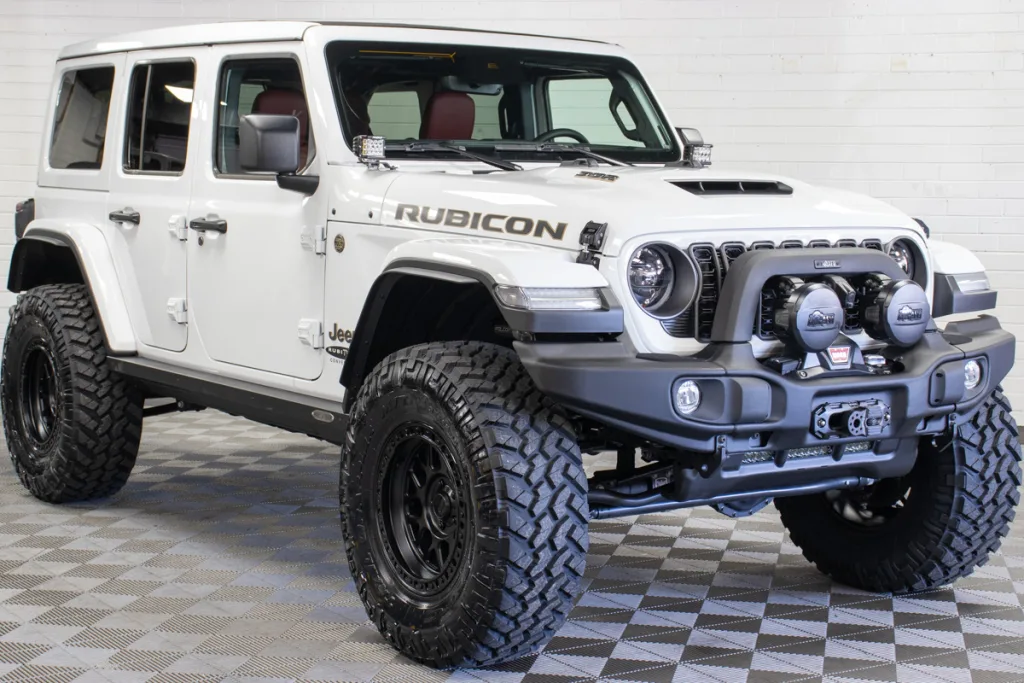
The Jeep Rubicon is not just another trim level. It is the version of the Wrangler built to do the hardest jobs, cross the roughest terrain, and deliver the kind of off road hardware most SUVs simply do not offer. When people talk about the Wrangler as a serious trail machine, they are usually talking about the Rubicon.
Hidden Automotive DiscountsAt its core, the Rubicon stands out because it was engineered with capability first. It is not a cosmetic package. It is not just bigger tires and a more aggressive badge. It is a purpose built off road vehicle with real mechanical upgrades that matter the moment the pavement ends.
Why the Jeep Rubicon Matters
The Rubicon name carries weight because it represents the most trail focused version of the Wrangler lineup. For years, it has been the model enthusiasts looked to when they wanted factory installed off road equipment that could handle rocks, mud, steep climbs, deep ruts, and uneven terrain without needing immediate aftermarket upgrades.
That is what makes it special. A Rubicon arrives with real hardware, real intent, and real credibility.
Unmatched Off Road Capability
The biggest reason the Jeep Rubicon is so respected is simple. It is incredibly capable off road.
A major part of that comes from the Rock Trac transfer case, one of the Rubicon’s defining features. This heavy duty system gives the vehicle exceptional low speed crawling control and the kind of torque delivery needed for steep inclines and technical trails. It allows the Rubicon to move with precision in places where lesser SUVs lose composure.
Then there are the front and rear locking differentials, which are critical when traction becomes inconsistent. By helping distribute power where it is needed, these differentials allow the Rubicon to keep moving when one or more wheels would otherwise lose grip. On loose rock, mud, or slippery surfaces, that feature can be the difference between driving through an obstacle and getting stuck in it.
The Rubicon also benefits from high ground clearance and serious underbody protection. Its skid plates help shield key components from trail damage, while its overall geometry is designed to handle obstacles that would stop more road focused vehicles almost immediately.
Another standout feature is the electronic sway bar disconnect. This lets the suspension articulate more freely over uneven terrain, improving wheel travel and helping the Rubicon maintain traction where a stiffer setup would struggle. For serious off road driving, that is not a gimmick. It is a real advantage.
Rugged Design That Actually Serves a Purpose
What makes the Rubicon visually appealing is also what makes it functional.
Yes, it has the stance, the chunky tires, and the unmistakable Wrangler shape. But unlike many vehicles that borrow the language of adventure without the engineering to back it up, the Rubicon’s design is tied directly to its purpose.
Its upright proportions help visibility on the trail. Its short overhangs improve approach and departure angles. Its removable roof and doors are not just lifestyle flourishes. They create one of the most unique open air driving experiences on the market.
Inside, the Rubicon has traditionally used durable materials meant to stand up to dirt, water, and the kind of use that would quickly wear down a more delicate interior. It is a vehicle designed to be used, not just admired from a driveway.
Modern Tech Without Losing Its Identity
Part of what has helped the Rubicon remain relevant is its ability to evolve without losing what made it desirable in the first place.
Modern Rubicon models offer infotainment systems, navigation, smartphone integration, and driver assistance features that make daily driving easier. Systems like Uconnect add convenience, while features such as adaptive cruise control, blind spot monitoring, and parking assistance bring the Wrangler closer to modern expectations.
And yet, even with those upgrades, the Rubicon still feels like a Rubicon. That balance is important. Jeep did not turn it into a soft crossover with an off road costume. It kept the core identity intact while improving livability.
The Community Factor
Owning a Rubicon is also about belonging to something larger.
Jeep culture is one of the strongest owner communities in the automotive world. Rubicon owners in particular tend to be deeply invested in off roading, trail driving, overlanding, and the kind of lifestyle built around exploration. There is a sense of shared identity that comes with the vehicle, and that community aspect adds to the Rubicon’s appeal in a way that is hard to measure on a spec sheet.
It is not just about what the vehicle can do. It is also about what it represents.
What Made Key Jeep Rubicon Years Special
The Rubicon has evolved over time, and certain years stand out more than others.
The 2003 Jeep Wrangler Rubicon was the one that started it all. This was the first Wrangler Rubicon, and it immediately established the formula with locking differentials, the Rock Trac 4×4 system, and aggressive off road hardware that made it a factory built trail machine.
The 2007 Rubicon mattered because it introduced the JK generation and, importantly, the first four door Wrangler Rubicon. That gave buyers far more interior space and practicality while preserving the off road capability that made the name so respected.
The 2012 Rubicon was significant because it brought the 3.6L Pentastar V6, which improved performance in a major way. With 285 horsepower and improved drivability, it made the Rubicon feel more competent both on road and off.
The 2018 Rubicon launched the JL generation and marked a major modernization of the Wrangler. It introduced lighter materials, improved cabin quality, better technology, and new engine options, including a turbocharged 2.0L. It also made the Rubicon easier to live with every day without diluting its off road strength.
The 2021 Rubicon 392 changed the conversation completely. With a factory installed 6.4L HEMI V8 producing 470 horsepower, it became one of the wildest Wranglers ever built. It was excessive, dramatic, and exactly the kind of vehicle that made the Rubicon legend even bigger.
The 2024 Rubicon 4xe reflected Jeep’s effort to electrify the formula. By combining a plug in hybrid setup with traditional Rubicon capability, it showed that Jeep was trying to modernize the trail ready Wrangler without abandoning its core strengths.
Why the Rubicon Keeps Its Status
A lot of vehicles get marketed as adventurous. Very few earn the reputation the Rubicon has.
What makes it special is not just one feature. It is the combination of locking differentials, serious transfer case hardware, trail ready suspension, high clearance, removable body components, and a long standing identity built around capability rather than image alone.
The Rubicon feels authentic because it is. It was built for difficult environments, and that sense of honesty is part of why it continues to stand apart.
Final Thought
The Jeep Rubicon is special because it delivers something rare in the modern market: a vehicle with genuine off road substance, unmistakable character, and decades of credibility behind it.
It is rugged without feeling fake. It is capable without apology. And whether you are looking at an early 2003 model, a more refined JL Rubicon, a powerful Rubicon 392, or a newer electrified 4xe, the core appeal remains the same.
The Rubicon is not special because Jeep says it is.
It is special because, year after year, it has continued to prove it on the trail.
Connect with us


