





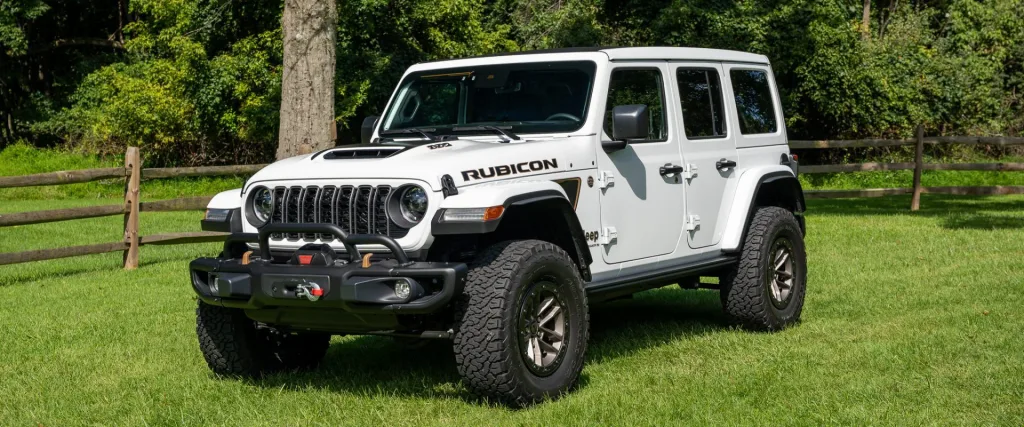
The Jeep Wrangler has one of the most loyal owner bases in the auto industry, and for good reason. Few vehicles match its combination of off-road capability, open-air driving experience, aftermarket support, and iconic design. But if you are buying used, especially without a factory warranty, one question matters more than almost anything else: which Jeep Wrangler years should you avoid?
Not every Wrangler is created equal. Some model years are much more dependable than others. Certain years are known for electrical gremlins, weak engines, steering issues, water leaks, excessive oil consumption, or expensive repair patterns that make them harder to recommend. Others are much more refined and can be excellent long-term purchases.
If you want the complete year-by-year breakdown, start with this detailed guide on Jeep Wrangler reliability by year.
This in-depth article focuses specifically on the Jeep Wrangler years to avoid, why those years developed weaker reputations, what common problems show up, and how to shop smart if you are considering a used Wrangler anyway.
Why some Jeep Wrangler years are worse than others
The Wrangler is not a normal SUV, and that changes how reliability should be judged.
A Wrangler is engineered around body-on-frame construction, solid axles, heavy-duty four-wheel-drive hardware, removable roof panels, removable doors, and a rugged chassis designed for uneven terrain. That makes it far more capable off-road than a typical crossover, but it also means more vibration, more exposure to the elements, and more wear on steering and suspension parts.
Wrangler reliability tends to suffer most when one or more of these conditions are present:
First-year redesign issues
When Jeep introduces a new generation, early production models often show bugs that later years fix.
Electrical complexity
Wranglers from certain years developed recurring issues with modules, sensors, warning lights, and related electronics.
Powertrain weaknesses
Some engines and transmission pairings are simply less desirable than others.
Steering and suspension sensitivity
Because of the Wrangler’s design, worn front-end parts can create a much more noticeable driving problem than on many other SUVs.
Heavy owner modification
Lift kits, oversized tires, and aftermarket steering components can either improve the vehicle or make it worse. On the used market, a bad modification job can make even a decent Wrangler year a nightmare.
So when people ask which Jeep Wrangler years to avoid, the answer is not just about defect counts. It is also about which years combine poor factory reliability with higher exposure to expensive or recurring repair patterns.
The Wrangler generations that matter most
For used buyers, two generations matter most:
JK generation: 2007 to 2018
This generation introduced the modern four-door Wrangler Unlimited and dramatically expanded Wrangler popularity. It also includes several of the years most buyers are warned about.
JL generation: 2018 to present
This generation improved comfort, interior quality, technology, and road manners. But, like many first-year redesigns, the early JL had issues that later models improved upon.
If your goal is to avoid the riskiest Wrangler years, you will spend most of your attention on the early JK years and the first JL year.
The Jeep Wrangler years to avoid most
2007 Jeep Wrangler
The 2007 Wrangler is one of the first years most buyers should approach with caution.
Why? Because it was the first model year of the JK generation. First-year vehicles often carry launch problems, and the 2007 Wrangler is a textbook example. It brought major changes to the platform, but it also came with more early build issues than the later JK years.
Common concerns with the 2007 Wrangler include:
- Electrical problems
- Fuel system complaints
- Water leaks
- Premature wear in steering and suspension components
- Less desirable engine performance from the 3.8-liter V6
The 3.8-liter engine in these early JK Wranglers is not universally terrible, but it is widely viewed as less refined and less satisfying than the later 3.6-liter Pentastar V6. It tends to feel underpowered, especially in four-door models, and can become even more frustrating when oversized tires or added weight are involved.
Another major reason to be careful with 2007 models is age. Even if a specific vehicle avoided major defects when new, it is now old enough that rubber seals, suspension bushings, wiring, gaskets, and interior weather protection may all need attention. On a Wrangler, that wear is more noticeable because the vehicle is so exposed to the environment.
The 2007 Wrangler is not automatically a bad purchase, but it is one of the clearest examples of a year to avoid unless the vehicle has excellent records, careful ownership history, and a very thorough inspection.
2008 Jeep Wrangler
The 2008 Wrangler often gets grouped with the 2007 because many of the same weaknesses remained.
It still used the 3.8-liter V6, it still carried early JK-generation issues, and it still showed more complaints than the better later JK years. Buyers often encounter recurring concerns around oil usage, electrical issues, steering wear, and general roughness compared with later Wranglers.
A common problem with older 2008 Wranglers on the used market is that many were bought specifically for off-road use. That means the vehicle may have been:
- Lifted
- Driven hard on trails
- Exposed to mud, water, salt, or rock damage
- Equipped with aftermarket parts that stress factory steering components
Even if the factory reliability of the 2008 model was only moderate, poor owner behavior can make it much worse today.
The biggest issue with the 2008 Wrangler is not that every one will fail. It is that there are too many reasons to choose a later model instead. When you can often stretch to a stronger Wrangler year with better mechanical reputation, the 2008 becomes hard to justify unless the price is extremely attractive.
2010 Jeep Wrangler
The 2010 Wrangler is another year that regularly appears on avoid lists.
By this point, Jeep had already been producing the JK for a few years, but the 2010 still carried several pain points that hurt its long-term reputation. Complaints often center around:
- Water leaks
- Soft top and hardtop sealing issues
- Electrical faults
- Steering vibration
- Occasional engine and oil-related concerns
One reason water leaks matter so much on a Wrangler is because they create secondary problems. A leak is not just a wet floor. Over time it can lead to:
- Mold or interior odor
- Corrosion in connectors
- Power accessory problems
- Damaged carpet and trim
- Persistent cabin noise and poor sealing
On a conventional SUV, cabin leaks are annoying. On a Wrangler, they can become part of a wider pattern of aging and deterioration if left unresolved.
The 2010 also remains tied to the less desirable 3.8-liter powertrain. If you are shopping for a JK and want to minimize risk, most buyers are better off skipping this year and going forward.
2011 Jeep Wrangler
The 2011 Wrangler is often considered one of the last and least attractive years of the early JK period.
In theory, being late in the cycle before the engine change should have made it better sorted. In practice, it still does not enjoy the reputation of later models. It shares the same core issue as earlier JK years: the 3.8-liter V6 never earned the confidence or enthusiasm that the 3.6-liter Pentastar would later bring.
The 2011 also still faces complaints involving:
- Steering and alignment behavior
- Electrical system trouble
- Interior water intrusion
- General aging-related reliability decline
This year is especially tricky because it can sometimes look appealing on the used market. Buyers may see it as a more modern Wrangler than the 2007 to 2010 models, but it still predates the major mechanical upgrade that changed the JK’s reputation.
If you are spending real money on a used Wrangler, most informed shoppers would rather move to 2012 and newer, or ideally to the better later JK years after early Pentastar bugs were worked through.
2012 Jeep Wrangler
The 2012 Wrangler is a fascinating case, because it is both an improvement and a caution year.
This was the first year Jeep put the 3.6-liter Pentastar V6 into the Wrangler. That was a major upgrade in power, drivability, and long-term appeal. On paper, that should make the 2012 an easy recommendation.
But there is a catch.
The 2012 Wrangler was the first year of that engine in the JK, and first-year mechanical changes often come with surprises. This year developed a reputation for issues involving:
- Cylinder head concerns on some early Pentastar engines
- Oil and cooling-related complaints
- Electrical issues
- New-powertrain teething problems
So while the 2012 is better than the old 3.8-liter Wranglers in many ways, it is also not the strongest Pentastar Wrangler to buy.
Think of the 2012 as a transition year. It gave buyers the engine they wanted, but not yet the polished version of ownership experience they would get in later years. If you are choosing between a 2012 and a 2015 or 2016, the later vehicle is usually the safer bet.
2018 Jeep Wrangler
The 2018 Wrangler is unusual because it overlaps two realities.
For JK buyers, 2018 can mean the final year of the old generation, which is generally more mature. But for many used buyers and reputation discussions, 2018 is strongly associated with the first-year JL generation, and that is where caution comes in.
The first-year JL brought major improvements:
- Better interior quality
- Modern infotainment
- Updated safety features
- Improved ride and refinement
- New powertrain choices
But first-year redesigns often come with bugs, and the 2018 JL proved that rule still matters.
Concerns associated with early JL models include:
- Steering box issues
- Wandering or vague steering feel
- Infotainment glitches
- Electrical complaints
- Build inconsistencies
- Early recall exposure
The reason many buyers avoid first-year JL models is simple: later JL years benefited from fixes, updates, and refinement. Unless the price difference is significant, many shoppers would rather buy a 2019 or newer JL and avoid the uncertainty.
Jeep Wrangler years that deserve caution, not automatic rejection
Not every questionable Wrangler year must be fully avoided. Some years are better described as buy carefully rather than do not buy.
2013 Jeep Wrangler
The 2013 is far better than the early JK years, but it is still close enough to the powertrain transition that some buyers prefer the 2015 to 2017 range. A well-maintained 2013 can be a solid Wrangler, but condition matters more here than in later years.
2014 Jeep Wrangler
The 2014 is often viewed as a decent middle ground. It is not usually the first year people warn against, but it also does not get the same enthusiastic recommendation as the best late-JK models. Service history is everything.
Heavily modified versions of any year
This matters enough to say clearly: a good Wrangler year can become a bad purchase if the vehicle has been poorly modified.
Watch carefully for:
- Lift kits with poor alignment
- Suspension geometry that looks off
- Tires rubbing on fenders or control arms
- Steering components under strain
- Cheap aftermarket bumpers or wiring
- Evidence of hard off-road abuse underneath
If a Wrangler has been “built” by someone who knew what they were doing, that can be fine. If it was assembled cheaply in a driveway with no alignment discipline and no documentation, walk away.
The better Wrangler years to buy instead
To understand which years to avoid, it helps to understand what the stronger years look like.
2015 to 2017 JK Wrangler
These are widely considered among the best used JK years to buy. By this point, the Pentastar engine was established, many early powertrain bugs had been addressed, and the overall platform was more mature.
Why buyers like these years:
- Better engine than early JKs
- More refined than 2007 to 2011
- Strong aftermarket support
- Good balance of old-school Wrangler simplicity and improved drivability
Among them, the 2017 Wrangler often gets especially strong praise because it was one of the last and most sorted versions of the JK.
2019 and newer JL Wrangler
If your budget allows, many buyers feel more comfortable starting with 2019 for the JL generation.
Benefits include:
- Better first-year bug resolution than 2018
- Improved tech behavior
- Stronger refinement
- Modern cabin and safety features
- Better daily driving comfort
The JL is not perfect, but later versions generally make more sense than jumping into the first production year.
Common Jeep Wrangler problems that make certain years worse
Whether you are looking at a year to avoid or just a risky used example, these are the issues that tend to matter most.
Death wobble
This phrase is famous in Jeep circles for a reason. Death wobble describes a violent front-end shaking event that can happen when steering and suspension components are worn, loose, or poorly aligned.
Not every Wrangler will experience it, but years with steering sensitivity, worn front-end parts, large tires, or questionable modifications are more vulnerable.
The problem often traces back to:
- Track bar wear
- Ball joints
- Tie rod ends
- Improper alignment
- Suspension geometry changes from lifts
- Steering stabilizer issues
A Wrangler with any hint of front-end shimmy should be inspected carefully before purchase.
Water leaks
Wranglers with removable tops are naturally more vulnerable to sealing issues than most SUVs. Years known for weatherstrip or roof leak complaints deserve special inspection around:
- Floor carpeting
- Door seals
- Rear cargo area
- Electrical connectors
- Hardtop panel joints
Water damage can quietly create expensive long-term problems.
Oil leaks and engine issues
Earlier and transition-year Wranglers can show oil leaks or engine-specific concerns. Always inspect:
- Valve cover area
- Oil filter housing area
- Signs of oil burning
- Cooling system condition
- Service records showing regular oil changes
Electrical problems
Electrical complaints are a recurring Wrangler theme across multiple years. Pay close attention to:
- Warning lights
- Power windows and locks
- Infotainment responsiveness
- Battery health
- Start-stop or auxiliary battery issues on newer models
- Evidence of aftermarket wiring
Bad wiring on a modified Jeep can turn a small issue into a major headache.
Rust and underbody damage
This is especially important in colder climates or coastal areas. Rust can affect:
- Frame rails
- Suspension mounts
- Brake lines
- Skid plates
- Body mounts
Rust is one of the fastest ways a used Wrangler stops being a fun purchase and starts becoming a money pit.
How to shop smart if you still want a “bad year” Wrangler
Sometimes a risky year is simply what fits the budget. If that is the case, the right approach is not blind avoidance. It is disciplined shopping.
Here is how to reduce your risk.
Buy on condition, not just year
A perfect 2011 can be better than a neglected 2016. Year matters, but maintenance history matters more.
Demand service records
Look for evidence of:
- Regular oil changes
- Cooling system maintenance
- Brake service
- Suspension repairs
- Steering work
- Differential and transfer case fluid changes
Inspect for modifications
Ask what was changed, when it was changed, and who installed it. A Wrangler with no documentation should be treated cautiously.
Get a pre-purchase inspection
This is not optional on a Wrangler unless the vehicle is extremely cheap. A qualified inspection can reveal:
- Hidden frame damage
- Steering wear
- Suspension issues
- Oil leaks
- Transfer case problems
- Evidence of water intrusion
Drive it at multiple speeds
A short city loop is not enough. You want to test:
- Low-speed turns
- Highway stability
- Braking behavior
- Steering centering
- Any sign of vibration
A Wrangler that feels loose, wanders, or shakes at speed is telling you something.
Final verdict: Jeep Wrangler years to avoid
If you want the clearest answer, the Jeep Wrangler years most buyers should be most careful with are:
- 2007
- 2008
- 2010
- 2011
- 2012
- 2018
The early JK years are the biggest risk because they combine first-generation bugs, the weaker 3.8-liter engine, age-related wear, and a higher probability of ownership abuse. The 2012 is better in many ways but still a transition year with first-year Pentastar concerns. The 2018 JL is best approached carefully because first-year redesigns often bring issues that later models resolve.
That does not mean every Wrangler from those years is bad. It means those are the years where the margin for error is thinner. If you buy one, you need to be more careful, more skeptical, and more committed to inspection and records.
For most shoppers, the smarter used Wrangler targets are the 2015 to 2017 JK models or 2019 and newer JL models. Those years generally offer a better balance of performance, reliability, and ownership confidence.
The Wrangler is still one of the most desirable used SUVs on the market, but it is not a vehicle you buy casually. The right year can deliver years of fun, strong resale value, and serious off-road capability. The wrong year can drain your budget through electrical problems, steering repairs, leaks, and neglected wear.
That is why understanding the Jeep Wrangler years to avoid is not just helpful. It is the difference between buying an icon and buying a project.
Connect with us


