





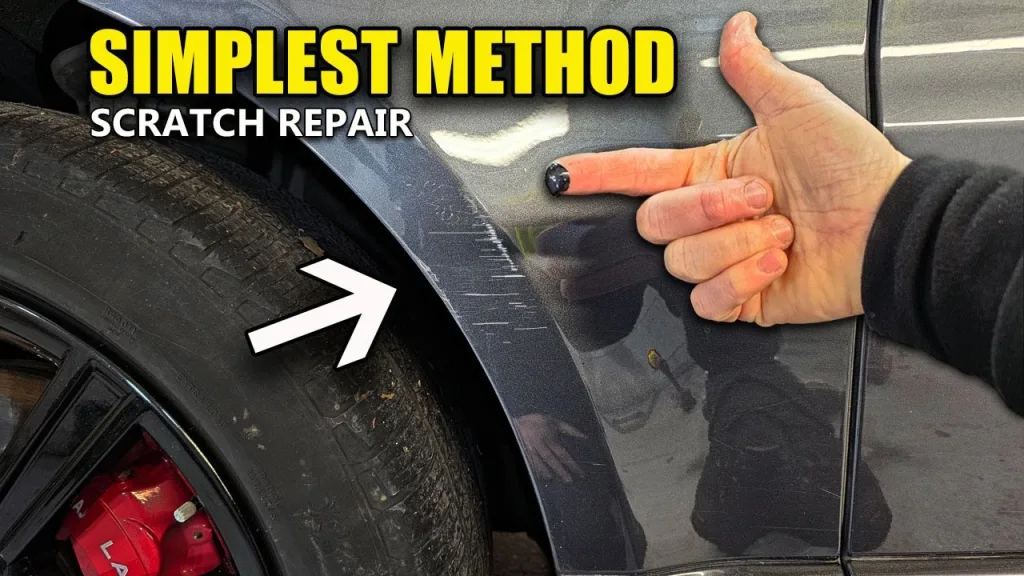
If you search how to buff out scratches on car, you are usually not asking about body-shop-level refinishing. You want to know whether a scratch can be fixed at home, what products actually work, whether a scratch is only in the clear coat or deeper in the paint, and when buffing is a smart fix versus a complete waste of time.
That is the real question. Not just how to rub on polish, but which scratches can actually be buffed out and which ones cannot.
The short answer is this: light surface scratches, paint transfer, swirl marks, and some clear-coat defects can often be improved or removed with the right polishing compound and technique, but deeper scratches that cut through the clear coat usually need touch-up paint, professional refinishing, or both. That distinction shows up clearly in product guidance from detailing brands and in independent testing. Meguiar’s says fine scratches and blemishes can be removed with clear-coat-safe products like ScratchX or Ultimate Compound, while Consumer Reports found that scratch repair pens only work on minor surface scratches and can even make the damage look worse. (Meguiar’s catalog, Consumer Reports)
Why this question gets confused so fast
A lot of online advice treats all scratches like they are the same. They are not.
Some marks are barely more than paint transfer or very fine clear-coat abrasion. Others go through the clear coat into the base color. Some reach the primer. Some even expose bare metal or plastic. If you use the same method for all of those, you are going to get bad results.
That is why the first rule of buffing out scratches is not “buy a compound.” The first rule is figure out how deep the damage is.
The first thing you need to know: clear coat versus deeper paint damage
Modern automotive paint usually includes a top clear coat over the color coat. If a scratch is only affecting that upper clear layer, you have a much better chance of improving it with polishing or a light compound.
If the scratch goes deeper into the color layer, primer, or substrate, buffing alone will not truly remove it. At best, polishing may soften the edges or reduce how visible it looks. But once paint is physically missing, you are no longer just correcting the surface. You are dealing with lost material.
This is exactly why manufacturers also sell touch-up paint. Toyota’s official parts site, for example, markets genuine touch-up paint specifically for scratches and chips, which is a direct reminder that some defects need paint repair rather than polishing.
The easiest test: if your fingernail catches, be careful
One of the most common quick checks is to lightly run a fingernail across the scratch. If your nail does not catch, the damage is often lighter and more likely to be in the clear coat or on the surface. If your nail catches clearly, the scratch is usually deeper and less likely to be fully corrected by buffing.
That is not a laboratory test, but it is a useful real-world filter. It helps you stop expecting compound to do the job of paint.
What kinds of scratches can usually be buffed out?
The scratches most likely to respond well to buffing or polishing include:
- light clear-coat scratches
- swirl marks
- fingernail scratches around door handles
- paint transfer from another object
- fine blemishes and surface scuffs
- light oxidation-related defects that look like scratching
Meguiar’s product guidance specifically says its ScratchX is designed for fine scratches, scuff marks, paint transfer, and fingernail marks, while the company’s FAQ says small scratches and swirl marks can be removed with a clear-coat-safe paint cleaner like Ultimate Compound. (Meguiar’s FAQ)
That is the category where home correction usually has the best chance of success.
What kinds of scratches usually cannot be buffed out completely?
Buffing is usually the wrong expectation for:
- deep scratches that expose primer
- scratches that expose bare metal or plastic
- chips with missing paint
- damage that has sharp edges and obvious depth
- wide gouges from impact
- peeling or failing paint around the damaged area
This is where a lot of DIY advice goes wrong. It sells people on the idea that every scratch can be “erased.” But if material is gone, polishing cannot magically replace it.
At that point, the better paths are usually touch-up paint, localized paint repair, or professional refinishing.
What you actually need to buff out light scratches
If the scratch is minor enough to try correcting at home, the basic process usually needs:
- a wash first
- a clean microfiber towel
- a clear-coat-safe scratch remover or compound
- optional polishing pad or foam applicator
- patience and good lighting
This is where product choice matters. Meguiar’s says Ultimate Compound removes oxidation, scratches, water spots, and blemishes while being clear-coat safe. Its catalog also says small below-surface imperfections and fine scratches can be safely removed with ScratchX or Ultimate Compound. (Meguiar’s catalog)
The key phrase there is clear-coat safe. Modern paint systems are not the place for aggressive old-school rubbing compounds unless you really know what you are doing.
Step 1: Wash the area first
Never start buffing a dirty panel. Dirt and grit can turn a small correction job into more scratching very quickly.
Wash the panel thoroughly, dry it, and inspect the area in strong light. Sometimes what looks like a scratch is partly dirt, rubber, or transferred paint. That is good news because surface contamination is easier to remove than true paint damage.
Step 2: See if it is actually paint transfer
Paint transfer often looks worse than it is. If another car, shopping cart, wall, or pole rubbed the panel, some of what you see may be the other material sitting on top of your clear coat rather than your paint being deeply cut.
This is where a mild scratch remover or compound can make a big difference. If the mark lightens quickly after a careful test spot, you may be dealing more with transfer and surface scuffing than with a deep scratch.
Step 3: Start with the least aggressive method
This is one of the smartest habits in paint correction. Always start with the mildest realistic product and test a small area first.
That might mean beginning with a lighter scratch remover rather than jumping straight to a heavier compound. Meguiar’s own scratch-removal positioning reflects this logic, with products aimed at fine blemishes before more aggressive defect-removal work. (Meguiar’s Scratch Kit)
The reason is simple: every polishing step removes or levels a little material. You want the minimum correction that gives you the result you need.
Step 4: Work the product properly, not just quickly
A lot of people get bad results because they wipe compound on and off like wax. Scratch correction is not just about applying a product. It is about working the abrasive long enough, with the right pressure, to actually level or refine the defect.
Professional paint-finishing guidance from 3M is aimed more at collision and refinish work than casual driveway detailing, but it still reinforces an important principle: scratch removal and paint finishing are process-based, and results depend on the correct abrasive step, enough working time, and the right follow-up. 3M’s paint finishing and detail shop guidance and Perfect-It finishing system materials show that even professional scratch refinement moves through graded processes rather than one magic swipe.
For an at-home job, that means slow, controlled passes on a small section, not frantic rubbing over a huge panel.
Step 5: Wipe, inspect, repeat only if the defect is improving
After a test pass, wipe the area clean with a microfiber towel and inspect the result in direct light.
If the mark is clearly improving, you may be on the right track.
If nothing changes, or if the scratch still has sharp depth and obvious color loss, you are probably outside the range where buffing alone is a real solution.
That is the point where people either waste time or save time. If the defect is too deep, polishing more aggressively can just thin surrounding clear coat without truly fixing the problem.
Step 6: Finish with polish or protection
If you successfully reduce or remove the scratch, you should follow up with finishing polish or paint protection depending on the process you used.
Compounds and scratch removers are designed to correct defects, not necessarily leave long-term protection behind. A finishing polish, wax, or sealant can help restore gloss and protect the corrected area.
Consumer Reports’ wax buying guide also notes that some “cleaner wax” products are mildly abrasive and can remove some paint from the surface, which is another reminder that correction and protection are not the same step. (Consumer Reports)
Scratch repair pens: are they worth it?
This is one of the most searched subtopics around paint scratches, and the answer is more limited than a lot of ads imply.
Consumer Reports tested scratch repair pens and found they do not work on much beyond minor surface scratches and may actually make damage look worse. That does not mean every pen is useless in every situation. But it does mean you should not expect a pen to erase a meaningful scratch that really needed polishing or paint repair in the first place. (Consumer Reports)
That finding lines up with the broader logic here: shallow defects may respond to mild correction, but deeper damage usually needs real refinishing, not a cosmetic pen trick.
When touch-up paint makes more sense than buffing
If you can see the scratch is through the color layer, or you can see primer or exposed substrate, buffing is not the main fix anymore.
At that point, touch-up paint becomes much more relevant. That is exactly why automakers like Toyota sell factory-matched touch-up paint for chips and scratches.
Touch-up paint will not make every repair invisible, especially if the damage is large. But it is a better response than endlessly polishing paint that is no longer there.
When you should stop and go to a body shop
You should seriously consider professional repair if:
- the scratch is deep enough to expose primer or metal
- the panel has multiple damaged layers
- the scratch is large and highly visible
- the area is on a body line or edge where hand correction is risky
- the damage includes denting or cracking
- the vehicle has premium paint you do not want to experiment on
There is a big difference between improving a light scratch on a daily driver and trying to make a deep key mark disappear on a dark, newer car without repainting. Knowing that difference saves money and disappointment.
The biggest mistake DIYers make
The biggest mistake is believing more aggression automatically equals better results.
In reality, aggressive polishing on a scratch that is too deep can just remove healthy surrounding clear coat, reduce gloss, and still leave the scratch behind. That is why the smartest approach is always:
- inspect the defect
- start mild
- test a small area
- escalate only if the scratch is truly improving
- stop when the defect clearly needs paint, not polish
So how do you buff out scratches on a car?
The cleanest answer is this: you can buff out light scratches by washing the area, confirming the damage is shallow enough, using a clear-coat-safe scratch remover or compound on a small test spot, working it carefully, and inspecting whether the defect is actually improving. Fine clear-coat defects, paint transfer, and light scratches often respond well. Deeper scratches usually do not. (Meguiar’s FAQ, Meguiar’s Ultimate Compound)
Final verdict
If you want the real answer to how to buff out scratches on car, it is this: light scratches can often be improved or removed with proper washing, a clear-coat-safe compound, and controlled polishing, but deeper scratches that go through the paint usually need touch-up paint or professional repair. That is why the smartest move is to identify the depth first, start with the least aggressive correction method, and stop once you realize you are dealing with missing paint rather than a surface defect. (Meguiar’s catalog, Consumer Reports)
So the short practical version is this: if it is light, polish it; if it is deep, paint it; if it is severe, price out a body shop before you burn through clear coat chasing a miracle.
Connect with us


