





This is one of the most searched and most misunderstood basic car maintenance questions:
Do you check engine oil hot or cold?
Some people say always cold.
Others say always hot.
Others say it doesn’t matter.
All three answers are incomplete.
The correct way to check engine oil depends on engine design, oil behavior, and manufacturer intent. The confusion exists because advice that was correct for older vehicles does not always apply cleanly to modern engines.
This guide explains the correct answer, the why behind it, and how to check your oil properly without misreading the dipstick.
Why This Question Is So Confusing
Motor oil does not behave the same way in all conditions.
Oil:
- Expands when hot
- Drains slowly from engine components
- Clings to internal surfaces after shutdown
That means the oil level you see on the dipstick can change significantly depending on:
- Engine temperature
- How long the engine has been off
- Vehicle orientation
- Oil viscosity
Yet most people are taught a single rule without understanding the reasoning behind it.
The Short Answer (For People Who Just Want It)
Most vehicles are designed for the oil to be checked when the engine is warm and then shut off for a few minutes.
However:
- Checking oil stone cold can be acceptable in some cases
- Checking oil immediately after shutting off a hot engine is incorrect
- Checking oil while the engine is running is always wrong
The correct method balances oil expansion and drainage.
Why You Should Not Check Oil Immediately After Driving
When the engine is hot and running:
- Oil is circulating through the engine
- A significant amount is still in the cylinder head, galleries, and oil filter
- The oil pan has not fully refilled
If you shut the engine off and check immediately:
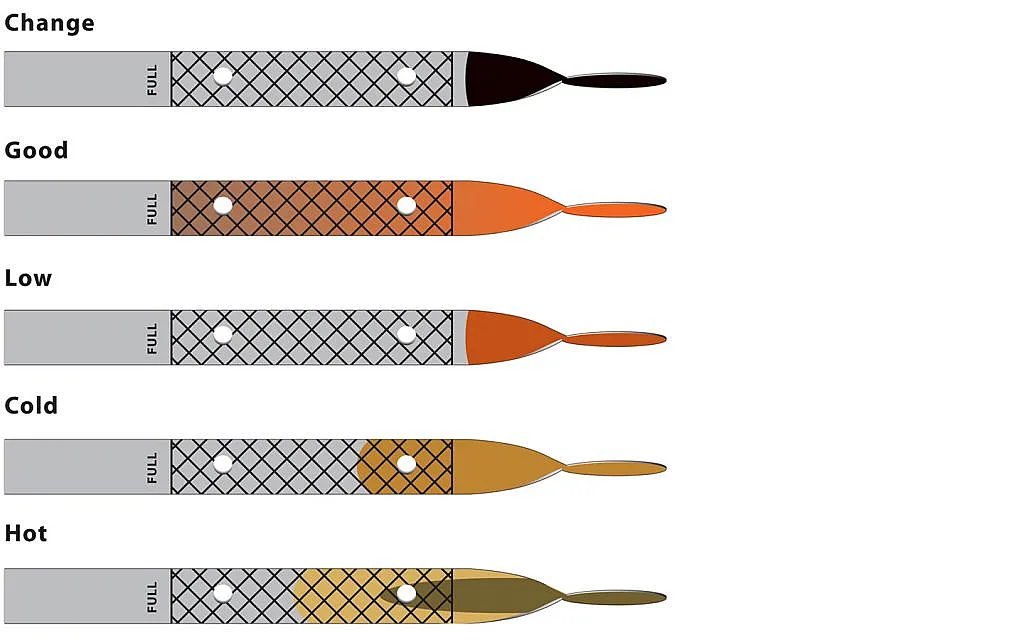
- The dipstick will usually show a low reading
- This can trick you into adding oil unnecessarily
- Overfilling becomes a real risk
This is one of the most common causes of overfilled engines.
Why Checking Oil Completely Cold Isn’t Perfect Either
Checking oil when the engine is completely cold sounds logical, but it introduces its own problems.
When oil is cold:
- It contracts slightly
- It drains more completely into the oil pan
- It may sit higher on the dipstick than it would under operating conditions
In many engines, this difference is small. In some engines, especially those with complex oil routing, it can be noticeable.
That’s why manufacturers rarely specify “check oil cold.”
The Correct Method: Warm Engine, Short Rest Period
For most vehicles, the correct oil check procedure is:
- Drive or run the engine until it reaches normal operating temperature
- Shut the engine off
- Wait 5 to 10 minutes
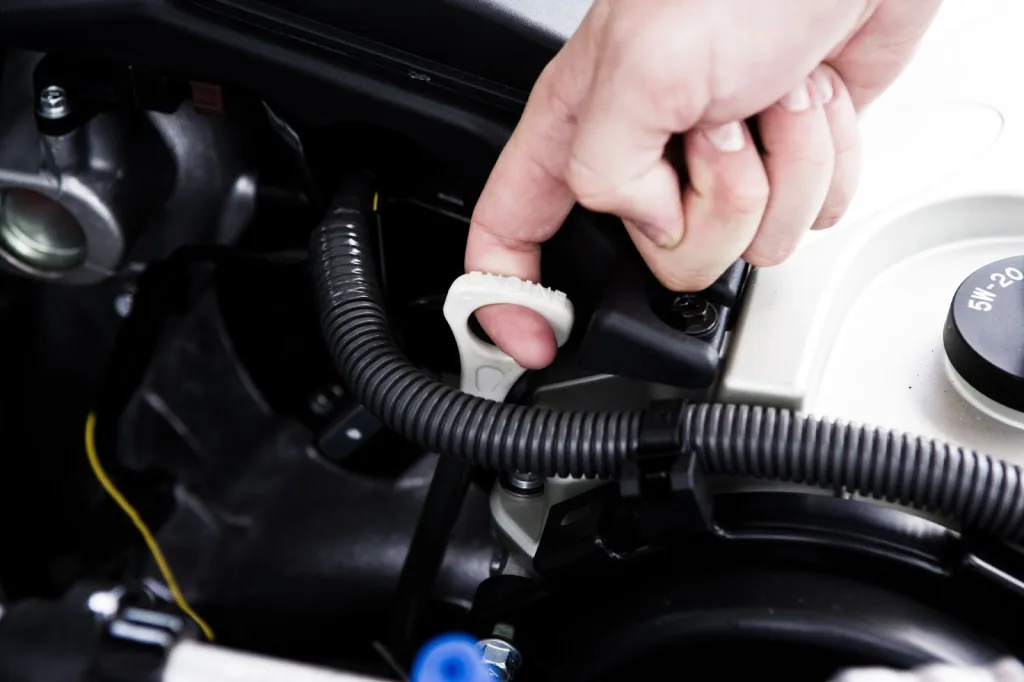
- Check the oil level
This method allows:
- Oil to drain back into the oil pan
- Expansion effects to normalize
- A stable, repeatable reading
This is the condition most dipstick markings are calibrated for.
Do You Check Oil Hot or Cold? What Manufacturers Actually Design For
Engine manufacturers design dipstick ranges based on:
- Oil volume at operating temperature
- Drain-back characteristics
- Oil pump pickup location
That means the “full” mark is not arbitrary. It assumes the oil has:
- Been circulating
- Been allowed time to drain
- Settled to its designed level
Checking oil completely cold can show a slightly higher reading than intended.
Why Consistency Matters More Than Temperature
One of the most overlooked aspects of oil checking is consistency.
If you:
- Always check oil under the same conditions
- On level ground
- After the same wait time
You will get accurate trend information, even if conditions aren’t perfect.
Problems arise when people:
- Check cold one time
- Check hot another time
- Compare readings without context
That’s how confusion starts.
Special Cases Where Cold Checks Are Acceptable
There are situations where checking oil cold is reasonable:
- The vehicle has been sitting overnight
- The engine design allows full drain-back
- The manufacturer explicitly allows cold checks
In these cases:
- The reading should still fall within the safe range
- Small differences are normal
Cold checks are useful for quick verification, not fine-tuning.
What About Modern Cars Without Dipsticks?
Many modern vehicles no longer have physical dipsticks.
Instead, they use:
- Electronic oil level sensors
- Dashboard or infotainment readouts
These systems often require:
- Engine at operating temperature
- Vehicle parked on level ground
- Engine off for a specified time
If your vehicle uses an electronic oil check, the system will usually tell you when conditions are correct.
Common Mistakes People Make When Checking Oil
Checking While the Engine Is Running
Always wrong. The reading will be inaccurate and oil can spray from the dipstick tube.
Checking on a Slope
Even a slight incline can skew the reading significantly.

Not Wiping the Dipstick Properly
Always wipe once, reinsert fully, then check.
Misreading the Dipstick
Oil smears can look higher or lower than the actual level.
Overfilling Based on a False Low Reading
Overfilled oil can cause:
- Foaming
- Increased crankcase pressure
- Seal damage
- Catalytic converter contamination
Does Oil Type Change the Answer?
Oil viscosity and formulation do influence drain-back time.
- Thicker oils drain more slowly
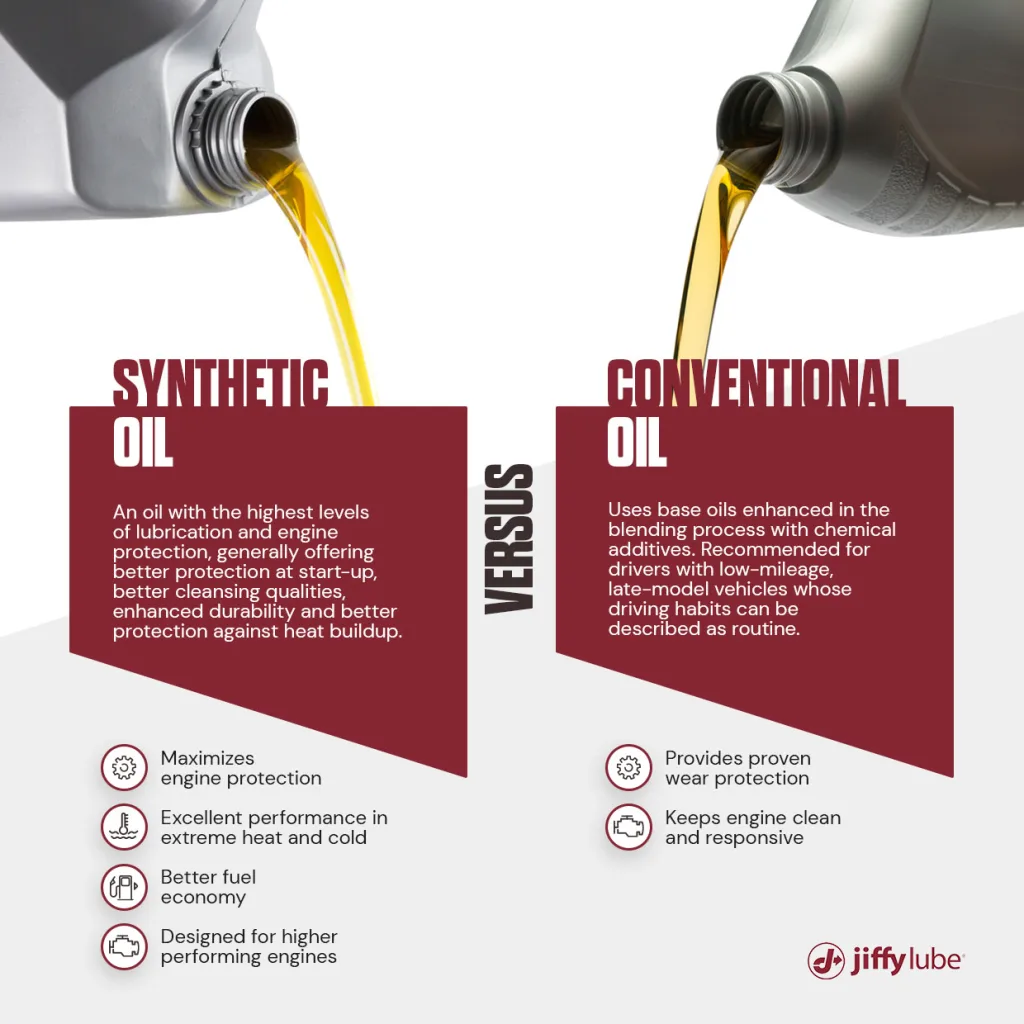
- Synthetic oils may cling differently to surfaces
- High-mileage oils may behave slightly differently
However, these differences are minor compared to temperature and wait time.
The correct checking method remains the same.
Do You Check Oil Level When Engine Hot or Cold? The Safe Rule
If you want one rule that works for nearly every vehicle:
Check engine oil when the engine is warm, turned off, and has sat for 5–10 minutes on level ground.
This minimizes false readings and matches how engines are designed to be measured.
Emergency Situations: What If You Must Check Immediately?
If you must check oil immediately after shutdown:
- Expect the reading to be slightly low
- Do not top off unless the oil is clearly below the minimum mark
- Recheck properly later
Never add oil based on a rushed check unless the engine is dangerously low.
Why Overfilling Is Worse Than Slightly Low Oil
Many people fear low oil more than high oil. That’s a mistake.
Slightly low oil:
- Reduces buffer capacity
- Can be corrected easily
Overfilled oil:
- Can aerate
- Increases crankcase pressure
- Causes oil to enter intake or exhaust systems
False low readings are far more dangerous than false high ones.
Final Answer: Do You Check Engine Oil Hot or Cold?
Here is the clear, correct conclusion:
- Not while running
- Not immediately hot
- Not ice-cold if precision matters
The correct method is:
Warm engine, engine off, wait a few minutes, then check.
That’s how engines are designed. That’s how dipsticks are calibrated. And that’s how you avoid costly mistakes.
Frequently Asked Questions
Do you check engine oil hot or cold?
Warm engine, turned off, after a short wait.
Do you check oil when engine is hot or cold?
Neither extreme. Warm and settled is best.
Do you check oil level when engine hot or cold?
After the engine has been warm and allowed to drain back.
Can I check oil first thing in the morning?
Yes, but expect slight variation. It’s acceptable for general checks.
Why does my oil level change between checks?
Temperature, drain-back time, and driving conditions all affect readings.
Bottom Line
Checking engine oil is simple, but only if you do it the way engines are designed to be measured. Most mistakes come from rushing or relying on outdated advice.
Check it warm. Check it consistently. And don’t chase the dipstick line obsessively.
Connect with us


