




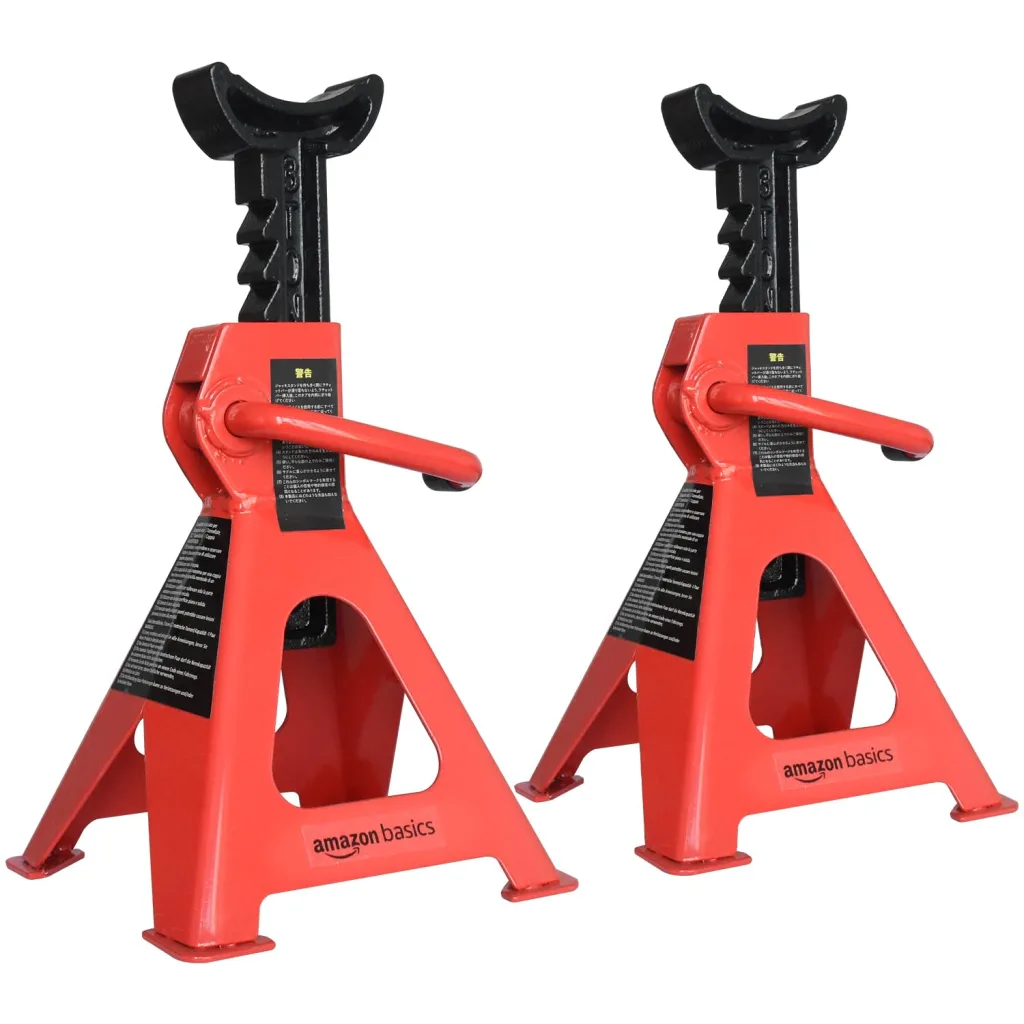
If you have ever shopped for a car jack, 3 ton car jack, jack stand, or 3 ton car jack stands, you already know how messy this category gets. One listing screams heavy duty. Another focuses on low price. Another mixes up floor jacks and jack stands like they are the same thing. They are not. That confusion is exactly why this category continues to perform so well in search. People are not just hunting for a tool. They are trying to avoid buying the wrong one, trusting the wrong product, or using the right product the wrong way.
That is what makes this topic more important than it first looks. A jack is not just a garage accessory. A stand is not just a metal prop. These are load-bearing safety tools. If you get the decision wrong, or if you rely on marketing instead of actual standards and ratings, the consequences can be serious. That is why the strongest articles in this category should not start with “top picks” and affiliate fluff. They should start with the real buyer problem.
The first thing a serious buyer needs to understand is simple: a jack lifts, and a stand supports. That sounds obvious, but a shocking number of product pages, roundups, and search results blur the line between the two. A floor jack raises the vehicle. A jack stand helps support it after the lift. That distinction is backed by real safety guidance, not just common sense. The ASME PASE safety standard covers portable automotive service equipment including jacks and automotive stands, while OSHA regulations for jacks require proper rating, safe condition, and inspection based on service use.
What 3-ton jack stands actually are
A 3-ton jack stand is a support device used after a vehicle has been raised. It does not lift the vehicle by itself. Its job is to hold the load at a fixed height more securely. A 3-ton floor jack, by contrast, is the lifting tool used to raise the vehicle in the first place.
That may sound basic, but it matters because buyers often search for “3 ton jack” when they mean floor jack, and “3 ton car jack stands” when they actually want a complete lift-and-support setup. If the article does not explain the difference clearly, the reader is left doing guesswork in a category where guesswork is a bad idea.
Manufacturer documentation helps make this distinction clearer. For example, U.S. Jack’s garage stand information states that its stands are designed for supporting a vehicle, are intended to be used in matched pairs, and comply with ASME PASE. That is the kind of product documentation buyers should value more than vague phrases like “professional grade” or “shop quality.”
Why the 3-ton category is the sweet spot for so many buyers
For most sedans, hatchbacks, compact SUVs, crossovers, and many light-duty trucks, the 3-ton category lands right in the middle of the market in a way that makes sense. It gives buyers more confidence than a lightweight emergency scissor jack, but it is still manageable in a home garage and does not feel like oversized commercial equipment.
That is why 3-ton gear dominates so many search variations. The category is broad enough to match the needs of everyday drivers, DIY owners, tire rotators, brake-job weekenders, and even light truck owners who want better equipment than the trunk jack that came with the vehicle. In practical terms, 3-ton equipment is often where people move when they want to step up from “bare minimum roadside tool” to “garage tool I actually trust.”
Are 3-ton jack stands actually safe?
They can be. But they are only as safe as the combination of product quality, proper usage, correct placement, and inspection discipline. This is where buyers often oversimplify the category. A stand being labeled 3 tons does not automatically make it safe. A respected brand name does not automatically make it safe either. What matters is whether the stand is properly rated, properly manufactured, correctly positioned, and used on the right surface.
OSHA’s portable jack rules make clear that jacks must be inspected regularly and also checked after abnormal load or shock. In plain English, if a jack or stand has been overloaded, dropped hard, bent, cracked, or otherwise abused, it should not just be trusted because it still looks usable from ten feet away.
A major reminder of why this matters came from the NHTSA consumer advisory warning Harbor Freight jack stand users. That notice followed widespread recalls and highlighted the very real consequences of defective support equipment. It also did something useful for the category as a whole: it reminded buyers that quality control, recall history, and traceability matter. These are not decorative tools. They are safety devices.
What “3 ton” actually means
This is one of the biggest points of confusion for buyers. Many people assume that a 3-ton rating means each single stand supports 3 tons. That is not always how the equipment is rated. Depending on the manufacturer, capacity may be expressed for the pair rather than for one individual stand.
That is why reading the manual matters. In this category, assumptions are expensive. If a product is intended to be used as a matched pair supporting one end of the vehicle, that is the framework you should use when evaluating it. Manufacturer documentation often spells this out more clearly than retailer listings do.
The broader lesson is that buyers should never treat “3 ton” as a vibe. It is not a cosmetic label. It is a load rating that needs to be understood in context.
Why standards matter more than marketing
A surprising amount of garage equipment is sold with language that sounds reassuring but means very little. Terms like durable, workshop ready, mechanic grade, and heavy duty can be useful as general signals, but they are not substitutes for documented standards and proper design.
That is why ASME PASE matters. The standard covers the design, construction, marking, operation, maintenance, and inspection of portable automotive service equipment. If a brand or product line references compliance with that standard, that is more meaningful than a dozen generic marketing adjectives.
The same goes for regulatory guidance. OSHA’s jack requirements require clearly marked rated load capacities, prohibit overloading, and require inspections at regular intervals based on service conditions. That language is not exciting, but it is exactly the kind of boring information that separates serious equipment choices from impulse buys.
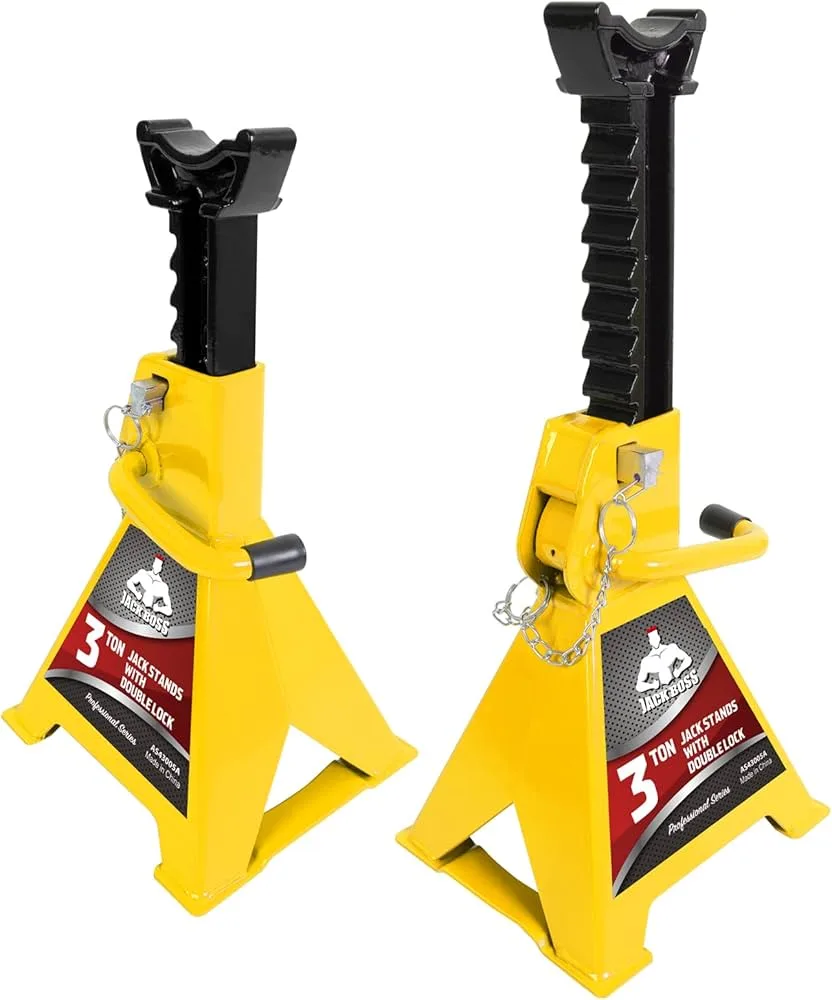
What makes a good 3-ton jack stand
The best 3-ton jack stands are not necessarily the cheapest, the most expensive, or the ones with the flashiest packaging. The good ones tend to get a handful of basics right.
First, they have a stable base. A stand with a wide, confidence-inspiring footprint is easier to trust than one that feels narrow and top-heavy.
Second, they have clear load labeling and usage instructions. If a buyer has to guess the rating context or dig through vague retailer copy to understand how the stand is supposed to be used, that is already a mark against the product.
Third, they have solid structural integrity. That includes clean welds where applicable, a properly shaped saddle, and a locking design that inspires confidence rather than doubt.
Fourth, they fit real usage. A stand that is theoretically strong but awkward in height range, hard to position, or unstable on a normal garage floor is not a great real-world choice.
And fifth, they come from a brand or source where documentation, replacement support, and recall traceability actually exist.
Floor jack vs bottle jack vs jack stand
This is where a lot of buying guides get sloppy. A floor jack is usually the most common home-garage lifting tool because it is easier to position, easier to pump, and generally more convenient for basic service tasks like tire rotation or brake work. A bottle jack is more compact and can be very powerful for its size, but it is often less convenient for lower vehicles and more limited in how it interfaces with certain lift points.
A jack stand is neither of those things. It is not the primary lift device. It is the support device that comes after the lift.
That means most buyers should think in systems rather than isolated products. If you are doing real service work at home, you are rarely choosing only a jack stand or only a jack. You are usually choosing the full lifting-and-support process.
Why inspection matters more than people think
This is the least glamorous part of the category, which is why so many shoppers ignore it. But inspection is not optional if you care about safety. A jack or stand can look fine and still be a bad bet if it has taken abnormal force, been misused, or has internal wear you are ignoring.
OSHA’s language on regular inspection and post-shock inspection is highly relevant here. The guidance is clear: service condition matters. In real terms, if a stand has cracked welds, distorted components, worn locking features, or questionable deformation, it should be removed from service rather than rationalized into one more use.
This is also why ultra-cheap tools in this category deserve more scrutiny than buyers often give them. Saving a few dollars on a shirt or accessory is one thing. Saving a few dollars on a load-bearing support device that may hold part of a vehicle above you is not the same decision.
Why recalls changed the way smart buyers shop
The Harbor Freight recall situation did not just affect one retailer. It changed the psychology of the category. Suddenly, a lot more buyers started paying attention to model numbers, recall notices, stand mechanisms, and the difference between “seems fine” and “is actually documented as safe for sale.”
That shift was healthy. The NHTSA advisory made it clear that defects in this category are not theoretical. The event reinforced something that should have already been obvious: brand trust should be earned through quality control, clear documentation, and responsible response to failures.
What buyers often get wrong
A lot of buyers make one of four mistakes in this category.
The first is buying only on price.
The second is assuming a bigger number automatically means safer equipment.
The third is trusting the jack alone without proper stands.
The fourth is ignoring surface, placement, and inspection.
Those mistakes all stem from the same mindset: treating lifting equipment like any other consumer product. It is not. In this category, safe use matters as much as the product itself.
What to look for before buying
If you are shopping for 3-ton jack stands or related 3-ton lifting gear, this is the practical checklist that matters most:
- Clear capacity labeling
- Documentation that explains whether rating is per pair or otherwise specified
- Stable base design
- Proper height range for your vehicle
- Saddle shape that fits intended contact points
- Known brand or manufacturer documentation
- Evidence of standards compliance where applicable
- No history of unaddressed safety concerns
- Product condition if buying in person
- Proper pairing with a suitable lifting jack
That checklist is not exciting, but it is much more useful than chasing whichever product title sounds toughest.
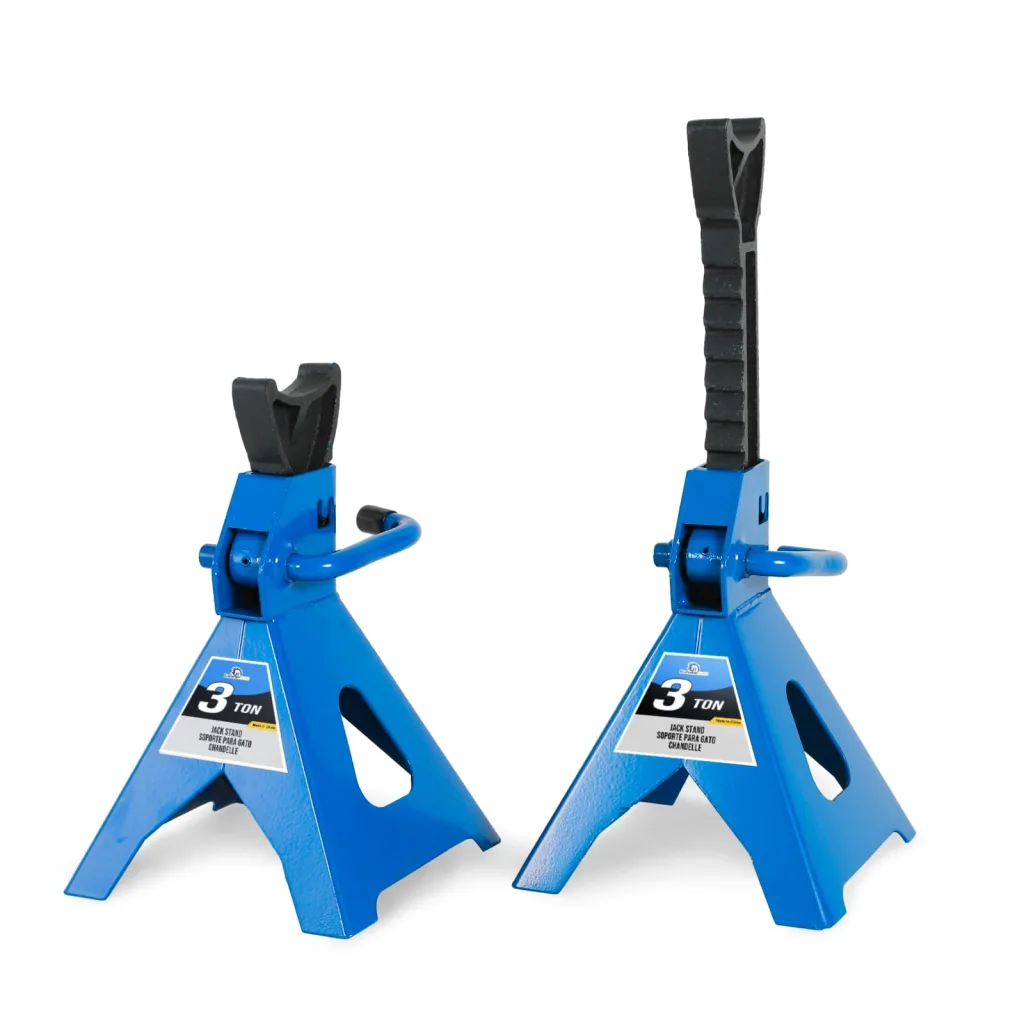
Are expensive stands always better?
Not necessarily. Higher price can sometimes mean better materials, cleaner manufacturing, stronger documentation, or better quality control. But price alone is not the point. The real goal is trustworthiness.
A reasonably priced stand with clear documentation, proper labeling, standards-based design, and a stable footprint is often a smarter buy than a more expensive product sold with vague premium language and very little concrete information.
The better question is not “what costs more?” It is “what would make me feel confident using this correctly?” In this category, the answer should usually include documentation, design, traceability, and inspection condition.
Who should buy 3-ton gear?
For many owners, 3-ton gear is the logical starting point for a real home-garage setup. It suits people who rotate tires, inspect suspension parts, perform light brake service, or simply want something much stronger and more confidence-inspiring than an emergency roadside jack.
It can also make sense for crossover and light-truck owners who want better support equipment without stepping into oversized heavy-duty categories they do not really need.
That does not mean 3-ton equipment is correct for every vehicle or every scenario. Vehicle size, curb weight, lift points, working environment, and service task all matter. But for a huge percentage of everyday consumer vehicles, 3-ton equipment is where practicality and confidence meet.
Final verdict
A 3-ton jack stand setup is popular for a reason. It hits the practical middle ground for a wide range of real-world drivers, DIY owners, and garage users. It is stronger and more confidence-inspiring than the small emergency tools that come with many vehicles, while still being manageable for normal home use.
But this is not a category where smart buyers should chase the lowest price and hope for the best. The better move is to prioritize standards, inspection discipline, clear documentation, stable design, and real manufacturer support. The most useful references in this space are not generic “best of” lists. They are the ASME PASE standard, OSHA’s jack regulations, OSHA’s inspection guidance for portable jacks, the NHTSA consumer advisory on recalled Harbor Freight jack stands, and product documentation like U.S. Jack’s garage stand guide.
If you are choosing equipment in this category seriously, that is where your confidence should come from: not hype, not price tags, and not product titles packed with buzzwords. A good 3-ton jack stand is not just the one that sounds strongest. It is the one that makes the most sense on paper, in practice, and under the vehicle when correct support actually matters.
Connect with us


