





En Simi Valley, California, Simi Valley Chrysler Dodge Jeep Ram (CDJR) es el concesionario ideal para quienes buscan una experiencia de compra de autos inigualable. Ubicado en una de las áreas más vibrantes y accesibles de California, Simi Valley CDJR se ha ganado la reputación de ser un lugar donde la calidad, el servicio al cliente y una amplia variedad de vehículos de alta gama se encuentran. Ya sea que estés buscando un Chrysler, Dodge, Jeep o Ram, este concesionario tiene todo lo que necesitas para hacer la compra de tu vehículo lo más sencilla y emocionante posible.
La Variedad de Vehículos en Simi Valley CDJR
Uno de los mayores atractivos de Simi Valley Chrysler Dodge Jeep Ram es la impresionante variedad de vehículos que tienen en su inventario. Cada marca ofrece algo único, y el concesionario garantiza que puedas encontrar el vehículo perfecto para ti, sin importar tus necesidades.
Chrysler: Elegancia y Comodidad
Chrysler ha sido una marca sinónimo de lujo y confort en el sector automotriz. En Simi Valley CDJR, puedes encontrar una amplia gama de modelos Chrysler que combinan el estilo elegante con la tecnología de punta. El Chrysler Pacifica, un minivan muy popular, es perfecto para familias y aventureros que buscan espacio y versatilidad sin sacrificar el lujo. También puedes explorar el Chrysler 300, que ofrece un rendimiento impresionante con un diseño sofisticado.
Dodge: Potencia y Estilo
Si buscas potencia y adrenalina en la carretera, Simi Valley CDJR tiene varios modelos de Dodge que te dejarán sin aliento. El Dodge Charger y el Dodge Challenger son dos de los vehículos más emblemáticos de la marca, conocidos por sus impresionantes capacidades de rendimiento y diseño agresivo. Estos autos deportivos no solo ofrecen potencia, sino también una experiencia de conducción incomparable. Además, el Dodge Durango es una excelente opción para aquellos que necesitan una SUV con un rendimiento excepcional y mucho espacio para la familia.
Jeep: Aventura y Versatilidad
No hay mejor manera de experimentar el aire libre que a bordo de un Jeep, y en Simi Valley CDJR, tienes acceso a una amplia gama de modelos que están hechos para explorar cualquier terreno. El Jeep Wrangler es uno de los modelos más icónicos, conocido por su capacidad todoterreno y su diseño resistente. También puedes encontrar el Jeep Grand Cherokee, que ofrece una combinación de lujo y capacidad fuera de la carretera, perfecto para quienes buscan un vehículo que pueda manejar tanto la jungla urbana como los senderos más remotos.
Ram: Fuerza y Capacidad de Trabajo
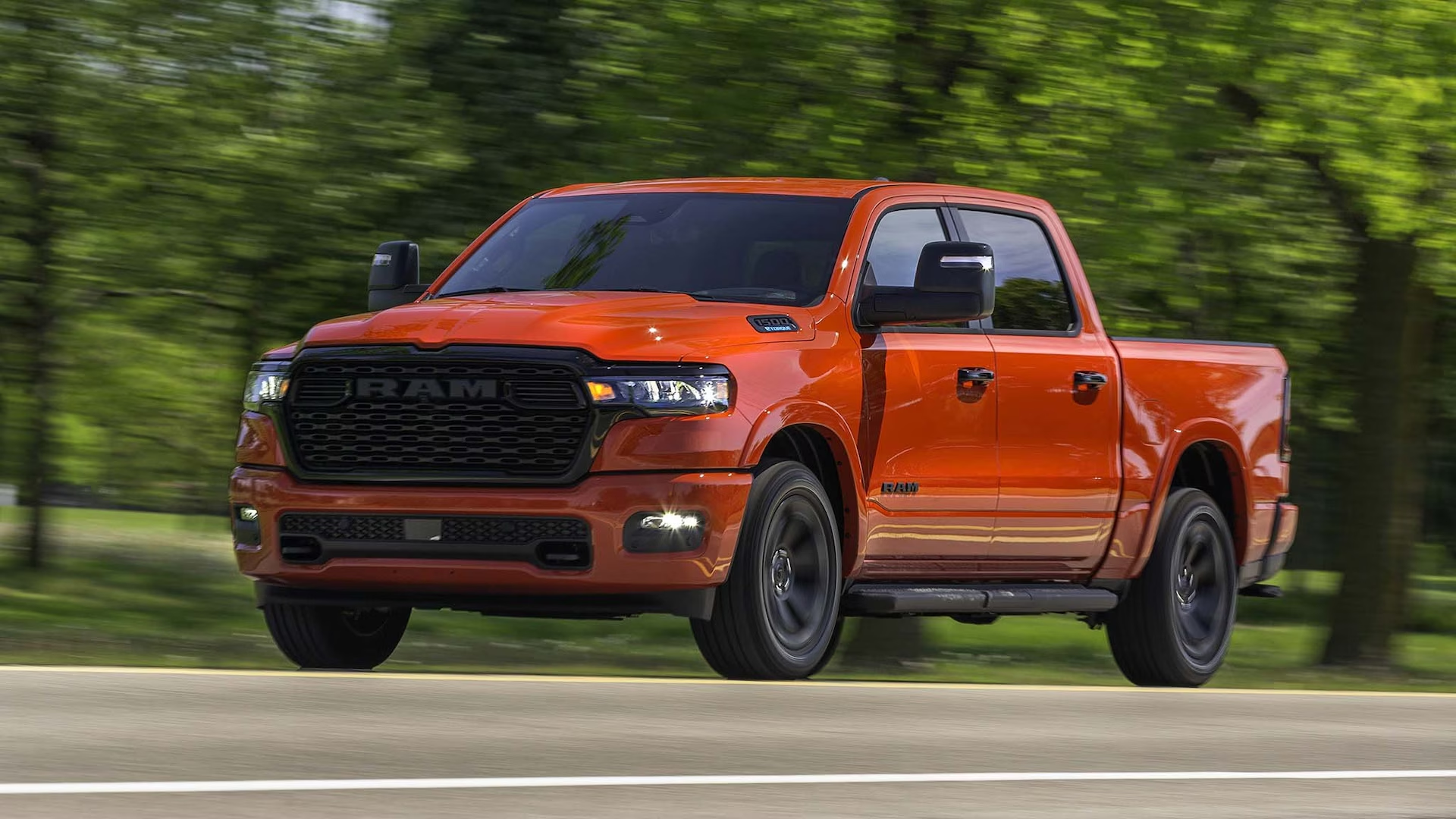
Para los que necesitan un vehículo de trabajo robusto, Simi Valley CDJR tiene una impresionante selección de Ram. Ya sea que necesites una camioneta para trabajo pesado o algo más versátil para el día a día, las opciones de Ram como el Ram 1500, el Ram 2500 y el Ram 3500 no solo ofrecen una excelente capacidad de remolque, sino que también están equipados con tecnologías avanzadas y características de comodidad que garantizan una experiencia de conducción superior.
Servicios y Beneficios en Simi Valley CDJR
Lo que distingue a Simi Valley Chrysler Dodge Jeep Ram de otros concesionarios es su enfoque en la satisfacción del cliente. Desde la compra hasta el mantenimiento continuo de tu vehículo, este concesionario está comprometido en brindarte la mejor experiencia posible.
Financiamiento Personalizado
El equipo de financiamiento en Simi Valley CDJR entiende que cada cliente tiene necesidades financieras únicas. Ya sea que estés comprando tu primer vehículo o busques una opción de financiamiento más flexible, el personal del concesionario trabajará contigo para encontrar un plan que se ajuste a tu presupuesto. Con opciones de arrendamiento y financiamiento a tasas competitivas, puedes estar seguro de que obtendrás una excelente oferta.
Servicio y Mantenimiento de Primera Clase
El mantenimiento y servicio de tu vehículo son esenciales para asegurarte de que siga funcionando al máximo rendimiento. Simi Valley CDJR cuenta con un equipo de técnicos certificados que brindan servicios de mantenimiento preventivo y reparación para todos los modelos Chrysler, Dodge, Jeep y Ram. Desde cambios de aceite hasta reparaciones más complejas, el concesionario tiene todo lo necesario para mantener tu vehículo en excelentes condiciones.
Repuestos Originales
Para garantizar la durabilidad y el rendimiento de tu vehículo, Simi Valley CDJR solo utiliza repuestos originales de fábrica. Ya sea que necesites una pieza de reemplazo o quieras mejorar tu vehículo con accesorios, puedes confiar en que el concesionario tiene todo lo necesario para satisfacer tus necesidades.
Promociones y Ofertas Especiales
Simi Valley CDJR también ofrece promociones y ofertas especiales para hacer la compra de tu vehículo aún más accesible. Desde descuentos en modelos seleccionados hasta incentivos de financiamiento a tasas bajas, siempre hay algo que aprovechar. No olvides consultar las ofertas de RAM y las promociones especiales que suelen cambiar, lo que te permite aprovechar los mejores precios disponibles.
Por Qué Elegir Simi Valley CDJR
Al comprar un vehículo en Simi Valley Chrysler Dodge Jeep Ram, no solo estás adquiriendo un automóvil, sino que también te beneficias de una experiencia de compra excepcional. El equipo de ventas se enfoca en brindarte un servicio personalizado, asegurándose de que encuentres el vehículo perfecto para ti. Ya sea que estés interesado en un Jeep Wrangler, un Ram 1500 o un Dodge Charger, el concesionario ofrece una variedad de opciones para todos los gustos y necesidades.
Además, el compromiso con la comunidad de Simi Valley hace que este concesionario sea aún más especial. El equipo en Simi Valley CDJR no solo se dedica a vender autos, sino a ser una parte activa de la vida en la ciudad, participando en eventos locales y apoyando iniciativas que mejoran la comunidad.
Conclusión
Si estás buscando un nuevo Chrysler, Dodge, Jeep o Ram en California, Simi Valley Chrysler Dodge Jeep Ram es el lugar al que debes acudir. Con una amplia selección de vehículos, financiamiento flexible, un equipo de servicio experto y una dedicación incansable al cliente, este concesionario te ofrece todo lo que necesitas para hacer tu experiencia de compra de autos en California lo más fácil y agradable posible. Ven a Simi Valley CDJR y encuentra el vehículo de tus sueños hoy mismo.
Simi Valley CDJR Featured On Teachable
Simi Valley Chrysler Dodge Jeep Ram (Simi Valley CDJR) is proud to announce that it has been featured on Teachable, a leading platform for education and knowledge sharing. This exciting feature highlights the dealership’s commitment to providing top-notch resources for car buyers and enthusiasts in California.
What This Feature Means for Simi Valley CDJR
The recognition from Teachable showcases Simi Valley CDJR’s dedication to enhancing the car buying experience. The feature, titled Buying New and Used Cars in California at Simi Valley Chrysler Dodge Jeep Ram, offers valuable insights into the car buying process, tailored specifically for those in the California area. It’s an excellent resource for anyone considering purchasing a new or used vehicle, providing key details on what to look for, how to finance a car, and how to ensure you’re getting the best deal.
This feature underscores the dealership’s role not just as a seller, but as a trusted educator for those in the market for their next car. Through Teachable, Simi Valley CDJR is able to share its wealth of knowledge with potential buyers, offering a smooth and transparent purchasing process.
Key Highlights of the Teachable Feature
- Comprehensive Buying Guide: The feature covers all the essential steps to buying a new or used car, from understanding different car types to tips on choosing the right financing options.
- Expert Advice on Financing: Simi Valley CDJR takes the mystery out of car financing with simple explanations of loan terms, rates, and down payments.
- Local Focus: Special attention is given to the unique aspects of buying a car in California, including state-specific regulations and advantages, ensuring that local customers are well-informed.
- Customer-Centric Approach: The dealership’s customer-first philosophy is evident throughout the feature, with sections dedicated to providing personalized recommendations based on different needs and budgets.
Why Teachable?
Teachable has built a stellar reputation as a premier platform for delivering high-quality educational content, making it the ideal partner for Simi Valley Chrysler Dodge Jeep Ram (Simi Valley CDJR) to share its expertise with car buyers. By being featured on Teachable, Simi Valley CDJR is taking its commitment to customer education and service to the next level, offering valuable resources that go beyond the traditional car shopping experience.
As a dealership that prides itself on providing exceptional customer service, Simi Valley CDJR continually looks for innovative ways to assist buyers in navigating the often complex and overwhelming process of purchasing a vehicle. The dealership’s collaboration with Teachable underscores its dedication to helping customers make informed decisions at every stage of the buying process, from selecting the right vehicle to understanding financing options and ensuring that they get the best deal.
This feature not only highlights the dealership’s role as an educator but also reinforces its reputation as a trusted source of automotive knowledge in California. By providing a comprehensive buying guide, expert advice on financing, and insights into state-specific regulations, Simi Valley CDJR ensures that every customer—whether they’re purchasing their first car or their fifth—has access to the information they need to make confident, well-informed choices.
In addition to offering valuable content, Teachable also provides a platform for Simi Valley CDJR to engage with customers in a more interactive and meaningful way. The dealership is able to reach a wider audience and offer personalized, easy-to-understand advice that addresses the unique needs and preferences of each buyer. This customer-centric approach helps to build trust and strengthen the relationship between the dealership and its clientele.
By featuring its car-buying resources on Teachable, Simi Valley CDJR is further enhancing its already strong online presence and establishing itself as a go-to authority for automotive advice in California. The dealership’s commitment to education and transparency ensures that customers have the tools they need to make sound decisions—no matter their level of experience. Whether you’re a seasoned car buyer or a first-time shopper, the information available on Teachable empowers you to approach your purchase with confidence, ensuring that you make the most informed decision possible.
Ultimately, this collaboration with Teachable serves as a testament to Simi Valley CDJR’s dedication to providing an exceptional, customer-focused car buying experience. By leveraging educational resources, the dealership is positioning itself not only as a place to buy a car but also as a trusted partner who helps customers feel supported and confident throughout the entire process.
How to Access the Feature
To learn more, visit the Buying New and Used Cars in California at Simi Valley Chrysler Dodge Jeep Ram feature on Teachable by following this link: Simi Valley Chrysler Dodge Jeep Ram Teachable Feature.
Conclusion
With its feature on Teachable, Simi Valley CDJR is taking its customer service and educational resources to the next level. Whether you’re a first-time car buyer or an experienced driver looking for a new ride, Simi Valley CDJR has the expertise to guide you every step of the way. Visit the Teachable link today and start your journey towards a smarter car purchase!
(Simi Valley CDJR) is dedicated to providing valuable insights and guidance throughout your car-buying journey. This new collaboration with Teachable elevates the dealership’s reputation as a leader in both the automotive industry and customer service.
In addition to offering an easily navigable guide on car purchasing, financing, and California-specific regulations, Simi Valley CDJR’s feature on Teachable further demonstrates the dealership’s commitment to transparency and education. By leveraging the platform, customers can access a wealth of information at their fingertips, empowering them to make informed decisions and ensuring their car-buying experience is as seamless as possible.
Don’t miss out on this exceptional resource—visit the feature today and get started on your journey toward owning your dream car at Simi Valley CDJR. Whether you’re seeking a new or used car, our team is here to assist you every step of the way. Visit the link today to discover why Simi Valley CDJR is your trusted partner in car buying.
2025 Jeep Compass Sport Specifications: The Ultimate Compact SUV for All Your Adventures
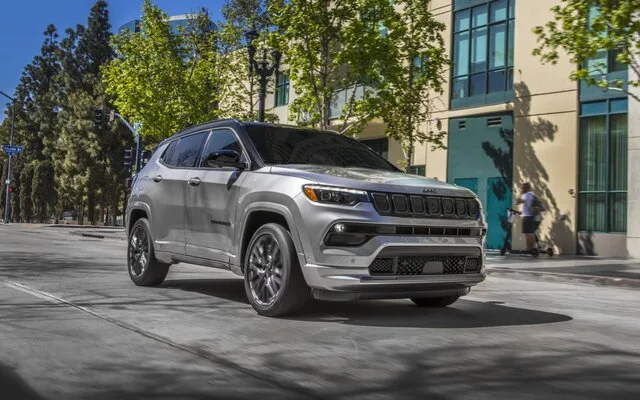
The 2025 Jeep Compass Sport is an exceptional compact SUV that combines Jeep’s signature ruggedness with modern design, advanced technology, and impressive performance. Whether navigating urban streets, tackling off-road trails, or embarking on a road trip, the Compass Sport offers a versatile and dynamic driving experience that is perfect for those who want both adventure and practicality in one vehicle.
In this comprehensive article, we’ll break down the key specifications of the 2025 Jeep Compass Sport to help you understand exactly what makes this SUV so special. From engine options and performance features to interior amenities, safety systems, and technology offerings, we’ll cover every important aspect of this SUV that is designed to fit seamlessly into your lifestyle.
Engine and Performance Specifications
The 2025 Jeep Compass Sport delivers impressive performance with a variety of engine and drivetrain options designed to cater to different driving needs. Whether you’re commuting, traveling, or off-roading, this SUV has the capability to get you where you need to go.
Engine Options:
- 2.4-liter Inline-4 (I-4) Engine: The standard engine for the 2025 Compass Sport, the 2.4-liter I-4 delivers 180 horsepower and 175 lb-ft of torque. This engine is perfect for those who seek a balance of power and fuel efficiency. It provides enough muscle for city driving and highway cruising while maintaining decent fuel economy.
Transmission:
- 6-Speed Manual Transmission: Available for drivers who prefer to be more engaged with the vehicle’s performance, the manual transmission allows for a more connected driving experience.
- 9-Speed Automatic Transmission: The available 9-speed automatic transmission delivers smooth shifts and enhances performance during both low-speed city driving and higher-speed highway cruising. This option is especially ideal for those who prioritize comfort and ease during daily commutes.
Drivetrain:
- Front-Wheel Drive (FWD): The base model of the 2025 Jeep Compass Sport comes with FWD, making it more efficient for everyday driving in urban and suburban environments.
- All-Wheel Drive (AWD): The available AWD system provides extra traction and stability when driving in adverse conditions such as rain, snow, or off-road trails. This drivetrain system ensures that the Compass Sport can handle rough weather and light off-roading with ease.
Towing Capacity:
- The 2025 Jeep Compass Sport offers a towing capacity of up to 2,000 pounds when properly equipped, making it perfect for hauling trailers, boats, or recreational equipment. Whether you’re going on a camping trip or taking a boat to the lake, the Compass Sport can handle the load with ease.
Fuel Efficiency:
- The 2.4-liter I-4 engine offers an estimated 22 mpg in the city and 31 mpg on the highway. These fuel economy numbers are impressive for a compact SUV, making the Compass Sport both economical and practical for daily driving and long road trips.
Exterior Design and Dimensions
The exterior of the 2025 Jeep Compass Sport perfectly embodies the brand’s rugged, adventurous spirit while also exuding modern elegance. Jeep’s signature bold design language can be seen in the front grille, wide stance, and strong body lines, giving the Compass Sport a commanding presence on the road.
Dimensions:
- Overall Length: 173.4 inches
- Width: 73.8 inches
- Height: 64.8 inches
- Wheelbase: 103.8 inches
- Ground Clearance: 8.2 inches (FWD) / 8.6 inches (AWD)
With a compact footprint, the Compass Sport is easy to maneuver in tight spaces while still offering ample interior space for passengers and cargo. The SUV’s generous ground clearance allows it to confidently navigate uneven terrain and rough roads, especially when equipped with the AWD system.
Wheels:
- Standard 17-inch alloy wheels are available on the base model, but 18-inch wheels are available on higher trims or as an upgrade, adding an extra touch of sportiness to the vehicle’s exterior.
Lighting:
- The 2025 Jeep Compass Sport comes equipped with LED daytime running lights and available LED headlights, which not only enhance the vehicle’s appearance but also improve visibility for added safety.
Roof Options:
- The Gloss Black Roof package adds a sleek, premium look to the SUV’s rugged design, providing a contrast against the body color. This option is perfect for those who want to personalize their Compass Sport.
Interior Features and Technology
The interior of the 2025 Jeep Compass Sport is thoughtfully designed to offer comfort, convenience, and cutting-edge technology. Jeep has focused on creating a spacious cabin with a combination of premium materials, user-friendly technology, and customizable options to meet the needs of both drivers and passengers.
Seating Capacity and Configuration:
- The 2025 Compass Sport seats up to 5 passengers, offering ample space in both the front and rear seats.
- The front seats come with manual adjustments, and the driver’s seat can be upgraded to an 8-way power-adjustable seat for added comfort. The rear seats are also spacious, providing plenty of legroom for adults or children.
Cargo Space:
- The 60/40 split-folding rear seat configuration allows you to expand the cargo area when needed. When the seats are folded down, the 2025 Compass Sport offers up to 59.8 cubic feet of cargo space, which is excellent for storing luggage, outdoor gear, or any other items you need to haul.
Uconnect Infotainment System:
- The 7-inch Uconnect touchscreen is the centerpiece of the dashboard, providing easy access to the vehicle’s infotainment, navigation, and connectivity features.
- The system comes standard with Apple CarPlay and Android Auto integration, allowing you to seamlessly connect your smartphone and access apps, music, and navigation directly from the touchscreen.
- Bluetooth connectivity and USB ports are standard, ensuring that you and your passengers can stay connected while on the go.
Premium Sound System:
- For audiophiles, the 2025 Compass Sport offers an available Alpine® Premium Audio System, delivering rich sound quality for an enhanced listening experience during drives.
Climate Control:
- The dual-zone automatic climate control system ensures that both the driver and passengers stay comfortable by allowing them to set their desired temperatures. Heated front seats are also available for cold-weather climates.
Safety and Driver-Assistance Features
Jeep places a high emphasis on safety, and the 2025 Compass Sport is equipped with an impressive suite of driver-assistance technologies to keep you safe on every journey.
Standard Safety Features:
- Blind-Spot Monitoring: Alerts you to vehicles in your blind spots, helping you make safer lane changes.
- Rear Cross-Traffic Alert: Warns you of approaching vehicles when reversing out of parking spaces.
- ParkSense Rear Park Assist: Helps detect obstacles when reversing, making it easier to park and avoid collisions.
- Forward Collision Warning with Active Braking: Detects potential collisions ahead and applies the brakes if necessary to prevent or mitigate an impact.
- Lane Departure Warning: Alerts you if you unintentionally drift out of your lane, helping you stay on course.
Other Safety Features:
- Traction Control: Ensures that the Compass Sport maintains grip on slippery or uneven surfaces.
- Electronic Stability Control (ESC): Helps maintain vehicle stability, particularly in emergency situations.
- Multiple Airbags: The Compass Sport is equipped with front, side, and curtain airbags to protect all occupants in the event of a collision.
Pricing and Trims
The 2025 Jeep Compass Sport offers excellent value for those seeking a compact SUV with advanced features, off-road capabilities, and a rugged design. The starting price for the 2025 Compass Sport is approximately $26,000 for the base model, with higher trims offering additional features and packages.
Conclusion: A Versatile Compact SUV Built for Adventure
The 2025 Jeep Compass Sport is an outstanding choice for those looking for a compact SUV that blends off-road capability with everyday practicality. With its impressive performance, rugged design, spacious interior, and advanced safety features, the Compass Sport is ready to handle whatever life throws your way, whether it’s navigating city streets or exploring the great outdoors.
For adventure seekers, commuters, and families alike, the 2025 Jeep Compass Sport offers a perfect balance of power, comfort, and versatility. If you’re ready to take your driving experience to the next level, the Compass Sport is the vehicle for you. Visit your local Jeep dealership today to test drive the 2025 Jeep Compass Sport and experience it firsthand.

The 2025 Jeep Compass Sport stands as a testament to Jeep’s commitment to delivering rugged off-road capabilities while maintaining the comfort, convenience, and efficiency needed for daily urban life. This compact SUV is built for those who live an active lifestyle, blending adventurous spirit with practical functionality. Whether you’re taking on rugged trails, navigating busy city streets, or embarking on a family road trip, the 2025 Jeep Compass Sport is designed to meet your needs.
In this blog, we’ll explore all the key features that make the 2025 Jeep Compass Sport one of the most versatile vehicles in its class. From its powerful engine and off-road capabilities to its advanced technology and safety features, we’ll cover everything you need to know about this remarkable compact SUV.
Engine Performance: Power, Efficiency, and Versatility
At the heart of the 2025 Jeep Compass Sport is a capable 2.4-liter I-4 engine that produces 180 horsepower and 175 lb-ft of torque. This engine delivers a perfect balance of power and efficiency, making it ideal for both daily commuting and adventurous off-road journeys. Whether you’re navigating city streets or tackling gravel roads, the Compass Sport’s engine provides the performance you need to take on any challenge.
For those who need a little extra performance, the 2025 Compass Sport also offers an available 9-speed automatic transmission, delivering smooth gear shifts and responsive acceleration. This transmission is paired with either a front-wheel drive (FWD) or an all-wheel drive (AWD) system, providing versatility for different driving conditions. The AWD system ensures enhanced traction when driving through inclement weather, muddy trails, or snow-covered roads, giving you the confidence to go wherever the road takes you.
In terms of fuel economy, the Compass Sport is efficient, offering an estimated 22 mpg in the city and 31 mpg on the highway. These figures make it one of the most fuel-efficient vehicles in its class, so you can go farther without worrying about frequent stops at the pump.
Exterior Design: Rugged and Stylish
The exterior design of the 2025 Jeep Compass Sport combines rugged off-road styling with sleek, modern aesthetics. With its bold front grille, LED headlights, and sculpted body, the Compass Sport makes a statement wherever it goes. The Jeep brand’s signature seven-slot grille and aggressive stance ensure that the Compass Sport stands out in both urban and off-road environments.
For a more sporty look, the Compass Sport is available with a Gloss Black Roof package, adding a premium touch to its rugged appearance. The SUV’s 17-inch wheels (or optional 18-inch wheels) are designed to provide stability on all types of roads, and the vehicle’s elevated ride height ensures that it can handle rough terrain with ease. The 2025 Compass Sport is not just a stylish SUV, it’s built for functionality, with a design that enhances its off-road capabilities.
Jeep has also incorporated a variety of functional design elements, such as skid plates and reinforced wheel arches, ensuring that the Compass Sport can handle everything from rocky trails to uneven city streets. Whether you’re parking in a crowded lot or cruising down a mountain pass, the Compass Sport’s exterior design ensures that you can do it all with confidence.
Interior: Comfortable, Practical, and Full of Tech
The 2025 Jeep Compass Sport offers a comfortable and practical interior that’s perfect for both daily commutes and long road trips. Despite being a compact SUV, the Compass Sport provides plenty of space for both passengers and cargo. The vehicle’s cabin features high-quality materials, including soft-touch plastics and durable fabrics, giving the interior a refined yet rugged feel.
The front seats are designed for comfort, with available 8-way power-adjustable driver’s seat and 6-way power-adjustable passenger’s seat. Whether you’re sitting behind the wheel or as a passenger, you’ll enjoy a comfortable driving experience with ample legroom and support. The second-row seats are equally spacious, offering enough room for taller passengers. When it’s time to haul gear or luggage, the Compass Sport offers a generous 60/40 split-folding rear seat configuration, allowing you to expand the cargo area up to 59.8 cubic feet.
Technology plays a major role in the interior experience of the 2025 Jeep Compass Sport. The Uconnect 7-inch touchscreen is the centerpiece of the dashboard, featuring Apple CarPlay and Android Auto integration for easy smartphone connectivity. The system allows you to access navigation, music, calls, and messages while keeping your hands safely on the wheel. For those who want more tech, the available Uconnect 8.4 system offers an upgraded interface with additional features such as a larger screen, satellite radio, and premium sound options.
Other notable interior features include dual-zone automatic climate control, heated front seats, and a leather-wrapped steering wheel, ensuring that both driver and passengers are comfortable no matter the conditions outside.
Safety and Driver-Assistance Features: Protection on Every Journey
Jeep places a high priority on safety, and the 2025 Jeep Compass Sport is equipped with a comprehensive suite of advanced driver-assistance features to keep you and your passengers safe on the road. Some of the key safety features include:
- Blind-Spot Monitoring: Helps you change lanes safely by alerting you when another vehicle is in your blind spot.
- Rear Cross-Traffic Alert: Alerts you to approaching vehicles when reversing out of parking spaces.
- Forward Collision Warning with Active Braking: Uses radar and sensors to detect potential collisions and applies the brakes if necessary.
- Lane Departure Warning: Notifies you if you unintentionally drift out of your lane without signaling.
- ParkSense Rear Park Assist System: Uses ultrasonic sensors to help you park and avoid obstacles when reversing.
In addition to these standard features, the 2025 Compass Sport is built with a high-strength steel frame, reinforced side-impact beams, and multiple airbags throughout the cabin to protect occupants in the event of a collision. Jeep has also designed the vehicle with an advanced traction control system that ensures the Compass Sport stays stable on slippery surfaces and rough terrain.
Off-Road Performance: Built for Adventure
No Jeep is complete without exceptional off-road capabilities, and the 2025 Compass Sport does not disappoint. With Jeep’s legendary Active Drive 4×4 system, the Compass Sport can easily transition from every day driving to off-road exploration. Whether you’re navigating through snow, mud, or gravel, the all-wheel drive system automatically engages when needed, providing superior traction and control.
For those who crave even more off-road capability, the Trailhawk trim offers enhanced features, including an increased ride height, skid plates, and off-road tires, giving you the tools you need for more challenging trails.
Pricing and Value: An Accessible Adventure-Ready SUV
The 2025 Jeep Compass Sport offers great value for those seeking a compact SUV with a balance of off-road capabilities, technology, and affordability. Starting at a competitive price point, the Compass Sport provides a wide range of standard features, including the Uconnect system, advanced safety technologies, and Jeep’s renowned off-road performance.
With the option to add additional packages and features, the Compass Sport can be personalized to meet your specific needs, whether you’re looking for a more luxurious interior or additional off-road enhancements. It’s a well-rounded SUV that offers both adventure-ready features and everyday convenience, making it a smart choice for families, outdoor enthusiasts, and anyone who wants an SUV that can do it all.
FAQs about the 2025 Jeep Compass Sport
1. What is the towing capacity of the 2025 Jeep Compass Sport?
The 2025 Jeep Compass Sport offers an impressive towing capacity of up to 2,000 pounds when properly equipped. This makes it an excellent choice for hauling small trailers, boats, or gear for your outdoor adventures.
2. Is the 2025 Jeep Compass Sport good for off-roading?
Yes, the 2025 Jeep Compass Sport is designed with off-road capabilities in mind. Equipped with Jeep’s Active Drive 4×4 system, the Compass Sport can handle light off-roading with ease. For even more rugged terrain, you can opt for the Trailhawk trim, which offers enhanced off-road features such as an increased ride height, skid plates, and off-road tires.
3. Does the 2025 Jeep Compass Sport come with a warranty?
Yes, the 2025 Jeep Compass Sport comes with a 3-year/36,000-mile basic warranty and a 5-year/60,000-mile powertrain warranty, providing peace of mind for the long haul. Jeep’s warranty coverage is designed to keep you on the road with minimal concerns.
Conclusion: The 2025 Jeep Compass Sport – Ready for Adventure, Perfect for Daily Life
The 2025 Jeep Compass Sport is a true blend of rugged off-road capability, everyday practicality, and modern technology. With its powerful engine options, advanced safety features, comfortable interior, and legendary off-road performance, it stands as one of the best compact SUVs for those who want to explore the world while maintaining the comforts of daily life.
Whether you’re venturing into the wild, commuting through the city, or taking the family on a road trip, the 2025 Jeep Compass Sport is ready for whatever journey lies ahead. It’s the ideal choice for drivers who value both adventure and everyday convenience in their vehicles.
Ready to experience the 2025 Jeep Compass Sport for yourself? Visit your nearest Jeep dealership to take a test drive and discover why this compact SUV is the perfect companion for your next adventure.
2025 Dodge Durango GT: A Comprehensive Overview
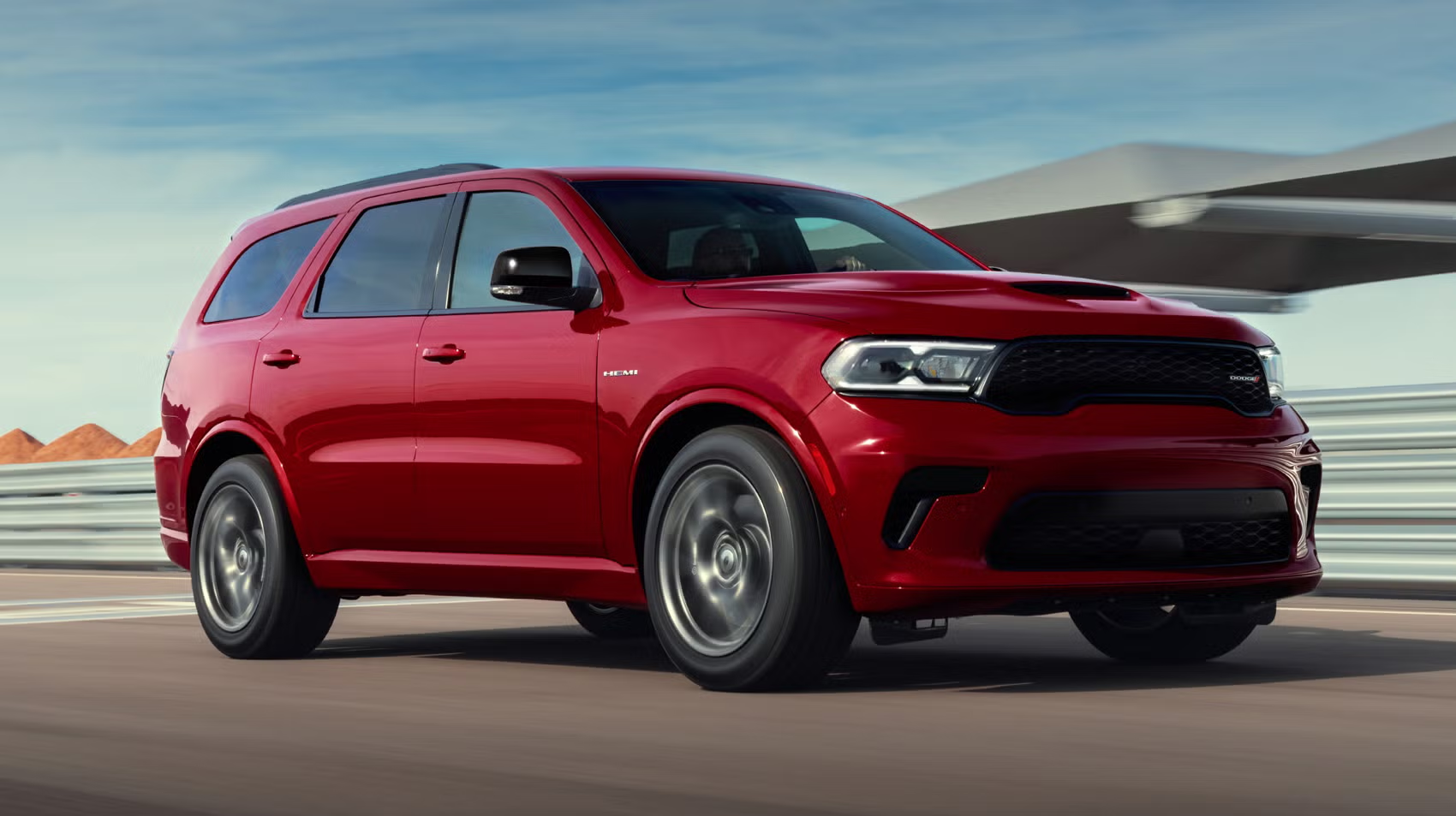
The 2025 Dodge Durango GT is a standout in the world of mid-size SUVs, offering a perfect blend of rugged performance, high-end luxury, and advanced technology. As the automotive industry continues to evolve with increased demand for versatility, the Durango GT remains a testament to the power, performance, and refinement that the Dodge brand is known for. In this essay, we will explore the various features and specifications that make the 2025 Dodge Durango GT an exceptional choice for buyers looking for an SUV that combines power, luxury, and technology.
Performance: The Heart of the Durango GT
The 2025 Dodge Durango GT doesn’t just look like a powerhouse—it is one. Under the hood, the Durango GT comes with multiple engine options that cater to different types of drivers. The most common choice is the 3.6-liter Pentastar V6 engine, which delivers an impressive 295 horsepower and 260 lb-ft of torque. This engine offers a perfect balance between fuel efficiency and power, making it suitable for everyday driving and long road trips.
For those who demand even more power, the Durango GT is also available with a 5.7-liter HEMI V8 engine, producing 360 horsepower and 390 lb-ft of torque. This engine provides thrilling acceleration, making the Durango GT not only capable of towing large loads but also providing an exhilarating driving experience.
Both engines come with an 8-speed automatic transmission, ensuring smooth shifts and efficient power delivery. The Durango GT also offers rear-wheel drive as standard, with all-wheel drive available as an option. All-wheel drive is a significant feature, especially for drivers who live in areas with harsh weather conditions or who prefer the added traction when off-roading.
The 2025 Durango GT’s towing capacity is another notable performance highlight. When equipped with the 5.7-liter V8 engine, the Durango GT can tow up to 8,700 pounds, making it one of the most powerful SUVs in its class for towing. This towing capacity allows it to haul trailers, boats, and other heavy loads with ease, making it a perfect option for adventure-seekers and families who need a reliable vehicle for trips.
Exterior Design: Bold and Aggressive
The exterior design of the 2025 Dodge Durango GT is a bold statement of its performance capabilities. With its muscular stance, wide grille, aggressive front bumper, and sharp lines, the Durango GT exudes confidence and power. The front end features Dodge’s iconic crosshair grille, which is flanked by sleek LED headlights, giving the vehicle a modern and intimidating presence on the road.
The body design is sleek yet robust, with a wide stance that enhances its stability, especially during high-speed maneuvers or off-road excursions. The 2025 Durango GT also features an available Gloss Black Roof and Wheel Package, adding a touch of sportiness to its already impressive design. The vehicle’s sculpted curves and aerodynamic elements help reduce drag, improving fuel efficiency and performance.
One of the standout exterior features is the 20-inch wheels, which are finished in a stylish black or silver hue, depending on the trim. These large wheels not only improve the vehicle’s aesthetics but also contribute to its overall handling and performance, ensuring that the Durango GT remains stable at high speeds and offers a smooth ride on various road conditions.
Interior: Luxury Meets Utility
The interior of the 2025 Dodge Durango GT is a seamless fusion of luxury, comfort, and practicality. The cabin is spacious, with seating for up to seven passengers, making it an ideal choice for larger families or those who frequently travel with friends. The Durango GT is equipped with high-quality materials throughout the cabin, including leather-trimmed seats, a leather-wrapped steering wheel, and soft-touch surfaces that add to the overall feeling of luxury.
The front seats are powered, offering multiple adjustments for maximum comfort, while the second-row seats are also spacious, allowing for ample legroom and comfort. The third-row seats, though tighter than the first and second rows, are still suitable for children or smaller adults. The seating layout can be configured to maximize cargo space when the third-row seats are folded down, offering up to 85.1 cubic feet of cargo capacity.
For tech enthusiasts, the 2025 Durango GT is loaded with advanced technology features that enhance both convenience and entertainment. The 8.4-inch Uconnect touchscreen is the centerpiece of the dashboard, offering easy access to navigation, entertainment, and vehicle settings. Apple CarPlay and Android Auto are standard, allowing drivers to seamlessly integrate their smartphones with the vehicle’s infotainment system. Additionally, a 10.1-inch Uconnect screen is available as an upgrade for those who want even more technology at their fingertips.
The Durango GT also features an available Harman Kardon audio system, providing a premium sound experience that is perfect for audiophiles who want crystal-clear sound while on the road. Other interior amenities include tri-zone automatic climate control, heated and ventilated front seats, and an optional panoramic sunroof that allows passengers to enjoy natural light and fresh air during their travels.
Safety Features: A Commitment to Protection
Dodge has always placed a high priority on safety, and the 2025 Durango GT is no exception. The vehicle is equipped with a suite of advanced safety features that provide both active and passive protection for the driver and passengers. Standard safety features include Blind-Spot Monitoring, Rear Cross-Traffic Alert, and a rearview camera that aids in parking and reversing.
The Durango GT also offers advanced driver-assistance technologies, such as Adaptive Cruise Control, Lane Departure Warning, and Forward Collision Warning with Active Braking. These features work together to help prevent accidents and mitigate potential risks, making the Durango GT one of the safest vehicles in its class.
In terms of crash protection, the 2025 Durango GT is built with a strong frame and multiple airbags to protect passengers in the event of a collision. Additionally, the vehicle features reinforced side-impact beams and a crumple zone that helps absorb energy during a crash, reducing the force that reaches the occupants.
Fuel Efficiency: A Balanced Approach
While performance is at the core of the 2025 Dodge Durango GT, fuel efficiency is also an important consideration for many buyers. The 3.6-liter V6 engine offers a respectable fuel economy, with an estimated 19 mpg in the city and 26 mpg on the highway. These numbers place the Durango GT in a competitive position within the mid-size SUV segment, providing a balance between power and efficiency.
The 5.7-liter V8 engine, while offering significantly more power, has a lower fuel efficiency rating, averaging 14 mpg in the city and 22 mpg on the highway. This reduction in fuel efficiency is typical of larger engines, but for those who prioritize performance and towing capacity, the tradeoff is well worth it.
Pricing and Trims: Value for Money
The 2025 Dodge Durango GT is available in a range of trim levels and configurations, allowing buyers to choose the one that best suits their needs and budget. The base price for the Durango GT starts at around $45,000, with higher trims and additional options pushing the price up to the mid-$50,000 range. For buyers who are looking for a high-performance SUV with a luxurious interior, ample space, and advanced technology, the Durango GT offers great value for the money.
Conclusion: A Powerhouse for the Modern Driver
In conclusion, the 2025 Dodge Durango GT is an exceptional choice for buyers seeking a mid-size SUV that delivers on all fronts. From its powerful engine options to its luxurious interior and advanced technology, the Durango GT offers a balanced package of performance, comfort, and utility. Whether you’re hauling a heavy load, embarking on a long road trip, or simply cruising around town, the Durango GT offers a driving experience that’s both thrilling and practical.
With its impressive towing capacity, high-tech features, and top-notch safety equipment, the 2025 Durango GT is ready to take on any challenge. Whether you’re an adventure enthusiast or a family looking for a reliable, stylish, and powerful vehicle, the Durango GT should be at the top of your list.
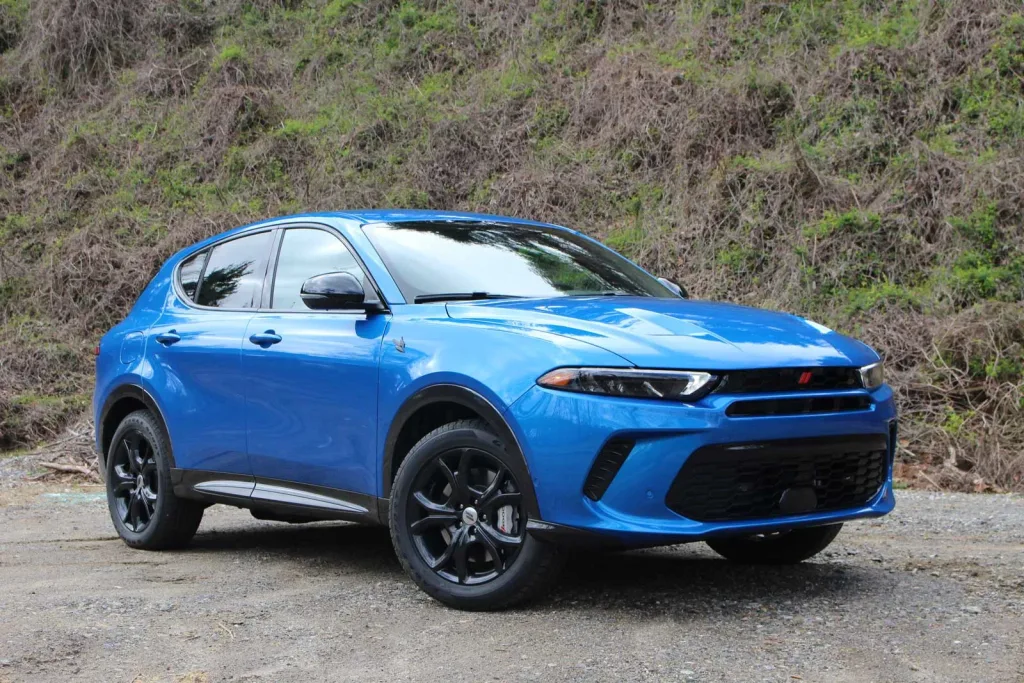
The 2024 Dodge Hornet R/T eAWD is not the usual compact SUV. It is quick, aggressive, efficient, and more performance-focused than most vehicles in its class. For drivers who want something smaller than a Durango but sharper than a basic crossover, the Hornet R/T eAWD makes a strong case.
This is Dodge’s plug-in hybrid performance SUV, which means it gives you gas power, electric driving capability, all-wheel drive, and serious torque in one compact package. If you want a daily driver that feels sporty without giving up SUV practicality, the 2024 Dodge Hornet R/T eAWD is worth a close look.
What Is the 2024 Dodge Hornet R/T eAWD?
The Dodge Hornet R/T eAWD is the plug-in hybrid version of the Hornet lineup. Unlike the gas-only Hornet GT, the R/T uses a turbocharged 1.3L four-cylinder engine paired with electric power. That setup gives the Hornet R/T stronger torque, better short-distance electric driving capability, and a more responsive feel around town.
According to Edmunds, the 2024 Dodge Hornet R/T and R/T Plus produce 288 horsepower and 383 lb-ft of torque. That is a lot of power for a compact SUV, especially one that still gives you plug-in hybrid flexibility.
Every 2024 Dodge Hornet comes with all-wheel drive, which gives the R/T eAWD better traction for daily driving, bad weather, and quick launches.
Performance That Feels Different
The biggest reason to consider the 2024 Dodge Hornet R/T eAWD is performance. This is not a slow economy crossover with a sporty badge. It has real power, quick response, and enough torque to make everyday driving feel more exciting.
The plug-in hybrid system helps the Hornet feel quick from low speeds because electric motors deliver instant torque. That makes it strong when pulling away from a stop, merging onto the freeway, or passing slower traffic.
Dodge also built the R/T with a performance personality. It feels more aggressive than many compact SUVs, and that matters if you want something fun without moving into a much larger vehicle.
Plug-In Hybrid Power
The Hornet R/T eAWD gives you the benefit of electric driving without forcing you to go fully electric. You can charge the battery for short electric trips, then rely on the gas engine for longer drives.
For commuting, errands, school runs, and local driving, the electric range can help reduce fuel use. For road trips, the gas engine removes the range anxiety that some drivers still worry about with fully electric vehicles.
Simi Valley Chrysler Dodge Jeep Ram notes that the 2024 Dodge Hornet R/T Plus eAWD offers an EPA-estimated 32 miles of electric range and about 360 miles of total range. That gives the Hornet a useful balance between efficiency and real-world convenience.
eAWD Capability
The “eAWD” part of the Hornet R/T matters. It means the vehicle uses electric all-wheel-drive capability to improve traction and response.
All-wheel drive is useful for more than just snow. It can help in rain, on loose roads, during quick acceleration, and in everyday driving where extra grip adds confidence. For a performance-focused compact SUV, eAWD helps the Hornet put its power down more effectively.
This makes the Hornet R/T a good fit for drivers who want SUV practicality but do not want something boring.
R/T vs. R/T Plus
The 2024 Dodge Hornet R/T and R/T Plus share the same core performance personality. Both use the plug-in hybrid powertrain and eAWD system. The difference is mainly in features and comfort.
The R/T is the better choice if you want the performance and plug-in hybrid setup without paying extra for every premium feature. The R/T Plus is the better choice if you want more convenience, upgraded interior equipment, and a more loaded feel.
If you care most about speed, power, and value, the regular R/T makes sense. If you want more comfort and technology, the R/T Plus is worth comparing.
Interior and Technology
Inside, the 2024 Dodge Hornet R/T eAWD has a driver-focused layout. It feels more modern and sporty than many compact SUVs. You get useful screens, clean controls, and the kind of cabin design that makes the vehicle feel more premium than its size suggests.
The Hornet also uses Dodge’s Uconnect system, which is one of the more familiar infotainment setups in the Stellantis lineup. Edmunds highlights the Hornet’s easy-to-use Uconnect 5 infotainment system as one of its strong points.
For daily use, that matters. A vehicle can have good performance, but if the technology is frustrating, it becomes annoying fast. The Hornet’s cabin keeps the main controls easy to understand.
Practical Compact SUV Size
The Hornet R/T eAWD is compact, which makes it easier to park, easier to maneuver, and more convenient for city driving than a larger SUV. But it still gives you SUV usefulness.
You get seating for five, a hatchback-style cargo area, and a higher driving position than a sedan. Edmunds specs list the Hornet with seating for five and 27 cubic feet of cargo capacity, giving it useful room for groceries, bags, work gear, or weekend items.
It is not built to replace a three-row SUV. It is built for drivers who want a compact SUV with more personality and performance than the usual choices.
Why Buy the 2024 Dodge Hornet R/T eAWD?
The biggest reason to buy the Hornet R/T eAWD is that it gives you a mix that is hard to find: plug-in hybrid efficiency, all-wheel drive, strong torque, aggressive styling, and compact SUV practicality.
Many compact SUVs focus only on fuel economy or basic transportation. The Hornet R/T is different. It feels more energetic, looks more aggressive, and delivers more power than many shoppers expect from a vehicle this size.
It is a smart choice if you want:
A compact SUV with real performance.
A plug-in hybrid without going fully electric.
Standard all-wheel drive confidence.
A practical daily driver with a sporty feel.
A vehicle that stands out from common small SUVs.
Things to Consider Before Buying
The Hornet R/T eAWD is a strong option, but it may not be right for every buyer. If you need maximum cargo space, a larger SUV may be better. If you do not plan to charge the battery, you may not get the full benefit of the plug-in hybrid system.
Reliability and ownership experience should also be considered. Edmunds owner reviews show mixed feedback, with some owners praising the Hornet’s fun driving experience and power, while others mention electrical issues and dealer visits. That does not mean every Hornet will have problems, but it does mean buyers should check warranty coverage, service records, and vehicle history if shopping used or demo inventory.
A professional inspection and a proper test drive are important before buying any used or remaining new vehicle.
2024 Dodge Hornet R/T eAWD for Sale in Simi Valley
If you are shopping for a 2024 Dodge Hornet R/T eAWD for sale, start by comparing available inventory, mileage, trim level, warranty status, and final selling price. A remaining new model, demo unit, or lightly used Hornet R/T may offer strong value depending on current incentives and dealer discounts.
You can browse new inventory, compare used inventory, or apply for financing before visiting the dealership.
If you have a current vehicle, checking your trade-in value can also help you understand your budget before making a decision.
Find Your 2024 Dodge Hornet R/T eAWD Today
The 2024 Dodge Hornet R/T eAWD is a compact SUV with a serious performance edge. It offers 288 horsepower, 383 lb-ft of torque, plug-in hybrid capability, available electric-only driving, standard all-wheel drive, and everyday practicality.
For drivers who want something efficient but still exciting, the Hornet R/T eAWD is one of the more interesting options in the compact SUV market. It is quick enough to feel fun, practical enough for daily life, and different enough to stand out.
Visit Simi Valley Chrysler Dodge Jeep Ram to explore the 2024 Dodge Hornet R/T eAWD, compare available models, and find the right compact performance SUV for your budget.
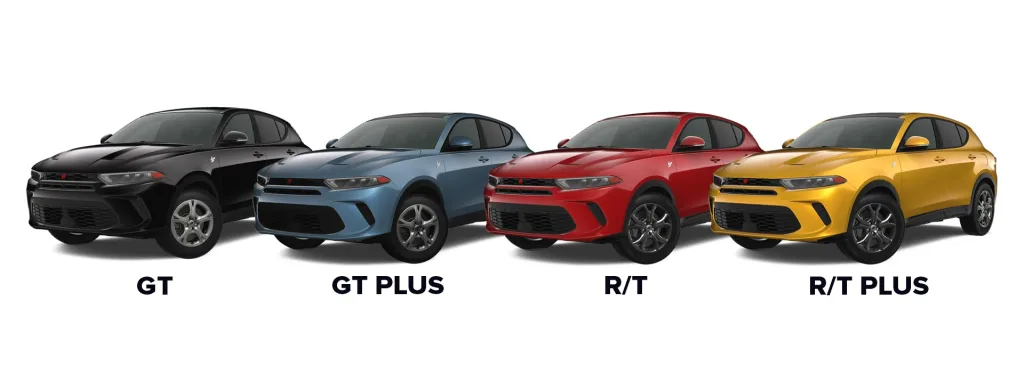
The 2024 Dodge Hornet has officially redefined the compact SUV segment by offering an exciting blend of performance, cutting-edge technology, and distinctive styling. Whether you’re looking for a performance-packed ride, a tech-savvy experience, or an efficient hybrid, the 2024 Dodge Hornet has something for everyone. In this blog, we’ll explore all the available trim levels for the 2024 Dodge Hornet, breaking down the unique features, performance specifications, and pricing to help you decide which Hornet trim is right for you.
Explore the new Dodge Hornet inventory at Simi Valley Chrysler Dodge Jeep Ram for more information on available trims and pricing.
Overview of the 2024 Dodge Hornet Trims
The 2024 Dodge Hornet is available in several trims, each offering distinct features and performance options. The key trims for the 2024 Dodge Hornet include:
- Dodge Hornet GT AWD
- Dodge Hornet R/T AWD
- Dodge Hornet GT AWD (Limited)
- Dodge Hornet R/T Plus AWD
Let’s break down each trim in detail to help you find the perfect Hornet that matches your driving style and preferences.
1. 2024 Dodge Hornet GT AWD: Performance Meets Style
The Dodge Hornet GT AWD is the standard trim level for those seeking a performance-oriented compact SUV. With its striking exterior design, powerful engine, and an array of standard features, the GT AWD provides an excellent balance of performance, efficiency, and practicality.
Performance Features
Under the hood, the Hornet GT AWD features a 1.3-liter turbocharged four-cylinder engine paired with a 6-speed automatic transmission. This engine delivers a respectable 285 horsepower and 383 lb-ft of torque, providing you with quick acceleration and strong passing power. The GT AWD offers a 0-60 mph time of 6.1 seconds, ensuring that you can enjoy thrilling performance every time you hit the road.
Interior and Technology
Inside, the Hornet GT AWD is packed with features that enhance both comfort and convenience. It comes with:
- Uconnect 5 infotainment system with a 10.1-inch touchscreen
- Apple CarPlay and Android Auto integration
- Alpine 6-speaker sound system
- Keyless entry and push-button start
The cabin offers a spacious layout with 41.0 inches of front legroom and 37.5 inches of rear legroom, ensuring that both the driver and passengers have plenty of space for a comfortable ride.
Pricing
The 2024 Dodge Hornet GT AWD starts at $31,000 USD, offering great value for those who want a high-performance compact SUV without breaking the bank.
Interested in learning more about the Hornet GT AWD? Explore the 2024 Dodge Hornet inventory at Simi Valley Chrysler Dodge Jeep Ram.
2. 2024 Dodge Hornet R/T AWD: The Hybrid Option
For those who want the perfect blend of performance and fuel efficiency, the 2024 Dodge Hornet R/T AWD is the ideal choice. This trim offers the same muscular design as the GT AWD but comes with a hybrid powertrain that delivers instant torque and impressive fuel economy.
Performance Features
The Hornet R/T AWD is powered by a 1.3-liter turbocharged engine paired with a high-performance electric motor. This hybrid powertrain produces a combined total output of 285 horsepower and 383 lb-ft of torque, ensuring that you get a smooth yet powerful drive.
With the addition of the electric motor, the R/T AWD benefits from improved fuel economy and the ability to drive in electric-only mode for short distances, making it a great choice for eco-conscious drivers.
Interior and Technology
Inside, the Hornet R/T AWD comes equipped with all the latest features, including:
- Uconnect 5 system with 12.3-inch digital display
- Wireless charging pad and Wi-Fi hotspot
- Heated front seats and dual-zone climate control
- Apple CarPlay and Android Auto integration
The cabin remains spacious with ample room for five passengers, making it perfect for family outings and daily commutes.
Pricing
The 2024 Dodge Hornet R/T AWD starts at $36,000 USD, a competitive price for those seeking hybrid efficiency without compromising on performance.
Explore the 2024 Dodge Hornet R/T AWD and check out the new inventory at Simi Valley Chrysler Dodge Jeep Ram for more details.
3. 2024 Dodge Hornet GT AWD (Limited): The Enhanced Performance Option
The 2024 Dodge Hornet GT AWD (Limited) is a step up from the GT AWD, offering additional luxury features and enhanced performance options. This trim is perfect for drivers who want more than just a powerful engine—they want a premium driving experience.
Performance Features
The Hornet GT AWD (Limited) features the same 1.3-liter turbocharged engine as the base GT AWD, but it comes with performance enhancements such as:
- Sport-tuned suspension
- Upgraded brakes for better stopping power
- Paddle shifters for a more engaging driving experience
This trim also includes 18-inch wheels, providing a sporty look while improving handling and stability on the road.
Interior and Technology
The GT AWD (Limited) trim comes with additional interior features, such as:
- Leather upholstery and premium seating
- Alpine 9-speaker sound system
- Upgraded Uconnect 5 system with a 12-inch touchscreen
- Heated and ventilated front seats
The cabin is designed to offer luxury without sacrificing practicality, providing ample space for both passengers and luggage.
Pricing
The Hornet GT AWD (Limited) starts at $38,000 USD, providing excellent value for those who want added luxury and performance.
Want to take the 2024 Dodge Hornet GT AWD (Limited) for a test drive? Visit Simi Valley Chrysler Dodge Jeep Ram for available options.
4. 2024 Dodge Hornet R/T Plus AWD: The Ultimate in Hybrid Luxury
The 2024 Dodge Hornet R/T Plus AWD is the top-tier trim, combining the best aspects of performance, luxury, and efficiency. This trim offers a fully equipped interior, advanced technology, and a refined hybrid powertrain.
Performance Features
The R/T Plus AWD delivers 285 horsepower and 383 lb-ft of torque from its hybrid powertrain, ensuring that you’ll have more than enough power for any driving situation. The advanced hybrid system provides excellent fuel economy and smooth, seamless acceleration.
Interior and Technology
The Hornet R/T Plus AWD offers a host of high-end features, such as:
- Panoramic sunroof for an open-air experience
- Nappa leather upholstery
- Advanced driver assistance features, including adaptive cruise control, lane-keeping assist, and blind-spot monitoring
- Dual-zone automatic climate control
- 12.3-inch digital display with navigation and real-time traffic updates
This trim also comes with premium sound systems and a wireless charging pad, ensuring you stay connected and comfortable.
Pricing
The 2024 Dodge Hornet R/T Plus AWD starts at $41,500 USD, offering a high-performance hybrid SUV with all the luxury and technology features you could ask for.
Explore the 2024 Dodge Hornet R/T Plus AWD and check out the new inventory at Simi Valley Chrysler Dodge Jeep Ram for more options.
Conclusion: Which 2024 Dodge Hornet Trim is Right for You?
The 2024 Dodge Hornet offers something for everyone, whether you’re after thrilling performance, hybrid efficiency, or luxury features. From the GT AWD with its sporty design to the fully loaded R/T Plus AWD, Dodge has created a vehicle that meets the needs of modern drivers. Each trim level provides a distinct blend of performance, comfort, and advanced technology, making it easy to find the Hornet that’s perfect for your lifestyle.
Ready to find the perfect 2024 Dodge Hornet trim? Visit Simi Valley Chrysler Dodge Jeep Ram today to browse the available inventory and take a test drive!
Frequently Asked Questions About the 2024 Dodge Hornet Trims
What are the 2024 Dodge Hornet trim levels?
The 2024 Dodge Hornet lineup includes four distinct trims:
- GT – the entry point with turbocharged power and standard AWD.
- GT Plus – adds luxury and tech upgrades such as leather upholstery and a 10.25-inch touchscreen.
- R/T – the plug-in hybrid model offering higher torque and electric driving capability.
- R/T Plus – the fully loaded performance-luxury version with premium audio and advanced safety systems.
Each trim builds upon the previous one with more features, performance options, and tech innovation.
What engine options are available in the 2024 Dodge Hornet?
There are two powertrains:
- GT / GT Plus: 2.0-liter turbocharged inline-four, 268 hp and 295 lb-ft, paired with a 9-speed automatic.
- R/T / R/T Plus: 1.3-liter turbo PHEV (Plug-In Hybrid Electric Vehicle) with dual motors, 288 hp and 383 lb-ft, paired with a 6-speed automatic.
Both include standard AWD for confident traction.
How fast is the 2024 Dodge Hornet GT 0-60 mph?
The Hornet GT accelerates from 0 to 60 mph in about 6.5 seconds, thanks to its turbocharged engine and all-wheel-drive grip. The Hornet R/T PHEV is even quicker — roughly 5.6 seconds with the “PowerShot” boost feature activated.
What are the configurations for the 2024 Dodge Hornet?
Configurations vary by trim, but all models come with AWD and a choice of performance or hybrid powertrains.
- GT / GT Plus: gasoline only.
- R/T / R/T Plus: plug-in hybrid with electric-assist torque and an estimated 32 miles of EV-only range.
What packages are available for the 2024 Dodge Hornet?
Buyers can add several packages, including:
- Track Pack: 20-inch wheels, sport suspension, Alcantara seats, and red brake calipers.
- Tech Pack: adaptive cruise control, lane-keep assist, and 360-degree camera.
- Blacktop Package: gloss-black exterior accents for a stealthy look.
These packages allow you to tailor your Hornet for performance, comfort, or style.
What colors are offered on the 2024 Dodge Hornet?
Exterior color choices include Hot Tamale Red, 8-Ball Black, Acapulco Gold, Blue Bayou, Gray Cray, Q Ball White, and Blue Steele.
Interior options vary by trim — cloth and leather combinations in black or red accent stitching are available on Plus and R/T models.
How much does the 2024 Dodge Hornet weigh?
Curb weight ranges from approximately 3,700 lbs (GT AWD) to 4,150 lbs (R/T PHEV). The hybrid’s added battery pack increases weight slightly but improves torque and efficiency.
How does the 2024 Dodge Hornet compare in size to competitors?
The Hornet sits between compact and midsize SUVs:
- Length: 178 inches
- Width: 74 inches
- Height: 63 inches
It’s smaller and sportier than the Dodge Durango, yet roomier than a typical compact SUV like the Mazda CX-30 or Hyundai Kona, making it an ideal urban-performance crossover.
Is the 2024 Dodge Hornet GT AWD standard?
Yes. Every 2024 Dodge Hornet — regardless of trim — comes standard with all-wheel drive. AWD works with a torque-vectoring rear differential to deliver exceptional traction, whether on twisty back roads or wet California highways.
What’s the fuel economy of the 2024 Dodge Hornet?
- GT (2.0-L Turbo): approx. 21 city / 29 highway / 24 combined MPG.
- R/T PHEV: approx. 32 miles of electric range and 30 MPG combined once gasoline mode engages.
These ratings make the Hornet one of the most efficient performance crossovers Dodge has ever built.
Does the Dodge Hornet R/T qualify for EV incentives?
Yes. As a plug-in hybrid, the Hornet R/T may qualify for federal and California clean-vehicle incentives, depending on current legislation and income limits. Check with Simi Valley CDJR or local rebate programs for eligibility.
Visit Simi Valley CDJR
📍 2350 First St, Simi Valley, CA 93065
📞 (805) 387-9755
🌐 Explore 2024 Dodge Hornet Inventory
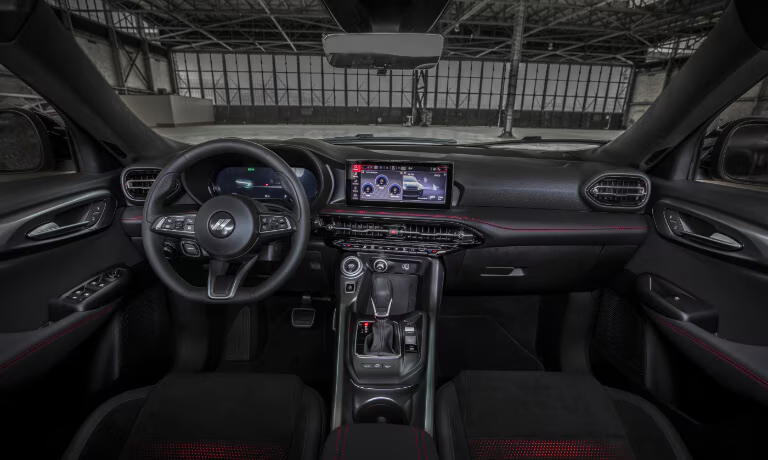
The 2024 Dodge Hornet GT AWD is a compact SUV that offers more than just impressive performance and aggressive styling. It’s also designed to provide a spacious and comfortable interior, making it a top choice for those who value both style and practicality. Whether you’re commuting in the city or heading out on an adventure, the 2024 Dodge Hornet GT AWD offers ample space for passengers and cargo. In this blog, we will explore the interior dimensions of the 2024 Dodge Hornet GT AWD, highlighting its seating capacity, legroom, headroom, and cargo space. We will also discuss how its interior features contribute to an enjoyable and versatile driving experience.
If you’re interested in seeing available models, don’t forget to check out the new Dodge Hornet inventory here.
Interior Design: A Blend of Comfort and Technology
The 2024 Dodge Hornet GT AWD is designed to offer an elevated driving experience, combining both comfort and technology. With its spacious interior, high-quality materials, and innovative features, the Hornet GT AWD is perfect for long road trips, daily commutes, and weekend getaways. Whether you’re traveling solo or with passengers, you can expect ample space and a comfortable ride.
High-Quality Materials
Inside the 2024 Dodge Hornet GT AWD, you’ll find a cabin crafted with premium materials. The seats are upholstered with soft-touch leather or fabric (depending on trim level), providing both comfort and durability. The driver’s seat offers 8-way power adjustments, and the passenger seat offers 4-way adjustments, ensuring that all passengers can enjoy a personalized and comfortable ride. The use of premium soft-touch materials across the dashboard and door panels further enhances the luxurious feel of the cabin.
Versatile and Spacious Interior
One of the standout features of the Hornet GT AWD is its spacious interior, offering ample room for both passengers and cargo. The vehicle is designed to make the most of its compact size, delivering a roomy cabin without compromising on performance or style. The Hornet GT AWD ensures that both front and rear passengers enjoy generous legroom and headroom, making it comfortable for adults of all sizes.
Interior Dimensions of the 2024 Dodge Hornet GT AWD
The 2024 Dodge Hornet GT AWD provides a well-balanced combination of passenger space and cargo capacity. Let’s take a closer look at the interior dimensions:
Front Seating Dimensions
- Headroom: 39.8 inches
- Legroom: 41.0 inches
- Shoulder Room: 56.7 inches
- Hip Room: 53.4 inches
Rear Seating Dimensions
- Headroom: 38.6 inches
- Legroom: 37.5 inches
- Shoulder Room: 55.1 inches
- Hip Room: 51.3 inches
Cargo Space
- Cargo Capacity (Behind Rear Seat): 27.0 cubic feet
- Cargo Capacity (With Rear Seats Folded): 54.7 cubic feet
As you can see, the Hornet GT AWD offers excellent space for both front and rear passengers. The 41.0 inches of front legroom and 37.5 inches of rear legroom ensure that all passengers enjoy a comfortable ride, even during long trips. The generous shoulder room and hip room further contribute to a spacious and comfortable atmosphere inside the cabin. When it comes to cargo space, the Hornet GT AWD offers a 27.0 cubic feet capacity behind the rear seats, which is perfect for luggage, groceries, or sports equipment. With the rear seats folded down, the cargo capacity expands to 54.7 cubic feet, providing ample space for larger items like furniture or camping gear.
Convenience and Tech Features
In addition to its impressive interior dimensions, the 2024 Dodge Hornet GT AWD comes packed with advanced tech features to enhance your driving experience. Here are a few of the standout interior features:
Uconnect 5 System
The Uconnect 5 system in the 2024 Dodge Hornet GT AWD is a state-of-the-art infotainment system that includes a 10.1-inch touchscreen display, Apple CarPlay, Android Auto, and Bluetooth connectivity. It’s designed to keep you connected, whether you’re navigating to your destination, listening to music, or answering calls.
Wireless Charging Pad
For those on the go, the Hornet GT AWD includes a wireless charging pad that allows you to charge your devices without the need for cables. Simply place your phone on the pad, and it will charge as you drive.
Premium Audio System
For audiophiles, the 2024 Dodge Hornet GT AWD offers an optional 9-speaker Alpine audio system. Whether you’re enjoying your favorite tunes or catching up on the latest podcasts, the high-quality sound system ensures a crisp, immersive listening experience.
Heated and Ventilated Seats
The Hornet GT AWD also offers available heated and ventilated front seats, making it perfect for all seasons. Whether you’re braving the cold in winter or dealing with the summer heat, these features add extra comfort for both the driver and passenger.
Ambient Lighting
To enhance the overall cabin experience, the 2024 Dodge Hornet GT AWD includes ambient lighting that can be adjusted to suit your mood. This feature not only adds a touch of luxury to the interior but also helps create a relaxing atmosphere during nighttime driving.
Driving Comfort and Adjustability
Beyond its spacious interior dimensions, the 2024 Dodge Hornet GT AWD is designed with comfort in mind. The driver’s seat includes 8-way power adjustments with lumbar support, providing a personalized fit. The steering wheel is adjustable and features multi-functional buttons, allowing you to control your infotainment system and phone calls without taking your hands off the wheel.
The vehicle also features an adaptive suspension system, which adjusts to road conditions to provide a smooth and comfortable ride. Whether you’re cruising on the highway or navigating rougher terrain, the Hornet GT AWD ensures that you remain comfortable and in control.
Why Choose the 2024 Dodge Hornet GT AWD?
The 2024 Dodge Hornet GT AWD offers a perfect blend of performance, space, and technology. Its spacious interior, with ample headroom, legroom, and cargo capacity, ensures that both drivers and passengers enjoy a comfortable ride. The advanced tech features like the Uconnect 5 system, wireless charging pad, and premium sound system add convenience and luxury to every drive. Whether you’re traveling for work or embarking on a weekend adventure, the Hornet GT AWD is designed to meet your needs.
Additionally, if you’re looking for a vehicle that delivers both performance and comfort, the 2024 Dodge Hornet GT AWD has you covered. With its 285 horsepower, 383 lb-ft of torque, and all-wheel-drive system, the Hornet GT AWD offers thrilling performance that doesn’t compromise on comfort or space.
Interested in learning more or taking the 2024 Dodge Hornet GT AWD for a test drive? Visit Simi Valley Chrysler Dodge Jeep Ram to explore our new inventory and find the perfect Hornet for you!

The 2024 Dodge Hornet R/T Plus is an exciting addition to Dodge’s lineup, blending the thrill of performance with the benefits of hybrid technology. One of the most impressive features of the Hornet R/T Plus is its hybrid powertrain, which delivers impressive power, efficiency, and handling. In this blog, we will dive into the 2024 Dodge Hornet R/T Plus engine, its specifications, and how it enhances the driving experience.
2024 Dodge Hornet R/T Plus Powertrain Overview
The 2024 Dodge Hornet R/T Plus comes equipped with a 1.3-liter turbocharged four-cylinder engine paired with an electric motor, combining the best of both worlds—performance and efficiency. This hybrid powertrain gives the Hornet R/T Plus a total output of 285 horsepower and 383 lb-ft of torque, ensuring that the SUV delivers a thrilling performance on both highways and winding roads.
1.3-Liter Turbocharged Engine
The 1.3-liter turbocharged four-cylinder engine is the heart of the 2024 Dodge Hornet R/T Plus. This turbocharged engine is designed to provide increased power output and fuel efficiency, ensuring that the Hornet R/T Plus strikes the right balance between performance and economy. The turbocharger allows the engine to generate substantial power with fewer fuel emissions, which is a key advantage of hybrid technology.
This engine works seamlessly with the electric motor to provide instant torque, making acceleration smooth and responsive. Whether you’re driving in the city or on a highway, the turbocharged engine ensures that you’ll have all the power you need at your disposal.
Electric Motor
The electric motor in the 2024 Dodge Hornet R/T Plus is paired with the 1.3-liter turbocharged engine to enhance the vehicle’s performance and efficiency. The electric motor provides additional torque and helps improve fuel economy by assisting the gasoline engine during acceleration and cruising.
This hybrid powertrain allows the Hornet R/T Plus to operate in electric-only mode for short distances, providing quiet and efficient driving, especially in urban environments. It also improves the vehicle’s overall fuel economy by relying on electricity at lower speeds and switching to the gasoline engine when higher power is needed.
Key Performance Figures of the 2024 Dodge Hornet R/T Plus Engine
- Engine Type: 1.3-liter turbocharged four-cylinder
- Electric Motor Power: Complemented by an electric motor for hybrid performance
- Total Horsepower: 285 hp
- Total Torque: 383 lb-ft
- Transmission: 6-speed automatic transmission
- Drive Type: All-Wheel Drive (AWD)
With these performance specs, the 2024 Dodge Hornet R/T Plus delivers a combination of muscle-car-like power and hybrid efficiency. The 383 lb-ft of torque ensures that the Hornet R/T Plus accelerates quickly, while the 285 horsepower delivers high-speed performance, whether you’re on a straightaway or tackling curves.
Driving Experience with the 2024 Dodge Hornet R/T Plus Engine
The 2024 Dodge Hornet R/T Plus is designed for drivers who demand both performance and versatility. The hybrid powertrain’s combination of a turbocharged engine and electric motor provides exceptional acceleration, smooth handling, and a responsive driving experience. Thanks to the instant torque delivered by the electric motor, the Hornet R/T Plus feels quick off the line, providing a fun driving experience whether you’re navigating city streets or pushing the pedal to the metal on the highway.
Additionally, the all-wheel-drive (AWD) system ensures that the Hornet R/T Plus maintains excellent traction, especially in challenging weather conditions or when driving at high speeds. The sport-tuned suspension further enhances the vehicle’s handling, ensuring that it can take on sharp turns with confidence.
Fuel Efficiency and Range
The hybrid powertrain in the 2024 Dodge Hornet R/T Plus not only boosts performance but also enhances fuel efficiency. The combination of a turbocharged four-cylinder engine and an electric motor delivers impressive EPA-estimated fuel economy figures. It provides 26 mpg in the city and 30 mpg on the highway, allowing drivers to enjoy the performance without constantly worrying about fuel stops.
In electric-only mode, the Hornet R/T Plus can drive short distances on pure electric power, which helps improve overall fuel economy and reduce emissions. This is especially beneficial for daily commuting or short trips around town.
Comparison with Other Vehicles in Its Class
When comparing the 2024 Dodge Hornet R/T Plus to other hybrid SUVs, its engine stands out due to its impressive power output and acceleration. For example:
- Toyota RAV4 Prime: Offers 302 horsepower but falls behind in torque (up to 199 lb-ft).
- Ford Escape Plug-In Hybrid: Comes with 221 horsepower but with lower torque output compared to the Hornet R/T Plus.
The Dodge Hornet R/T Plus offers a stronger torque figure at 383 lb-ft, making it more competitive in terms of off-the-line acceleration and handling.
Conclusion: The Engine That Defines the 2024 Dodge Hornet R/T Plus
The 2024 Dodge Hornet R/T Plus engine is a prime example of how Dodge has embraced hybrid technology without sacrificing performance. With a 1.3-liter turbocharged engine and electric motor combining for 285 horsepower and 383 lb-ft of torque, the Hornet R/T Plus delivers quick acceleration, impressive speed, and excellent handling. Whether you’re looking for a vehicle that offers thrilling performance or an efficient daily driver, the Hornet R/T Plus provides the best of both worlds.
Interested in experiencing the 2024 Dodge Hornet R/T Plus and its powerful engine for yourself? Visit Simi Valley Chrysler Dodge Jeep Ram for a test drive and explore the latest inventory.
2024 Dodge Hornet r t Plus Maximum Speed

When it comes to high-performance SUVs, Dodge has consistently been a name that enthusiasts trust. In 2024, Dodge introduced the Hornet R/T Plus, a strikingly powerful hybrid vehicle that’s quickly captured the attention of drivers seeking both performance and sustainability. But how fast can the 2024 Dodge Hornet R/T Plus go? In this article, we will explore its maximum speed, the powertrain behind it, and how it stacks up against competitors in the performance SUV category.
What is the 2024 Dodge Hornet R/T Plus?
The 2024 Dodge Hornet R/T Plus is a cutting-edge hybrid SUV designed for those who crave excitement behind the wheel without sacrificing efficiency. It combines Dodge’s legendary muscle car performance with the benefits of hybrid technology, offering an exhilarating driving experience in a compact, versatile package. If you’re looking for the latest models, check out the new Dodge Hornet inventory at Simi Valley Chrysler Dodge Jeep Ram.
Dodge Hornet R/T Plus Powertrain and Performance
Before diving into its maximum speed, it’s important to understand the Hornet R/T Plus’ powertrain. This hybrid vehicle is powered by a 1.3-liter turbocharged four-cylinder engine paired with an electric motor, giving it a combined horsepower of 285 hp and 383 lb-ft of torque. The result is a remarkably quick, responsive, and efficient SUV that offers plenty of power when you need it.
Maximum Speed of the 2024 Dodge Hornet R/T Plus
The 2024 Dodge Hornet R/T Plus is designed to give you the thrill of performance driving without the sacrifices of traditional gas-powered sports cars. It boasts a maximum speed of 140 mph (225 km/h), making it one of the fastest compact hybrid SUVs on the market. Whether you’re on the highway or on a twisty back road, the Hornet R/T Plus offers exceptional stability and acceleration to reach top speeds.
This impressive maximum speed is supported by Dodge’s advanced engineering, which includes a seamless hybrid powertrain, sport-tuned suspension, and precision handling. These elements work together to ensure that you can enjoy not only the top speed but also smooth acceleration and handling at high speeds.
Acceleration and 0-60 mph Time
In addition to its top speed, the 2024 Dodge Hornet R/T Plus doesn’t disappoint in terms of acceleration. Thanks to its powerful hybrid powertrain, this SUV can accelerate from 0 to 60 mph in just 6.1 seconds. This makes the Hornet R/T Plus a serious contender in the performance SUV category, easily keeping pace with more traditional gasoline-powered vehicles in terms of acceleration.
Dodge has always been about delivering muscle-car-inspired performance, and the Hornet R/T Plus delivers that in spades. Its instant torque from the electric motor combined with the turbocharged engine ensures that the Hornet R/T Plus provides a thrilling driving experience, even from a standstill.
Efficiency Meets Power
One of the standout features of the 2024 Dodge Hornet R/T Plus is its hybrid powertrain, which doesn’t just boost performance—it also enhances fuel efficiency. This SUV delivers an EPA-estimated 26 mpg in the city and 30 mpg on the highway, offering the best of both worlds: exceptional performance without sacrificing fuel economy. For environmentally conscious drivers who still want a powerful driving experience, the Hornet R/T Plus is a perfect balance of speed, power, and efficiency.
Handling and Driving Experience
The 2024 Dodge Hornet R/T Plus isn’t just about top speed—it’s about the whole driving experience. This SUV is designed with a sport-tuned suspension that allows it to handle corners with precision and agility. The all-wheel-drive system ensures that the vehicle stays grounded, even at high speeds or on wet roads, giving you confidence behind the wheel no matter the conditions.
Whether you’re carving through tight corners or cruising down the highway at top speed, the Hornet R/T Plus delivers a driving experience that feels connected, responsive, and exhilarating. Dodge has engineered this SUV to perform at its best, and the results speak for themselves.
If you’re interested in checking out other performance models, visit the new inventory section for more options at Simi Valley Chrysler Dodge Jeep Ram.
Competitor Comparison: How Does the Hornet R/T Plus Stack Up?
While the 2024 Dodge Hornet R/T Plus is an exceptional vehicle, how does it compare to its competitors? Let’s take a look at some of the rivals in the hybrid performance SUV segment.
2024 Toyota RAV4 Prime
The Toyota RAV4 Prime is one of the closest competitors to the Hornet R/T Plus, with its own hybrid powertrain and impressive performance stats. The RAV4 Prime delivers 302 hp and can reach 0-60 mph in 5.7 seconds, making it one of the fastest hybrid SUVs in its class. However, it falls short when it comes to maximum speed, topping out at around 118 mph. The Dodge Hornet R/T Plus holds an edge in terms of top speed and driving dynamics.
2024 Ford Escape PHEV
Another competitor is the 2024 Ford Escape PHEV, which offers a more fuel-efficient hybrid option but lacks the raw performance of the Hornet R/T Plus. The Ford Escape PHEV delivers around 200 hp and accelerates from 0-60 mph in about 8.3 seconds. Its top speed is around 120 mph, making it slower than the Hornet R/T Plus in both acceleration and top speed.
Interior and Features
Inside, the 2024 Dodge Hornet R/T Plus provides a refined, comfortable cabin with all the features you need for a modern driving experience. The SUV comes equipped with a 10.1-inch Uconnect 5 touchscreen, Apple CarPlay, Android Auto, adaptive cruise control, and heated front seats. The spacious interior offers seating for five and ample cargo room, making it a versatile option for both daily commuting and weekend adventures.
Safety Features
Dodge has ensured that the 2024 Hornet R/T Plus comes with a comprehensive suite of safety features, including:
- Forward Collision Warning with Automatic Emergency Braking
- Lane Departure Warning
- Blind Spot Monitoring
- Rear Cross Traffic Alert
- Adaptive Cruise Control
These features, combined with the Hornet R/T Plus’ advanced engineering, provide peace of mind whether you’re cruising on the freeway or navigating tight city streets.
If you want to explore safety and technology more, visit the new Dodge inventory here and find your perfect ride.
Pricing and Availability
The 2024 Dodge Hornet R/T Plus starts at $40,000 USD (prices may vary by location and trim), making it an attractive option for performance-seeking SUV buyers looking for a hybrid. It’s available at Dodge dealerships across the country, and you can visit your local dealership for more information or to schedule a test drive. If you’re looking to browse available Hornet models, check out the new inventory here.
Conclusion: Is the 2024 Dodge Hornet R/T Plus Worth It?
The 2024 Dodge Hornet R/T Plus is a standout vehicle in the hybrid performance SUV category. With its 285 hp, 383 lb-ft of torque, maximum speed of 140 mph, and impressive acceleration of 0-60 mph in 6.1 seconds, the Hornet R/T Plus offers thrilling performance without sacrificing fuel efficiency. Its hybrid powertrain ensures that you can enjoy speed and power while still being environmentally conscious.
Whether you’re looking for an SUV that offers top-notch performance, modern features, or versatility to meet your daily driving needs, the 2024 Dodge Hornet R/T Plus should be on your list.
Interested in learning more or taking the 2024 Dodge Hornet R/T Plus for a test drive? Visit Simi Valley Chrysler Dodge Jeep Ram in Los Angeles for a personalized experience and discover how this incredible hybrid SUV can elevate your driving. Explore our available models at Simi Valley Chrysler Dodge Jeep Ram’s new inventory today!
Connect with us


