





Leasing A Car With Bad Credit? is it Possible?

Leasing a car with bad credit is possible but fraught with challenges, including stricter requirements, higher costs, and limited options. This guide unpacks the feasibility of leasing with poor credit (typically a FICO score below 580), examines alternative paths, and provides actionable strategies to improve your odds.
1. Understanding Auto Leasing and Credit Scores
Leasing a car is akin to a long-term rental: You pay monthly to drive the vehicle but don’t own it. Lessors (dealerships or banks) evaluate creditworthiness rigorously because they assume financial risk if you default.
- Why Credit Matters:
- Risk Assessment: Poor credit signals past payment delinquencies or defaults.
- Lease Terms: Lower scores often mean higher money factors (leasing’s equivalent of interest rates) and larger security deposits.
- Approval Rates: According to Experian’s 2023 State of the Automotive Finance Market report, only 12% of approved lessees had subprime credit (scores 501–600), and just 2% had deep subprime (300–500).
2. Minimum Credit Score Requirements
Most lessors prefer scores of 620+ for competitive rates. However, some subprime lenders cater to lower scores:
| Credit Tier | Typical Minimum Score | Lease Availability |
|---|---|---|
| Prime | 720+ | Widely available |
| Near Prime | 620–719 | Likely, with fees |
| Subprime | 580–619 | Limited options |
| Deep Subprime | 300–579 | Rare, high risk |
3. Challenges of Leasing With Bad Credit
A. Higher Costs
- Elevated Money Factors: A poor credit score can double your effective interest rate. For example:
- Prime lessee: 0.0015 MF (3.6% APR equivalent).
- Subprime lessee: 0.0035 MF (8.4% APR equivalent).
- Larger Security Deposits: Upfront payments may equal 1–2 months’ lease payments.
- Fees: Acquisition fees (895–895–1,295) and disposition fees (300–300–500) add to costs.
B. Limited Inventory
Lessors may restrict access to pricier models to mitigate risk. Entry-level vehicles (e.g., Honda Civic, Toyota Corolla) are more accessible.
C. Stricter Requirements
- Proof of Income: Lessors often demand 3–6 months of pay stubs or bank statements.
- Employment History: Steady employment (1–2+ years) is typically required.
- Debt-to-Income Ratio (DTI): Most lenders cap DTI at 45–50%.
4. Subprime Lease Providers
While traditional lenders (e.g., Ally, Chase) avoid deep subprime applicants, these entities may offer leases:
- Credit Acceptance Corporation: Works with dealers to facilitate leases for scores as low as 500, but APRs often exceed 20%.
- Santander Consumer USA: Offers subprime leasing through partner dealerships.
- Regional Buy-Here-Pay-Here (BHPH) Dealers: Some BHPH lots lease vehicles in-house, bypassing credit checks but charging steep rates.
Caution: Subprime leases often include GPS trackers, starter-interrupt devices, and repossession clauses.
5. Strategies to Improve Approval Odds
A. Increase Your Down Payment
A larger capitalized cost reduction (down payment) lowers the lessor’s risk. Aim for 20%+ of the vehicle’s value.
B. Add a Co-Signer
A co-signer with good credit (720+) can secure better terms. Ensure they understand they’re liable if you default.
C. Opt for Less Popular Models
Lease deals on high-depreciation vehicles (e.g., Nissan Altima, Jeep Compass) may have lower credit barriers.
D. Repair Your Credit
- Dispute Errors: 1 in 5 credit reports have errors, per the FTC. Use AnnualCreditReport.com to review yours.
- Reduce Debt: Pay down credit cards to below 30% utilization.
- Become an Authorized User: Piggyback on a family member’s healthy credit card account.
6. Alternatives to Leasing
If leasing proves unfeasible, consider:
A. Subprime Financing
Purchase a used car with a loan from lenders like Capital One Auto Finance or Westlake Financial. Rates average 13–25% APR, but you’ll own the car eventually.
B. BHPH Dealerships
No credit check required, but expect:
- High Interest Rates: Up to 29% APR.
- Older Inventory: Vehicles often have 100,000+ miles.
- Repossession Risks: Missed payments lead to swift repossession.
C. Public Transportation or Car Sharing
Services like Zipcar or Turo offer short-term flexibility without long-term commitments.
7. Case Study: Leasing a $30,000 Car With a 550 Credit Score
- Vehicle: 2023 Hyundai Elantra (36-month lease, 12,000 miles/year).
- Prime Lessee: 299/month,299/month,2,000 due at signing.
- Subprime Lessee: 489/month,489/month,3,500 due at signing.
- Total Cost Difference: $8,604 over the lease term.
8. Red Flags to Avoid
- “Guaranteed Approval” Scams: Legitimate lessors never guarantee approval without checks.
- Yo-Yo Financing: Dealers may lease you a car pending “final approval,” then demand higher payments later.
- Unnecessary Add-ons: Avoid overpriced warranties or GAP insurance unless essential.
9. Legal Protections
- Equal Credit Opportunity Act (ECOA): Prohibits discrimination based on income source (e.g., Social Security, child support).
- Consumer Leasing Act (CLA): Mandates clear disclosure of lease terms, fees, and mileage penalties.
10. Long-Term Implications
- Credit Impact: On-time payments can rebuild your score, but defaults worsen it.
- Cycle of Debt: High lease payments may strain your budget, leading to further delinquencies.
Conclusion
Leasing a car with bad credit is an uphill battle, but not impossible. Subprime lenders and strategic moves (e.g., larger down payments, co-signers) can help—though often at steep costs. Weigh leasing against alternatives like subprime loans or car sharing, and prioritize credit repair to unlock better deals long-term.
For further reading, explore the FTC’s Leasing vs. Buying Guide or consult a nonprofit credit counselor via NFCC.
Can Car Dealerships Be Open On Sundays?
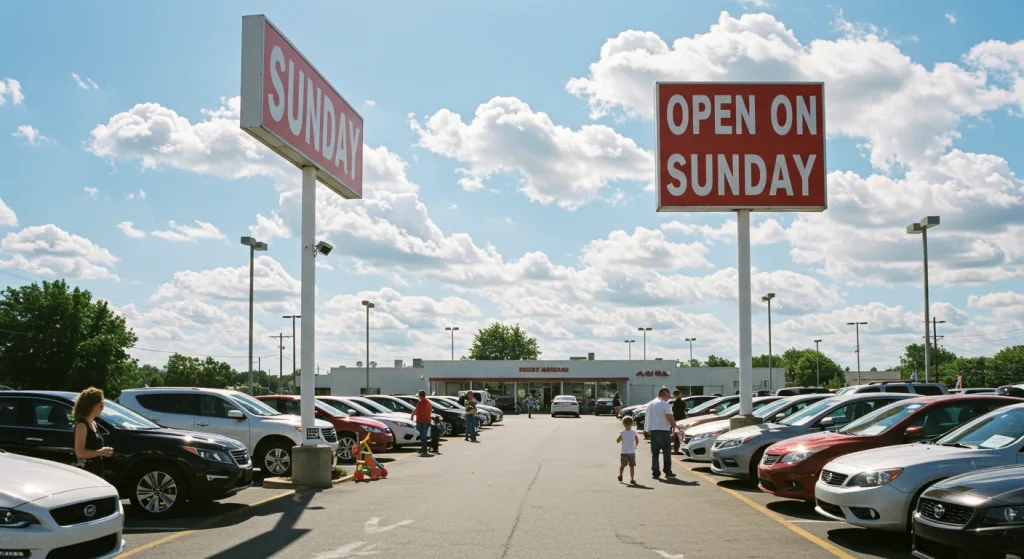
Can Car Dealerships Be Open on Sundays?
Yes, car dealerships can be open on Sundays in many states, including California. But the full answer depends on state law because some states still have old “blue laws” that restrict or ban dealership vehicle sales on Sundays.
The simple answer is this: in California, car dealerships can generally sell cars on Sundays. In some other states, dealerships may be closed by law or restricted from selling vehicles that day. That is why you may see Sunday hours at some California dealerships, while dealers in states like Pennsylvania or Colorado may be closed or limited.
Why Are Some Car Dealerships Closed on Sundays?
Many dealerships are closed on Sundays because of older state laws, business tradition, or staffing choices.
These laws are often called blue laws. They were originally created to restrict certain business activities on Sundays. Some states later repealed them, but a handful still restrict car sales.
Other dealerships close on Sundays voluntarily. Even when the law allows Sunday sales, some stores choose to give employees a fixed day off, reduce operating costs, or keep sales and service schedules simpler.
Are Car Dealerships Open on Sundays in California?
Yes, California dealerships can generally be open on Sundays.
California does not have the same statewide Sunday car-sales ban found in some other states. That means a California dealership may choose to open its sales department on Sunday if it wants to.
However, hours vary by store. Some dealers open sales only. Some keep service closed. Some operate shorter Sunday hours. Some may close completely by choice.
For Southern California shoppers, the best move is to check the dealership’s website or call before visiting.
Can You Buy a Car on Sunday in California?
Yes, you can usually buy a car on Sunday in California if the dealership is open.
A dealer can show vehicles, take test drives, complete paperwork, process financing applications, value trades, and sell vehicles on Sunday. Some DMV-related processing may be completed electronically or finalized during the next business day, depending on the transaction.
That does not usually stop you from buying the vehicle. It just means some backend registration or lender steps may process later.
Are Service Departments Open on Sundays?
Sometimes, but less often than sales departments.
Many dealership service departments are closed on Sundays even when the sales department is open. Service requires technicians, parts staff, advisors, warranty support, and repair scheduling. Because of that, many stores keep service hours Monday through Saturday.
If you need an oil change, recall repair, diagnostic appointment, tire service, or warranty work, do not assume Sunday service is available. Check the service department hours first.
Which States Ban or Restrict Sunday Car Sales?
Sunday car-sales laws vary by state.
Some states ban dealership sales on Sundays. Some allow dealers to open either Saturday or Sunday but not both. Some allow Sunday sales with restrictions. Many states allow Sunday sales normally.
For example, Pennsylvania still has Sunday vehicle-sale restrictions. A 2025 Pennsylvania legislative memo described Pennsylvania as one of the states that still prohibits Sunday vehicle sales by licensed dealers. (PA General Assembly) Other industry guides also note that multiple states still restrict dealership Sunday sales, though the exact number and details can change by state and year. (CarParts.com)
Because these laws change and vary locally, always verify the law in your state before assuming a dealership can sell on Sunday.
Why Sunday Shopping Can Be Useful
Sunday can be a good day to shop if the dealership is open.
Traffic may be lighter. Buyers may have more free time. Families can shop together. You can compare vehicles without rushing after work. It can also be useful if you want to browse inventory before speaking with a salesperson.
For shoppers in California, Sunday can be a practical day to compare new inventory, review used inventory, and start a finance application before visiting.
What to Check Before Visiting on a Sunday
Before driving to a dealership on Sunday, confirm three things.
Check whether the sales department is open.
Check whether the specific vehicle is still available.
Check whether service, finance, or trade appraisal staff are available.
A dealership may be open but have reduced staffing. Calling ahead can save time, especially if you are coming from Los Angeles, Thousand Oaks, Glendale, Van Nuys, Burbank, or another nearby area.
Can You Test Drive on Sunday?
Yes, if the dealership is open and staffed for sales.
Most open Sunday dealerships can usually handle test drives. Bring your driver’s license, proof of insurance if requested, and enough time to compare trims properly.
If you are shopping for a Jeep, Ram, Dodge, or Chrysler, use the test drive to check visibility, seat comfort, ride quality, steering feel, technology, cargo space, and whether the vehicle fits your daily driving needs.
Can Financing Be Approved on Sunday?
Often, yes.
Many dealerships can submit credit applications electronically on Sundays. Some lenders respond quickly, while others may not fully process the deal until the next business day. If the dealership has finance staff available, you may still be able to complete the purchase.
The safest move is to apply online before visiting. That gives the finance team more time to review options.
Final Answer
Yes, car dealerships can be open on Sundays in many states, and California dealerships can generally sell cars on Sundays.
But Sunday dealership rules are not the same everywhere. Some states still restrict or ban Sunday vehicle sales. Even in states where Sunday sales are legal, individual dealerships may choose to close or operate shorter hours.
If you are shopping in California, Sunday can be a normal car-buying day. Just confirm the store hours, vehicle availability, finance department availability, and service department schedule before visiting.
Junk Cars Are Bought By Whom? Lets Find Out!
When a car reaches the end of its usable life, owners often face a dilemma: What to do with a vehicle that no longer runs, costs too much to repair, or fails emissions tests? The answer lies in the growing market for junk cars—a multi-billion-dollar industry fueled by recyclers, salvage yards, and niche buyers. This article explores who buys junk cars, how the process works, and strategies to maximize your return.
1. The Buyers: Key Players in the Junk Car Industry
The market for junk cars is diverse, with each buyer type offering distinct advantages based on your priorities (speed, profit, or convenience).
A. Junkyards and Salvage Yards
Junkyards, also known as salvage yards, are traditional buyers of junk cars. They dismantle vehicles to sell usable parts (engines, transmissions, catalytic converters) and recycle the remaining metal.
- How They Operate: Many yards use proprietary software like Hollander Parts to identify high-demand parts.
- Pricing: Offers depend on the car’s weight, parts value, and current scrap metal prices.
- Pros: Instant cash, no paperwork hassles.
- Cons: Lower payouts compared to part-out strategies.
B. Scrap Metal Recyclers
Scrap yards focus on the car’s metal content, shredding vehicles to extract steel, aluminum, and copper.
- Market Drivers: Global scrap prices tracked by London Metal Exchange influence payouts.
- Environmental Impact: Recycling reduces mining demand; the EPA notes recycling steel saves 74% of the energy used to produce new steel.
- Typical Offer: 100–100–500, based on weight and metal type.
C. Online Junk Car Buyers
Digital platforms like Peddle and Cash Cars Buyer streamline selling with instant quotes and free towing.
- Process: Enter your car’s details online, receive an offer, and schedule pickup.
- Advantage: Convenience, especially for non-running cars.
- Drawback: Fees or lower offers due to middlemen costs.
D. Private Buyers (Mechanics, DIY Enthusiasts)
Individuals often seek junk cars for specific parts or restoration projects.
- Where to Find Them: List on eBay Motors or Facebook Marketplace.
- Profit Potential: Higher than scrap value if rare parts (e.g., vintage engines) are intact.
- Consideration: Time-intensive; requires negotiation skills.
E. Charities
Nonprofits like Kars4Kids accept junk cars as donations, offering tax deductions.
- Benefit: No selling effort; deductible per IRS guidelines.
- Limitation: Lower financial return compared to direct sales.
2. Factors That Determine Your Junk Car’s Value
Understanding valuation criteria helps you negotiate better deals:
- Weight: Scrap metal value hinges on the car’s curb weight (e.g., SUVs yield more steel).
- Usable Parts: Functional components like alternators, GPS systems, or tires boost value.
- Catalytic Converters: These contain precious metals (platinum, palladium); J.D. Power notes they can add 50–50–300 to offers.
- Location: Areas with higher scrap demand (e.g., industrial regions) pay more.
- Title Status: Buyers often require a title; some states permit sales with a bill of sale.
3. How to Sell Your Junk Car: Step-by-Step
- Get Multiple Quotes
Contact local junkyards, online buyers, and scrap yards. Use AutoPart to compare part values. - Prepare Documentation
Secure the title (or apply for a duplicate), and cancel insurance post-sale. - Remove Personal Belongings
Check under seats and trunks; retrieve registration/insurance cards. - Arrange Pickup
Most buyers offer free towing; confirm logistics in writing.
4. Maximizing Profit: Insider Tips
- Part Out Valuable Components: Sell high-demand parts (e.g., infotainment systems) on eBay Motors before scrapping the shell.
- Negotiate Based on Metal Prices: Track Kitco’s Scrap Metal Index for optimal timing.
- Highlight Rare Models: Classic or imported cars attract restoration buyers on Bring a Trailer.
5. Environmental and Legal Considerations
- Fluid Disposal: Buyers must drain oils, coolants, and refrigerants per EPA regulations.
- Title Transfer: Protect yourself from liability by transferring ownership promptly.
6. Case Study: From Junk to Profit
A 2005 Toyota Camry with a seized engine was sold:
- Scrap Yard Offer: 250(basedon3,000lbsat250(basedon3,000lbsat0.08/lb).
- Part-Out Strategy: Sold the transmission (200),catalyticconverter(200),catalyticconverter(150), and tires (100)privately,netting100)privately,netting450.
Conclusion
Selling a junk car requires balancing speed, effort, and profit. Whether you choose a scrap yard’s instant cash, an online buyer’s convenience, or a private sale’s higher returns, understanding the market ensures you make an informed decision. As sustainability drives metal recycling demand, your junk car’s value may rise—making now an ideal time to sell.
For further reading, explore the Automotive Recyclers Association or Scrap Metal Prices 2024 Report.
Number of Cars in the World? Actual Answer

Number of Cars in the World? Actual Answer
There are about 1.6 billion vehicles in the world in 2026.
The cleaner answer is this: the world has roughly 1.6 to 1.65 billion cars, trucks, buses, vans, and other road vehicles in use. If you only mean passenger cars, the number is lower, usually estimated closer to 1.4 to 1.5 billion depending on how the source defines “car.”
Hedges & Company estimates about 1.645 billion vehicles globally in its September 2025 analysis. WhichCar put the global car count at about 1.475 billion in 2024, or roughly one car for every 5.5 people.
So the actual answer depends on the definition:
Passenger cars only: about 1.4 to 1.5 billion
All road motor vehicles: about 1.6 to 1.65 billion
Why There Is No Perfect Single Number
There is no perfect live counter for every car in the world.
Countries report vehicle registrations differently. Some include cars, trucks, buses, vans, motorcycles, and commercial vehicles. Others separate passenger vehicles from total vehicles. Some databases include vehicles that are registered but barely used. Others try to estimate vehicles actually in operation.
That is why one source may say 1.47 billion cars, while another says 1.64 billion vehicles. They are not always contradicting each other. They are often counting different things.
Cars vs Vehicles: The Big Difference
When people ask how many cars are in the world, they usually mean all vehicles on the road.
But technically, a “car” means passenger cars. A “vehicle” can include cars, pickups, SUVs, vans, buses, and commercial trucks.
That distinction matters. The world has far more total vehicles than passenger cars alone.
For example, OICA separates vehicle production into passenger cars and commercial vehicles. That same split is important when counting vehicles already on the road.
How Many New Cars Are Made Each Year?
The world adds tens of millions of new vehicles every year.
OICA tracks global motor vehicle production by country and separates passenger cars from commercial vehicles. Its production data shows how large the global auto industry is, with China, the United States, Japan, India, Germany, South Korea, Mexico, and other major markets producing millions of vehicles annually.
Not every new vehicle increases the global total permanently because older vehicles are scrapped, exported, written off, or retired. But annual production is one reason the global vehicle fleet keeps growing.
Which Country Has the Most Cars?
The United States and China are the two biggest vehicle markets in the world, but they are different.
The United States has one of the highest vehicle ownership rates per person. Many households own more than one vehicle, especially outside major cities.
China has become the world’s largest auto market by sales and production volume. It also has a rapidly growing vehicle fleet because of urbanization, rising incomes, and large-scale domestic manufacturing.
India is another major growth market, but vehicle ownership per person is still much lower than in the U.S. or Europe. That means India has room for long-term growth if incomes, infrastructure, and consumer demand keep rising.
How Many Electric Cars Are in the World?
Electric vehicles are growing fast, but gasoline and diesel vehicles still dominate the global fleet.
Reuters reported that global EV sales rose by 20% in 2025 to 20.7 million units, based on Benchmark Mineral Intelligence data. That is a huge number, but it is still annual sales, not the total global fleet.
Even with rapid EV growth, most of the 1.6-billion-plus vehicles in use are still internal-combustion vehicles. Fleet turnover takes time because cars often stay on the road for 10, 15, or even 20 years in many markets.
Why the Number Keeps Growing
The global vehicle count keeps growing because more people are buying cars in developing and emerging markets.
In wealthy countries, vehicle ownership is already mature. Growth is slower because most households already own vehicles. In developing markets, more people are entering the middle class, cities are expanding, and personal transportation demand is rising.
At the same time, vehicles are lasting longer. Better manufacturing, improved rust protection, more durable engines, and better maintenance allow many vehicles to stay on the road longer.
That means new vehicles are added faster than old ones disappear in many regions.
Will the World Reach 2 Billion Cars?
Yes, the world could eventually reach 2 billion vehicles, but the timing depends on population growth, urbanization, public transit, fuel prices, regulation, EV adoption, and shared mobility.
If developing markets continue growing and vehicles remain essential for personal transportation, the global fleet may keep expanding. But the growth rate may slow in places where cities restrict cars, public transit improves, or car ownership becomes less necessary.
The bigger future question is not just how many vehicles exist. It is what powers them.
Why This Number Matters
The number of cars in the world matters because it affects fuel demand, emissions, traffic, road infrastructure, parking, insurance, repair industries, tire demand, battery demand, and global manufacturing.
A world with 1.6 billion vehicles needs massive systems to support it: roads, fuel stations, charging networks, repair shops, parts suppliers, tire makers, insurers, lenders, dealerships, and recycling operations.
That is why the vehicle count is more than a trivia question. It shows the scale of modern transportation.
Final Answer
There are about 1.6 to 1.65 billion road vehicles in the world.
If you only count passenger cars, the answer is closer to 1.4 to 1.5 billion.
The best practical answer for 2026 is: around 1.6 billion vehicles worldwide, with passenger cars making up most of that total.
Insure a Car Not in Your Name : is it Possible?

Insuring a car that isn’t registered in your name is a nuanced topic, with rules varying by country, insurer, and circumstance. While it’s sometimes possible, it requires navigating legal, financial, and ethical considerations. This guide explores the scenarios, risks, and solutions for insuring a vehicle you don’t own, with hyperlinks to official resources and expert insights.
1. The Short Answer
Yes, you can insure a car not in your name in some cases, but insurers typically require you to prove an “insurable interest” in the vehicle. This means you must demonstrate that you’d suffer financially if the car is damaged or stolen. However, laws and policies vary by region and insurer. Below, we break down the details.
2. Legal Requirements: What Defines “Insurable Interest”?
To purchase insurance for a car you don’t own, you must prove a legitimate stake in the vehicle. Acceptable forms of insurable interest include:
- Regular Use: You drive the car frequently (e.g., a family member’s vehicle).
- Financial Responsibility: You pay for maintenance, repairs, or loan payments.
- Legal Obligation: You’re required to insure it under a contract (e.g., a leased car).
Key Laws:
- USA: Most states allow non-owner insurance if you have insurable interest (NAIC Guidelines).
- Canada: Requires “legal entitlement” to insure a vehicle (Insurance Bureau of Canada).
- UK: Must have a “material interest” in the car (Financial Conduct Authority).
3. Scenarios Where Insuring a Non-Owned Car is Possible
A. Family Members
- Parent/Child: A parent can insure a car owned by their child (and vice versa) if they live at the same address.
- Spouses: Most insurers allow spouses to share a policy, even if only one is the registered owner.
B. Leased or Financed Vehicles
- Co-Signer: If you co-signed a loan, insurers often let you insure the car.
- Lease Agreements: Lessees can insure cars titled to the leasing company.
C. Business or Trust Vehicles
- Company Cars: Employees can insure vehicles owned by their employer if they’re authorized drivers.
- Trusts/Estates: Trustees can insure cars owned by the trust.
D. Long-Term Borrowers
- Friend’s Car: Insurers like GEICO and Progressive may allow this if you’re a frequent driver.
4. When You Cannot Insure a Car Not in Your Name
- No Insurable Interest: You don’t drive or financially support the vehicle.
- Fraudulent Intent: Insuring a car secretly (e.g., an ex-partner’s vehicle).
- State Restrictions: Some states, like New York and Texas, prohibit non-owner policies unless you’re excluded from the owner’s insurance (Texas DMV).
5. Risks of Insuring a Non-Owned Car
A. Claim Denials
If the insurer discovers you lack insurable interest, they may deny claims or cancel the policy.
B. Overlapping Coverage
If the owner has their own policy, insurers might dispute who pays for damages.
C. Legal Liability
- Accidents: You could be sued personally if coverage is invalid.
- Registration Issues: Driving an unregistered vehicle may violate local laws.
6. How to Insure a Car Not in Your Name
Step 1: Get Permission from the Owner
The owner must provide written consent and may need to be listed on the policy.
Step 2: Prove Insurable Interest
Gather documents like:
- A notarized letter from the owner.
- Proof of shared residence (utility bills, lease agreements).
- Financial records (payment receipts for repairs, loan contributions).
Step 3: Find an Insurer That Allows It
- Progressive: Permits non-owner policies for frequent drivers.
- GEICO: Covers family members in multi-car households.
- State Farm: Offers “permissive use” policies for borrowed cars.
Step 4: List the Owner on the Policy
Most insurers require the owner to be a named insured or additional interest.
7. Case Studies: Real-World Examples
Case 1: College Student Insuring a Parent’s Car
- Scenario: A student lives at home and drives a parent’s car.
- Solution: Parent adds the student to their policy or the student gets a non-owner policy.
Case 2: Caregiver Insuring a Client’s Vehicle
- Scenario: A caregiver uses a client’s car for errands.
- Solution: The client’s insurance extends coverage, or the caregiver buys non-owner insurance.
Case 3: Business Partner Insuring a Company Car
- Scenario: A partner drives a company-owned vehicle.
- Solution: The business adds the partner to its commercial auto policy.
8. Legal and Ethical Considerations
A. State Laws
- California: Allows non-owner policies if you have a valid driver’s license (CA DMV).
- Florida: Requires proof of “regular use” to insure a non-owned car (FLHSMV).
B. Disclosure Requirements
Misrepresenting ownership is insurance fraud, punishable by fines or jail time. Always disclose the owner’s details.
C. Ethical Implications
Insuring a car without the owner’s knowledge violates trust and could lead to legal disputes.
9. Alternatives to Insuring a Non-Owned Car
A. Non-Owner Car Insurance
Covers liability when driving cars you don’t own.
B. Being Added to the Owner’s Policy
Cheaper and simpler if the owner agrees.
C. Usage-Based Insurance
Pay-per-mile plans like Metromile or Nationwide SmartMiles for occasional drivers.
10. International Perspectives
A. Canada
- Ontario: Requires the owner’s consent and proof of regular use (FSRA).
- Alberta: Allows non-owner policies if you’re the primary driver (Alberta Insurance Council).
B. United Kingdom
- Fronting: Insuring a car under your name for a high-risk driver (e.g., a child) is illegal (Association of British Insurers).
C. Australia
- Nominee Insurance: Covers specific drivers on the owner’s policy (Insurance Council of Australia).
11. Key Takeaways
- Legally Possible? Yes, if you prove insurable interest.
- Risks: Fraud accusations, claim denials, legal liability.
- Best Option: Have the owner add you to their policy.
12. FAQs
Q: Can I insure my boyfriend’s/girlfriend’s car?
Yes, if you’re a frequent driver and have shared financial ties (e.g., joint bills).
Q: Can I insure a car I’m buying but haven’t registered yet?
Yes, through a “binder” policy until registration is complete.
Q: Does a non-owner policy cover rental cars?
Yes, but liability limits may apply.
13. Resources
Final Advice
Always consult your insurer and local DMV before insuring a car you don’t own. Transparency is critical to avoid legal trouble. When in doubt, ask the owner to add you to their policy—it’s simpler, safer, and often cheaper.
Need Help? Contact an independent insurance agent via TrustedChoice for personalized advice.
Find Your Car Vin Number Easily

Your car’s Vehicle Identification Number (VIN) is like its social security number—a unique 17-character code that holds critical details about its history, specifications, and legal status. Whether you’re buying a used car, verifying ownership, or ordering parts, knowing where to find the VIN is essential. This guide covers every common (and hidden) location, how to decode the VIN, and tips to spot fraud.
What Is a VIN?
The VIN is a 17-digit alphanumeric code standardized globally since 1981. It excludes the letters I, O, and Q to prevent confusion. Each character reveals specific details, such as:
- Manufacturer: 1HG = Honda.
- Country of origin: 1 = USA, J = Japan.
- Model year: C = 2023, D = 2024.
Use the NHTSA VIN Decoder to unlock your car’s full story.
Common VIN Locations
1. Dashboard (Driver’s Side)
- Where to look: Peer through the windshield on the driver’s side. The VIN is typically etched into a metal plate or sticker on the dashboard’s edge.
- Why it’s there: Easily visible for law enforcement and inspections.
2. Driver’s Door Jamb
- Where to look: Open the driver’s door and check the door pillar (the vertical part where the door latches).
- Additional info: Often paired with tire pressure specs and manufacturing dates.
3. Under the Hood
- Engine bay firewall: Near the windshield wiper motor.
- Radiator support: Front-center of the engine bay.
- Strut towers: Metal plates on either side of the engine (common in trucks).
4. Vehicle Registration & Insurance Documents
- Title, registration, and insurance cards: Legally required to display the VIN.
Hidden or Secondary VIN Locations
Manufacturers stamp VINs in multiple spots to deter theft and fraud. Check these if the primary VIN is missing or tampered with:
1. Under the Car
- Driver’s side frame rail: Near the front wheel (use a flashlight).
- Spare tire well: Remove the spare tire and check the floor.
2. Inside the Trunk
- Trunk lid: Stamped on the inner lip.
- Rear wheel arch: Behind the driver’s side rear wheel liner.
3. Engine Block
- Front of the engine: Clean grease or debris to spot the stamp (common in older cars).
4. Glovebox or Owner’s Manual
- Manufacturer’s sticker: Some brands list the VIN in the manual or on a glovebox label.
VIN Locations by Vehicle Type
| Vehicle Type | Primary VIN Location | Secondary Locations |
|---|---|---|
| Sedans/SUVs | Dashboard (driver’s side) | Door jamb, under hood |
| Trucks | Driver’s door jamb | Frame rail, engine bay firewall |
| Motorcycles | Steering neck (below handlebars) | Engine casing, rear fender |
| Classic Cars | Firewall or frame | Trunk floor, engine block |
Why Multiple VIN Locations Matter
- Fraud Prevention: Matching VINs across locations helps identify cloned or stolen vehicles.
- Accident Repairs: Body shops verify VINs to ensure replacement parts match the original car.
- Legal Compliance: Law enforcement uses VINs to confirm ownership during traffic stops or inspections.
How to Verify a VIN’s Authenticity
- Check for consistency: Ensure the VIN matches on the dashboard, door jamb, and paperwork.
- Look for tampering: Signs include:
- Scratched or altered characters.
- Mismatched fonts or spacing.
- Epoxy or paint covering the VIN plate.
Troubleshooting: Can’t Find the VIN?
- Check the OBD-II port: Mechanics can scan the port (under the dashboard) for the VIN.
- Contact the manufacturer: Provide proof of ownership to request VIN details.
- Consult a professional: Dealerships or auto shops have tools to locate hidden VINs.
Decoding Your VIN
Each character in the VIN reveals specific details. Let’s break down 1HGCM82633A123456:
- 1: Made in the USA.
- HG: Honda Motor Co.
- CM826: Accord EX-L V6 model.
- 3: Check digit (anti-fraud code).
- 3: 2023 model year.
- A: Marysville, Ohio assembly plant.
- 123456: Unique production sequence.
Tool: NHTSA’s Free VIN Decoder.
Red Flags to Watch For
- Salvage title: Indicates severe past damage. Verify via NICB VINCheck.
- Odometer rollback: Inconsistent mileage in service records.
- Recall alerts: Search NHTSA Recalls using your VIN.
Final Checklist
- ✅ Locate the VIN on the dashboard and door jamb.
- ✅ Match it to your title, registration, and insurance.
- ✅ Run a history report before purchasing a used car.
Key Resources
Why This Matters
Your car’s VIN is the key to unlocking its past and protecting your investment. Whether you’re buying a used vehicle, filing an insurance claim, or simply curious about your car’s origins, knowing where to find and how to decode the VIN empowers you to make informed decisions.
Got questions? Drop them below
Car Battery Voltage Lets Find Out?

Car Battery Voltage: Let’s Find Out What the Numbers Mean
A healthy car battery should usually read about 12.6 volts or higher when the engine is off and about 13.5 to 14.5 volts when the engine is running.
The simple answer is this: 12.6 volts means the battery is charged, 12.2 volts means it is weak, and anything near 12.0 volts or lower means the battery is deeply discharged or possibly failing. Interstate Batteries says a charged car battery should measure 12.6 volts or higher, while AutoZone explains that a running vehicle usually shows 13.5 to 14.5 volts because the alternator is charging the battery.
What Voltage Should a Car Battery Have?
A fully charged 12-volt car battery is not actually 12.0 volts.
A healthy, fully charged battery at rest should usually read around 12.6 to 12.8 volts after the car has been off for a while. If it reads 12.4 volts, it may still start the car, but it is not fully charged. If it reads 12.0 volts, it is low. If it reads below 12.0 volts, the battery is deeply discharged.
A quick voltage guide:
12.6V to 12.8V: fully charged.
12.4V: partly charged but usually usable.
12.2V: weak charge.
12.0V: low battery.
Below 12.0V: deeply discharged or possibly failing.
13.5V to 14.5V running: normal alternator charging range.
Jiffy Lube also explains that a fully charged battery measures about 12.6 volts with the engine off and usually rises to 13.5 to 14.5 volts when the engine is running.
Why Is It Called a 12-Volt Battery If It Reads 12.6 Volts?
A car battery is called a 12-volt battery because it has six cells, and each cell produces a little over 2 volts when fully charged.
Together, those cells create around 12.6 volts at full charge. So 12 volts is the nominal system rating, not the exact fully charged reading.
That is why a reading of 12.0 volts is not “perfect.” On a car battery, 12.0 volts usually means the battery is significantly discharged.
Resting Voltage vs Running Voltage
Resting voltage means the battery voltage when the engine is off.
Running voltage means the voltage while the engine is running and the alternator is charging.
This difference is important. If your battery reads 12.6 volts with the engine off, that is good. If it reads 12.6 volts while the engine is running, that can be bad because the alternator may not be charging properly.
AutoZone’s alternator testing guide says that if voltage stays around 12.4 to 12.6 volts or lower while the engine is running, the alternator may not be charging the battery.
Car Battery Voltage Chart
Here is the practical chart most drivers need:
12.7V: excellent charge.
12.6V: fully charged.
12.5V: good.
12.4V: usable but not full.
12.3V: low-normal.
12.2V: weak.
12.1V: very low.
12.0V: heavily discharged.
11.8V or lower: very weak or failing.
10.5V or lower: possible dead cell or serious battery issue.
This chart is most useful after the vehicle has been sitting for a few hours, not right after driving. Right after a drive, the battery may show a surface charge that makes it look healthier than it really is.
How to Test Car Battery Voltage
The easiest way to test car battery voltage is with a multimeter.
Turn the car off. Let it sit for a few minutes, or ideally longer if you want a better resting reading. Set the multimeter to DC volts. Touch the red probe to the positive terminal and the black probe to the negative terminal.
Read the number.
If it shows around 12.6 volts, the battery is charged. If it shows 12.2 volts or lower, the battery is weak and should be charged or tested. If it shows below 12 volts, the battery may not reliably start the car.
For a more complete check, test it again with the engine running. You should usually see about 13.5 to 14.5 volts if the charging system is working.
What Voltage Is Too Low to Start a Car?
Many cars may struggle to start around 12.0 volts or lower, especially in cold weather.
Some vehicles can still crank at 12.2 volts. Others may not, depending on battery age, engine size, starter condition, temperature, cable condition, and how much power the vehicle needs.
Cold weather makes this worse because batteries lose cranking strength in low temperatures. A battery that starts the car fine in summer may fail on a cold morning.
What Voltage Means the Alternator Is Bad?
If the engine is running and the battery still reads only about 12.4 to 12.6 volts, the alternator may not be charging properly.
A normal charging system often shows about 13.5 to 14.5 volts. If the reading is too low, the alternator, belt, wiring, fuse, battery cable, or charging control system may have a problem.
If the reading is above 15 volts, that can also be a problem because the alternator may be overcharging. Overcharging can damage the battery and electronics.
Can a Battery Show Good Voltage and Still Be Bad?
Yes. A battery can show decent voltage and still fail under load.
Voltage tells you the battery’s state of charge, but it does not fully prove battery health. A weak battery may read 12.6 volts at rest but drop badly when you try to start the engine.
That is why parts stores and repair shops use a load test or battery conductance tester. Those tests measure whether the battery can deliver enough cranking power, not just voltage.
If your car starts slowly even though the battery reads 12.5 or 12.6 volts, get the battery load-tested.
Signs Your Battery Voltage Is a Problem
Watch for slow cranking, clicking when you turn the key, dim headlights, warning lights, electrical glitches, needing frequent jump-starts, or the battery dying after sitting overnight.
Also check for corrosion on the terminals. Corrosion can cause voltage drop and poor electrical contact even if the battery itself is not dead.
A loose battery cable can create the same symptoms as a weak battery.
Battery Voltage After Jump-Starting
After a jump-start, the battery may still be weak.
A jump-start only gives the car enough power to start. It does not fully recharge the battery immediately. You may need to drive for a while or use a battery charger.
If the battery keeps dying after a jump, do not keep jumping it forever. Test the battery and alternator. The problem could be a weak battery, bad alternator, parasitic drain, loose cable, or corrosion.
How Long Should a Car Battery Last?
Most car batteries last about 3 to 5 years, but heat, cold, short trips, long storage, weak charging, and heavy electrical use can shorten battery life.
In hot climates, batteries can fail sooner because heat accelerates internal wear. In cold climates, weak batteries often reveal themselves during winter because starting requires more power.
If your battery is older than three years and the voltage keeps dropping, it is smart to test it before it leaves you stranded.
Final Answer
A healthy car battery should read about 12.6 volts or higher with the engine off.
With the engine running, voltage should usually rise to about 13.5 to 14.5 volts because the alternator is charging.
If your battery reads 12.2 volts or lower, it is weak. If it reads below 12 volts, it is deeply discharged. If it reads only 12.6 volts while running, the alternator may not be charging properly.
The best test is simple: check resting voltage, check running voltage, then load-test the battery if the numbers or starting behavior seem suspicious.
Car Battery Cost Breakdown By Expert
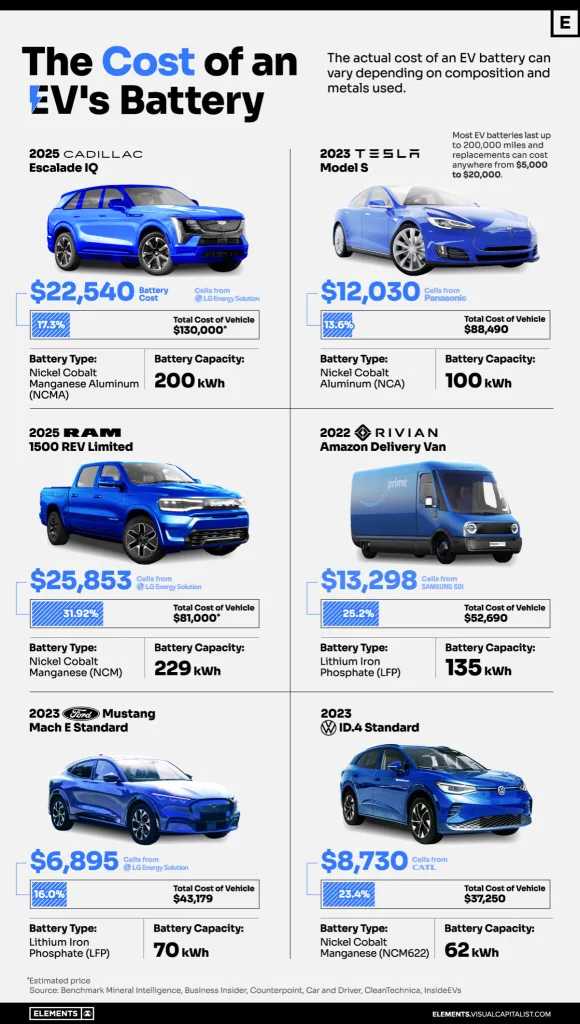
Car Battery Cost Breakdown by Expert
A regular car battery usually costs $120 to $300 installed, but the real price depends on the battery type, vehicle size, warranty, labor, and whether your car needs an AGM battery or computer registration after replacement.
The simple answer is this: most standard flooded lead-acid batteries cost less, AGM batteries cost more, and luxury vehicles or start-stop vehicles can push the total replacement bill higher. AAA lists mobile car battery replacement starting around $199.99 for members, while Consumer Reports says AGM batteries can cost 40% to 100% more than conventional batteries. AAA battery service Consumer Reports battery guide
Average Car Battery Replacement Cost
Most drivers should expect to pay about $120 to $300 for a normal car battery replacement.
That range usually covers common sedans, compact SUVs, older vehicles, and standard gas-powered cars that use a normal flooded battery. If you drive a truck, large SUV, European luxury vehicle, start-stop vehicle, or newer model with AGM battery requirements, the cost can move higher.
A 2026 service estimate from Walser puts most car battery replacements between $120 and $300, depending on battery type and vehicle requirements. Walser battery cost guide
Standard Battery Cost
A standard flooded lead-acid battery is usually the cheapest option.
Expect to pay roughly $100 to $180 for many common group sizes before tax, core charge, and installation. These batteries work well for many older vehicles and basic daily drivers.
They are not always the best choice for newer vehicles with high electrical demand, heavy accessories, or automatic start-stop systems. If your vehicle came with an AGM battery, do not downgrade to a cheaper standard battery unless the manufacturer allows it.
AGM Battery Cost
AGM batteries cost more, but many modern vehicles require them.
AGM stands for Absorbent Glass Mat. These batteries are built to handle higher electrical loads, vibration, deeper cycling, and start-stop systems better than traditional flooded batteries.
Consumer Reports says AGM batteries can cost 40% to 100% more than conventional batteries, with many top batteries priced in the $200 to $300 range. Consumer Reports
If your car has start-stop technology, lots of electronics, heated seats, power accessories, or a factory AGM battery, expect the higher price.
Walmart Car Battery Cost
Walmart is often one of the cheaper places to buy a battery.
Walmart’s EverStart batteries can be very competitive, especially for common group sizes. A current Walmart listing shows an EverStart Platinum AGM H7 battery at $189, which is cheaper than many premium AGM options at auto parts stores. Walmart car batteries
Walmart can be a good value if they have the right battery in stock and installation is available at your location.
AAA Car Battery Cost
AAA is usually not the cheapest, but it is convenient.
The big advantage is mobile service. AAA can test the battery, come to your location, install the new battery, and recycle the old one. AAA says members can get mobile battery replacement with batteries starting around $199.99, plus free testing and installation through its mobile battery service. AAA mobile battery service
AAA makes sense if you are stranded, busy, or do not want to tow the car to a shop. If you are shopping purely by price, Walmart, Costco, or some local shops may be cheaper.
Dealership Battery Cost
A dealership battery replacement usually costs more than Walmart or an auto parts store.
Expect about $200 to $500, depending on the vehicle. Some luxury, European, hybrid, or start-stop vehicles can cost more because they may require an AGM battery, battery registration, computer reset, or special installation process.
The benefit is correct fitment, OEM battery options, warranty documentation, and proper electronic reset if required.
For newer Chrysler, Dodge, Jeep, or Ram vehicles, a dealership or qualified shop is a safer choice if the vehicle uses battery monitoring or start-stop systems.
Why Some Car Batteries Cost More
Battery price changes based on several things.
The biggest factors are:
Battery group size.
Cold cranking amps.
Flooded vs AGM type.
Warranty length.
Brand.
Vehicle electrical demand.
Installation difficulty.
Battery registration or reset.
Core charge.
Location and retailer markup.
A small sedan battery may be simple and cheap. A large truck battery with high cold cranking amps or an AGM battery for a modern SUV can cost much more.
What Is a Core Charge?
A core charge is a refundable fee added when you buy a new battery.
You get the money back when you return the old battery. This encourages battery recycling because car batteries contain lead and acid and should not be thrown away.
If you bring your old battery at the time of purchase, the store may remove the core charge immediately.
Do You Need Installation?
Many batteries are simple to install, but not all.
If the battery is easy to access under the hood, installation may be quick. Some vehicles place the battery in the trunk, under the seat, behind panels, or under braces. Some require memory saving, battery registration, or reset procedures.
If your car is newer, European, hybrid, or start-stop equipped, do not assume it is a basic swap.
Can You Replace a Car Battery Yourself?
Yes, if the battery is easy to access and the vehicle does not require special programming.
For a simple older vehicle, DIY replacement can save labor. You disconnect the negative cable first, then positive, remove the hold-down, swap the battery, reconnect positive first, then negative.
But if the car needs battery registration or has a complicated battery location, paying a shop is smarter.
How Long Should a Car Battery Last?
Most car batteries last about 3 to 5 years.
Heat, cold, short trips, weak alternators, long storage, corrosion, parasitic drains, and heavy electrical loads can shorten battery life. If your battery is over three years old and the car starts slowly, test it before it fails.
A battery can test fine one month and fail the next if it is old and exposed to extreme temperatures.
Signs You Need a New Battery
Common signs include:
Slow cranking.
Clicking when starting.
Dim lights.
Battery warning light.
Needing frequent jump-starts.
Electrical glitches.
Corroded terminals.
Battery age over 3 to 5 years.
Resting voltage below about 12.2 volts.
A healthy battery should usually read about 12.6 volts or higher with the engine off and about 13.5 to 14.5 volts when the engine is running.
Cheapest Place to Buy a Car Battery
The cheapest common options are usually Walmart, Costco, and some local parts stores.
Costco can be very competitive for Interstate batteries, but availability depends on membership, location, and battery size. Walmart is often easy to access and tends to have strong prices on EverStart batteries.
Auto parts stores like AutoZone, O’Reilly, Advance Auto Parts, and NAPA may cost more, but they often offer free testing, quick availability, and convenient replacement.
Best Value Battery
The best value is usually not the cheapest battery.
Look for the correct group size, correct battery type, strong cold cranking amps, good warranty, and fresh manufacture date. A cheap battery with a short warranty may not be a good deal if it fails early.
For most drivers, the best value is a mid-grade or premium battery from a reputable brand with at least a 3-year replacement warranty.
Final Answer
A typical car battery replacement costs about $120 to $300.
A standard battery is usually around $100 to $180 before extras.
An AGM battery is usually around $200 to $350.
Dealer or luxury-vehicle battery replacement can reach $300 to $500+.
AAA mobile replacement starts around $199.99 for members.
The expert answer is simple: buy the correct battery type for your vehicle, do not downgrade from AGM if your car requires it, compare the warranty, and include installation, core charge, taxes, and any reset or registration cost before deciding where to buy.

Where Are Jeeps Made? A Global Journey Through Jeep’s Manufacturing Legacy
Jeep is an American-born brand, but modern Jeep production is global. The simple answer is this: the most iconic Jeeps, including the Wrangler and Gladiator, are built in Toledo, Ohio, while other Jeep models are built in places like Detroit, Michigan, Warren, Michigan, Toluca, Mexico, and other Stellantis facilities depending on model year and market.
That means Jeep is not a one-factory brand. It is a global SUV brand with deep American roots and a modern international supply chain. Stellantis owns Jeep today, and Stellantis lists Jeep as one of its global brands. (Stellantis.com)
Jeep’s American Origin Story
Jeep’s identity started in the United States.
The brand’s roots go back to World War II military vehicles and the Willys MB, which became one of the most recognizable utility vehicles ever built. That early Jeep formula shaped the civilian Jeep models that followed and eventually led to the Wrangler.
That is why Jeep still feels so American even though the company now operates globally. The seven-slot grille, upright windshield, short overhangs, trail capability, and open-air design are all part of a brand identity born from American utility and off-road culture.
Where Is the Jeep Wrangler Made?
The Jeep Wrangler is built in Toledo, Ohio.
That is the most important answer for many shoppers because the Wrangler is the heart of Jeep. It is the model most closely connected to the original Jeep formula, and it remains tied to one of Jeep’s most famous manufacturing locations.
Stellantis confirmed that the 250,000th Wrangler 4xe was assembled at the Toledo Assembly Complex, showing that Toledo remains central to Wrangler production. (CBT News)
Where Is the Jeep Gladiator Made?
The Jeep Gladiator is also built in Toledo, Ohio.
That makes sense because the Gladiator is heavily connected to the Wrangler. It has Wrangler-style design, removable roof options, removable doors, off-road hardware, and a pickup bed. It is basically Jeep’s modern truck for buyers who want Wrangler personality with utility.
Cars.com’s 2025 American-Made Index ranked the Jeep Gladiator among the top American-made vehicles and called it the highest-ranked American-made pickup truck. That ranking considers more than just the badge, including assembly location, parts content, engine sourcing, transmission sourcing, and U.S. manufacturing workforce. (Stellantis.com)
Why Toledo Matters So Much to Jeep
Toledo is more than a production site. It is part of Jeep’s identity.
The Toledo connection goes back generations, and it remains one of the clearest reasons Jeep still feels rooted in American manufacturing. When people ask whether Jeep is American-made, the Wrangler and Gladiator give the strongest answer because both are tied to Toledo assembly.
For Jeep fans, Toledo is not just a dot on the map. It is part of the brand’s mythology.
Where Is the Jeep Grand Cherokee Made?
The Jeep Grand Cherokee is strongly tied to Detroit, Michigan.
The Detroit Assembly Complex has been central to Grand Cherokee production. Stellantis Detroit materials say the Mack plant produces the next-generation Jeep Grand Cherokee, Grand Cherokee L, and electrified models. (Stellantis4Detroit)
That matters because the Grand Cherokee is one of Jeep’s most important models. It is the more refined, family-friendly, road-focused Jeep SUV, but it still carries the brand’s 4×4 identity.
Where Are the Wagoneer and Grand Wagoneer Made?
The Jeep Wagoneer and Grand Wagoneer have been tied to Warren Truck Assembly in Michigan.
These are Jeep’s large three-row SUVs, built for buyers who want space, towing capability, premium features, and full-size SUV presence. They are different from the Wrangler in personality, but they still sit inside Jeep’s American SUV story.
Recent reporting around Stellantis production and U.S. investment has identified Warren Truck Assembly as the home of Wagoneer and Grand Wagoneer production. (New York Post)
Where Is the Jeep Compass Made?
The Jeep Compass has been built in Toluca, Mexico for the North American market.
This is where the global side of Jeep becomes clearer. The Compass is a compact SUV, and its production footprint has shifted over time depending on region and market. In recent North American context, Toluca has been an important Compass production location.
Recent reports on a supplier dispute noted that the Toluca plant produces the Jeep Compass and Jeep Cherokee for North and Latin American markets. (Mexico Business News)
Where Is the Jeep Cherokee Made?
The revived Jeep Cherokee has also been connected to Toluca, Mexico production.
This is important because the Cherokee name has a long history in the Jeep lineup, but modern production decisions depend on platform, capacity, supply chain, and market strategy. Reports in 2026 described the Toluca facility as producing both the Jeep Compass and the revived Jeep Cherokee for North and Latin American markets. (Road & Track)
Stellantis also announced a major U.S. investment plan that includes reopening the Belvidere Assembly Plant in Illinois to expand production of the Jeep Cherokee and Jeep Compass for the U.S. market, with initial production expected in 2027. (Stellantis.com)
Is Every Jeep Made in America?
No, not every Jeep is made in America.
The Wrangler and Gladiator are strongly tied to U.S. production in Toledo. The Grand Cherokee is strongly tied to Detroit. Wagoneer and Grand Wagoneer have major Michigan production ties. But models like the Compass and Cherokee can involve Mexico or other global production facilities depending on market and year.
This is normal in the modern auto industry. Automakers build vehicles where it makes sense for cost, logistics, parts supply, regional demand, trade rules, and plant capacity.
Jeep Manufacturing Is Global
Jeep is sold around the world, so Jeep production is not limited to the United States.
Global production allows Jeep to serve different markets more efficiently. A Jeep sold in Europe, South America, or Asia may not come from the same plant as a Jeep sold in California or Michigan.
That is why two vehicles with the same Jeep badge may have different assembly locations depending on the country where they are sold.
How to Tell Where Your Jeep Was Built
The easiest way to tell where your Jeep was built is to check the VIN or window sticker.
The first character of the VIN identifies the country of final assembly:
1, 4, or 5 usually means United States.
2 usually means Canada.
3 usually means Mexico.
The window sticker is even better because it can show final assembly point, parts content, engine origin, and transmission origin.
If you are buying used, ask for the VIN and build sheet. If you are buying new, read the Monroney window sticker before signing.
Jeep Assembly vs Jeep Parts
Assembly location is not the same as parts origin.
A Jeep can be assembled in the United States using parts from several countries. Another Jeep can be assembled in Mexico but still include U.S.-sourced components. Modern vehicles use global supply chains.
That means “made in America” can mean different things:
Final assembly in the U.S.
High U.S. or North American parts content.
American brand heritage.
U.S.-built engine or transmission.
U.S. manufacturing workforce.
This is why American-made indexes often use several factors instead of only assembly location.
Why Jeep Still Feels American
Jeep still feels American because of its heritage and its most iconic products.
The Wrangler and Gladiator are built in Ohio. The Grand Cherokee has major Detroit roots. The brand’s identity comes from American military history, off-road culture, and utility design.
Even when Jeep uses global production, the core personality remains tied to American adventure culture: trails, open-air driving, mud, rocks, snow, camping, towing, and rugged SUV ownership.
Does Manufacturing Location Affect Quality?
Not automatically.
A U.S.-built Jeep is not automatically perfect, and a Mexico-built Jeep is not automatically inferior. Quality depends on engineering, supplier parts, assembly process, plant standards, maintenance, recalls, and real-world ownership.
For used buyers, condition matters more than the plant. A well-maintained Jeep with records is usually a better buy than a neglected Jeep from any factory.
Before buying, check service history, open recalls, accident history, tire condition, engine behavior, transmission performance, and rust.
Which Jeeps Are Most American-Made?
The Wrangler and Gladiator are the easiest answers.
They are assembled in Toledo and carry the strongest connection to Jeep’s original identity. The Gladiator has also ranked very strongly in Cars.com’s American-Made Index. (Stellantis.com)
The Grand Cherokee also has a strong American manufacturing story because of its Detroit production.
If buying American-built is important to you, start with Wrangler, Gladiator, and Grand Cherokee, then verify the specific vehicle’s window sticker.
Why Jeep Production Keeps Changing
Jeep production changes because the auto industry changes.
Plants are retooled. Models are redesigned. Supply chains shift. New hybrid and electric versions require new equipment. Trade policy can affect sourcing. Market demand changes. Stellantis may move production to balance costs, capacity, and regional demand.
That is why the most accurate answer is always model-year specific. A Jeep’s assembly location can change over time.
What This Means for Shoppers
If you care about where your Jeep is made, do not rely only on the model name.
Check the exact vehicle. A Wrangler is likely Toledo-built. A Grand Cherokee is likely Detroit-built. A Compass or Cherokee may involve Mexico or future U.S. production depending on year and market.
For shoppers around Simi Valley, compare current new Jeep inventory and review the window sticker for final assembly details. If you are shopping pre-owned, browse used Jeep inventory and verify the VIN, build sheet, service history, and recall status.
FAQs About Where Jeeps Are Made
Where are Jeep Wranglers made?
Jeep Wranglers are built at the Toledo Assembly Complex in Ohio.
Where are Jeep Gladiators made?
Jeep Gladiators are also built in Toledo, Ohio.
Where are Jeep Grand Cherokees made?
The Jeep Grand Cherokee is strongly tied to the Detroit Assembly Complex in Michigan.
Are all Jeeps made in the United States?
No. Some Jeeps are made in the United States, while others are built in Mexico or other global facilities depending on model, year, and market.
Is Jeep an American brand?
Yes. Jeep is an American-born brand with roots in World War II-era utility vehicles, but it is now owned by Stellantis, a global automaker.
How do I know where my Jeep was built?
Check the VIN and window sticker. The VIN can identify the country of final assembly, while the window sticker provides more detailed production and parts-content information.
Is the Jeep Compass made in America?
For recent North American production, the Jeep Compass has been associated with Toluca, Mexico. Stellantis has also announced plans to expand future Compass production at Belvidere, Illinois, beginning around 2027. (Stellantis.com)
Final Thoughts: Jeep Is American at Heart, Global in Production
Jeep is American in heritage, culture, and several key manufacturing locations. The Wrangler and Gladiator are built in Toledo, Ohio. The Grand Cherokee has deep Detroit production ties. Wagoneer and Grand Wagoneer have Michigan manufacturing roots.
But Jeep is also a global brand under Stellantis, and not every Jeep is built in the United States. Some models are built in Mexico or other markets depending on region and model year.
The best answer is simple: Jeep’s soul is American, but its manufacturing footprint is global.

Is the Jeep Wrangler Safe?
The Jeep Wrangler is safe enough for its purpose, but it is not the safest SUV you can buy. It is built for off-road capability first, not maximum crash-test performance. Newer Wranglers have improved safety features, but they still have higher rollover risk, weaker crash-test results than many crossovers, and fewer standard driver-assist features on lower trims.
If you want a rugged SUV for trails, snow, dirt roads, and open-air driving, the Wrangler makes sense. If your top priority is family safety, quiet highway driving, and the best crash protection, a normal crossover like a Subaru Outback, Honda CR-V, Toyota RAV4, or Volvo XC60 is the safer choice.
The Straight Answer
The Jeep Wrangler is not unsafe, but it has safety trade-offs.
It has strong off-road protection, a tough frame, available driver-assistance features, stability control, airbags, and a reinforced structure. But it also has a tall body, high center of gravity, removable doors, a removable roof, and a design focused more on capability than crash absorption.
That means the Wrangler is better on trails than it is in crash-test comparisons.
Jeep Wrangler Crash Test Ratings
Newer Jeep Wranglers perform better than older models, but their scores are still mixed.
The Wrangler has received decent ratings in some government crash tests, especially for frontal and side crash protection. However, rollover risk remains a weak point because the Wrangler sits tall and has a higher center of gravity.
The IIHS has also rated the Wrangler lower than many mainstream SUVs in certain crash tests. It has not usually performed like top safety-rated crossovers.
This does not mean the Wrangler is dangerous. It means buyers should understand what it is: a rugged off-road SUV, not a safety-first family crossover.
Why the Wrangler Has Higher Rollover Risk
The Wrangler is tall, narrow, and built with off-road ground clearance. That helps it clear rocks, ruts, snow, and rough terrain, but it also raises the center of gravity.
A higher center of gravity increases rollover risk during sharp turns, sudden swerves, or certain crashes.
That is one of the biggest safety concerns with the Wrangler.
Electronic stability control helps reduce this risk, but it cannot change the basic shape and physics of the vehicle.
Safety Features on Newer Jeep Wranglers
Newer Wranglers are safer than older ones because they offer more safety technology.
Common or available features include:
Front airbags
Side airbags
Rearview camera
Anti-lock brakes
Electronic stability control
Blind-spot monitoring
Rear parking sensors
Forward collision warning
Automatic emergency braking
Adaptive cruise control
The problem is that some advanced safety features may not be standard on every trim. If safety matters, look for a Wrangler with the available safety packages.
Is the Wrangler Safe for Daily Driving?
Yes, the Wrangler can be safe for daily driving if you understand its limits.
It is fine for commuting, errands, light highway use, and weekend driving. But it does not drive like a normal crossover. It can feel louder, rougher, and less planted at highway speeds.
The Wrangler also needs more careful driving. Avoid sharp lane changes, hard cornering, and aggressive high-speed driving. It is not built to behave like a low, wide SUV.
Is the Wrangler Safe for Families?
The Wrangler can work for families, especially the four-door Wrangler Unlimited. It has more room, easier rear-seat access, and better daily usability than the two-door model.
But if safety is your number one priority, there are better family SUVs. Many crossovers offer stronger crash-test results, lower rollover risk, smoother handling, and more standard safety tech.
For families who love the Jeep lifestyle, the four-door Wrangler is the better choice. For families who only care about safety and comfort, a regular crossover is smarter.
Is the Wrangler Safe Off-Road?
Yes, the Wrangler is one of the safer SUVs for off-road use because it is built for that environment.
It has strong 4×4 systems, good ground clearance, skid plates, available rock rails, and a reinforced body structure. It is designed to handle trails, steep hills, mud, rocks, and uneven terrain better than most SUVs.
But off-roading still carries risk. Rollovers, getting stuck, remote breakdowns, and underbody damage are all possible. Drivers should use proper tires, avoid reckless trail driving, and never off-road alone in risky areas.
Do Modifications Make a Wrangler Less Safe?
Yes, bad modifications can make a Wrangler less safe.
Lift kits, oversized tires, heavy bumpers, poor suspension work, and cheap aftermarket parts can affect braking, steering, rollover risk, crash sensors, and ride stability.
A mild, professionally installed setup is usually fine. A poorly built lifted Wrangler can be dangerous.
If safety matters, avoid extreme lifts and poorly modified used Wranglers.
What to Check Before Buying a Used Wrangler
Before buying a used Jeep Wrangler, check:
Frame rust
Tire wear
Suspension condition
Steering looseness
Brake condition
Warning lights
Airbag system
Recall history
Accident history
Quality of modifications
Hard off-road abuse
Do not buy a Wrangler just because it looks good. A lifted Jeep with bad suspension, rust, or cheap parts can become expensive and unsafe.
Final Answer
The Jeep Wrangler is safe enough if you buy the right one, drive it properly, and understand its limits.
It is great for off-road use, weekend adventure, snow, trails, and Jeep lifestyle driving. But it is not the safest SUV for families, long highway commutes, or buyers who want top crash-test scores.
Straight answer: the Jeep Wrangler is safe for what it is built to do, but it is not as safe as many modern crossovers. If safety is your top priority, choose a more road-focused SUV. If off-road capability is your priority, the Wrangler still makes sense.
Connect with us


