




Can Car Dealerships Be Open On Sundays?
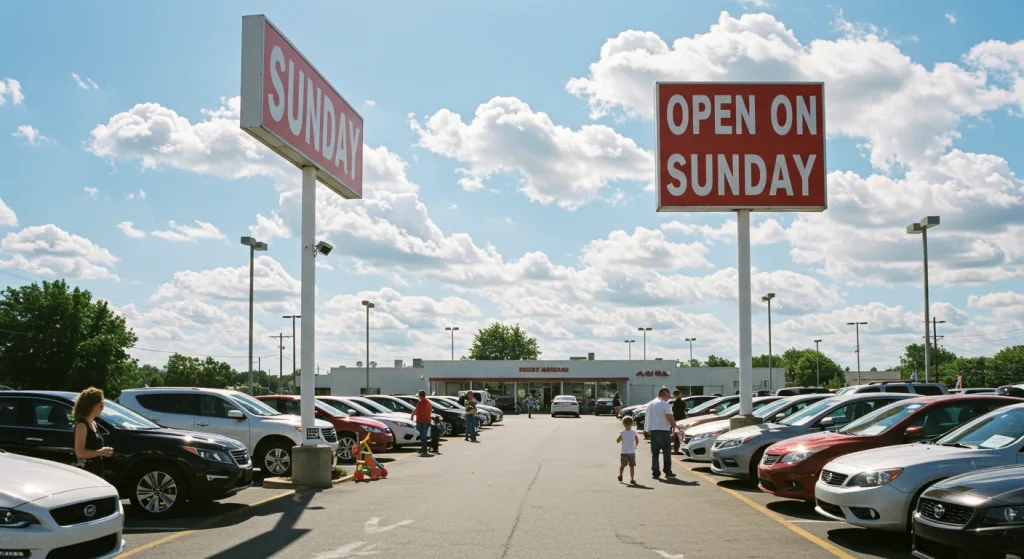
The question “Are car dealerships open on Sundays?” seems straightforward, but the answer is shaped by a complex web of state laws, cultural norms, and evolving retail strategies. While some dealerships welcome weekend shoppers, others remain closed due to legal restrictions or operational preferences. This 1,200-word analysis explores the factors influencing Sunday hours, regional differences, and how consumers can navigate this fragmented landscape.
1. The Legal Landscape: Blue Laws and Automotive Sales
Sunday closures for car dealerships trace back to “blue laws”—religious-rooted regulations restricting commerce on Sundays. Though many of these laws have been repealed, remnants persist in some states, particularly for automotive sales.
A. States With Sunday Sales Restrictions
- Colorado: Prohibits Sunday sales of cars, trucks, and motorcycles under § 12-6-110. Exceptions include RVs and motorcycles under 50cc.
- Illinois: Bans Sunday sales in counties with populations under 500,000 (e.g., rural areas) but allows urban dealers like those in Chicago to operate.
- Minnesota, Oklahoma, Pennsylvania: Restrict Sunday sales unless the dealership operates with fewer than 10 employees or sells fewer than 12 cars annually.
- Texas: Repealed its blue law in 2019, now permitting Sunday sales statewide.
These laws aim to promote a “day of rest” but face criticism for stifling competition. The National Automobile Dealers Association (NADA) has lobbied against such restrictions, arguing they harm consumer convenience.
B. States With No Restrictions
Most states, including California, Florida, and New York, allow Sunday sales. Dealerships in these regions often compete by offering weekend promotions. For example, Florida’s AutoNation locations advertise “Sunday Funday” test drives and financing specials.
2. Why Some Dealerships Close Voluntarily
Even in states without restrictions, many dealerships close on Sundays due to:
- Staffing Costs: Weekend wages (e.g., overtime pay) can erode profit margins.
- Cultural Norms: In regions like the Midwest, Sunday closures align with community values.
- Online Shift: With 83% of car buyers starting their research online (Cox Automotive), dealers prioritize digital tools over extended hours.
3. Regional Trends: Where Sunday Sales Thrive
Urban and high-traffic areas are more likely to open on Sundays. For example:
A. Texas
After repealing its blue law, Sunday sales surged. Houston’s Mac Haik Chevrolet reports 20% of weekly foot traffic occurs on Sundays.
B. California
Major dealerships like Longo Toyota (the world’s largest Toyota dealer) use Sundays for family-oriented events, offering free food and kid-friendly activities to attract shoppers.
C. New York
Luxury brands like BMW of Manhattan open Sundays but limit hours (e.g., 11 AM–5 PM) to manage staffing.
4. The Rise of “Online Sundays”
Even if physical showrooms are closed, many dealers now offer:
- Virtual Appointments: Platforms like Roadster enable 24/7 browsing and negotiations.
- Chatbots: AI tools like DealerFire answer questions and schedule test drives outside business hours.
- Home Delivery: Brands like Tesla and Carvana deliver purchases directly to buyers’ homes, bypassing traditional hours entirely.
5. Pros and Cons of Sunday Hours
For Dealers
- Pros: Higher foot traffic, competitive edge, and increased impulse purchases.
- Cons: Staff burnout, utility costs, and slim margins on promotional deals.
For Consumers
- Pros: Flexibility for working buyers, relaxed atmosphere with fewer crowds.
- Cons: Limited negotiation leverage (managers may not be present).
6. How to Confirm Sunday Hours
- Check Dealership Websites: Most list hours on their Google Business profiles.
- Call Ahead: Confirm if sales, service, and financing departments are all open.
- Luxury vs. Mass-Market: Luxury brands (e.g., Mercedes-Benz) are less likely to open Sundays than volume dealers (e.g., Honda).
7. Case Study: Sunday Sales in Illinois
In Illinois, rural dealerships like Bob Ridings Ford (Macomb) close Sundays, while Chicago’s Bill Kay Chevrolet stays open. This divide reflects population thresholds in state law and highlights regional inequities in consumer access.
8. The Future of Sunday Sales
- Legal Challenges: Advocacy groups like the Institute for Justice are fighting blue laws in Oklahoma and Minnesota.
- Shift to Online Sales: As 31% of buyers express willingness to purchase entirely online (McKinsey), physical Sunday hours may become less critical.
9. Consumer Tips for Sunday Shopping
- Prepare Documents: Bring pre-approval letters or trade-in details to expedite deals.
- Target Promotions: Dealers often clear inventory on weekends; check for “Sunday Specials” on sites like Cars.com.
- Verify Inventory: Use dealer websites to ensure desired models are in stock.
10. FAQs
Q: Can I complete a purchase on Sunday if financing is closed?
A: Some dealers may take deposits but finalize paperwork on weekdays.
Q: Are service departments open Sundays?
A: Often yes—chains like Firestone and Midas typically operate Sundays for repairs.
Q: Do Sunday buyers pay more?
A: Not necessarily, but promotions may offset hidden fees. Always compare prices online first.
Conclusion
Whether car dealerships are open on Sundays depends on a patchwork of state laws, local culture, and dealer strategy. While buyers in states like Texas and California enjoy weekend access, others face hurdles rooted in outdated regulations. As the industry pivots to digital retail, the relevance of Sunday hours may diminish—but for now, savvy shoppers can leverage weekend opportunities with research and preparation.
For further reading, explore NADA’s 2023 Dealership Operations Report or state-specific blue law analyses via Ballotpedia.
Junk Cars Are Bought By Whom? Lets Find Out!

When a car reaches the end of its usable life, owners often face a dilemma: What to do with a vehicle that no longer runs, costs too much to repair, or fails emissions tests? The answer lies in the growing market for junk cars—a multi-billion-dollar industry fueled by recyclers, salvage yards, and niche buyers. This article explores who buys junk cars, how the process works, and strategies to maximize your return.
1. The Buyers: Key Players in the Junk Car Industry
The market for junk cars is diverse, with each buyer type offering distinct advantages based on your priorities (speed, profit, or convenience).
A. Junkyards and Salvage Yards
Junkyards, also known as salvage yards, are traditional buyers of junk cars. They dismantle vehicles to sell usable parts (engines, transmissions, catalytic converters) and recycle the remaining metal.
- How They Operate: Many yards use proprietary software like Hollander Parts to identify high-demand parts.
- Pricing: Offers depend on the car’s weight, parts value, and current scrap metal prices.
- Pros: Instant cash, no paperwork hassles.
- Cons: Lower payouts compared to part-out strategies.
B. Scrap Metal Recyclers
Scrap yards focus on the car’s metal content, shredding vehicles to extract steel, aluminum, and copper.
- Market Drivers: Global scrap prices tracked by London Metal Exchange influence payouts.
- Environmental Impact: Recycling reduces mining demand; the EPA notes recycling steel saves 74% of the energy used to produce new steel.
- Typical Offer: 100–100–500, based on weight and metal type.
C. Online Junk Car Buyers
Digital platforms like Peddle and Cash Cars Buyer streamline selling with instant quotes and free towing.
- Process: Enter your car’s details online, receive an offer, and schedule pickup.
- Advantage: Convenience, especially for non-running cars.
- Drawback: Fees or lower offers due to middlemen costs.
D. Private Buyers (Mechanics, DIY Enthusiasts)
Individuals often seek junk cars for specific parts or restoration projects.
- Where to Find Them: List on eBay Motors or Facebook Marketplace.
- Profit Potential: Higher than scrap value if rare parts (e.g., vintage engines) are intact.
- Consideration: Time-intensive; requires negotiation skills.
E. Charities
Nonprofits like Kars4Kids accept junk cars as donations, offering tax deductions.
- Benefit: No selling effort; deductible per IRS guidelines.
- Limitation: Lower financial return compared to direct sales.
2. Factors That Determine Your Junk Car’s Value
Understanding valuation criteria helps you negotiate better deals:
- Weight: Scrap metal value hinges on the car’s curb weight (e.g., SUVs yield more steel).
- Usable Parts: Functional components like alternators, GPS systems, or tires boost value.
- Catalytic Converters: These contain precious metals (platinum, palladium); J.D. Power notes they can add 50–50–300 to offers.
- Location: Areas with higher scrap demand (e.g., industrial regions) pay more.
- Title Status: Buyers often require a title; some states permit sales with a bill of sale.
3. How to Sell Your Junk Car: Step-by-Step
- Get Multiple Quotes
Contact local junkyards, online buyers, and scrap yards. Use AutoPart to compare part values. - Prepare Documentation
Secure the title (or apply for a duplicate), and cancel insurance post-sale. - Remove Personal Belongings
Check under seats and trunks; retrieve registration/insurance cards. - Arrange Pickup
Most buyers offer free towing; confirm logistics in writing.
4. Maximizing Profit: Insider Tips
- Part Out Valuable Components: Sell high-demand parts (e.g., infotainment systems) on eBay Motors before scrapping the shell.
- Negotiate Based on Metal Prices: Track Kitco’s Scrap Metal Index for optimal timing.
- Highlight Rare Models: Classic or imported cars attract restoration buyers on Bring a Trailer.
5. Environmental and Legal Considerations
- Fluid Disposal: Buyers must drain oils, coolants, and refrigerants per EPA regulations.
- Title Transfer: Protect yourself from liability by transferring ownership promptly.
6. Case Study: From Junk to Profit
A 2005 Toyota Camry with a seized engine was sold:
- Scrap Yard Offer: 250(basedon3,000lbsat250(basedon3,000lbsat0.08/lb).
- Part-Out Strategy: Sold the transmission (200),catalyticconverter(200),catalyticconverter(150), and tires (100)privately,netting100)privately,netting450.
Conclusion
Selling a junk car requires balancing speed, effort, and profit. Whether you choose a scrap yard’s instant cash, an online buyer’s convenience, or a private sale’s higher returns, understanding the market ensures you make an informed decision. As sustainability drives metal recycling demand, your junk car’s value may rise—making now an ideal time to sell.
For further reading, explore the Automotive Recyclers Association or Scrap Metal Prices 2024 Report.
Number of Cars in the World? Actual Answer

If you want a single, clean number for how many cars exist in the world in 2026, the honest answer is this: there is no perfect real-time official count. Different organizations measure different things, and that alone changes the total. Some datasets focus strictly on passenger cars, while others fold in vans, light commercial vehicles, or broader road fleets. The safest current estimate for passenger cars alone is roughly 1.4 to 1.5 billion worldwide. One useful way to triangulate that number is through electric-vehicle stock: the IEA and REN21 both report that the global electric-car fleet reached almost 58 million at the end of 2024, representing about 4% of the total passenger-car fleet, which implies a total global passenger-car stock of roughly 1.45 billion.
That estimate also fits the broader market context. According to ACEA, global car registrations reached 77.6 million in 2025, while global car production rose to 78.7 million. Those are enormous annual volumes, and they help explain why the worldwide fleet remains so large even as older vehicles are scrapped each year. This is not a stagnant market. It is a massive rolling system with constant turnover.
Why the Number Is Harder to Pin Down Than It Looks
A lot of articles make the mistake of treating the global car count as if it were one universally agreed statistic. It is not. Some sources count only registered passenger cars. Others use broader definitions that include light-duty vehicles or even all motor vehicles. Reporting lags also matter. Many of the best datasets arrive a year late, which means a “2026” article is often built from 2024 and 2025 evidence, not from a live global registry updated in real time. That does not make the estimate useless. It just means precision should not be faked.
So if someone says there are exactly 1.5 billion cars in the world, the better response is: that is a reasonable shorthand, but it depends on the definition. For a consumer-facing article, the most defensible phrasing is that the world has about 1.45 billion passenger cars, with broader road-vehicle totals running higher depending on what is included.
Why This Matters in 2026
This is not just a trivia question. The size of the global car fleet shapes fuel demand, emissions, infrastructure planning, industrial policy, and household economics. The IEA notes that passenger cars are the single largest source of global oil demand today, accounting for roughly one-quarter of total oil consumption. That means the scale of the car fleet is directly tied to energy security and price volatility, not just transportation trends.
It also matters for climate policy. The IEA’s Breakthrough Agenda Report 2025 says the global road sector emitted just over 6 gigatonnes of CO2 in 2024, and more than 60% of road emissions came from passenger cars or vans. In other words, when policymakers talk about decarbonizing transport, passenger cars sit at the center of the conversation. They are not the whole story, but they are still the biggest part of it.
The EV Shift Is Real, But the Global Fleet Is Still Mostly Combustion-Powered
One of the biggest misconceptions in the market is that electric vehicles are already replacing internal-combustion cars at fleet scale. They are growing fast, but the total fleet is still overwhelmingly gasoline and diesel. The IEA says electric car sales topped 17 million in 2024, more than 20% of all new cars sold worldwide, and REN21 similarly reports that EVs accounted for about 4% of the global passenger-car stock at the end of 2024. That is major momentum, but it also means around 96% of the global passenger-car fleet was still non-electric at that point.
China is the clearest example of how quickly things can change. The IEA says more than 11 million electric cars were sold in China in 2024, and that about one in ten cars on Chinese roads is now electric. That is not just a regional story. It is a signal that the shape of the global fleet is starting to change from the inside out, even if the headline car count remains dominated by traditional vehicles for now.
What the 2025 Market Says About the Next Few Years
If you are trying to understand where the world car population is heading, annual sales matter as much as fleet totals. ACEA’s latest industry report shows that worldwide car registrations rose 3.5% in 2025, while production climbed 4.2%. Asia accounted for 62.1% of global car output, underlining how heavily the industry’s center of gravity now sits in that region. Any serious conversation about global car growth now runs through Asia first.
The electrification trend is also continuing. The IEA says electric-car sales in the first quarter of 2025 were up 35% year over year, and it expects more than 20 million electric cars to be sold in 2025, or roughly one in four new cars sold worldwide. That does not mean the total global fleet will suddenly shrink or flip electric overnight. It means the composition of new sales is changing faster than the installed base.
So, How Many Cars Are There in the World?
The best answer for 2026 is this: there are roughly 1.45 billion passenger cars in operation globally, give or take, depending on how narrowly you define “car.” That estimate is more defensible than throwing out a hard 1.5 billion without context, because it ties the fleet size to real published data on EV stock and market share.
And that is really the key point. The more important story is not whether the true number is 1.43 billion, 1.47 billion, or 1.5 billion. The more important story is that the global car fleet remains vast, deeply tied to oil demand and emissions, and is only beginning to shift meaningfully toward electrification. The number itself matters. The direction of the fleet matters even more.
Insure a Car Not in Your Name : is it Possible?

Insuring a car that isn’t registered in your name is a nuanced topic, with rules varying by country, insurer, and circumstance. While it’s sometimes possible, it requires navigating legal, financial, and ethical considerations. This guide explores the scenarios, risks, and solutions for insuring a vehicle you don’t own, with hyperlinks to official resources and expert insights.
1. The Short Answer
Yes, you can insure a car not in your name in some cases, but insurers typically require you to prove an “insurable interest” in the vehicle. This means you must demonstrate that you’d suffer financially if the car is damaged or stolen. However, laws and policies vary by region and insurer. Below, we break down the details.
2. Legal Requirements: What Defines “Insurable Interest”?
To purchase insurance for a car you don’t own, you must prove a legitimate stake in the vehicle. Acceptable forms of insurable interest include:
- Regular Use: You drive the car frequently (e.g., a family member’s vehicle).
- Financial Responsibility: You pay for maintenance, repairs, or loan payments.
- Legal Obligation: You’re required to insure it under a contract (e.g., a leased car).
Key Laws:
- USA: Most states allow non-owner insurance if you have insurable interest (NAIC Guidelines).
- Canada: Requires “legal entitlement” to insure a vehicle (Insurance Bureau of Canada).
- UK: Must have a “material interest” in the car (Financial Conduct Authority).
3. Scenarios Where Insuring a Non-Owned Car is Possible
A. Family Members
- Parent/Child: A parent can insure a car owned by their child (and vice versa) if they live at the same address.
- Spouses: Most insurers allow spouses to share a policy, even if only one is the registered owner.
B. Leased or Financed Vehicles
- Co-Signer: If you co-signed a loan, insurers often let you insure the car.
- Lease Agreements: Lessees can insure cars titled to the leasing company.
C. Business or Trust Vehicles
- Company Cars: Employees can insure vehicles owned by their employer if they’re authorized drivers.
- Trusts/Estates: Trustees can insure cars owned by the trust.
D. Long-Term Borrowers
- Friend’s Car: Insurers like GEICO and Progressive may allow this if you’re a frequent driver.
4. When You Cannot Insure a Car Not in Your Name
- No Insurable Interest: You don’t drive or financially support the vehicle.
- Fraudulent Intent: Insuring a car secretly (e.g., an ex-partner’s vehicle).
- State Restrictions: Some states, like New York and Texas, prohibit non-owner policies unless you’re excluded from the owner’s insurance (Texas DMV).
5. Risks of Insuring a Non-Owned Car
A. Claim Denials
If the insurer discovers you lack insurable interest, they may deny claims or cancel the policy.
B. Overlapping Coverage
If the owner has their own policy, insurers might dispute who pays for damages.
C. Legal Liability
- Accidents: You could be sued personally if coverage is invalid.
- Registration Issues: Driving an unregistered vehicle may violate local laws.
6. How to Insure a Car Not in Your Name
Step 1: Get Permission from the Owner
The owner must provide written consent and may need to be listed on the policy.
Step 2: Prove Insurable Interest
Gather documents like:
- A notarized letter from the owner.
- Proof of shared residence (utility bills, lease agreements).
- Financial records (payment receipts for repairs, loan contributions).
Step 3: Find an Insurer That Allows It
- Progressive: Permits non-owner policies for frequent drivers.
- GEICO: Covers family members in multi-car households.
- State Farm: Offers “permissive use” policies for borrowed cars.
Step 4: List the Owner on the Policy
Most insurers require the owner to be a named insured or additional interest.
7. Case Studies: Real-World Examples
Case 1: College Student Insuring a Parent’s Car
- Scenario: A student lives at home and drives a parent’s car.
- Solution: Parent adds the student to their policy or the student gets a non-owner policy.
Case 2: Caregiver Insuring a Client’s Vehicle
- Scenario: A caregiver uses a client’s car for errands.
- Solution: The client’s insurance extends coverage, or the caregiver buys non-owner insurance.
Case 3: Business Partner Insuring a Company Car
- Scenario: A partner drives a company-owned vehicle.
- Solution: The business adds the partner to its commercial auto policy.
8. Legal and Ethical Considerations
A. State Laws
- California: Allows non-owner policies if you have a valid driver’s license (CA DMV).
- Florida: Requires proof of “regular use” to insure a non-owned car (FLHSMV).
B. Disclosure Requirements
Misrepresenting ownership is insurance fraud, punishable by fines or jail time. Always disclose the owner’s details.
C. Ethical Implications
Insuring a car without the owner’s knowledge violates trust and could lead to legal disputes.
9. Alternatives to Insuring a Non-Owned Car
A. Non-Owner Car Insurance
Covers liability when driving cars you don’t own.
B. Being Added to the Owner’s Policy
Cheaper and simpler if the owner agrees.
C. Usage-Based Insurance
Pay-per-mile plans like Metromile or Nationwide SmartMiles for occasional drivers.
10. International Perspectives
A. Canada
- Ontario: Requires the owner’s consent and proof of regular use (FSRA).
- Alberta: Allows non-owner policies if you’re the primary driver (Alberta Insurance Council).
B. United Kingdom
- Fronting: Insuring a car under your name for a high-risk driver (e.g., a child) is illegal (Association of British Insurers).
C. Australia
- Nominee Insurance: Covers specific drivers on the owner’s policy (Insurance Council of Australia).
11. Key Takeaways
- Legally Possible? Yes, if you prove insurable interest.
- Risks: Fraud accusations, claim denials, legal liability.
- Best Option: Have the owner add you to their policy.
12. FAQs
Q: Can I insure my boyfriend’s/girlfriend’s car?
Yes, if you’re a frequent driver and have shared financial ties (e.g., joint bills).
Q: Can I insure a car I’m buying but haven’t registered yet?
Yes, through a “binder” policy until registration is complete.
Q: Does a non-owner policy cover rental cars?
Yes, but liability limits may apply.
13. Resources
Final Advice
Always consult your insurer and local DMV before insuring a car you don’t own. Transparency is critical to avoid legal trouble. When in doubt, ask the owner to add you to their policy—it’s simpler, safer, and often cheaper.
Need Help? Contact an independent insurance agent via TrustedChoice for personalized advice.
Find Your Car Vin Number Easily

Your car’s Vehicle Identification Number (VIN) is like its social security number—a unique 17-character code that holds critical details about its history, specifications, and legal status. Whether you’re buying a used car, verifying ownership, or ordering parts, knowing where to find the VIN is essential. This guide covers every common (and hidden) location, how to decode the VIN, and tips to spot fraud.
What Is a VIN?
The VIN is a 17-digit alphanumeric code standardized globally since 1981. It excludes the letters I, O, and Q to prevent confusion. Each character reveals specific details, such as:
- Manufacturer: 1HG = Honda.
- Country of origin: 1 = USA, J = Japan.
- Model year: C = 2023, D = 2024.
Use the NHTSA VIN Decoder to unlock your car’s full story.
Common VIN Locations
1. Dashboard (Driver’s Side)
- Where to look: Peer through the windshield on the driver’s side. The VIN is typically etched into a metal plate or sticker on the dashboard’s edge.
- Why it’s there: Easily visible for law enforcement and inspections.
2. Driver’s Door Jamb
- Where to look: Open the driver’s door and check the door pillar (the vertical part where the door latches).
- Additional info: Often paired with tire pressure specs and manufacturing dates.
3. Under the Hood
- Engine bay firewall: Near the windshield wiper motor.
- Radiator support: Front-center of the engine bay.
- Strut towers: Metal plates on either side of the engine (common in trucks).
4. Vehicle Registration & Insurance Documents
- Title, registration, and insurance cards: Legally required to display the VIN.
Hidden or Secondary VIN Locations
Manufacturers stamp VINs in multiple spots to deter theft and fraud. Check these if the primary VIN is missing or tampered with:
1. Under the Car
- Driver’s side frame rail: Near the front wheel (use a flashlight).
- Spare tire well: Remove the spare tire and check the floor.
2. Inside the Trunk
- Trunk lid: Stamped on the inner lip.
- Rear wheel arch: Behind the driver’s side rear wheel liner.
3. Engine Block
- Front of the engine: Clean grease or debris to spot the stamp (common in older cars).
4. Glovebox or Owner’s Manual
- Manufacturer’s sticker: Some brands list the VIN in the manual or on a glovebox label.
VIN Locations by Vehicle Type
| Vehicle Type | Primary VIN Location | Secondary Locations |
|---|---|---|
| Sedans/SUVs | Dashboard (driver’s side) | Door jamb, under hood |
| Trucks | Driver’s door jamb | Frame rail, engine bay firewall |
| Motorcycles | Steering neck (below handlebars) | Engine casing, rear fender |
| Classic Cars | Firewall or frame | Trunk floor, engine block |
Why Multiple VIN Locations Matter
- Fraud Prevention: Matching VINs across locations helps identify cloned or stolen vehicles.
- Accident Repairs: Body shops verify VINs to ensure replacement parts match the original car.
- Legal Compliance: Law enforcement uses VINs to confirm ownership during traffic stops or inspections.
How to Verify a VIN’s Authenticity
- Check for consistency: Ensure the VIN matches on the dashboard, door jamb, and paperwork.
- Look for tampering: Signs include:
- Scratched or altered characters.
- Mismatched fonts or spacing.
- Epoxy or paint covering the VIN plate.
Troubleshooting: Can’t Find the VIN?
- Check the OBD-II port: Mechanics can scan the port (under the dashboard) for the VIN.
- Contact the manufacturer: Provide proof of ownership to request VIN details.
- Consult a professional: Dealerships or auto shops have tools to locate hidden VINs.
Decoding Your VIN
Each character in the VIN reveals specific details. Let’s break down 1HGCM82633A123456:
- 1: Made in the USA.
- HG: Honda Motor Co.
- CM826: Accord EX-L V6 model.
- 3: Check digit (anti-fraud code).
- 3: 2023 model year.
- A: Marysville, Ohio assembly plant.
- 123456: Unique production sequence.
Tool: NHTSA’s Free VIN Decoder.
Red Flags to Watch For
- Salvage title: Indicates severe past damage. Verify via NICB VINCheck.
- Odometer rollback: Inconsistent mileage in service records.
- Recall alerts: Search NHTSA Recalls using your VIN.
Final Checklist
- ✅ Locate the VIN on the dashboard and door jamb.
- ✅ Match it to your title, registration, and insurance.
- ✅ Run a history report before purchasing a used car.
Key Resources
Why This Matters
Your car’s VIN is the key to unlocking its past and protecting your investment. Whether you’re buying a used vehicle, filing an insurance claim, or simply curious about your car’s origins, knowing where to find and how to decode the VIN empowers you to make informed decisions.
Got questions? Drop them below
Car Battery Voltage Lets Find Out?

Understanding your car battery’s voltage is critical for diagnosing issues, maintaining reliability, and avoiding breakdowns. But how many volts should a car battery have, and why does this number matter? In this guide, we’ll explore the science behind car battery voltage, how to measure it, and what deviations from the norm mean for your vehicle.
1. The Short Answer
Most modern cars use a 12-volt (12V) battery. However, voltage isn’t static—it fluctuates based on the battery’s state of charge and activity:
- Resting (Engine Off): 12.6–12.8V (fully charged).
- Charging (Engine Running): 13.5–14.7V (alternator actively charging).
- Under Load (Cranking): 9.6V or higher (minimum to start the engine).
These values apply to traditional lead-acid batteries, the most common type in gas-powered vehicles.
2. Why 12 Volts?
The 12V standard emerged in the 1950s as cars transitioned from 6V to support more electrical components (e.g., headlights, radios). Today, 12V remains the norm due to:
- Balance of Power and Safety: Higher voltages (e.g., 24V) risk damaging sensitive electronics.
- Compatibility: 12V systems work with global automotive standards (SAE International).
Fun Fact: Heavy-duty vehicles (e.g., trucks, buses) often use 24V systems for greater starting power.
3. How to Measure Your Car Battery’s Voltage
Tools Needed:
- Digital Multimeter: Affordable and precise (AstroAI Multimeter, $25 on Amazon).
- Battery Load Tester: For assessing cranking health (Schumacher BT-100, $40).
Steps:
- Turn Off the Engine: Ensure the car is off for 1+ hours for an accurate “resting” voltage.
- Set Multimeter to 20V DC: Connect red probe to battery’s positive (+) terminal, black to negative (-).
- Read Voltage:
- 12.6–12.8V: Fully charged.
- 12.4V: 75% charged.
- 12.2V: 50% charged.
- Below 12V: Dead or failing battery.
Tutorial: ChrisFix’s Battery Testing Video.
4. Voltage vs. Cold Cranking Amps (CCA)
Voltage measures electrical potential, while CCA (Cold Cranking Amps) quantifies a battery’s ability to start the engine in cold weather:
- Higher CCA = More starting power (e.g., 800 CCA vs. 500 CCA).
- Voltage Stability: A healthy battery maintains ≥9.6V during cranking.
Example: A battery with 12.6V resting voltage but low CCA may fail to start your car in winter.
Resource: Interstate Battery’s CCA Guide.
5. Factors That Affect Battery Voltage
A. State of Charge
- Fully Charged: 12.6–12.8V.
- Discharged: Below 12V (requires charging or replacement).
B. Temperature
Cold weather thickens engine oil and slows chemical reactions, reducing voltage:
- 32°F (0°C): Voltage drops ~0.2V.
- -22°F (-30°C): Voltage drops ~0.5V.
Study: Battery University on Temperature Effects.
C. Age and Wear
Batteries lose capacity over time:
- 3–5 Years: Average lifespan.
- Sulfation: Crystal buildup on plates reduces voltage and capacity.
D. Electrical Load
Accessories (lights, AC, infotainment) drain voltage when the engine is off.
6. Voltage in Hybrid and Electric Vehicles
Hybrids and EVs use high-voltage systems alongside 12V batteries:
- Toyota Prius: 12V battery + 201.6V hybrid battery (Toyota Hybrid Guide).
- Tesla Model 3: 12V battery + 350–400V main pack (Tesla Support).
Safety Note: High-voltage systems require specialized training to repair.
7. When Low Voltage Signals a Problem
A. Alternator Failure
- Symptom: Voltage below 13.5V while driving.
- Fix: Replace alternator (AutoZone Alternator Guide).
B. Parasitic Drain
- Symptom: Voltage drops overnight.
- Fix: Locate and repair the drain (Popular Mechanics Tutorial).
C. Bad Battery
- Symptom: Resting voltage below 12.4V.
- Fix: Replace the battery.
8. Maintaining Optimal Voltage
- Monthly Checks: Test voltage with a multimeter.
- Clean Terminals: Remove corrosion with baking soda and water (WD-40 Specialist Cleaning Kit).
- Drive Regularly: Short trips prevent full charging.
- Use a Battery Tender: For infrequently driven cars (NOCO Genius1, $30).
9. Voltage and Jump-Starting
- Safe Voltage for Jump-Starting: 12V car + 12V donor battery.
- Risk of Overvoltage: Using a 24V truck to jump a 12V car can fry electronics.
Guide: AAA’s Jump-Starting Tips.
10. Myths About Car Battery Voltage
Myth 1: “Higher voltage means a better battery.”
- Truth: Voltage must match the car’s system (12V). Excess voltage damages electronics.
Myth 2: “A battery at 12V is fine.”
- Truth: 12V resting = 50% charge. It should be 12.6V+.
Myth 3: “All 12V batteries are the same.”
- Truth: AGM batteries maintain voltage better than flooded lead-acid.
11. When to Replace Your Battery
- Resting Voltage: Consistently below 12.4V.
- Age: Over 3–5 years.
- Physical Signs: Swelling, leaks, or corrosion.
Warranty Note: Many batteries have prorated warranties (e.g., 3-year free replacement).
12. Voltage Comparison Table
| Battery State | Voltage (12V System) | Action Needed |
|---|---|---|
| Fully Charged | 12.6–12.8V | None |
| Partially Discharged | 12.2–12.4V | Recharge |
| Discharged | 11.9–12.1V | Recharge or replace |
| Dead | Below 11.9V | Replace immediately |
13. FAQs
Q: Can I use a car battery for solar panels?
- Yes, but deep-cycle batteries (e.g., Renogy Deep Cycle AGM) are better suited for renewable energy storage.
Q: Why does my battery show 14V when running?
- The alternator charges the battery at 13.5–14.7V. This is normal.
Q: Is 10 volts enough to start a car?
- No. Cranking requires ≥9.6V under load.
14. Conclusion
A healthy car battery should maintain 12.6–12.8 volts when rested and 13.5–14.7 volts while charging. Regularly testing voltage with a multimeter can prevent unexpected failures and extend battery life. If your battery struggles to hold a charge, replace it promptly—or risk being stranded.
Explore More:
- Battery University’s Voltage Guide
- Car and Driver: How Long Do Car Batteries Last?
- YouTube: Engineering Explained on Car Batteries
By mastering your battery’s voltage, you’ll keep your car reliable and avoid costly repairs.
Car Battery Cost Breakdown By Expert

A car battery is the unsung hero of your vehicle, quietly powering everything from ignition to electronics. But when it fails, you’re left stranded—and scrambling to find a replacement. The cost of a car battery can vary wildly, from $50 to over $2,000, depending on your vehicle’s needs and your budget. In this guide, we’ll break down the factors that influence pricing, compare top brands, and share tips to save money without sacrificing reliability.
1. Average Car Battery Prices in 2024
Car battery costs depend on type, size, and technology. Here’s a snapshot of what to expect:
| Battery Type | Price Range | Best For |
|---|---|---|
| Standard Flooded Lead-Acid | $50–$150 | Most gas-powered sedans, trucks, and SUVs |
| EFB (Enhanced Flooded) | $100–$200 | Start-stop vehicles (e.g., Toyota Corolla, Honda Civic) |
| AGM (Absorbent Glass Mat) | $150–$300+ | Luxury cars, EVs, and high-demand systems (e.g., BMW, Tesla) |
| Lithium-Ion | $300–$2,000+ | Performance cars, hybrids, and custom builds |
Source: Consumer Reports’ 2024 Battery Guide
2. What Determines the Cost of a Car Battery?
A. Battery Type
- Flooded Lead-Acid: The most affordable and common type. Requires occasional maintenance (topping off water). Example: EverStart Maxx ($120).
- AGM: Spill-proof, durable, and handles frequent charging. Used in luxury cars with start-stop tech. Example: Optima RedTop ($250).
- Lithium-Ion: Lightweight and long-lasting but expensive. Found in EVs like Teslas. Example: Tesla Model 3 Battery (~$15,000).
B. Group Size
Batteries are categorized by “group size” (e.g., 24F, 35, H6), which ensures compatibility with your vehicle’s tray and terminals. Check your owner’s manual or use the Interstate Battery Lookup Tool to find the right fit.
C. Cold Cranking Amps (CCA)
CCA measures a battery’s ability to start your car in cold weather. Higher CCA = higher cost:
- 500–600 CCA: $80–$120 (mild climates).
- 800+ CCA: $150–$250 (cold regions like Canada or Minnesota).
D. Brand Reputation
- Budget: EverStart (Walmart), Autocraft (Advance Auto) – $50–$120.
- Mid-Range: DieHard (Advance Auto), Duralast (AutoZone) – $100–$200.
- Premium: Odyssey, Bosch, ACDelco – $180–$400+.
3. Hidden Costs to Consider
A. Installation Fees
- Free Installation: Retailers like AutoZone and O’Reilly Auto Parts often install batteries for free.
- Professional Labor: Independent mechanics charge $20–$50.
B. Core Charge
A refundable $10–$30 fee added until you return your old battery for recycling.
C. Taxes and Disposal Fees
Varies by state. California, for example, adds a $3 recycling fee.
4. Price Examples by Vehicle
| Vehicle | Battery Type | Typical Cost |
|---|---|---|
| Toyota Camry | Group 35 (Flooded) | $100–$150 |
| Ford F-150 | Group 65 (AGM) | $200–$300 |
| Tesla Model Y | Lithium-Ion | $5,000–$20,000 |
| BMW 5 Series | H8 AGM | $250–$400 |
Pro Tip: Use RockAuto’s Parts Catalog to find budget-friendly options for your make/model.
5. Where to Buy a Car Battery
A. Auto Parts Stores
- AutoZone: Offers free testing, installation, and a 3-year warranty.
- Advance Auto: Regular coupons (e.g., $50 off $200).
B. Warehouse Clubs
- Costco: Sells Interstate Batteries at member-exclusive prices (e.g., $110 for a Group 65).
- Sam’s Club: Discounts on Duracell AGM batteries.
C. Online Retailers
- Amazon: Competitive pricing but no installation. Check reviews for compatibility.
- Walmart: Affordable EverStart batteries with in-store pickup.
D. Dealerships
Most expensive but guarantees OEM compatibility (e.g., $300+ for a Honda Civic battery).
6. How to Save Money on a Car Battery
- Price Match: Retailers like AutoZone will match competitors’ prices.
- Use Coupons: Sites like RetailMeNot share promo codes for Advance Auto and O’Reilly.
- Buy Refurbished: Rare, but some shops sell reconditioned batteries at 30% off.
- Recycle Your Old Battery: Get a $10–$30 core charge refund.
7. When to Replace Your Battery
Most batteries last 3–5 years. Watch for these signs:
- Slow engine cranking.
- Dim headlights or flickering dash lights.
- Swollen or corroded battery case.
- Frequent jump-starts.
Test your battery’s health with a multimeter or visit a free testing station at AutoZone.
8. DIY vs. Professional Installation
DIY Installation
- Tools Needed: Wrench, gloves, and safety glasses.
- Steps:
- Disconnect the negative terminal first.
- Remove the old battery and clean the tray.
- Install the new battery and reconnect terminals.
- Tutorial: ChrisFix’s Battery Replacement Video.
Professional Installation
Worth it for:
- Luxury cars requiring battery coding (e.g., BMW, Mercedes).
- Complex placements (e.g., under seats or in the trunk).
9. Warranty Coverage
- Free Replacement Period: 1–3 years (prorated afterward).
- Top Warranties:
- Odyssey AGM: 4-year full replacement.
- Duralast Gold: 3-year free replacement.
- Register Your Battery: Submit proof of purchase to activate coverage.
10. Environmental Impact
Lead-acid batteries are 99% recyclable. Always recycle your old battery at:
- Auto parts stores (free drop-off).
- Local recycling centers (Earth911’s Search Tool).
11. Final Cost Breakdown
| Expense | Cost |
|---|---|
| Battery | $50–$300 |
| Installation | $0–$50 |
| Core Charge Refund | -$10–$30 |
| Taxes/Fees | $5–$30 |
| Total | $45–$350 |
The Bottom Line
The average driver will spend $100–$200 on a reliable car battery. AGM and lithium-ion batteries cost more but offer longevity for high-demand vehicles. To save, buy from warehouse clubs, use coupons, and recycle your old battery. When in doubt, consult your owner’s manual or a trusted mechanic.
Need Help?
- Find the right battery: Interstate Battery Lookup Tool.
- Compare prices: Consumer Reports’ Battery Ratings.
- Recycle: Call2Recycle Locations.
By understanding these factors, you’ll power up wisely—and keep your ride running smoothly for years to come. ⚡🚗

The Jeep brand, synonymous with rugged off-road capability and American automotive heritage, has evolved into a global powerhouse under parent company Stellantis. From its World War II roots to modern electrification efforts, Jeep’s manufacturing footprint spans continents, balancing tradition with innovation. In this deep dive, we explore the factories, models, and strategies behind Jeep’s worldwide production network—and why it matters to enthusiasts and everyday drivers alike.
The Birthplace: Toledo, Ohio, USA
Jeep’s story begins in Toledo, Ohio, where the original Willys MB—the vehicle that helped the Allies win WWII—rolled off assembly lines in 1941. Today, the Toledo Assembly Complex remains the beating heart of Jeep’s identity, producing two of its most iconic models:
- Jeep Wrangler (JL): The latest iteration of the legendary off-roader, beloved for its removable doors and Trail Rated® prowess.
- Jeep Gladiator (JT): A pickup truck variant combining Wrangler DNA with practical cargo-hauling capability.
Recent Investments:
In 2023, Stellantis announced a $1.6 billion overhaul to transition Toledo to electric vehicle (EV) production. This includes the upcoming Jeep Recon EV, a fully electric Wrangler-inspired model, and the Wagoneer EV, signaling Jeep’s commitment to a zero-emission future.
Why Toledo Matters:
- Historical Significance: The plant has built every generation of the Wrangler since 1986.
- Economic Impact: Employs over 6,000 workers and supports thousands more in supplier roles.
Expanding Across America
Beyond Toledo, Jeep operates key facilities in the U.S. to meet demand for luxury and family-oriented SUVs:
Warren Truck Assembly Plant (Michigan)
- Models: Jeep Wagoneer and Grand Wagoneer—revivals of Jeep’s premium SUV line.
- Capacity: Expanded in 2021 to produce up to 260,000 vehicles annually.
Sterling Heights Assembly Plant (Michigan)
- Models: Jeep Grand Cherokee (WL), the brand’s best-selling SUV.
- Tech Focus: Produces advanced hybrid variants like the Grand Cherokee 4xe.
Belvidere Assembly Plant (Illinois)
- Status: Idled in 2023 after producing the Jeep Cherokee (KL) for a decade.
- Controversy: Closure sparked debates about the future of U.S. auto manufacturing and labor rights.
Mexico: Cost-Effective Production for the Americas
Mexico’s lower labor costs and trade agreements make it a strategic hub for Jeep’s North and South American markets:
Toluca Assembly Plant
- Models: Jeep Compass (MP), a compact SUV tailored for urban adventurers.
- History: Opened in 1968; previously built the Jeep Liberty until 2012.
Saltillo Truck Assembly Plant
- Models: Jeep Gladiator (JT) trucks supplement Toledo’s output.
- Exports: Supplies pickups to Latin America and beyond.
Why Mexico?
- USMCA Benefits: Avoids tariffs under the U.S.-Mexico-Canada Agreement.
- Scalability: Produces over 300,000 vehicles annually across Stellantis brands.
Europe: Melfi, Italy’s Electrification Hub
Jeep’s European presence centers on the Melfi Assembly Plant in southern Italy, a critical site for electrification:
- Models: Jeep Renegade (BU) and Jeep Compass (MP).
- EV Transition: Retooled in 2023 to build hybrid and electric models, including the Renegade 4xe.
- Exports: Supplies vehicles to Europe, the Middle East, and Africa.
Market Challenges:
- Competition: Faces pressure from European brands like Volkswagen and Renault in the compact SUV segment.
- Emissions Regulations: Stellantis is investing $40 billion globally to meet EU CO2 targets.
Brazil: Dominating South America’s SUV Market
Jeep’s Goiana Plant in northeastern Brazil is a cornerstone of its Latin American strategy:
- Models: Jeep Compass (MP) and Jeep Commander (MX), a seven-seat SUV exclusive to emerging markets.
- Investment: Opened in 2015 with a $3 billion investment, making it Stellantis’ largest facility in South America.
- Flex-Fuel Engines: Builds vehicles compatible with Brazil’s ethanol-heavy fuel mix.
Regional Impact:
- Sales Leadership: Jeep holds a 15% market share in Brazil’s SUV segment.
- Export Hub: Ships vehicles to Argentina, Chile, and Colombia.
India: Competing in the World’s Third-Largest Auto Market
Jeep’s Ranjangaon Plant near Pune, India, is a joint venture with Tata Motors:
- Models: Jeep Compass (MP) and Jeep Meridian, a locally tailored three-row SUV.
- Localization: Over 70% of parts sourced domestically to reduce costs.
- Exports: Right-hand-drive Compass SUVs shipped to Japan, Australia, and the UK.
Challenges:
- Price Sensitivity: Jeep struggles to compete with budget Indian brands like Mahindra.
- EV Ambitions: Plans to launch the Compass EV by 2025 to tap into India’s growing electric market.
China: A Rocky Road for Jeep
Jeep’s Chinese ventures have faced headwinds despite early promise:
- GAC Fiat Chrysler Plants: Produced the Jeep Cherokee (KL) and Grand Commander until 2022.
- Sales Collapse: Jeep’s China sales plummeted from 200,000 units in 2017 to under 20,000 in 2022.
- Pullback: Stellantis ended its joint venture with GAC in 2022, shifting focus to imports.
Lessons Learned:
- Local Competition: Outpaced by Chinese EV makers like BYD and NIO.
- Brand Perception: Jeep’s rugged image clashed with Chinese buyers’ preference for luxury and tech.
Emerging Markets: Argentina, South Africa, and Beyond
Jeep’s global reach extends to smaller yet strategic markets:
- Argentina: The Ferreyra Plant in Córdoba assembles the Jeep Renegade for South America.
- South Africa: Semi-knocked-down (SKD) kits of the Jeep Grand Cherokee are assembled at the Rosslyn Plant.
- Thailand: CKD (completely knocked-down) kits assembled to avoid ASEAN import tariffs.
Strategic Shifts: Electrification and Labor Dynamics
Electric Vehicle Push
Stellantis plans to invest $35 billion by 2025 to electrify its brands, with Jeep leading the charge:
- Toledo’s EV Overhaul: Will produce the Jeep Recon EV and Wagoneer EV by 2024.
- European Retooling: Melfi and other plants transitioning to hybrid/EV platforms.
Labor Challenges
- UAW Strikes: The 2023 UAW strike targeted Stellantis plants, demanding wage hikes amid record profits.
- Plant Closures: Idling of Belvidere and European facilities sparks debates about job losses vs. EV transition.
Why Manufacturing Locations Matter
- Quality Perception: U.S.-made Wranglers are prized for their “authentic” heritage.
- Cost Efficiency: Mexican and Indian plants lower production costs.
- Regulatory Compliance: Localized production meets regional emissions and safety laws.
The Future of Jeep Manufacturing
Jeep’s production map is poised for further transformation:
- EV Dominance: Toledo and Melfi will anchor electric SUV production.
- Market-Specific Models: Brazil and India will see more affordable, regionally tailored Jeeps.
- Sustainability Goals: Stellantis aims for carbon neutrality by 2038, driving plant upgrades.
Conclusion
From the historic Toledo Assembly Complex to the high-tech Goiana Plant in Brazil, Jeep’s manufacturing network reflects its evolution from a wartime workhorse to a global SUV leader. While challenges like electrification costs and labor disputes loom, Jeep’s blend of heritage and innovation ensures its factories will keep building vehicles that embody adventure—wherever the road (or trail) may lead.
For the latest updates, follow Stellantis’ official announcements or trusted automotive sources like Automotive News and Reuters. 🚙🌍
Sources:

Is the Jeep Wrangler Safe?
The Jeep Wrangler is safe enough for its purpose, but it is not the safest SUV you can buy. It is built for off-road capability first, not maximum crash-test performance. Newer Wranglers have improved safety features, but they still have higher rollover risk, weaker crash-test results than many crossovers, and fewer standard driver-assist features on lower trims.
If you want a rugged SUV for trails, snow, dirt roads, and open-air driving, the Wrangler makes sense. If your top priority is family safety, quiet highway driving, and the best crash protection, a normal crossover like a Subaru Outback, Honda CR-V, Toyota RAV4, or Volvo XC60 is the safer choice.
The Straight Answer
The Jeep Wrangler is not unsafe, but it has safety trade-offs.
It has strong off-road protection, a tough frame, available driver-assistance features, stability control, airbags, and a reinforced structure. But it also has a tall body, high center of gravity, removable doors, a removable roof, and a design focused more on capability than crash absorption.
That means the Wrangler is better on trails than it is in crash-test comparisons.
Jeep Wrangler Crash Test Ratings
Newer Jeep Wranglers perform better than older models, but their scores are still mixed.
The Wrangler has received decent ratings in some government crash tests, especially for frontal and side crash protection. However, rollover risk remains a weak point because the Wrangler sits tall and has a higher center of gravity.
The IIHS has also rated the Wrangler lower than many mainstream SUVs in certain crash tests. It has not usually performed like top safety-rated crossovers.
This does not mean the Wrangler is dangerous. It means buyers should understand what it is: a rugged off-road SUV, not a safety-first family crossover.
Why the Wrangler Has Higher Rollover Risk
The Wrangler is tall, narrow, and built with off-road ground clearance. That helps it clear rocks, ruts, snow, and rough terrain, but it also raises the center of gravity.
A higher center of gravity increases rollover risk during sharp turns, sudden swerves, or certain crashes.
That is one of the biggest safety concerns with the Wrangler.
Electronic stability control helps reduce this risk, but it cannot change the basic shape and physics of the vehicle.
Safety Features on Newer Jeep Wranglers
Newer Wranglers are safer than older ones because they offer more safety technology.
Common or available features include:
Front airbags
Side airbags
Rearview camera
Anti-lock brakes
Electronic stability control
Blind-spot monitoring
Rear parking sensors
Forward collision warning
Automatic emergency braking
Adaptive cruise control
The problem is that some advanced safety features may not be standard on every trim. If safety matters, look for a Wrangler with the available safety packages.
Is the Wrangler Safe for Daily Driving?
Yes, the Wrangler can be safe for daily driving if you understand its limits.
It is fine for commuting, errands, light highway use, and weekend driving. But it does not drive like a normal crossover. It can feel louder, rougher, and less planted at highway speeds.
The Wrangler also needs more careful driving. Avoid sharp lane changes, hard cornering, and aggressive high-speed driving. It is not built to behave like a low, wide SUV.
Is the Wrangler Safe for Families?
The Wrangler can work for families, especially the four-door Wrangler Unlimited. It has more room, easier rear-seat access, and better daily usability than the two-door model.
But if safety is your number one priority, there are better family SUVs. Many crossovers offer stronger crash-test results, lower rollover risk, smoother handling, and more standard safety tech.
For families who love the Jeep lifestyle, the four-door Wrangler is the better choice. For families who only care about safety and comfort, a regular crossover is smarter.
Is the Wrangler Safe Off-Road?
Yes, the Wrangler is one of the safer SUVs for off-road use because it is built for that environment.
It has strong 4×4 systems, good ground clearance, skid plates, available rock rails, and a reinforced body structure. It is designed to handle trails, steep hills, mud, rocks, and uneven terrain better than most SUVs.
But off-roading still carries risk. Rollovers, getting stuck, remote breakdowns, and underbody damage are all possible. Drivers should use proper tires, avoid reckless trail driving, and never off-road alone in risky areas.
Do Modifications Make a Wrangler Less Safe?
Yes, bad modifications can make a Wrangler less safe.
Lift kits, oversized tires, heavy bumpers, poor suspension work, and cheap aftermarket parts can affect braking, steering, rollover risk, crash sensors, and ride stability.
A mild, professionally installed setup is usually fine. A poorly built lifted Wrangler can be dangerous.
If safety matters, avoid extreme lifts and poorly modified used Wranglers.
What to Check Before Buying a Used Wrangler
Before buying a used Jeep Wrangler, check:
Frame rust
Tire wear
Suspension condition
Steering looseness
Brake condition
Warning lights
Airbag system
Recall history
Accident history
Quality of modifications
Hard off-road abuse
Do not buy a Wrangler just because it looks good. A lifted Jeep with bad suspension, rust, or cheap parts can become expensive and unsafe.
Final Answer
The Jeep Wrangler is safe enough if you buy the right one, drive it properly, and understand its limits.
It is great for off-road use, weekend adventure, snow, trails, and Jeep lifestyle driving. But it is not the safest SUV for families, long highway commutes, or buyers who want top crash-test scores.
Straight answer: the Jeep Wrangler is safe for what it is built to do, but it is not as safe as many modern crossovers. If safety is your top priority, choose a more road-focused SUV. If off-road capability is your priority, the Wrangler still makes sense.
How the 2004 Dodge Sprinter Alternator System Works: Troubleshooting & Maintenance Guide

The 2004 Dodge Sprinter (part of the T1N generation produced from 1995–2006) is a staple in the camper van and commercial vehicle communities, prized for its durability, fuel efficiency, and spacious design. A common question among owners and converters is whether this model features a smart alternator—a technology that optimizes charging efficiency and fuel economy. Below, we dive into the details of the Sprinter’s alternator system, its implications for electrical setups, and how it compares to modern smart alternators.
1. What is a Smart Alternator?
A smart alternator (also called a variable voltage or ECU-controlled alternator) is an advanced charging system designed to reduce fuel consumption and emissions by dynamically adjusting its voltage output. Unlike traditional alternators, which maintain a steady ~14V output, smart alternators:
- Modulate voltage between 12V and 15V based on driving conditions.
- Reduce charging during acceleration (to lower engine load) and boost charging during deceleration (regenerative braking).
- Require integration with the vehicle’s Engine Control Unit (ECU).
This technology became widespread in the 2010s, particularly in hybrids and vehicles adhering to stricter emissions standards (e.g., Euro 6).
2. The 2004 Dodge Sprinter’s Alternator: Key Specifications
The T1N Sprinter uses a conventional fixed-voltage alternator, not a smart alternator. Here’s what you need to know:
A. Technical Details
- Voltage Output: Steady ~14V when the engine is running, regardless of RPM or load.
- Amperage: Ranges from 150A to 220A, depending on engine type (e.g., 2.7L diesel OM612 or gasoline variants).
- Design: A simple, brush-type alternator with a built-in voltage regulator.
- No ECU Integration: Charging behavior isn’t influenced by the engine’s computer.
B. Charging Behavior
- The alternator charges the starter battery continuously at full capacity.
- Unlike smart alternators, it doesn’t prioritize fuel efficiency over charging.
- Voltage remains stable even at idle (~13.8V–14.2V), making it reliable for auxiliary battery charging.
3. Why the 2004 Sprinter Lacks a Smart Alternator
Smart alternators emerged as automakers faced pressure to meet fuel economy and emissions regulations in the late 2000s. The T1N Sprinter, designed in the 1990s, predates these advancements. Other factors include:
- Simplicity: The Sprinter was engineered for commercial reliability, not cutting-edge efficiency.
- Diesel Focus: The 2.7L diesel engine’s efficiency goals were achieved through mechanical design (e.g., turbocharging), not electrical systems.
- Cost: Smart alternators require complex ECU programming, which would’ve raised the vehicle’s price.
4. Implications for Camper Van Conversions
For those converting a 2004 Sprinter into a camper, the alternator type directly impacts auxiliary power system design. Here’s how:
A. Charging House Batteries
- Traditional Alternator: Use a voltage-sensitive relay (VSR) or diode-based isolator to charge auxiliary batteries. These devices link the starter and house batteries when the alternator is active.
- Smart Alternator: Requires a DC-DC charger to stabilize fluctuating voltage, adding cost (~$300–$600) and complexity.
Advantage for 2004 Sprinter Owners: No need for a DC-DC charger—simpler, cheaper setups work.
B. Solar Integration
- Pairing solar panels with the alternator is straightforward. A solar charge controller can manage the house battery independently or in tandem with the alternator.
C. Power Demands
- The alternator’s 150A–220A output can support robust house systems, but avoid exceeding ~80% of its capacity to prevent overheating.
- Example: A 200A alternator can safely provide ~120A–160A to auxiliary systems while maintaining the starter battery’s charge.
5. How to Confirm Your Alternator Type
If you’re unsure whether your Sprinter has been modified, here’s how to verify its alternator type:
A. Multimeter Test
- Start the engine and let it idle.
- Measure voltage at the starter battery terminals.
- Traditional: Steady 13.8V–14.4V.
- Smart: Fluctuates between 12V–15V (e.g., drops at idle, surges during deceleration).
B. Consult Documentation
- The 2004 Sprinter service manual specifies a conventional alternator (part number A0049036801 for common models).
- Online forums like Sprinter-Source.com confirm T1N models lack smart alternators (Reference Thread).
C. Physical Inspection
- Smart alternators often have additional wiring for ECU communication. A traditional alternator has only power, ground, and exciter wires.
6. Pros and Cons of the 2004 Sprinter’s Alternator
Advantages
- Simplicity: Easier to troubleshoot and repair.
- Reliability: Fewer electronic components mean less risk of failure.
- Cost-Effective: No need for expensive DC-DC chargers in camper builds.
Drawbacks
- Fuel Efficiency: Less optimized than smart alternators, though the Sprinter’s diesel engine compensates.
- No Regenerative Charging: Misses out on energy recovery during braking.
7. Upgrading the Alternator: Is It Worth It?
Some owners consider retrofitting a smart alternator or upgrading to a higher-output unit. Key considerations:
A. Smart Alternator Retrofit
- Feasibility: Possible but requires ECU reprogramming, wiring changes, and compatibility checks.
- Cost: ~$1,000+ for parts and labor.
- Verdict: Not recommended unless chasing marginal efficiency gains.
B. High-Output Alternator
- Purpose: Supports power-hungry setups (e.g., inverters, winches).
- Options: Aftermarket units from brands like Nations Starter & Alternator (~220A–300A).
- Installation: Bolt-on replacement in most cases.
8. Maintenance Tips for the 2004 Sprinter Alternator
To ensure longevity:
- Check Belt Tension: A loose serpentine belt causes slippage and reduced charging.
- Clean Connections: Corroded terminals lead to voltage drops.
- Monitor Voltage: Use a dashboard voltmeter to spot early signs of failure.
- Replace Brushes: Worn brushes (a common failure point) can be replaced for ~$50 instead of buying a new alternator.
9. Troubleshooting Common Alternator Issues
A. Low Voltage Output
- Causes: Faulty voltage regulator, worn brushes, or bad diode trio.
- Fix: Rebuild the alternator or replace it.
B. Overheating
- Causes: Excessive load (e.g., too many accessories), poor ventilation.
- Fix: Reduce electrical demand or install a high-output alternator.
C. Whining Noise
- Causes: Worn bearings or misaligned pulley.
- Fix: Rebuild or replace the alternator.
10. Smart Alternators vs. Traditional: A Broader Perspective
While smart alternators excel in modern vehicles, the 2004 Sprinter’s simplicity is a boon for DIY enthusiasts. Key comparisons:
| Feature | 2004 Sprinter Alternator | Smart Alternator |
|---|---|---|
| Voltage Output | Fixed ~14V | Variable (12V–15V) |
| ECU Integration | No | Yes |
| Auxiliary Charging | Simple (VSR/isolator) | Requires DC-DC charger |
| Fuel Efficiency | Lower | Higher |
| Cost to Maintain | Lower | Higher |
11. Conclusion
The 2004 Dodge Sprinter does not have a smart alternator—it uses a robust, traditional charging system that’s ideal for camper van conversions and commercial use. While it lacks the fuel-saving tech of newer models, its simplicity, reliability, and compatibility with basic charging setups make it a favorite among van lifers. For those needing more power, upgrading to a high-output alternator is a practical solution, but retrofitting a smart alternator is generally unnecessary.
By understanding your Sprinter’s electrical system, you can design an efficient auxiliary power setup without overcomplicating your build.
Resources
Whether you’re powering a weekend adventure or a cross-country expedition, the 2004 Sprinter’s no-nonsense alternator has you covered. 🚐⚡
Connect with us


