





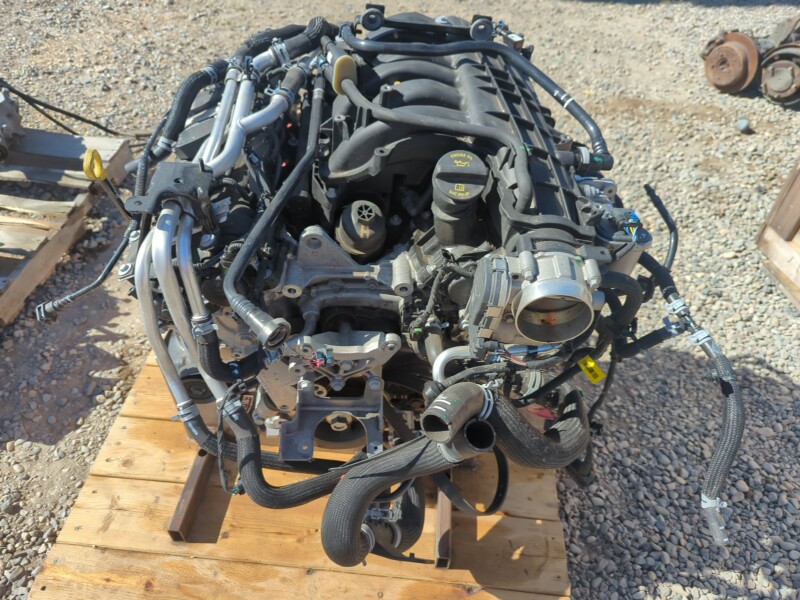
Few vehicles inspire as much debate about engines as the Jeep Wrangler. From the old-school V6s of the late 2000s to today’s turbocharged and plug-in hybrid options, Wrangler powertrains have evolved dramatically. Some are genuinely robust. Others demand compromises. This guide breaks down every major Jeep Wrangler engine, including the hybrid 4xe, explains real-world reliability, and answers the recurring question buyers ask: is the Wrangler engine weak without the hybrid assist?
Jeep Wrangler Engine Options Explained
Over the years, the Wrangler has offered one of the widest engine menus in the off-road segment. Each option exists for a different type of owner, and none are perfect for everyone.
3.6L Pentastar V6 (2012–Present)

This is the backbone of modern Wrangler ownership.
Why it’s popular
- Naturally aspirated, simple by modern standards
- Strong low-end torque for crawling
- Proven across millions of Stellantis vehicles
What to know
Early versions (2012–2014) suffered from cylinder head failures and oil cooler leaks. These issues were largely resolved after mid-decade revisions. When maintained properly, this engine routinely crosses high mileage without internal failure.
For buyers asking “best Jeep Wrangler engine,” this is still the safest long-term bet.
3.8L V6 (2007–2011)
This engine powered the early JK generation and is widely criticized.
Reality check
- Underpowered for the Wrangler’s weight
- Poor fuel economy
- Not unreliable, just inefficient and dated
The 3.8L rarely catastrophically fails, but it struggles under load, especially with larger tires or armor. Owners upgrade around it rather than because of it.
2.0L Turbocharged Inline-4 (2018–Present)
This engine divides opinion more than any other Wrangler motor.
Strengths
- Strong torque delivery
- Better fuel economy than the V6
- Pairs well with the 8-speed automatic
Concerns
Turbo complexity means heat management matters. Oil quality and service intervals are critical. When maintained, it performs well. When neglected, it doesn’t forgive.
This engine feels stronger on-road than the V6 but less mechanical off-road purists trust it less long term.
3.0L EcoDiesel V6 (2020–2023)

Torque monster. Niche appeal.
Why people love it
- Exceptional low-rpm torque
- Ideal for towing and long-distance driving
Why it disappeared
- Emissions complexity
- Higher ownership costs
- Limited buyer demand
Reliable when driven regularly, problematic for short trips and infrequent use.
Jeep Wrangler 4xe Hybrid Engine: Is It Actually Better?
The Wrangler 4xe combines:
- 2.0L turbo gasoline engine
- Two electric motors
- 17-kWh battery pack
Total system output sits well above the standard engines, but raw numbers don’t tell the whole story.
Is the Wrangler engine weak without the hybrid assist?
This is a common search for a reason.
On its own, the 2.0L turbo is not weak. However, the instant torque from the electric motor completely changes how the Wrangler feels. Off the line, crawling over obstacles, and city driving all benefit from electric assist. Without it, the gas engine feels more conventional and less dramatic.
In other words:
- The engine isn’t weak
- The hybrid system makes it feel significantly stronger and smoother
Reliability reality of the 4xe
The hybrid system itself has proven solid so far, but ownership success depends heavily on usage patterns:
- Regular charging helps battery health
- Software updates are essential
- Long-term complexity is higher than any non-hybrid Wrangler
This is not a “set it and forget it” drivetrain. It rewards informed owners.

Older Wrangler Engines by Year (Quick Reality Check)
2007–2011 Wrangler engines
Reliable but underpowered. Buy for simplicity, not performance.
2012–2014 Wrangler engines
Avoid early Pentastar years unless documented repairs were completed.
2015–2017 Wrangler engines
Pentastar reliability improved significantly. Strong used-market years.
2018–2023 Wrangler engines
Modern performance, more electronics, higher repair costs if neglected.
Check Engine Light on Jeep Wrangler: What It Usually Means
The Wrangler is notorious for triggering check engine lights that range from trivial to serious.
Common causes include:
- Loose or failing gas cap
- EVAP system leaks
- Oxygen sensor faults
- Battery voltage irregularities
In hybrids, software and sensor calibration issues can also trigger warnings without mechanical failure.
Ignoring a Wrangler check engine light is a mistake. Diagnosing early prevents cascading issues.
Engine Replacement and Swap Reality
Engine replacement costs vary widely depending on generation and powertrain. Older V6 swaps are straightforward. Modern turbo and hybrid replacements are expensive and often not financially sensible unless under warranty.
Hellcat-swapped Wranglers exist, but they are novelty builds, not practical ownership choices.
So, What’s the Best Jeep Wrangler Engine?
It depends on priorities.
- Best long-term reliability: 3.6L Pentastar (2015+)
- Best daily driving feel: 2.0L Turbo
- Best performance and efficiency: 4xe Hybrid
- Best torque for towing: EcoDiesel
There is no universally perfect Wrangler engine. There is only the right engine for how you actually drive.
Final Verdict
The Jeep Wrangler engine lineup reflects the vehicle itself: purpose-built, imperfect, and unapologetically specialized. The hybrid doesn’t fix weaknesses so much as it reshapes the experience. The non-hybrid engines are not weak, but they are honest. They demand realistic expectations, consistent maintenance, and an understanding that Wranglers are engineered for capability first, comfort and efficiency second.
If you choose the right engine for your use case, the Wrangler remains one of the most mechanically characterful vehicles you can still buy.
1. Is the Jeep Wrangler engine reliable?
Yes, most Jeep Wrangler engines are reliable when properly maintained. The 3.6L Pentastar V6 (2015 and newer) has the strongest long-term reliability record, while earlier engines require more caution.
2. Is the Jeep Wrangler engine weak without the hybrid system?
No, the engine itself is not weak. However, the hybrid system in the Wrangler 4xe adds instant electric torque, which makes the vehicle feel significantly stronger at low speeds compared to the gas engine alone.
3. What engine does the Jeep Wrangler 4xe use?
The Wrangler 4xe uses a 2.0-liter turbocharged four-cylinder gasoline engine paired with electric motors and a battery pack to create a plug-in hybrid system.
4. Which Jeep Wrangler engine lasts the longest?
The 3.6L Pentastar V6 is widely considered the longest-lasting Wrangler engine, with many examples exceeding high mileage when oil changes and cooling system maintenance are done on time.
5. Are older Jeep Wrangler engines reliable?
Older Wrangler engines can be reliable, but performance and efficiency are lower. Engines from 2007–2011 are mechanically simple but underpowered, while 2012–2014 models had known cylinder head issues.
6. What causes the check engine light on a Jeep Wrangler?
Common causes include a loose gas cap, EVAP system leaks, oxygen sensor failures, battery voltage issues, or software faults. Many check engine lights are minor but should still be scanned.
7. Is the Jeep Wrangler 2.0L turbo engine reliable?
The 2.0L turbo engine is reliable when maintained correctly. Because it is turbocharged, oil quality, cooling, and service intervals are more critical than with naturally aspirated engines.
8. Is the Jeep Wrangler hybrid engine expensive to repair?
Potentially yes. Hybrid components add complexity, and repairs outside warranty can be more expensive than traditional gas engines. Regular charging and software updates reduce long-term risk.
9. What is the best Jeep Wrangler engine for daily driving?
For daily driving, the 2.0L turbo and the 4xe hybrid offer the best balance of power and efficiency. The hybrid is smoother in city driving due to electric assist.
10. Which Jeep Wrangler engine should I avoid?
Buyers typically avoid early 2012–2014 3.6L engines unless documented repairs were completed, and 2007–2011 models if performance and fuel economy matter.
11. Does the Jeep Wrangler engine overheat?
Wrangler engines do not commonly overheat when properly maintained. Cooling issues usually stem from neglected coolant service, faulty thermostats, or aftermarket modifications.
12. How much does it cost to replace a Jeep Wrangler engine?
Engine replacement costs vary by year and engine type. Older V6 engines are cheaper to replace, while turbocharged and hybrid engines are significantly more expensive.
13. Is the Jeep Wrangler diesel engine reliable?
The diesel engine offers excellent torque and highway efficiency, but emissions systems require regular use and proper driving patterns. It is less suitable for short trips only.
14. Does lifting a Jeep Wrangler affect engine reliability?
A lift itself does not damage the engine, but larger tires and added weight increase strain on the drivetrain. Regearing and proper tuning help preserve engine health.
15. What is the best Jeep Wrangler engine overall?
For long-term ownership and simplicity, the 3.6L V6 remains the best all-around choice. For performance and efficiency, the 4xe hybrid delivers the most capability if maintained correctly.
Connect with us


