






Jeep Easter Eggs: Discovering Hidden Gems in Your Jeep
Jeep Easter eggs are small hidden design details placed throughout Jeep vehicles. They can be tiny Willys Jeep silhouettes, seven-slot grille shapes, animals, trail maps, coordinates, playful messages, or heritage graphics built into the glass, trim, lights, storage areas, fuel doors, and interior panels.
The simple answer is this: Jeep Easter eggs are hidden design surprises that celebrate Jeep history, off-road culture, and the personality of the brand. They are not random decorations. They are intentional details meant to reward owners who look closely.
Jeep has officially recognized owner traditions like Jeep Ducking, and the same community spirit explains why Easter eggs have become such a big part of Jeep ownership. A Jeep is not just a vehicle for many owners. It is something they explore, personalize, and connect with.
What Are Jeep Easter Eggs?
Jeep Easter eggs are hidden symbols, graphics, and design touches placed around the vehicle.
They are called Easter eggs because they are meant to be discovered. Some are easy to spot. Others are hidden in places most owners never check until someone points them out.
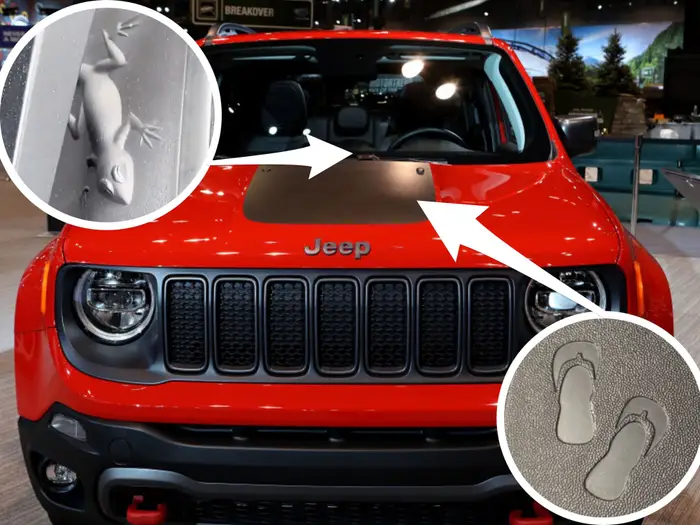
You might find a small Jeep grille in the headlights, a Willys silhouette on the windshield, a spider near the fuel door, a gecko on trim pieces, a map inside a storage area, or a tiny trail reference molded into plastic.
DarCars explains that many Jeep Easter eggs fall into themes like historical homage, outdoor adventure, and playful references to Jeep manufacturing or design.
Why Does Jeep Hide Easter Eggs?
Jeep hides Easter eggs because the brand has always been about personality.
Most vehicles are designed to be clean and predictable. Jeeps are different. A Wrangler, Gladiator, Renegade, Grand Cherokee, Compass, or Cherokee often carries little details that make the owner feel like the vehicle has a story.
The Easter eggs connect back to Jeep’s military roots, off-road trails, outdoor lifestyle, and enthusiast culture. They make the vehicle feel less generic and more personal.
For many owners, finding a hidden symbol is part of the fun of buying a Jeep.
When Did Jeep Easter Eggs Start?
The Jeep Easter egg tradition is commonly traced back to the late 1990s.
Many Jeep-focused sources credit designer Michael Santoro with adding the first widely recognized Jeep Easter egg to the 1997 Jeep Wrangler TJ. The detail was a small seven-slot grille design worked into the cowl area. JEDCo describes the 1997 Wrangler cowl grille imprint as the first Jeep Easter egg and notes that Jeep later expanded the idea into more models.
That small design decision became a larger brand tradition. Today, Jeep Easter eggs are one of the most talked-about hidden features in the automotive world.
Common Jeep Easter Eggs to Look For
The most common Jeep Easter eggs include the seven-slot grille, Willys Jeep silhouettes, tiny animals, trail maps, coordinates, flip-flops, stars, topographic patterns, and hidden words.
The seven-slot grille is one of the most common because it is the core visual identity of Jeep. You may find it in headlights, speaker grilles, trim pieces, wheel designs, or storage areas.
The Willys silhouette is another major one. It connects modern Jeep vehicles back to the original military-inspired Jeep shape.
Some models have animals, like spiders, geckos, snakes, or lizards. Others include trail references, maps, or outdoor symbols.
Jeep Wrangler Easter Eggs
The Jeep Wrangler is the model most people associate with Easter eggs.
Common Wrangler Easter eggs can include a small Willys Jeep silhouette on the windshield, seven-slot grille details, “Since 1941” references, hidden graphics in the wheels, and trail-inspired design details.
MotorTrend noted that the 2011 Wrangler included a “Jeep Since 1941” detail on the passenger grab handle, which is a good example of how Jeep uses small interior touches to connect modern models to brand heritage.
The Wrangler makes sense for Easter eggs because it is the most iconic Jeep. It has removable doors, removable roof options, off-road hardware, and a design that still clearly traces back to the original Jeep.
Jeep Gladiator Easter Eggs
The Jeep Gladiator also has Easter eggs because it shares so much of its identity with the Wrangler.
You may find hidden Jeep grille details, Willys shapes, trail references, and small graphics worked into the body or interior trim. Because the Gladiator is a pickup, some Easter eggs may appear near the bed, tailgate, cargo area, or rear lighting details.
The Gladiator is basically the Jeep truck for people who want Wrangler character with a pickup bed. Its Easter eggs follow that same theme: rugged, playful, and practical.
Jeep Renegade Easter Eggs
The Jeep Renegade is famous for having some of the most playful Easter eggs.
One of the best-known Renegade Easter eggs is the small spider near the fuel door area with the phrase “Ciao, baby!” This detail became popular online because many owners found it unexpectedly while filling up.
The Renegade also commonly includes small Jeep grille motifs, map-style details, and playful shapes throughout the interior and exterior. The Sun covered a Jeep owner finding the spider Easter egg in the gas cap area, showing how these little details continue to surprise drivers.
The Renegade’s Easter eggs tend to feel more playful than serious, which fits the vehicle’s smaller, city-friendly personality.
Jeep Cherokee and Grand Cherokee Easter Eggs
The Cherokee and Grand Cherokee also include Easter eggs, though they may be less obvious than the Wrangler’s.
Owners have found hidden Jeep shapes, trail references, glass etchings, storage-area designs, and off-road-inspired details. Some Cherokee models have been known for hidden storage details and trail references.
The Sun UK reported on a Jeep owner discovering a hidden reference to Hell’s Revenge, a famous Moab trail, inside a Jeep Cherokee storage area. That kind of detail shows how Jeep ties even mainstream SUVs back to off-road culture.
The Grand Cherokee may be more refined and luxury-oriented than a Wrangler, but Jeep still uses design cues that remind owners of the brand’s adventure roots.
Jeep Compass Easter Eggs
The Jeep Compass can also have Easter eggs, including small grille graphics, animal shapes, and outdoor-inspired design details.
Because the Compass is a compact SUV, its Easter eggs may be more subtle than the Wrangler’s. You may need to check the windshield edges, plastic trim, cargo area, speaker grilles, cupholders, and liftgate area.
That is part of the appeal. Jeep Easter eggs are not always sitting in plain sight.
Where to Find Jeep Easter Eggs
Start with the windshield.
Many Jeep models hide small graphics in the lower corner of the windshield or along glass edges. Then check the headlights, taillights, fuel door, cupholders, floor mats, storage bins, speaker grilles, center console, cargo area, liftgate, wheels, and under-seat compartments.
Southside Dodge notes that Jeep Easter eggs can appear in places like headlights, taillights, window trim, cupholders, instrument clusters, liftgates, and other hidden areas.
A good rule is simple: check the places designers touch but most owners ignore.
Are Jeep Easter Eggs on Every Jeep?
Not every Jeep has the same Easter eggs.
Some models have many. Some have only a few. Some Easter eggs vary by model year, trim, market, redesign, or special edition.
A Wrangler may have different hidden details than a Renegade. A 2018 model may have different details than a 2026 model. A special edition may include extra graphics or heritage touches that normal trims do not have.
That is why owners enjoy searching. There is no single universal Easter egg list that applies to every Jeep.
Do Jeep Easter Eggs Add Value?
Jeep Easter eggs do not usually add direct resale value by themselves.
A hidden Willys graphic or spider does not make the vehicle worth thousands more. But they do add emotional value, and emotional value matters in Jeep culture.
Jeep buyers often care about personality, community, heritage, and uniqueness. Easter eggs help reinforce that. They make the vehicle feel more special, which can make ownership more enjoyable.
For shoppers comparing Jeep models, features like drivetrain, trim, mileage, condition, service history, and warranty matter more for actual value. But Easter eggs make the ownership experience more memorable.
Jeep Easter Eggs vs Jeep Ducking
Jeep Easter eggs and Jeep Ducking are different, but both are part of Jeep culture.
Easter eggs are hidden design details built into the vehicle by Jeep designers.
Jeep Ducking is when another Jeep owner places a rubber duck on your Jeep as a friendly compliment.
Both traditions are about discovery, community, and personality. One comes from the designers. The other comes from owners.
Together, they show why Jeep has a stronger enthusiast culture than most SUV brands.
Why Jeep Owners Love Easter Eggs
Jeep owners love Easter eggs because they make the vehicle feel like more than transportation.
A hidden symbol creates a small moment of discovery. It gives owners something to show friends, family, and other Jeep fans. It also connects the vehicle to the larger Jeep story.
That story includes military history, the original Willys Jeep, the seven-slot grille, off-road trails, Moab, Wrangler culture, Jeep clubs, and the idea that a Jeep should have character.
Most brands do not get that kind of emotional connection. Jeep does.
Best Jeep Models for Easter Egg Hunters
The best Jeep models for Easter egg hunters are usually the Wrangler, Gladiator, Renegade, Cherokee, Compass, and Grand Cherokee.
The Wrangler and Gladiator are best if you want the strongest connection to Jeep heritage.
The Renegade is best if you want playful hidden details.
The Grand Cherokee is best if you want a more refined SUV that still carries Jeep identity.
The Compass and Cherokee are good if you want everyday SUV practicality with some hidden brand personality.
For local shoppers, compare current new Jeep inventory and look closely at trim, model year, and design details. If you want a specific older Easter egg, search used Jeep inventory because some hidden details may have changed by year.
How to Search for Easter Eggs in Your Jeep
Start outside the vehicle.
Look at the windshield, headlights, taillights, wheels, grille, mirrors, fuel door, bumpers, and liftgate. Then move inside and check the dashboard, grab handles, storage bins, cupholders, floor mats, seat trim, cargo panels, speaker grilles, and under-seat areas.
Use a flashlight. Look from different angles. Some Easter eggs are molded into plastic and only appear clearly under certain light.
Also check owner forums and model-specific groups. Jeep owners love sharing hidden finds, and someone with the same model may already have discovered details you missed.
FAQs About Jeep Easter Eggs
What are Jeep Easter eggs?
Jeep Easter eggs are hidden design details placed throughout Jeep vehicles, such as Willys silhouettes, grille graphics, animals, maps, trail references, and small messages.
Why does Jeep put Easter eggs on vehicles?
Jeep uses Easter eggs to celebrate brand history, off-road culture, owner community, and the playful personality of the brand.
When did Jeep Easter eggs start?
The Easter egg tradition is widely traced to the 1997 Jeep Wrangler TJ, when designer Michael Santoro added a hidden seven-slot grille detail to the cowl area.
Do all Jeeps have Easter eggs?
Many modern Jeeps have Easter eggs, but the number and type vary by model, year, trim, and special edition.
Where are Jeep Easter eggs located?
Common locations include the windshield, headlights, taillights, fuel door, cupholders, floor mats, speaker grilles, liftgate, storage bins, wheels, and interior trim.
Which Jeep has the most Easter eggs?
The Jeep Renegade is often mentioned for having many playful Easter eggs, while the Wrangler remains the most iconic Jeep for heritage-inspired hidden details.
Are Jeep Easter eggs real?
Yes. Jeep Easter eggs are real hidden design details, and many owners find them throughout their vehicles.
Final Thoughts: Jeep Easter Eggs Make Ownership More Fun
Jeep Easter eggs are small details with a big purpose.
They remind owners that Jeep is not just another SUV brand. It has history, personality, humor, and a community that actually cares about the little things.
From hidden Willys silhouettes to grille icons, spiders, geckos, trail maps, and “Since 1941” details, Jeep Easter eggs turn the vehicle into something owners can explore. That is exactly why people keep looking for them.
Connect with us


