





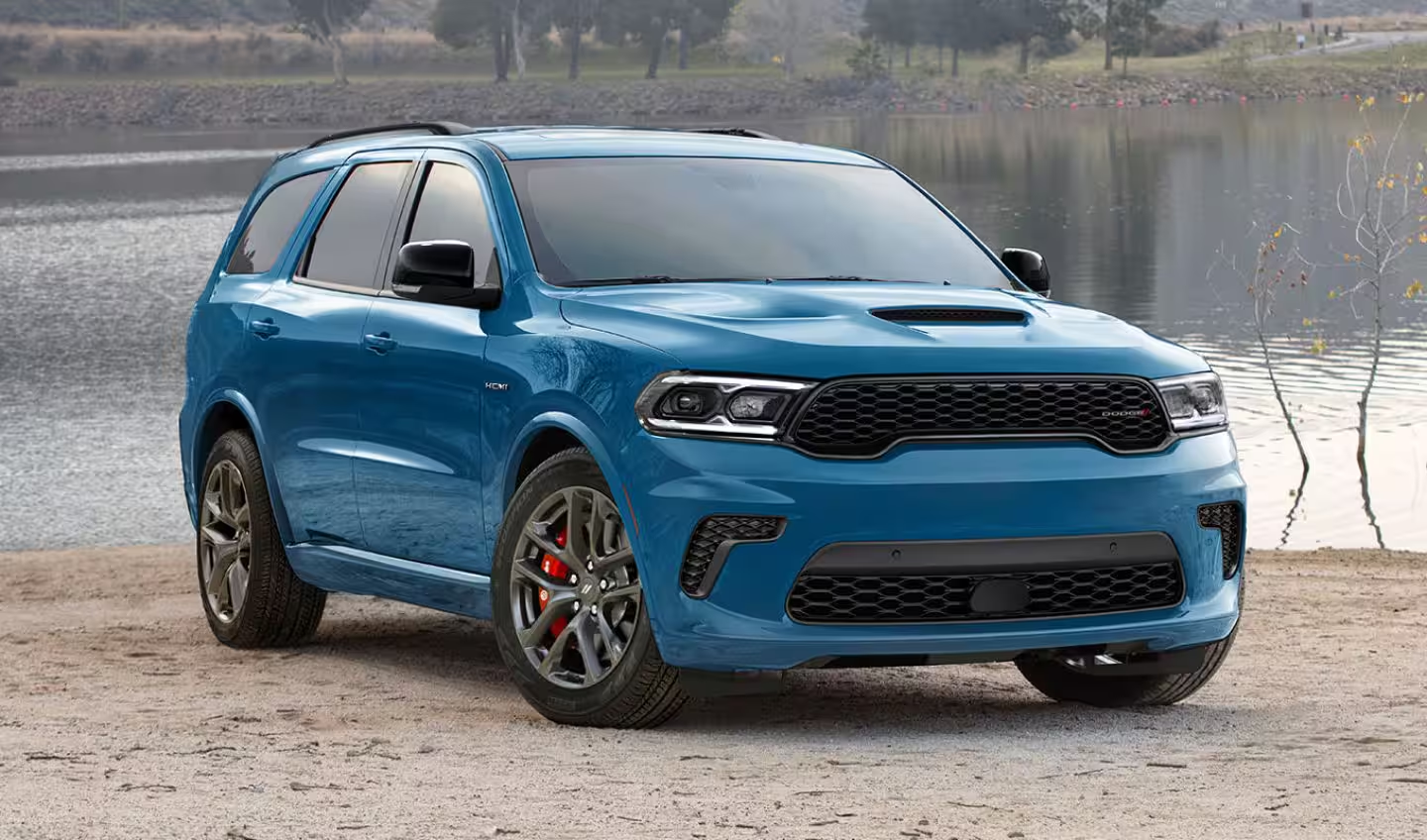
Dodge Durango Reliability – Experts Answer
The Dodge Durango is more reliable than many shoppers expect, especially if you buy the right engine and avoid neglected used examples.
The expert answer is simple: the Dodge Durango can be a dependable, long-lasting SUV, but it needs proper maintenance because it is a large, heavy, powerful three-row vehicle. RepairPal gives the Dodge Durango a 3.5 out of 5.0 reliability rating, ranking it 3rd out of 14 full-size SUVs. It also lists the Durango’s average annual repair cost at $675, which is lower than the full-size SUV average of $784.
That makes the Durango a solid choice if you want a three-row SUV with available V8 power, available all-wheel drive, strong towing capability, and more personality than a typical family crossover.
Is the Dodge Durango Reliable?
Yes, the Dodge Durango is generally reliable for its class.
It is not a small economy SUV, and it is not going to be as cheap to run as a Toyota RAV4 or Honda CR-V. But for a full-size SUV with available HEMI V8 power and real towing strength, the Durango’s reliability record is respectable.
J.D. Power gives the 2020 Dodge Durango a Quality & Reliability score of 80 out of 100, which places it in the average range. That score measures owner-reported defects, malfunctions, and design issues across the whole vehicle, from engine to infotainment.
So the honest answer is this: a Durango is reliable if you maintain it properly, but it is not a vehicle you should buy blindly with no service records.
Why the Durango Can Be a Smart Used SUV
The Dodge Durango has one major advantage: it has been around long enough for its strengths and weaknesses to be well understood.
That matters in the used SUV market. A long-running platform usually means mechanics know the vehicle, parts are easier to find, and common issues are easier to diagnose. The Durango also uses familiar Stellantis engines, including the 3.6L Pentastar V6 and 5.7L HEMI V8.
For families, the Durango makes sense because it offers three rows, useful cargo space, available AWD, and stronger towing capability than many softer crossovers. For buyers who want power, the HEMI models deliver the kind of feel most family SUVs do not offer.
The tradeoff is that size and power bring higher running costs. Tires, brakes, fuel, suspension parts, and drivetrain service can cost more than they would on a smaller SUV.
Best Dodge Durango Engine for Reliability
For most buyers, the 3.6L Pentastar V6 is the safest long-term engine choice.
It is common, widely serviced, and used across many Dodge, Jeep, Chrysler, and Ram vehicles. That helps with parts availability and mechanic familiarity. It also gives the Durango enough power for daily driving, family use, commuting, road trips, and light towing.
The 5.7L HEMI V8 can also be reliable, but it usually costs more to own. It uses more fuel, can wear tires and brakes faster, and is often bought by owners who tow or drive harder. That does not make it a bad engine. It just means you need stronger maintenance records before buying used.
The 6.4L SRT V8 and Hellcat Durango models are performance SUVs. They are exciting, but they are not the low-cost reliability picks. Tires, brakes, fuel, insurance, and repairs can all cost much more.
Dodge Durango V6 Reliability
The V6 Durango is the best fit for most shoppers who want reliability and lower ownership cost.
The 3.6L Pentastar V6 is not the most exciting engine in the lineup, but it is practical. It gives the Durango reasonable power without the extra fuel and maintenance cost of a V8.
If you are buying used, look for regular oil-change records, no coolant leaks, no check-engine light, smooth transmission shifts, clean idle, and no signs of overheating. A clean V6 Durango with maintenance records is usually the safest used Durango to buy.
Dodge Durango HEMI Reliability
The HEMI Durango can be reliable, but it needs proper care.
The 5.7L HEMI V8 is a strong engine for buyers who tow, carry passengers often, or simply want a more powerful SUV. It gives the Durango a muscular feel that many three-row SUVs cannot match.
Before buying a used HEMI Durango, check for ticking noises, exhaust manifold issues, oil leaks, cooling system problems, rough idle, transmission behavior, and signs of heavy towing use. If the previous owner kept up with maintenance, a HEMI Durango can be a great long-term SUV. If it was neglected, repairs can get expensive quickly.
Common Dodge Durango Problems
The Durango’s common problem areas are mostly what you would expect from a large SUV.
Buyers should check for oil leaks, coolant leaks, transmission shifting issues, worn suspension parts, brake wear, tire wear, infotainment glitches, electrical issues, air conditioning problems, AWD system concerns, and open recalls.
Because the Durango is heavy, tires and brakes can wear faster than on smaller SUVs. If the vehicle was used for towing, pay extra attention to transmission service, cooling system condition, rear suspension wear, hitch equipment, and maintenance records.
Before buying any used Durango, run the VIN through the official NHTSA recall lookup. Open recalls are not always dealbreakers, but they need to be addressed.
Is the Dodge Durango Expensive to Maintain?
The Dodge Durango is not cheap like a compact crossover, but it is reasonable for a full-size SUV.
RepairPal lists the Durango’s average annual repair cost at $675. That is slightly above the average for all vehicles, but below the average for full-size SUVs. RepairPal also notes that major repairs are uncommon for the Durango because repair frequency is relatively low.
That means the Durango is not a maintenance nightmare by default. But ownership costs can rise quickly if you buy a high-mileage V8 model, skip maintenance, tow heavily, or choose an SRT or Hellcat model.
How Long Will a Dodge Durango Last?
A properly maintained Dodge Durango can last 150,000 to 200,000 miles, and some can go beyond that.
The engine is only part of the story. To reach high mileage, the transmission, cooling system, brakes, tires, suspension, AWD system, electrical system, and body condition all matter.
A 100,000-mile Durango with complete records can still be a smart buy. A 60,000-mile Durango with no records, warning lights, rough shifting, or overheating history can be a bad one.
Best Dodge Durango Years to Buy Used
For most used buyers, a well-maintained 2018 to 2021 Dodge Durango is a strong place to start.
Those years give you modern features, strong engine choices, good availability, and a platform that was already familiar by then. The 2020 Durango is a useful benchmark because J.D. Power gives it an 80 out of 100 Quality & Reliability score.
Newer models can also be good if you want warranty coverage and updated technology. Older models can still be worth buying, but condition and service history become more important as mileage climbs.
Dodge Durango vs Other SUVs
The Dodge Durango is different from most family SUVs.
A Toyota Highlander, Honda Pilot, Mazda CX-9, or Kia Telluride may make more sense if your top priorities are fuel economy, lower ownership costs, and softer family comfort.
The Durango makes more sense if you want stronger towing, available V8 power, a rear-drive-based feel, available AWD, and a more muscular SUV personality.
It is not the most efficient SUV in the class. It is not the newest design. But it has character, space, and capability that many newer crossovers do not offer.
Should You Buy a Dodge Durango?
Yes, the Dodge Durango is worth buying if it matches your needs.
Buy the Durango if you want a three-row SUV with power, towing ability, available AWD, and a stronger road presence than a typical crossover. Choose the V6 if you want the most practical ownership experience. Choose the HEMI if you tow or want more power. Choose the SRT or Hellcat only if you are ready for performance-SUV ownership costs.
If you are shopping locally, compare available used SUV inventory by year, engine, mileage, trim, service history, and condition. For newer models, check current new Dodge inventory before deciding.
FAQs About Dodge Durango Reliability
Is the Dodge Durango reliable?
Yes, the Dodge Durango is generally reliable for a full-size SUV. RepairPal gives it a 3.5 out of 5.0 reliability rating and ranks it 3rd out of 14 full-size SUVs.
Is the Dodge Durango expensive to maintain?
The Durango has average ownership costs for its class. RepairPal lists the average annual repair cost at $675, which is lower than the full-size SUV average.
What is the most reliable Dodge Durango engine?
The 3.6L Pentastar V6 is usually the safest long-term choice because it is common, widely serviced, and less expensive to own than the V8 options.
Is the Dodge Durango HEMI reliable?
Yes, the 5.7L HEMI can be reliable with proper maintenance. It offers more power and towing ability, but it usually costs more in fuel, brakes, tires, and potential repairs.
How long will a Dodge Durango last?
A properly maintained Dodge Durango can last 150,000 to 200,000 miles or more. Maintenance history is the biggest factor.
Is a used Dodge Durango a good buy?
Yes, a used Durango can be a good buy if it has clean service records, no major accident history, no warning lights, smooth shifting, no overheating history, and no open recalls.
Final Thoughts: The Durango Is Solid If You Buy the Right One
The Dodge Durango is a solid SUV when maintained properly.
It has better reliability data than many people expect, strong engine choices, useful towing ability, and real three-row practicality. The V6 is the safest choice for most buyers. The HEMI is better for towing and power. The SRT and Hellcat are performance machines and should be budgeted accordingly.
The smart move is simple: buy the cleanest Durango you can find, check the service history, inspect the engine and transmission, verify recalls, and avoid neglected examples. Do that, and a Dodge Durango can be a dependable, capable SUV for years.
Connect with us


