





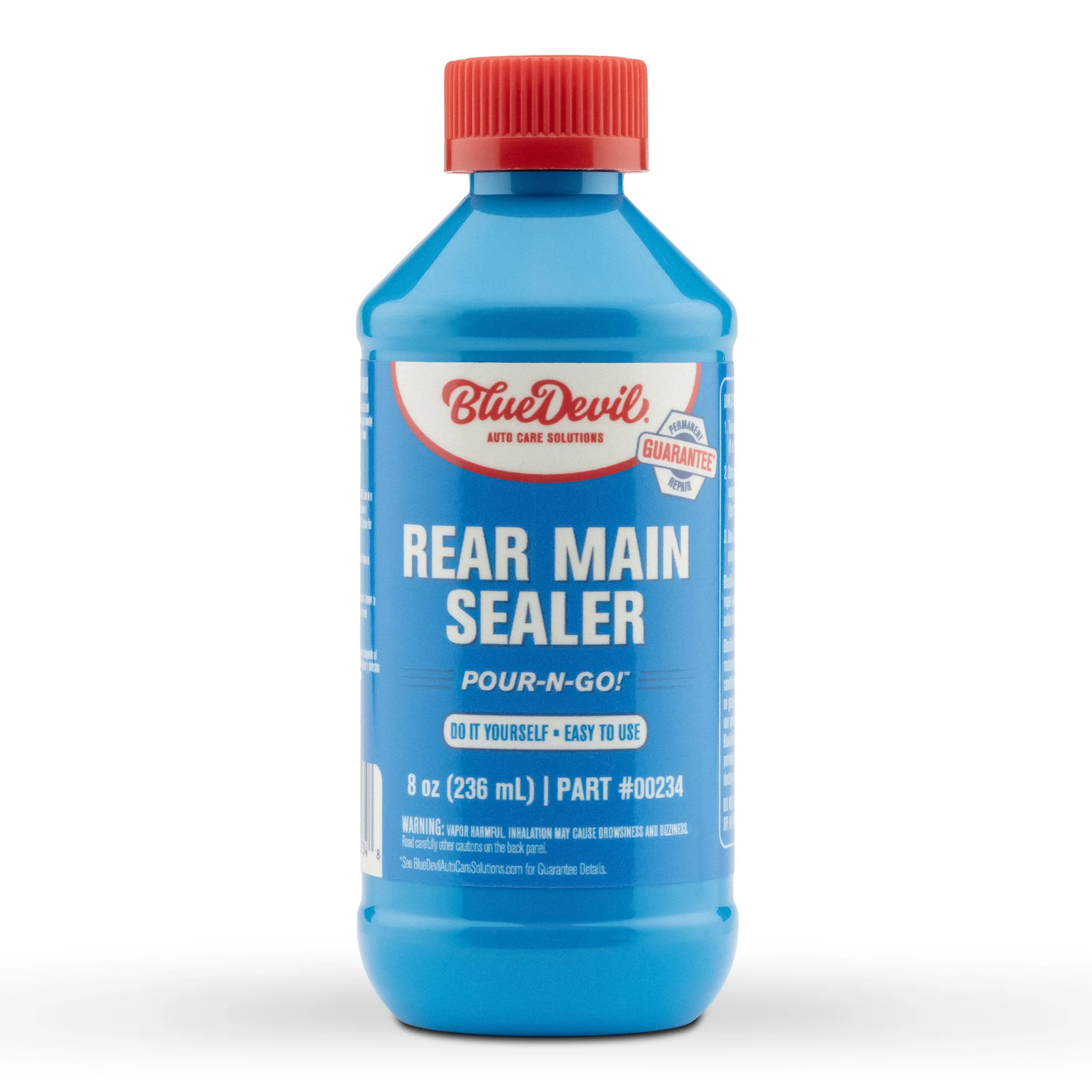
BlueDevil Rear Main Sealer: A Mechanic’s Perspective
BlueDevil Rear Main Sealer can be worth trying if you have a small rear main seal leak and the vehicle is not worth tearing apart immediately. But from a mechanic’s perspective, it should be treated as a temporary or low-cost attempt, not the same thing as replacing the rear main seal.
The simple answer is this: BlueDevil may help if the leak is caused by an old, dried, or slightly shrunken rubber seal. It will not fix a torn seal, damaged crankshaft surface, clogged PCV system, major oil leak, overfilled engine, or oil leak coming from somewhere else. BlueDevil says its Rear Main Sealer is designed for gas and diesel engines and works by restoring dried, cracked, or shrunken rubber seals.
What Is BlueDevil Rear Main Sealer?
BlueDevil Rear Main Sealer is an oil additive made to reduce or stop leaks from the rear main seal and certain other engine oil seals.
The rear main seal sits at the back of the engine where the crankshaft exits toward the transmission. When it leaks, oil can drip from the area between the engine and transmission. That is why the repair can be expensive. Access usually requires removing the transmission or separating major drivetrain parts.
That is exactly why products like BlueDevil are popular. A bottle costs far less than a rear main seal job.
How Does It Work?
BlueDevil is designed to condition rubber seals.
As seals age, they can dry out, harden, shrink, or lose flexibility. A seal conditioner attempts to soften and swell the rubber enough to help it seal again. This can reduce seepage if the seal is still physically intact.
That is the key point: it works best on an old seal that has shrunk slightly, not on a seal that is destroyed.
If the rear main seal lip is ripped, the crankshaft sealing surface is grooved, the engine has excessive crankcase pressure, or the leak is actually from the oil pan, valve cover, or intake area, an additive will not solve the real problem.
A Mechanic’s Honest Take
A mechanic would usually see BlueDevil as a gamble with limits.
It is not snake oil in the sense that seal conditioners can sometimes reduce small leaks. But it is also not a proper mechanical repair. The proper fix for a confirmed rear main seal leak is replacing the seal and inspecting the crankshaft surface, oil pan area, PCV system, and related gaskets.
The reason mechanics hesitate is simple: many “rear main seal leaks” are misdiagnosed.
Oil can run down from valve cover gaskets, oil pressure sensors, intake gaskets, oil filter housings, oil cooler seals, oil pan gaskets, or timing cover leaks and end up dripping near the bellhousing. That makes it look like a rear main leak when it is not.
Before using any sealer, confirm the leak source.
When BlueDevil Rear Main Sealer Is Worth Trying
BlueDevil is most worth trying when the leak is small and the vehicle is older.
It makes sense if:
The leak is a slow drip or seep.
The oil level is not dropping quickly.
The engine runs normally.
The vehicle is older or high mileage.
You want to delay an expensive repair.
The rear main seal leak has been properly diagnosed.
You understand it may not work.
It is especially reasonable on an older daily driver where a $1,000-plus repair may not make financial sense right away. Rear main seal repair costs can be high because the labor is intensive, and some estimates place the job around hundreds to well over $1,000 depending on the vehicle. Endurance notes rear main seal replacement can range from about $600 to $1,200+, while some vehicle-specific repairs can be higher.
When You Should Not Use It
Do not rely on BlueDevil if the leak is major.
Skip the additive and diagnose properly if:
Oil is pouring out.
The vehicle leaves large puddles.
The clutch is slipping from oil contamination.
The transmission bellhousing is soaked.
The engine oil level drops quickly.
There is blue smoke from oil burning.
The PCV system is clogged.
The engine has excessive blow-by.
The leak started after recent repair work.
The engine is already low on oil pressure.
A bottle of sealer is not a substitute for repairing a serious oil leak.
Use Clean Oil First
For best results, use it with clean engine oil.
Hot Rod recommends making sure the engine has clean oil and the correct oil specification before using BlueDevil or any rear main seal stop-leak product. That advice makes sense. Dirty, old oil filled with fuel dilution, sludge, or contaminants is not the best carrier for any additive.
If the oil is due for a change, change the oil and filter first, then add the product according to the directions.
How to Use BlueDevil Rear Main Sealer
Follow the instructions on the bottle.
BlueDevil’s directions commonly state to add one 8 oz bottle directly into the engine oil, with one bottle treating up to 8 quarts. The product is designed to stay in the oil while you drive. Highline Warren lists the basic direction as turning off the engine and pouring one 8 oz bottle into the engine oil.
Do not overfill the crankcase. If your oil level is already at the full mark and you are adding 8 oz, it is usually smart to leave enough room or drain a small amount if necessary.
Overfilled oil can create foaming, pressure issues, leaks, and other problems.
How Long Does It Take to Work?
Do not expect instant results.
Many seal conditioners need driving time and heat cycles to work into the rubber. You may need to drive for several days or a few hundred miles before deciding whether it helped.
If the leak gets slightly better, keep monitoring the oil level and the leak area. If nothing changes after a reasonable period, the seal may be too damaged or the leak may not be from the rear main seal.
Will It Hurt the Engine?
Used correctly, it usually should not hurt a healthy engine.
The risk comes from using too much, using it in an engine with the wrong oil level, ignoring a serious leak, or using additives as a replacement for maintenance. Any oil additive changes the oil mixture slightly, so I would not use it casually in a new engine, performance engine, warranty vehicle, or engine with known oiling issues.
For an older high-mileage vehicle with a small leak, the risk is usually more acceptable.
Will It Fix Every Oil Leak?
No.
BlueDevil Rear Main Sealer is meant for rubber seal-related oil leaks. It is not a universal repair for every gasket and sealing surface.
It will not properly fix:
Oil pan gasket leaks.
Valve cover gasket leaks.
Cracked covers.
Bad oil filter housing gaskets.
Loose drain plugs.
Bad oil pressure sensors.
Damaged timing covers.
Crankshaft groove damage.
Improperly installed seals.
Excessive crankcase pressure.
Misdiagnosis is the biggest issue. If the leak source is wrong, the product cannot work.
Rear Main Seal Leak Symptoms
A rear main seal leak usually shows up as oil at the back of the engine.
Common signs include oil dripping between the engine and transmission, oil on the lower bellhousing, oil spots after parking, burning oil smell if oil contacts hot exhaust, and gradual oil loss.
But those symptoms can overlap with other leaks. That is why cleaning the engine and using UV dye can help confirm the leak path before spending money.
Mechanic’s Diagnostic Advice
Before using BlueDevil, clean the oily area first.
Then drive the vehicle and recheck where fresh oil appears. If needed, add UV dye to the engine oil and inspect with a UV light. This can help identify whether the oil is truly coming from the rear main seal or running down from above.
Also check the PCV system. A clogged PCV valve or crankcase ventilation issue can increase crankcase pressure and force oil past seals. If the pressure problem remains, a sealer may not hold.
BlueDevil vs Rear Main Seal Replacement
BlueDevil is cheap and easy.
Rear main seal replacement is expensive and labor-intensive.
That is the tradeoff. BlueDevil is worth trying when the alternative repair cost does not make sense yet. But if the vehicle is valuable, the leak is severe, or you plan to keep the car long term, replacing the seal is the correct repair.
A sealer is a shortcut. A seal replacement is the fix.
Is It Good for Trucks?
It can be used in gas and diesel engines if compatible with the oil system and directions.
That includes many older trucks, SUVs, and high-mileage vehicles. But trucks often work harder, tow more, and run hotter. If a truck is leaking badly, diagnose it properly before relying on a bottle.
For Ram, Jeep, Dodge, Chevy, GMC, Ford, Toyota, and Nissan trucks, the same rule applies: confirm the leak source first.
Should You Use It Before Selling a Car?
Be careful.
Using a sealer to hide a known leak from a buyer is unethical. If you use it and sell the vehicle, disclose the leak history if asked. A small leak treatment on an older vehicle is one thing. Concealing a serious rear main seal issue is another.
For dealership or professional use, proper disclosure and diagnosis matter.
Final Verdict
BlueDevil Rear Main Sealer is not a miracle, but it can be useful in the right situation.
From a mechanic’s perspective, it is a reasonable low-cost attempt for a minor, confirmed rear main seal leak on an older or high-mileage vehicle. It is not the right answer for a major leak, torn seal, oil-soaked clutch, damaged crankshaft surface, clogged PCV system, or misdiagnosed oil leak.
Use it with clean oil, follow the directions, do not overfill the crankcase, and monitor the result. If the leak continues, the vehicle needs real mechanical repair.
Connect with us


