




Simi Valley Chrysler Dodge Jeep Ram

Blog / Dodge

Why Every Gearhead Dreams of Owning a 3rd Gen Dodge Ram!

3rd Gen Dodge Ram!

Why Every Gearhead Dreams of Owning a 3rd Gen Dodge Ram

The 3rd Gen Dodge Ram is special because it sits in that perfect space between old-school truck toughness and modern usable power. It still feels mechanical, simple, loud, and durable, but it also brought better styling, stronger engines, improved interiors, serious towing ability, and one of the most beloved diesel engines ever put in a pickup.

The simple answer is this: gearheads love the 3rd Gen Dodge Ram because it offered the 5.7L HEMI V8, the legendary 5.9L Cummins diesel, the later 6.7L Cummins, bold big-rig styling, real truck capability, and huge modification potential.

The 3rd Gen Ram started with the 2002 model-year Ram 1500, while the heavy-duty 2500 and 3500 models followed for 2003. Classic.com describes the third-generation Dodge Ram as being offered in 1500, 2500, and 3500 versions with regular, Quad, and Mega Cab configurations, plus gas V6, V8, V10, diesel inline-six, and even the wild Viper V10 in the Ram SRT-10.

The 3rd Gen Ram Had the Look

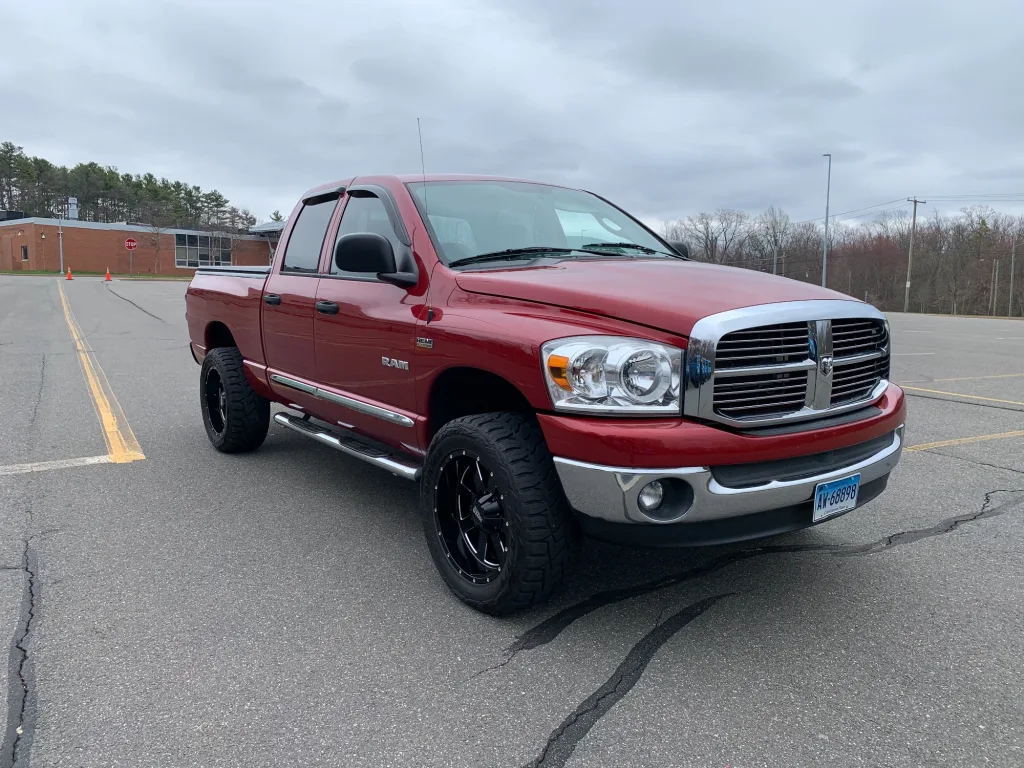
The 3rd Gen Dodge Ram looked tougher than most trucks of its era.

It kept the big-rig attitude that made the second-gen Ram famous, but it sharpened everything. The grille was bigger. The headlights looked more aggressive. The body had more presence. It looked like a truck that belonged on a jobsite, at a diesel meet, towing a trailer, or parked outside a shop with a turbo whistle echoing in the background.

That design aged well because it never tried to look soft. It looked like a Ram.

For gearheads, that matters. A truck needs to have stance before you even touch the suspension, wheels, tires, exhaust, or tune. The 3rd Gen Ram had that from day one.

The 5.9L Cummins Is the Big Reason

The biggest reason gearheads love the 3rd Gen Dodge Ram is the 5.9L Cummins turbo diesel.

The 5.9 Cummins has a reputation for durability, torque, and massive tuning potential. It is a straight-six diesel that feels more industrial than delicate. It is not just an engine. It is one of the main reasons people hunt for clean 2003 to 2007 Ram 2500 and 3500 trucks.

MotorTrend calls the 5.9L Cummins a diesel with big-rig-style character and explains how the engine helped give Dodge trucks a serious advantage among diesel buyers.

For many enthusiasts, the dream setup is a clean 5.9 Cummins 4x4 with a manual transmission. Those trucks have become harder to find in clean condition, which only makes them more desirable.

The 5.7L HEMI Made the Gas Trucks Fun

Not every dream 3rd Gen Ram has a diesel.

The 5.7L HEMI V8 gave gas Ram buyers real power and a muscle-truck personality. It sounded good, pulled hard, and gave the Ram 1500 a stronger identity than the older Magnum engines.

Dodge Garage notes that the early 5.7L HEMI made 345 horsepower and 375 lb-ft of torque in Ram trucks. For the early 2000s, that was serious power in a full-size pickup.

The HEMI Ram is not as legendary as the Cummins in diesel circles, but it is still a gearhead truck. It responds well to exhaust, intake, tuning, gears, and other upgrades. It also gives buyers a lower-cost way into the 3rd Gen Ram world.

The Ram SRT-10 Was Completely Insane

The 3rd Gen Ram also gave the world the Ram SRT-10.

This was not just a trim package. It was a Ram pickup with an 8.3L Viper V10 under the hood. That is the kind of truck that makes no practical sense and perfect gearhead sense at the same time.

Classic.com notes that the 3rd Gen Ram lineup included the 8.3L Viper V10-powered SRT-10 performance variant. That truck helped prove how wild the 3rd Gen platform could be.

A Viper-powered pickup is exactly the kind of thing enthusiasts remember because it would be almost impossible to justify in today’s market.

The Heavy-Duty Trucks Were Built to Work

The Ram 2500 and 3500 versions are a major part of the 3rd Gen appeal.

These trucks were built for towing, hauling, farm use, work use, and diesel performance. The heavy-duty models gave buyers the engine, frame, drivetrain, and axle strength they wanted for serious truck jobs.

The uploaded Ram towing reference you shared shows how capability remains central to Ram truck content, with heavy-duty Ram trucks positioned around higher towing and payload demands compared with the lighter-duty Ram 1500.

That same logic is why 3rd Gen Ram HD trucks still matter. A clean Ram 2500 or 3500 from this era is not just nostalgia. It can still work, tow, haul, and handle serious use when maintained properly.

The 6.7L Cummins Changed the Later Trucks

The later 3rd Gen heavy-duty trucks moved from the 5.9L Cummins to the 6.7L Cummins.

That transition happened in the 2007.5 model period. The 6.7 brought more displacement, more emissions equipment, and a newer transmission pairing. Some diesel fans prefer the simpler 5.9, while others like the added torque and newer drivability of the 6.7.

DrivingLine explains that the 2007.5 to 2009 Ram HD trucks introduced the 6.7L Cummins, the 68RFE six-speed automatic, and stricter emissions equipment while sending the third-gen body style out with more modern diesel hardware.

That split makes the 3rd Gen interesting. Early diesel buyers chase the 5.9. Later buyers may consider the 6.7 if they want newer torque and updated drivability.

Manual Transmission Trucks Are Gearhead Gold

One reason enthusiasts obsess over 3rd Gen Rams is manual transmission availability.

A Cummins diesel paired with a manual gearbox gives the truck a mechanical feel modern pickups rarely offer. You feel connected to the engine, the torque, and the work the truck is doing.

That is a huge part of the appeal. Modern diesel trucks are more powerful, more comfortable, and more advanced, but they often feel less raw. A manual 3rd Gen Cummins still feels like a machine.

For many gearheads, that is the dream.

The Aftermarket Is Massive

The 3rd Gen Dodge Ram has a huge aftermarket.

You can build one for towing, diesel performance, overlanding, work use, off-road trails, street stance, drag racing, or daily driving. There are lift kits, turbos, injectors, exhaust systems, tuners, wheels, tires, bumpers, lighting kits, interior upgrades, steering upgrades, suspension fixes, and transmission builds everywhere.

That matters because gearheads rarely leave trucks stock.

A 3rd Gen Ram gives owners a strong starting point and almost endless room to personalize it.

The Trucks Still Feel Simple Enough to Work On

Another reason people love them is that they are modern enough to drive, but old enough to understand.

Yes, they have electronics. Yes, diesel emissions became more complicated on the later 6.7 trucks. But compared with newer pickups, many 3rd Gen Rams still feel more approachable for owners who like wrenching.

You can work on them. You can upgrade them. You can diagnose common issues. You can find parts. You can build them without needing every repair to feel like a computer science project.

That DIY-friendly personality is a major reason the 3rd Gen Ram still has a loyal following.

Common 3rd Gen Ram Problems to Watch

The 3rd Gen Ram is loved, but it is not perfect.

Buyers should watch for rust, cracked dashboards, worn front-end components, steering play, transmission wear, ball joints, track bar issues, electrical problems, fuel-system issues on diesel trucks, and signs of hard towing or poor maintenance.

Diesel trucks should be inspected carefully. A modified Cummins can be great if it was built properly. It can also be expensive if it was abused, overfueled, overheated, or tuned without supporting upgrades.

A clean truck with maintenance records is worth paying more for. A cheap 3rd Gen Ram with rust, wiring problems, transmission slip, and unknown tuning can become a very expensive project.

Best 3rd Gen Dodge Ram to Buy

For diesel enthusiasts, the best choice is often a 2004.5 to 2007 Ram 2500 or 3500 with the 5.9L Cummins.

That period is popular because it gives buyers the later high-output 5.9 Cummins without the added emissions complexity of the 6.7 trucks.

For gas buyers, a 5.7L HEMI Ram 1500 is a good choice if you want the look and sound of a 3rd Gen without diesel pricing.

For collectors, the Ram SRT-10 is the wild one.

For work, towing, and hauling, a clean 2500 or 3500 Cummins is the one most buyers still chase.

Why Values Stayed Strong

Clean 3rd Gen Dodge Rams are getting harder to find.

Many were used hard. Many rusted. Many were modified badly. Many diesel trucks were tuned, lifted, worked, and abused. That makes clean, mostly stock, well-maintained examples more valuable.

The best trucks have the right engine, clean frame, strong transmission, good service history, and no major electrical or rust problems.

That is why gearheads keep looking. The supply of good ones is shrinking.

Is a 3rd Gen Dodge Ram Still Worth Buying?

Yes, a 3rd Gen Dodge Ram is still worth buying if you choose carefully.

It makes sense if you want a truck with character, towing ability, diesel torque, HEMI sound, strong aftermarket support, and a more mechanical feel than many modern pickups.

It does not make sense if you want a perfect, quiet, fuel-efficient, low-maintenance commuter with modern safety tech. These are older trucks now. They need inspection, maintenance, and realistic expectations.

If you want a newer truck instead, compare current new Ram inventory. If you want something with more old-school personality, start with used truck inventory and inspect condition carefully before buying.

FAQs About the 3rd Gen Dodge Ram

What years are 3rd Gen Dodge Ram trucks?

The 3rd Gen Dodge Ram 1500 started for the 2002 model year, while Ram 2500 and 3500 heavy-duty models followed for 2003. The generation ran through the late 2000s depending on model.

Why do people love the 3rd Gen Dodge Ram?

People love the 3rd Gen Ram because of its bold styling, 5.9L Cummins diesel, 5.7L HEMI V8, strong towing ability, manual transmission availability, and huge aftermarket support.

Is the 5.9 Cummins the best 3rd Gen engine?

For many diesel fans, yes. The 5.9L Cummins is one of the biggest reasons the 3rd Gen Ram is so desirable.

Is the 5.7 HEMI Ram good?

Yes, the 5.7L HEMI Ram is a strong gas option. It gives the truck good power, a great sound, and lower upfront cost than many Cummins trucks.

What is the most collectible 3rd Gen Ram?

The Ram SRT-10 is the most collectible performance version because it used the Viper V10. Clean manual Cummins trucks are also highly desirable.

What should I check before buying a 3rd Gen Ram?

Check for rust, transmission condition, front-end wear, steering play, cracked dash, fluid leaks, electrical issues, service records, and signs of poor tuning or hard towing.

Final Thoughts: The 3rd Gen Ram Hits the Gearhead Sweet Spot

Every gearhead dreams of a 3rd Gen Dodge Ram because it has the right mix of attitude, power, simplicity, and capability.

The 5.9 Cummins gives diesel fans the torque and durability they want. The 5.7 HEMI gives gas buyers a proper V8 truck. The SRT-10 gives collectors a Viper-powered pickup that still feels unbelievable. The heavy-duty models give work-truck buyers real muscle.

It is not perfect, and clean examples are getting harder to find. But that is exactly why the 3rd Gen Dodge Ram has become so desirable. It feels like a truck from the last era before everything became too quiet, too digital, and too polished.
Posted in:

Related Posts

What Does Srt Stand For Dodge

What Does Srt Stand For Dodge?

SRT stands for Street and Racing Technology. In Dodge vehicles, the SRT badge means the model was engineered for higher performance, stronger acceleration, upgraded handling, aggressive styling, and track-inspired capability. The simple answer: SRT is Dodge’s performance badge. It has been used on some of Dodge’s most powerful vehicles, including the Charger SRT Hellcat, Challenger SRT Hellcat, Durango SRT, Durango SRT Hellcat, Challenger SRT Demon, and Viper SRT. Dodge’s current SRT page says the SRT lineup still lives on through the Durango SRT, while also paying tribute to the Charger SRT and Challenger SRT models. ( dodge) What Does SRT Mean? SRT = Street and Racing Technology That name tells you the purpose of the badge: Letter Meaning What It Means S Street Built to be driven on public roads R Racing Inspired by track and drag-strip performance T Technology Uses upgraded engineering, powertrain, braking, cooling, and handling tech SRT is not just a cosmetic badge. On true SRT models, it usually means a more serious engine, upgraded brakes, performance suspension, aggressive tuning, and stronger cooling systems. What Makes a Dodge SRT Different? A Dodge SRT model is usually built above the normal trim levels. Compared with a regular Dodge model, an SRT version may include: More horsepower. More torque. Larger brakes. Performance suspension. Sportier transmission tuning. More aggressive exhaust. Performance tires. Track apps or performance pages. Better cooling. Unique SRT styling. That is why SRT models are usually more expensive, faster, and more collectible than standard trims. Popular Dodge SRT Models Some of the most famous Dodge SRT vehicles include: Dodge Challenger SRT Hellcat Dodge Charger SRT Hellcat Dodge Challenger SRT Demon Dodge Challenger SRT Super Stock Dodge Durango SRT 392 Dodge Durango SRT Hellcat Dodge Viper SRT Dodge says the 2023 Charger SRT Hellcat Redeye offered best-in-class horsepower at the time, while the Challenger SRT lineup included extreme models like the Super Stock. ( dodge) Is SRT the Same as Hellcat? No. SRT and Hellcat are related, but they are not the same thing. SRT is the performance division/badge. Hellcat refers to Dodge’s supercharged 6.2L HEMI V8 engine family and the high-output models that use it. So a Hellcat is usually an SRT, but not every SRT is a Hellcat. Example: Model SRT? Hellcat? Durango SRT 392 Yes No Charger SRT Hellcat Yes Yes Challenger SRT Demon Yes Hellcat-based Viper SRT Yes No Is SRT Better Than Scat Pack? SRT is usually positioned above Scat Pack, especially when talking about Hellcat models. A Scat Pack Dodge usually uses a naturally aspirated 6.4L 392 HEMI V8. It is powerful, loud, and fun, but it is generally below the supercharged SRT Hellcat models. Basic comparison: Trim Typical Engine Main Purpose R/T V8 muscle value Scat Pack 392 HEMI performance SRT 392 Higher-performance 392 model SRT Hellcat Supercharged extreme performance SRT Demon Drag-strip-focused limited model Does Dodge Still Make SRT? Yes, but the SRT lineup has changed. The gas-powered Dodge Charger and Challenger SRT models ended with the 2023 model year, but Dodge still references the Durango SRT as part of the current SRT lineup. ( dodge) The SRT name also remains important across Stellantis performance vehicles and performance parts. Dodge’s official site references factory-backed performance parts designed, developed, and validated by SRT Engineering. ( dodge) Final Answer SRT stands for Street and Racing Technology. For Dodge, SRT means a high-performance model built with more power, stronger brakes, better cooling, sharper handling, and more aggressive engineering than regular trims. The easiest way to remember it: SRT = Dodge performance. Hellcat = supercharged SRT power. Scat Pack = strong 392 HEMI performance below Hellcat.

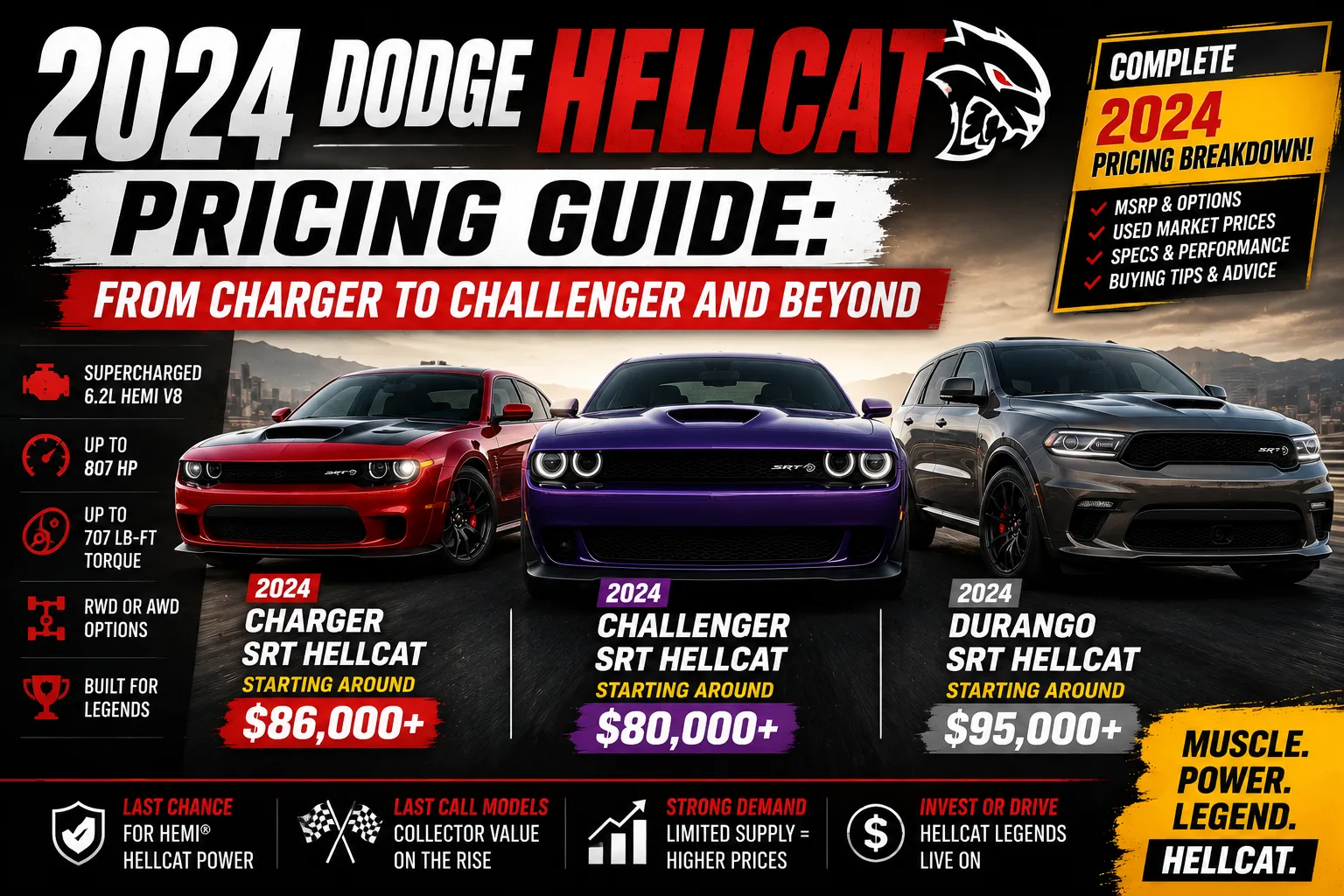
2024 Dodge Hellcat Pricing Guide

2024 Dodge Hellcat Pricing Guide: From Charger to Challenger and Beyond

2024 Dodge Hellcat Pricing Guide: From Charger to Challenger and Beyond The biggest thing to know is this: there was no new 2024 Dodge Charger Hellcat or 2024 Dodge Challenger Hellcat. Dodge ended the gas-powered Charger and Challenger after the 2023 model year, so any “2024 Hellcat Charger” or “2024 Hellcat Challenger” listing is usually a leftover 2023, a used model, or a dealer listing using the wrong year. The only true new 2024 Dodge Hellcat model shoppers could realistically point to was the 2024 Dodge Durango SRT Hellcat, the three-row SUV with the supercharged 6.2L HEMI V8. Edmunds lists the 2024 Durango SRT Hellcat Plus at $103,590 MSRP, while CarPro reviewed a 2024 Durango SRT Hellcat with a $95,995 base price and $109,190 as-tested price. So the 2024 Hellcat pricing guide comes down to three buckets: new Durango Hellcat pricing, used or leftover Charger Hellcat pricing, and used or leftover Challenger Hellcat pricing. Was There a 2024 Dodge Charger Hellcat? No, there was no new 2024 Dodge Charger Hellcat. The last gas-powered Charger Hellcat belonged to the 2023 model year. Dodge’s own Charger SRT page now frames the model as “Remembering the Beast,” which tells you exactly where the old supercharged Charger stands in Dodge history. That means if you are shopping in 2024 or later, Charger Hellcat pricing depends heavily on mileage, trim, condition, color, options, accident history, collector demand, and whether it is a standard Hellcat, Redeye, Widebody, or Jailbreak. 2023 Dodge Charger Hellcat Pricing Reference The 2023 Charger Hellcat is the closest reference point for shoppers asking about a 2024 Charger Hellcat. Car and Driver listed the 2023 Dodge Charger SRT Hellcat lineup from $86,365 to $95,960, depending on trim and options. That range covered factory MSRP, not today’s used-market pricing. Real market prices can be higher or lower depending on supply, condition, and collector demand. Low-mile, final-year, rare-color, Jailbreak, or Redeye examples may command stronger money than higher-mile cars. Was There a 2024 Dodge Challenger Hellcat? No, there was no new 2024 Dodge Challenger Hellcat. Like the Charger, the gas Challenger ended after the 2023 model year. Dodge’s official Challenger SRT page now presents the Challenger SRT as a past icon, highlighting its supercharged 6.2L HEMI V8 and Hellcat legacy rather than a current 2024 production model. So any 2024 Challenger Hellcat “price” is really a used, leftover, auction, or collector-market price. 2023 Dodge Challenger Hellcat Pricing Reference For the Challenger, the best baseline is also the 2023 model year. Car and Driver listed the 2023 Dodge Challenger SRT Hellcat lineup from $71,895 to $92,895, depending on trim and options. That range included multiple Hellcat-family versions. A standard Hellcat was cheaper than a Redeye Widebody Jailbreak. Special editions and final-year cars may carry market premiums, especially if mileage is low and documentation is clean. 2024 Dodge Durango SRT Hellcat Pricing The 2024 Dodge Durango SRT Hellcat was the main new Hellcat-powered Dodge available in 2024. This SUV used the supercharged 6.2L HEMI V8 and gave buyers Hellcat power with three rows, all-wheel drive, and real family-hauler utility. Dodge continues to position the Durango SRT Hellcat as the supercharged V8 performance SUV in the lineup. For pricing, expect the 2024 Durango SRT Hellcat to sit roughly in the mid-$90,000 to low-$100,000 MSRP range before options, with heavily optioned examples climbing higher. Edmunds lists the 2024 SRT Hellcat Plus at $103,590 MSRP, while CarPro’s reviewed example had a $109,190 as-tested price. Why Durango Hellcat Pricing Is So High The Durango Hellcat costs more because it is not just a regular Durango with a louder exhaust. It has a supercharged V8, standard all-wheel drive, upgraded cooling, performance brakes, performance suspension tuning, aggressive styling, and three-row practicality. It also exists in a market where new supercharged V8 vehicles are disappearing. That scarcity matters. Buyers are not only paying for horsepower. They are paying for one of the last family-sized Hellcat-powered SUVs still standing. What About the Ram TRX? The Ram 1500 TRX is not a Dodge, but it belongs in any real Hellcat pricing discussion. The TRX used a supercharged 6.2L HEMI V8 and became the Hellcat-powered off-road truck people still chase. It was discontinued after the Final Edition run, making used-market pricing especially sensitive to mileage and condition. Car and Driver listed the 2024 Ram 1500 TRX from $98,335 to $119,620, depending on trim and options. That means the TRX often overlapped with Durango Hellcat pricing, but served a totally different buyer. The Durango Hellcat is the family missile. The TRX is the desert-running supertruck. What About the Jeep Trackhawk? The Jeep Grand Cherokee Trackhawk is another Hellcat-powered legend, but it was not a 2024 model. It used the supercharged 6.2L HEMI V8 and became famous as the “Hellcat Jeep.” Since it is discontinued, pricing is fully used-market based. Clean examples can remain expensive because the Trackhawk has no direct new replacement. For buyers cross-shopping Hellcat vehicles, the Trackhawk still matters because it gives you Hellcat power, all-wheel drive, SUV practicality, and collector appeal. Why 2024 Hellcat Pricing Got Complicated Hellcat pricing became complicated because Dodge ended the old Charger and Challenger while keeping the Durango Hellcat alive. That created a confusing market. Some shoppers searched for a 2024 Charger Hellcat or 2024 Challenger Hellcat even though those cars were not built as 2024 models. Others found leftover 2023 inventory sold during 2024 and assumed it was a 2024 car. The model year matters. A final-year 2023 Charger or Challenger Hellcat may still be extremely desirable, but it is not a 2024 model. New vs Used Hellcat Pricing New Hellcat pricing in 2024 was mainly about the Durango SRT Hellcat. Used Hellcat pricing was about everything else: Charger, Challenger, Trackhawk, TRX, and older Durango Hellcat models. Used pricing changes based on: Mileage. Trim. Widebody package. Redeye package. Jailbreak package. Final-year status. Color. Accident history. Service history. Modifications. Number of owners. Original window sticker. Dealer markup or collector premium. A clean, stock Hellcat with low mileage usually brings stronger money than a modified one with unknown tuning. Charger Hellcat vs Challenger Hellcat Pricing The Challenger Hellcat often had a lower original starting MSRP than the Charger Hellcat, but the used market can vary. The Challenger is the classic two-door muscle car. The Charger is the four-door muscle sedan. Some buyers prefer the Challenger for collectibility and old-school style. Others prefer the Charger because it gives Hellcat power with rear doors and real daily usability. In the used market, the right trim matters more than the body style alone. A Challenger Redeye Widebody Jailbreak may cost more than a standard Charger Hellcat. A low-mile Charger Redeye may cost more than a higher-mile Challenger. Is the Hellcat Still Worth Buying? Yes, a Hellcat can still be worth buying if you understand the costs. The supercharged 6.2L HEMI is one of the most iconic modern American performance engines. It delivers brutal power, unforgettable sound, and the kind of character that is disappearing from new vehicles. But ownership is not cheap. Hellcats use more fuel, burn through tires faster, cost more to insure, and can be expensive to repair if abused or modified poorly. Before buying used, inspect service records, tire condition, brake condition, accident history, tune status, pulley changes, cooling system, and drivetrain behavior. Best Hellcat Value in 2024 The best value depends on the buyer. The Challenger Hellcat is best if you want the classic muscle-car shape. The Charger Hellcat is best if you want four-door practicality. The Durango SRT Hellcat is best if you want three rows and all-wheel drive. The Ram TRX is best if you want the supercharged V8 in a truck. The Jeep Trackhawk is best if you want the discontinued Hellcat SUV icon. For shoppers around Simi Valley, check used Dodge inventory for Charger, Challenger, Durango, and other performance models. If you want current Dodge options, browse new Dodge inventory. FAQs About 2024 Dodge Hellcat Pricing Is there a 2024 Dodge Charger Hellcat? No. The gas-powered Dodge Charger Hellcat ended after the 2023 model year. Is there a 2024 Dodge Challenger Hellcat? No. The gas-powered Dodge Challenger Hellcat also ended after the 2023 model year. What was the main 2024 Dodge Hellcat model? The main new 2024 Dodge Hellcat model was the Dodge Durango SRT Hellcat. How much did a 2024 Dodge Durango Hellcat cost? A 2024 Durango SRT Hellcat generally landed in the mid-$90,000 to low-$100,000 MSRP range before options, with some optioned examples around or above $109,000. How much was a 2023 Charger Hellcat? Car and Driver listed the 2023 Charger SRT Hellcat range from $86,365 to $95,960, depending on trim and options. How much was a 2023 Challenger Hellcat? Car and Driver listed the 2023 Challenger SRT Hellcat range from $71,895 to $92,895, depending on trim and options. Is a used Hellcat expensive to own? Yes. Fuel, tires, brakes, insurance, repairs, and maintenance can be expensive, especially on modified or abused examples. Final Thoughts: 2024 Was the Year Hellcat Became Scarcity-Driven The 2024 Dodge Hellcat pricing story is really about transition. The Charger Hellcat and Challenger Hellcat were gone as new models after 2023. The Durango SRT Hellcat carried the supercharged Dodge torch into 2024. The Ram TRX and Jeep Trackhawk remained part of the wider Hellcat conversation, but mostly through used and collector markets. So the actual answer is clear: there was no 2024 Charger Hellcat or Challenger Hellcat, but the 2024 Durango SRT Hellcat kept Hellcat power alive, usually at roughly $96,000 to $109,000 depending on trim and options.

2023DodgeChallenger-header-01

Is a Dodge Demon or Hellcat Faster?

Is a Dodge Demon or Hellcat Faster? The Dodge Demon is faster than a Dodge Hellcat in a straight line, especially in a drag race. The simple answer is this: the Demon was built to be the quickest factory drag-racing Challenger, while the Hellcat was built to be a brutally fast but more street-friendly muscle car. The original 2018 Dodge Challenger SRT Demon made up to 840 horsepower, while the 2023 Dodge Challenger SRT Demon 170 pushed the formula to 1,025 horsepower on E85 fuel. Dodge Garage lists the Demon 170 at 1,025 horsepower, 945 lb-ft of torque, 0 to 60 mph in 1.66 seconds, and a certified 8.91-second quarter-mile at 151.17 mph. That makes it far quicker than a normal Hellcat and even quicker than the Hellcat Redeye in factory drag-strip form. Demon vs Hellcat: The Quick Answer The Demon is faster in the quarter-mile. The Hellcat may be better as a daily driver. The Demon 170 is the fastest factory Challenger ever built. The Hellcat is still insanely fast, but it is not as drag-focused as the Demon. A Hellcat is a muscle car. A Demon is a street-legal drag car. How Fast Is the Dodge Demon? The original 2018 Dodge Challenger SRT Demon was already outrageous. MotorWeek lists the 2018 Demon at 840 horsepower, 770 lb-ft of torque, 0 to 60 mph in 2.3 seconds, and a 9.65-second quarter-mile. That was extreme when it launched. The Demon came with drag-focused hardware, including special tires, transbrake technology, drag suspension tuning, and equipment designed to help it launch hard. Then Dodge went even further with the Demon 170. The Demon 170 is the final boss version. With E85 fuel, it makes 1,025 horsepower and runs an 8.91-second quarter-mile according to Dodge Garage. That puts it in a completely different performance category from a regular Hellcat. How Fast Is the Dodge Hellcat? A regular Dodge Hellcat is still very fast. The Challenger and Charger Hellcat models used a supercharged 6.2L HEMI V8 and became icons because they delivered absurd horsepower in a relatively usable street car. Depending on year and version, Hellcat models made around 707 horsepower, while Redeye versions pushed power higher. The Hellcat Redeye is the closest normal Hellcat-family car to the Demon. MotorWeek lists the 2019 Challenger SRT Hellcat Redeye at 797 horsepower, 707 lb-ft of torque, 0 to 60 mph in 3.7 seconds, and an 11.4-second quarter-mile at 126 mph. That is extremely quick, but it is still slower than both the original Demon and the Demon 170 at the drag strip. Why the Demon Is Faster The Demon is faster because it was engineered specifically for drag racing. It is not just a Hellcat with more horsepower. Dodge changed the formula to help the Demon launch harder, hook better, and survive repeated drag-strip abuse. The Demon has drag-focused tires, special suspension tuning, more aggressive launch technology, extra cooling features, and higher-output engine tuning. The original Demon was already designed to dominate the quarter-mile, and the Demon 170 took that idea even further. A Hellcat is more of a street muscle car. A Demon is built to chase the lowest elapsed time. Demon 170 vs Hellcat Redeye The Demon 170 destroys the Hellcat Redeye in pure straight-line acceleration. The Demon 170 makes 1,025 horsepower on E85. The Hellcat Redeye makes 797 horsepower in many configurations. The Demon 170 is also designed around drag-strip launches, while the Redeye is more usable as a high-power street car. In a quarter-mile race, the Demon 170 is the clear winner. In daily driving, the Redeye may be easier to live with because it is not as specialized. Original Demon vs Hellcat The original 2018 Demon is also faster than a standard Hellcat. The Demon made up to 840 horsepower with the right setup, compared with the standard Hellcat’s roughly 707 horsepower. It also had more drag-specific equipment. The standard Hellcat is more comfortable as a normal street car. The Demon is more collectible and more extreme. Is the Hellcat Better for Daily Driving? Yes, the Hellcat is usually better for daily driving. The Hellcat is still loud, powerful, and aggressive, but it is less specialized than the Demon. It is easier to use every day, especially if you want regular tires, normal street manners, and fewer drag-racing compromises. The Demon is cooler and faster, but it is not the practical choice. It is more of a collectible drag weapon. Is the Demon Street Legal? Yes, the Demon and Demon 170 were built as street-legal production cars, but they are extremely drag-focused. That does not mean they are casual commuter cars. The Demon was built around launch performance, traction, and quarter-mile dominance. It can be driven on the street, but its real purpose is the drag strip. Which One Should You Buy? Buy the Demon if you want the faster, rarer, more collectible drag car. Buy the Hellcat if you want a more usable high-horsepower muscle car. Buy the Hellcat Redeye if you want something closer to Demon power but more street-friendly. Buy the Demon 170 if you want the most extreme factory Challenger ever built and understand that it is already a collector-grade machine. For local shoppers, check available used Dodge inventory for Challenger, Charger, Hellcat, Scat Pack, and other performance models. You can also browse new Dodge inventory to compare current Dodge performance options. FAQs About Demon vs Hellcat Is a Dodge Demon faster than a Hellcat? Yes. The Dodge Demon is faster than a Hell