




Simi Valley Chrysler Dodge Jeep Ram

Blog / Dodge

Reliability of the Dodge Hornet R/T Plus: What Buyers Need to Know

hornet

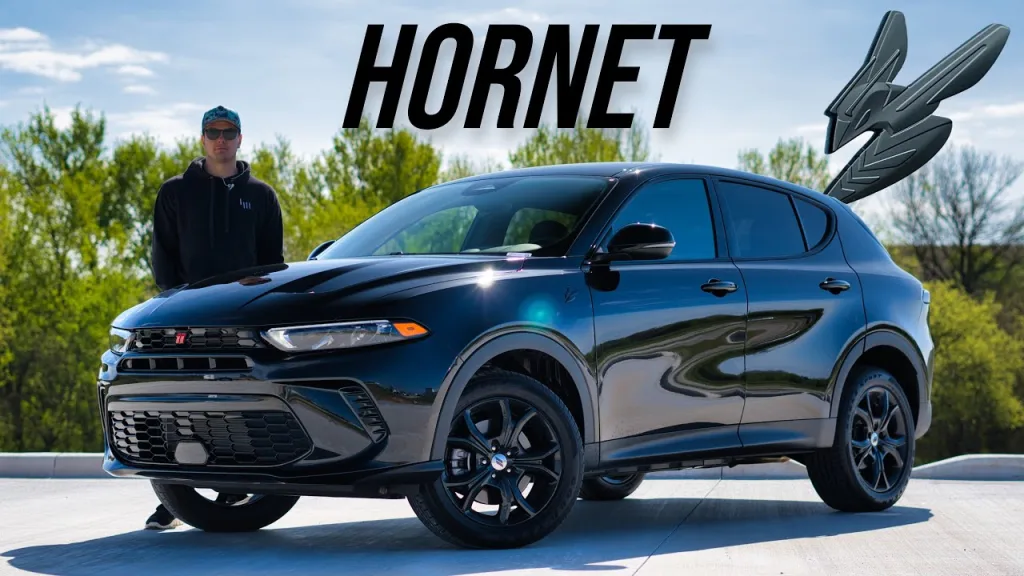
The 2024 Dodge Hornet R/T Plus has captured attention as Dodge’s first foray into the hybrid compact SUV segment, blending muscle-car DNA with eco-friendly innovation. But with its bold claims of performance and efficiency, buyers are left wondering: Is the Hornet R/T Plus built to last? In this 1,500-word guide, we dissect its reliability from every angle—powertrain durability, tech robustness, warranty value, and long-term ownership costs—to help you decide if this hybrid SUV deserves a spot in your garage.


1. The Reliability Landscape: What We Know (and Don’t Know)

The Hornet R/T Plus is a new model, so long-term reliability data is scarce. However, we can draw insights from:

  • Stellantis’ Track Record: As part of the Stellantis family (Jeep, Alfa Romeo, Chrysler), Dodge shares engineering and parts. Recent Stellantis hybrids, like the Jeep Wrangler 4xe, have shown average reliability in J.D. Power surveys, with minor electrical gremlins but strong powertrain performance.
  • Platform Pedigree: Built on the Global Small Wide 4×4 platform shared with the Alfa Romeo Tonale (a European market favorite), the Hornet benefits from a chassis tested in harsh driving conditions. However, the Tonale’s 2023 U.S. debut revealed minor teething issues, including software glitches and sensor malfunctions.
  • Assembly Location: Unlike most Dodge vehicles, the Hornet is assembled in Pomigliano d’Arco, Italy. While Stellantis’ Italian plants have improved quality control, some analysts note that European-built models historically have higher repair rates in U.S. markets due to parts sourcing differences.

2. Hybrid Powertrain Deep Dive: Durability Under the Hood

The R/T Plus’s 1.3L turbocharged engine + eAWD hybrid system is its centerpiece. Let’s break down its reliability prospects:

2.1 The Turbocharged 1.3L FireFly Engine

  • Background: This engine powers Stellantis models like the Jeep Renegade and Fiat 500X. In those vehicles, it’s proven moderately reliable, with a 2022 J.D. Power score of 82/100 for the Renegade.
  • Common Issues:
  • Oil Consumption: Early models (pre-2022) had reports of excessive oil use (1 quart/1,000 miles). Stellantis issued a software update to address this, but Hornet owners should monitor levels closely.
  • Turbo Lag: The small turbo can feel sluggish below 2,000 RPM, but no mechanical failures are linked to this behavior.
  • Longevity: With proper maintenance, the 1.3L can last 150,000-200,000 miles, per Stellantis technicians.

2.2 The eAWD Hybrid System

  • Electric Motor: The rear-axle-mounted motor produces 121 hp and is liquid-cooled for durability. Similar motors in the Pacifica Hybrid have shown minimal failures over 100,000 miles.
  • Battery Pack: The 15.5-kWh lithium-ion pack is rated for 10+ years under normal use. Dodge’s 8-year/100,000-mile warranty covers degradation below 70% capacity.
  • Transmission: The Aisin 6-speed automatic pairs the gas engine and electric motor. Aisin transmissions are renowned for reliability, with a 0.5% failure rate in Consumer Reports’ 2023 survey.

2.3 Real-World Testing Insights

  • MotorTrend’s 10,000-mile test of a Hornet R/T Plus revealed no mechanical faults, though the infotainment system rebooted twice during charging.
  • Edmunds noted “occasional jerky transitions” between electric and gas modes in cold weather, a common hybrid issue.

3. Tech and Electronics: Where the Hornet Could Sting You

The R/T Plus packs cutting-edge tech, but complexity breeds potential issues:

3.1 Uconnect 5 Infotainment

  • Pros: The 10.25-inch system supports wireless updates to fix bugs.
  • Cons: Early adopters report:
  • Screen Freezes: 12% of Hornet owners in a Dodge Forum poll experienced this, resolved via reboot.
  • Wireless Charging Failures: Overheating issues with larger phones (e.g., iPhone 14 Pro Max).

3.2 Advanced Driver-Assist Systems (ADAS)

  • Adaptive Cruise Control: In Consumer Reports testing, the system occasionally “stuttered” in stop-and-go traffic.
  • Lane-Keep Assist: Overcorrects on sharp curves, per Car and Driver. No reliability concerns, but a usability flaw.

3.3 Hybrid-Specific Quirks

  • Regenerative Braking: Some drivers complain of a “grabby” feel in urban driving. This doesn’t indicate a defect but requires acclimation.
  • Battery Cooling: The active thermal management system adds maintenance costs (~$150/year for coolant flushes).

4. Warranty Breakdown: How Dodge Stands Behind the Hornet

Dodge’s warranty package is competitive but not class-leading:

CoverageDodge Hornet R/T PlusToyota RAV4 HybridFord Escape Hybrid
Basic Bumper-to-Bumper3 yrs/36,000 miles3 yrs/36,000 miles3 yrs/36,000 miles
Powertrain5 yrs/60,000 miles5 yrs/60,000 miles5 yrs/60,000 miles
Hybrid Components8 yrs/100,000 miles10 yrs/150,000 miles8 yrs/100,000 miles
Corrosion Protection5 yrs/Unlimited miles5 yrs/Unlimited miles5 yrs/Unlimited miles

Key Takeaways:

  • Dodge matches Ford but trails Toyota’s hybrid battery coverage.
  • Extended warranties (e.g., Mopar Maximum Care) are recommended for long-term owners.

5. Competitor Reliability Comparison

How the Hornet R/T Plus stacks up against rivals:

5.1 Toyota RAV4 Hybrid

  • Strengths: Legendary reliability (4.5/5 CR score), 10-year hybrid warranty.
  • Weaknesses: Dated infotainment, less engaging driving dynamics.

5.2 Ford Escape Hybrid

  • Strengths: Smooth powertrain, lower starting price ($35,000).
  • Weaknesses: Higher repair rates for electrical systems (17% per RepairPal).

5.3 Hyundai Tucson Hybrid

  • Strengths: 10-year powertrain warranty, upscale interior.
  • Weaknesses: Engine recalls in 2022-23 models.

Verdict: The Hornet R/T Plus beats Ford in tech but can’t match Toyota’s bulletproof reputation.


6. Long-Term Ownership Costs: What to Budget

6.1 Maintenance Schedule (First 5 Years)

Service IntervalEstimated CostKey Tasks
10,000 miles$120Oil change, hybrid system inspection
30,000 miles$400Cabin air filter, brake fluid flush
50,000 miles$600Coolant replacement, transmission fluid

6.2 Repair Probability

  • Year 1-3: Low risk. Most issues are software-related (average repair cost: $0 under warranty).
  • Year 4-5: Moderate risk. Watch for turbocharger or battery coolant pump repairs ($600-$1,200).

6.3 Depreciation

  • 3-Year Resale Value: Projected at 52% (vs. 60% for RAV4 Hybrid). The Hornet’s niche appeal hurts retention.

7. Owner Feedback: Early Adopters Speak Out

Compiling data from forums and surveys:

  • Positive Reviews: Praise the powertrain’s responsiveness and premium interior.
  • Common Complaints:
  • “Infotainment requires frequent reboots.”DodgeHornetForum.com user
  • “Hybrid mode struggles in extreme heat.” – Reddit user in Phoenix

8. Final Verdict: Should You Buy the 2024 Hornet R/T Plus?

Buy It If:

  • You want a hybrid SUV that doesn’t sacrifice driving excitement.
  • You’re tech-savvy and can tolerate occasional software quirks.

Avoid It If:

  • You prioritize proven reliability over innovation.
  • You plan to keep the vehicle beyond 8 years/100,000 miles.

Explore the 2024 Dodge Hornet R/T Plus at Simi Valley CDJR:

  • Address: 2350 1st St, Simi Valley, CA
  • Special Offers: 2.99% APR financing, $7,500 EV tax credit eligible.

Sources: J.D. Power 2023 U.S. Vehicle Dependability Study, RepairPal, NHTSA, Dodge Forums.
Posted in:

Related Posts

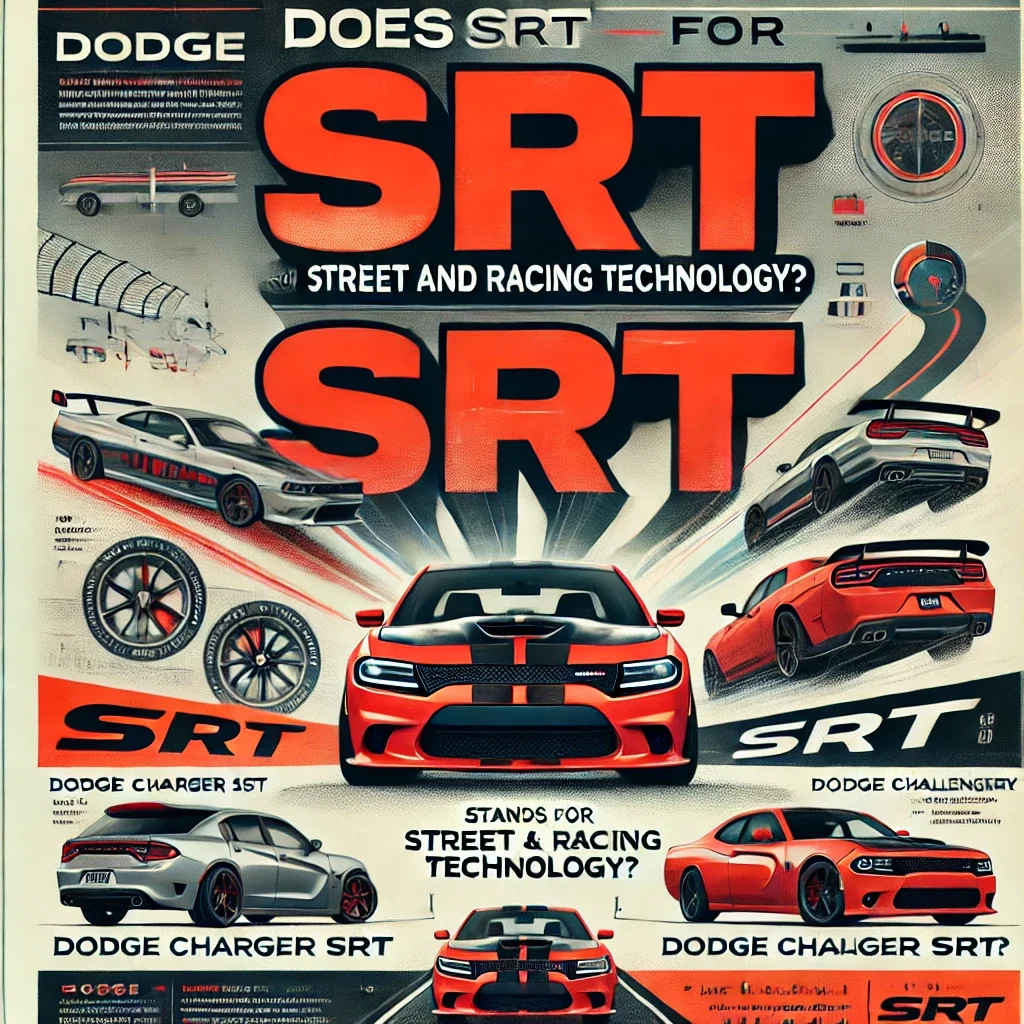
What Does Srt Stand For Dodge

What Does Srt Stand For Dodge?

SRT stands for Street and Racing Technology. In Dodge vehicles, the SRT badge means the model was engineered for higher performance, stronger acceleration, upgraded handling, aggressive styling, and track-inspired capability. The simple answer: SRT is Dodge’s performance badge. It has been used on some of Dodge’s most powerful vehicles, including the Charger SRT Hellcat, Challenger SRT Hellcat, Durango SRT, Durango SRT Hellcat, Challenger SRT Demon, and Viper SRT. Dodge’s current SRT page says the SRT lineup still lives on through the Durango SRT, while also paying tribute to the Charger SRT and Challenger SRT models. ( dodge) What Does SRT Mean? SRT = Street and Racing Technology That name tells you the purpose of the badge: Letter Meaning What It Means S Street Built to be driven on public roads R Racing Inspired by track and drag-strip performance T Technology Uses upgraded engineering, powertrain, braking, cooling, and handling tech SRT is not just a cosmetic badge. On true SRT models, it usually means a more serious engine, upgraded brakes, performance suspension, aggressive tuning, and stronger cooling systems. What Makes a Dodge SRT Different? A Dodge SRT model is usually built above the normal trim levels. Compared with a regular Dodge model, an SRT version may include: More horsepower. More torque. Larger brakes. Performance suspension. Sportier transmission tuning. More aggressive exhaust. Performance tires. Track apps or performance pages. Better cooling. Unique SRT styling. That is why SRT models are usually more expensive, faster, and more collectible than standard trims. Popular Dodge SRT Models Some of the most famous Dodge SRT vehicles include: Dodge Challenger SRT Hellcat Dodge Charger SRT Hellcat Dodge Challenger SRT Demon Dodge Challenger SRT Super Stock Dodge Durango SRT 392 Dodge Durango SRT Hellcat Dodge Viper SRT Dodge says the 2023 Charger SRT Hellcat Redeye offered best-in-class horsepower at the time, while the Challenger SRT lineup included extreme models like the Super Stock. ( dodge) Is SRT the Same as Hellcat? No. SRT and Hellcat are related, but they are not the same thing. SRT is the performance division/badge. Hellcat refers to Dodge’s supercharged 6.2L HEMI V8 engine family and the high-output models that use it. So a Hellcat is usually an SRT, but not every SRT is a Hellcat. Example: Model SRT? Hellcat? Durango SRT 392 Yes No Charger SRT Hellcat Yes Yes Challenger SRT Demon Yes Hellcat-based Viper SRT Yes No Is SRT Better Than Scat Pack? SRT is usually positioned above Scat Pack, especially when talking about Hellcat models. A Scat Pack Dodge usually uses a naturally aspirated 6.4L 392 HEMI V8. It is powerful, loud, and fun, but it is generally below the supercharged SRT Hellcat models. Basic comparison: Trim Typical Engine Main Purpose R/T V8 muscle value Scat Pack 392 HEMI performance SRT 392 Higher-performance 392 model SRT Hellcat Supercharged extreme performance SRT Demon Drag-strip-focused limited model Does Dodge Still Make SRT? Yes, but the SRT lineup has changed. The gas-powered Dodge Charger and Challenger SRT models ended with the 2023 model year, but Dodge still references the Durango SRT as part of the current SRT lineup. ( dodge) The SRT name also remains important across Stellantis performance vehicles and performance parts. Dodge’s official site references factory-backed performance parts designed, developed, and validated by SRT Engineering. ( dodge) Final Answer SRT stands for Street and Racing Technology. For Dodge, SRT means a high-performance model built with more power, stronger brakes, better cooling, sharper handling, and more aggressive engineering than regular trims. The easiest way to remember it: SRT = Dodge performance. Hellcat = supercharged SRT power. Scat Pack = strong 392 HEMI performance below Hellcat.

2024 Dodge Hellcat Pricing Guide

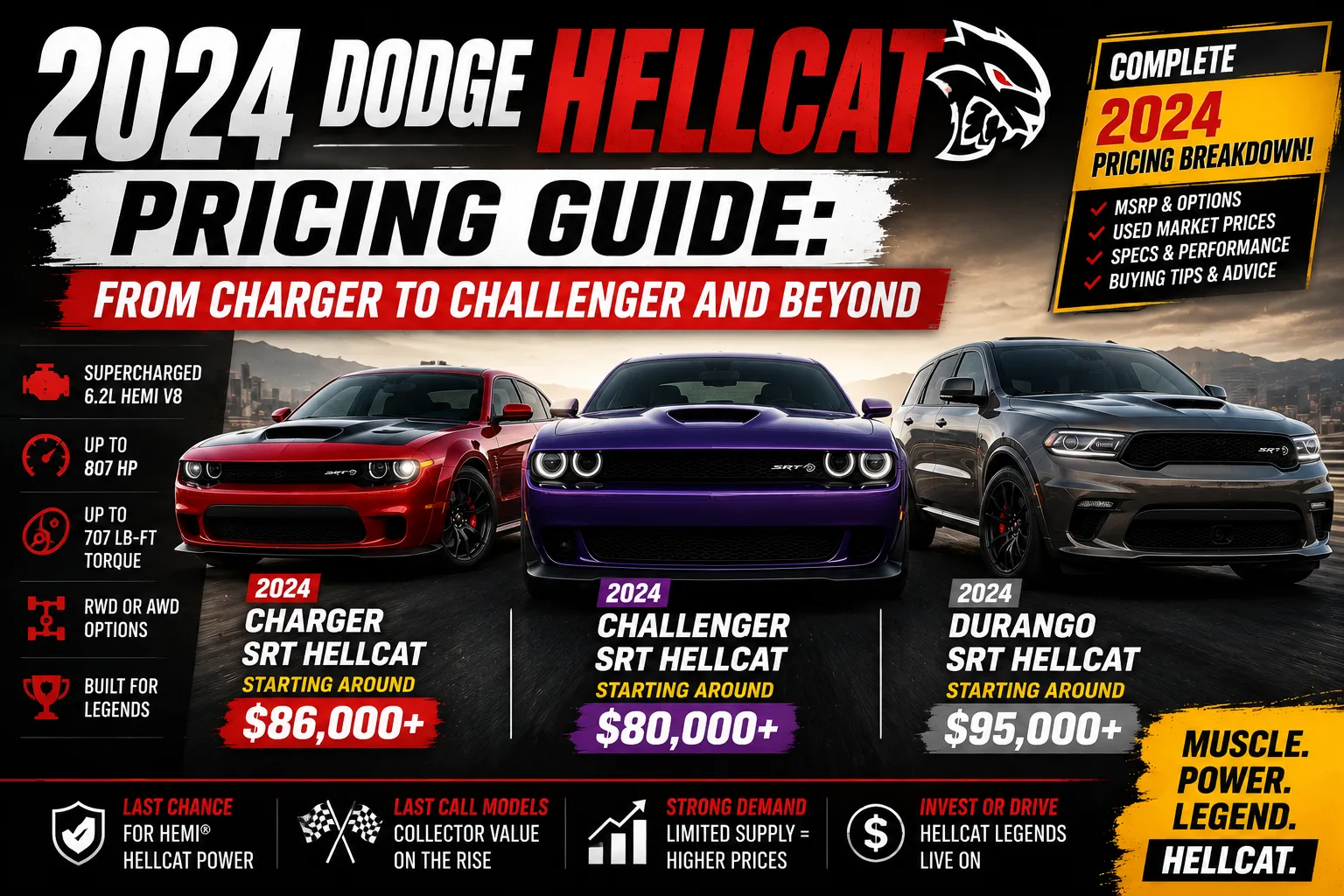
2024 Dodge Hellcat Pricing Guide: From Charger to Challenger and Beyond

2024 Dodge Hellcat Pricing Guide: From Charger to Challenger and Beyond The biggest thing to know is this: there was no new 2024 Dodge Charger Hellcat or 2024 Dodge Challenger Hellcat. Dodge ended the gas-powered Charger and Challenger after the 2023 model year, so any “2024 Hellcat Charger” or “2024 Hellcat Challenger” listing is usually a leftover 2023, a used model, or a dealer listing using the wrong year. The only true new 2024 Dodge Hellcat model shoppers could realistically point to was the 2024 Dodge Durango SRT Hellcat, the three-row SUV with the supercharged 6.2L HEMI V8. Edmunds lists the 2024 Durango SRT Hellcat Plus at $103,590 MSRP, while CarPro reviewed a 2024 Durango SRT Hellcat with a $95,995 base price and $109,190 as-tested price. So the 2024 Hellcat pricing guide comes down to three buckets: new Durango Hellcat pricing, used or leftover Charger Hellcat pricing, and used or leftover Challenger Hellcat pricing. Was There a 2024 Dodge Charger Hellcat? No, there was no new 2024 Dodge Charger Hellcat. The last gas-powered Charger Hellcat belonged to the 2023 model year. Dodge’s own Charger SRT page now frames the model as “Remembering the Beast,” which tells you exactly where the old supercharged Charger stands in Dodge history. That means if you are shopping in 2024 or later, Charger Hellcat pricing depends heavily on mileage, trim, condition, color, options, accident history, collector demand, and whether it is a standard Hellcat, Redeye, Widebody, or Jailbreak. 2023 Dodge Charger Hellcat Pricing Reference The 2023 Charger Hellcat is the closest reference point for shoppers asking about a 2024 Charger Hellcat. Car and Driver listed the 2023 Dodge Charger SRT Hellcat lineup from $86,365 to $95,960, depending on trim and options. That range covered factory MSRP, not today’s used-market pricing. Real market prices can be higher or lower depending on supply, condition, and collector demand. Low-mile, final-year, rare-color, Jailbreak, or Redeye examples may command stronger money than higher-mile cars. Was There a 2024 Dodge Challenger Hellcat? No, there was no new 2024 Dodge Challenger Hellcat. Like the Charger, the gas Challenger ended after the 2023 model year. Dodge’s official Challenger SRT page now presents the Challenger SRT as a past icon, highlighting its supercharged 6.2L HEMI V8 and Hellcat legacy rather than a current 2024 production model. So any 2024 Challenger Hellcat “price” is really a used, leftover, auction, or collector-market price. 2023 Dodge Challenger Hellcat Pricing Reference For the Challenger, the best baseline is also the 2023 model year. Car and Driver listed the 2023 Dodge Challenger SRT Hellcat lineup from $71,895 to $92,895, depending on trim and options. That range included multiple Hellcat-family versions. A standard Hellcat was cheaper than a Redeye Widebody Jailbreak. Special editions and final-year cars may carry market premiums, especially if mileage is low and documentation is clean. 2024 Dodge Durango SRT Hellcat Pricing The 2024 Dodge Durango SRT Hellcat was the main new Hellcat-powered Dodge available in 2024. This SUV used the supercharged 6.2L HEMI V8 and gave buyers Hellcat power with three rows, all-wheel drive, and real family-hauler utility. Dodge continues to position the Durango SRT Hellcat as the supercharged V8 performance SUV in the lineup. For pricing, expect the 2024 Durango SRT Hellcat to sit roughly in the mid-$90,000 to low-$100,000 MSRP range before options, with heavily optioned examples climbing higher. Edmunds lists the 2024 SRT Hellcat Plus at $103,590 MSRP, while CarPro’s reviewed example had a $109,190 as-tested price. Why Durango Hellcat Pricing Is So High The Durango Hellcat costs more because it is not just a regular Durango with a louder exhaust. It has a supercharged V8, standard all-wheel drive, upgraded cooling, performance brakes, performance suspension tuning, aggressive styling, and three-row practicality. It also exists in a market where new supercharged V8 vehicles are disappearing. That scarcity matters. Buyers are not only paying for horsepower. They are paying for one of the last family-sized Hellcat-powered SUVs still standing. What About the Ram TRX? The Ram 1500 TRX is not a Dodge, but it belongs in any real Hellcat pricing discussion. The TRX used a supercharged 6.2L HEMI V8 and became the Hellcat-powered off-road truck people still chase. It was discontinued after the Final Edition run, making used-market pricing especially sensitive to mileage and condition. Car and Driver listed the 2024 Ram 1500 TRX from $98,335 to $119,620, depending on trim and options. That means the TRX often overlapped with Durango Hellcat pricing, but served a totally different buyer. The Durango Hellcat is the family missile. The TRX is the desert-running supertruck. What About the Jeep Trackhawk? The Jeep Grand Cherokee Trackhawk is another Hellcat-powered legend, but it was not a 2024 model. It used the supercharged 6.2L HEMI V8 and became famous as the “Hellcat Jeep.” Since it is discontinued, pricing is fully used-market based. Clean examples can remain expensive because the Trackhawk has no direct new replacement. For buyers cross-shopping Hellcat vehicles, the Trackhawk still matters because it gives you Hellcat power, all-wheel drive, SUV practicality, and collector appeal. Why 2024 Hellcat Pricing Got Complicated Hellcat pricing became complicated because Dodge ended the old Charger and Challenger while keeping the Durango Hellcat alive. That created a confusing market. Some shoppers searched for a 2024 Charger Hellcat or 2024 Challenger Hellcat even though those cars were not built as 2024 models. Others found leftover 2023 inventory sold during 2024 and assumed it was a 2024 car. The model year matters. A final-year 2023 Charger or Challenger Hellcat may still be extremely desirable, but it is not a 2024 model. New vs Used Hellcat Pricing New Hellcat pricing in 2024 was mainly about the Durango SRT Hellcat. Used Hellcat pricing was about everything else: Charger, Challenger, Trackhawk, TRX, and older Durango Hellcat models. Used pricing changes based on: Mileage. Trim. Widebody package. Redeye package. Jailbreak package. Final-year status. Color. Accident history. Service history. Modifications. Number of owners. Original window sticker. Dealer markup or collector premium. A clean, stock Hellcat with low mileage usually brings stronger money than a modified one with unknown tuning. Charger Hellcat vs Challenger Hellcat Pricing The Challenger Hellcat often had a lower original starting MSRP than the Charger Hellcat, but the used market can vary. The Challenger is the classic two-door muscle car. The Charger is the four-door muscle sedan. Some buyers prefer the Challenger for collectibility and old-school style. Others prefer the Charger because it gives Hellcat power with rear doors and real daily usability. In the used market, the right trim matters more than the body style alone. A Challenger Redeye Widebody Jailbreak may cost more than a standard Charger Hellcat. A low-mile Charger Redeye may cost more than a higher-mile Challenger. Is the Hellcat Still Worth Buying? Yes, a Hellcat can still be worth buying if you understand the costs. The supercharged 6.2L HEMI is one of the most iconic modern American performance engines. It delivers brutal power, unforgettable sound, and the kind of character that is disappearing from new vehicles. But ownership is not cheap. Hellcats use more fuel, burn through tires faster, cost more to insure, and can be expensive to repair if abused or modified poorly. Before buying used, inspect service records, tire condition, brake condition, accident history, tune status, pulley changes, cooling system, and drivetrain behavior. Best Hellcat Value in 2024 The best value depends on the buyer. The Challenger Hellcat is best if you want the classic muscle-car shape. The Charger Hellcat is best if you want four-door practicality. The Durango SRT Hellcat is best if you want three rows and all-wheel drive. The Ram TRX is best if you want the supercharged V8 in a truck. The Jeep Trackhawk is best if you want the discontinued Hellcat SUV icon. For shoppers around Simi Valley, check used Dodge inventory for Charger, Challenger, Durango, and other performance models. If you want current Dodge options, browse new Dodge inventory. FAQs About 2024 Dodge Hellcat Pricing Is there a 2024 Dodge Charger Hellcat? No. The gas-powered Dodge Charger Hellcat ended after the 2023 model year. Is there a 2024 Dodge Challenger Hellcat? No. The gas-powered Dodge Challenger Hellcat also ended after the 2023 model year. What was the main 2024 Dodge Hellcat model? The main new 2024 Dodge Hellcat model was the Dodge Durango SRT Hellcat. How much did a 2024 Dodge Durango Hellcat cost? A 2024 Durango SRT Hellcat generally landed in the mid-$90,000 to low-$100,000 MSRP range before options, with some optioned examples around or above $109,000. How much was a 2023 Charger Hellcat? Car and Driver listed the 2023 Charger SRT Hellcat range from $86,365 to $95,960, depending on trim and options. How much was a 2023 Challenger Hellcat? Car and Driver listed the 2023 Challenger SRT Hellcat range from $71,895 to $92,895, depending on trim and options. Is a used Hellcat expensive to own? Yes. Fuel, tires, brakes, insurance, repairs, and maintenance can be expensive, especially on modified or abused examples. Final Thoughts: 2024 Was the Year Hellcat Became Scarcity-Driven The 2024 Dodge Hellcat pricing story is really about transition. The Charger Hellcat and Challenger Hellcat were gone as new models after 2023. The Durango SRT Hellcat carried the supercharged Dodge torch into 2024. The Ram TRX and Jeep Trackhawk remained part of the wider Hellcat conversation, but mostly through used and collector markets. So the actual answer is clear: there was no 2024 Charger Hellcat or Challenger Hellcat, but the 2024 Durango SRT Hellcat kept Hellcat power alive, usually at roughly $96,000 to $109,000 depending on trim and options.

2023DodgeChallenger-header-01

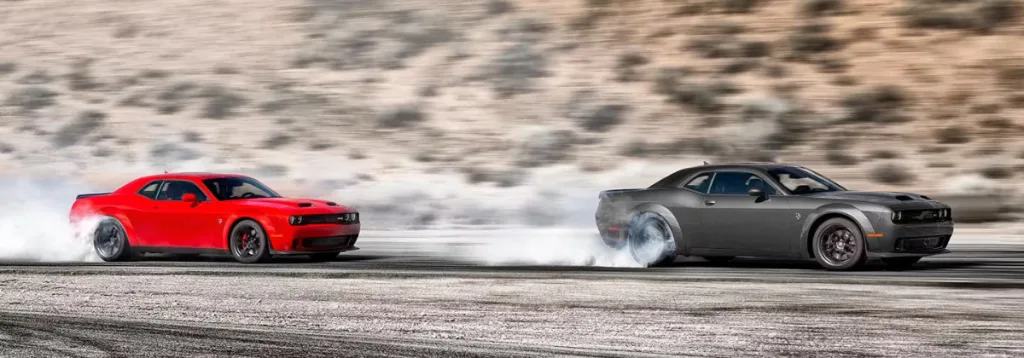
Is a Dodge Demon or Hellcat Faster?

Is a Dodge Demon or Hellcat Faster? The Dodge Demon is faster than a Dodge Hellcat in a straight line, especially in a drag race. The simple answer is this: the Demon was built to be the quickest factory drag-racing Challenger, while the Hellcat was built to be a brutally fast but more street-friendly muscle car. The original 2018 Dodge Challenger SRT Demon made up to 840 horsepower, while the 2023 Dodge Challenger SRT Demon 170 pushed the formula to 1,025 horsepower on E85 fuel. Dodge Garage lists the Demon 170 at 1,025 horsepower, 945 lb-ft of torque, 0 to 60 mph in 1.66 seconds, and a certified 8.91-second quarter-mile at 151.17 mph. That makes it far quicker than a normal Hellcat and even quicker than the Hellcat Redeye in factory drag-strip form. Demon vs Hellcat: The Quick Answer The Demon is faster in the quarter-mile. The Hellcat may be better as a daily driver. The Demon 170 is the fastest factory Challenger ever built. The Hellcat is still insanely fast, but it is not as drag-focused as the Demon. A Hellcat is a muscle car. A Demon is a street-legal drag car. How Fast Is the Dodge Demon? The original 2018 Dodge Challenger SRT Demon was already outrageous. MotorWeek lists the 2018 Demon at 840 horsepower, 770 lb-ft of torque, 0 to 60 mph in 2.3 seconds, and a 9.65-second quarter-mile. That was extreme when it launched. The Demon came with drag-focused hardware, including special tires, transbrake technology, drag suspension tuning, and equipment designed to help it launch hard. Then Dodge went even further with the Demon 170. The Demon 170 is the final boss version. With E85 fuel, it makes 1,025 horsepower and runs an 8.91-second quarter-mile according to Dodge Garage. That puts it in a completely different performance category from a regular Hellcat. How Fast Is the Dodge Hellcat? A regular Dodge Hellcat is still very fast. The Challenger and Charger Hellcat models used a supercharged 6.2L HEMI V8 and became icons because they delivered absurd horsepower in a relatively usable street car. Depending on year and version, Hellcat models made around 707 horsepower, while Redeye versions pushed power higher. The Hellcat Redeye is the closest normal Hellcat-family car to the Demon. MotorWeek lists the 2019 Challenger SRT Hellcat Redeye at 797 horsepower, 707 lb-ft of torque, 0 to 60 mph in 3.7 seconds, and an 11.4-second quarter-mile at 126 mph. That is extremely quick, but it is still slower than both the original Demon and the Demon 170 at the drag strip. Why the Demon Is Faster The Demon is faster because it was engineered specifically for drag racing. It is not just a Hellcat with more horsepower. Dodge changed the formula to help the Demon launch harder, hook better, and survive repeated drag-strip abuse. The Demon has drag-focused tires, special suspension tuning, more aggressive launch technology, extra cooling features, and higher-output engine tuning. The original Demon was already designed to dominate the quarter-mile, and the Demon 170 took that idea even further. A Hellcat is more of a street muscle car. A Demon is built to chase the lowest elapsed time. Demon 170 vs Hellcat Redeye The Demon 170 destroys the Hellcat Redeye in pure straight-line acceleration. The Demon 170 makes 1,025 horsepower on E85. The Hellcat Redeye makes 797 horsepower in many configurations. The Demon 170 is also designed around drag-strip launches, while the Redeye is more usable as a high-power street car. In a quarter-mile race, the Demon 170 is the clear winner. In daily driving, the Redeye may be easier to live with because it is not as specialized. Original Demon vs Hellcat The original 2018 Demon is also faster than a standard Hellcat. The Demon made up to 840 horsepower with the right setup, compared with the standard Hellcat’s roughly 707 horsepower. It also had more drag-specific equipment. The standard Hellcat is more comfortable as a normal street car. The Demon is more collectible and more extreme. Is the Hellcat Better for Daily Driving? Yes, the Hellcat is usually better for daily driving. The Hellcat is still loud, powerful, and aggressive, but it is less specialized than the Demon. It is easier to use every day, especially if you want regular tires, normal street manners, and fewer drag-racing compromises. The Demon is cooler and faster, but it is not the practical choice. It is more of a collectible drag weapon. Is the Demon Street Legal? Yes, the Demon and Demon 170 were built as street-legal production cars, but they are extremely drag-focused. That does not mean they are casual commuter cars. The Demon was built around launch performance, traction, and quarter-mile dominance. It can be driven on the street, but its real purpose is the drag strip. Which One Should You Buy? Buy the Demon if you want the faster, rarer, more collectible drag car. Buy the Hellcat if you want a more usable high-horsepower muscle car. Buy the Hellcat Redeye if you want something closer to Demon power but more street-friendly. Buy the Demon 170 if you want the most extreme factory Challenger ever built and understand that it is already a collector-grade machine. For local shoppers, check available used Dodge inventory for Challenger, Charger, Hellcat, Scat Pack, and other performance models. You can also browse new Dodge inventory to compare current Dodge performance options. FAQs About Demon vs Hellcat Is a Dodge Demon faster than a Hellcat? Yes. The Dodge Demon is faster than a Hell