




How Does Leasing a Car Work in California?
Leasing a car in California means you are paying to use the vehicle for a set period, usually 24 to 48 months, instead of buying it outright.
The simple answer is this: a car lease works like a long-term rental with rules. You make monthly payments, follow mileage limits, keep the vehicle in good condition, and either return it, buy it, or lease another vehicle at the end. LA County Consumer & Business Affairs explains that a lease usually lasts two to five years, and you do not own the vehicle during the lease term.
For many California drivers, leasing makes sense if they want lower monthly payments, newer vehicles, warranty coverage, and the ability to switch cars every few years. But leasing is not always cheaper long term, especially if you drive a lot, damage the vehicle, or want to own it for many years.
What Is a Car Lease?
A car lease is an agreement that lets you drive a vehicle for a specific term.
Instead of paying for the full vehicle price, you are mainly paying for the vehicle’s expected depreciation during the lease term, plus rent charges, taxes, fees, and other costs. That is why lease payments are often lower than finance payments on the same vehicle.
For example, if a vehicle is worth $40,000 today and the leasing company expects it to be worth $25,000 after three years, the lease is mostly based on that $15,000 difference, plus fees and charges.
You return the vehicle at the end unless you decide to buy it.
How Long Are Car Leases in California?
Most car leases in California run for 24, 36, or 48 months.
A 36-month lease is one of the most common choices because it often lines up with factory warranty coverage and gives drivers a reasonable balance between payment and flexibility.
Shorter leases may cost more per month, but they give you the ability to switch vehicles sooner. Longer leases may lower the payment, but they can increase the chance of maintenance costs, tire replacement, or being stuck in a vehicle longer than you wanted.
How Are Lease Payments Calculated?
A lease payment is based on several numbers.
The most important ones are the vehicle price, residual value, money factor, lease term, mileage allowance, taxes, fees, and any down payment or trade equity.
The residual value is what the leasing company expects the vehicle to be worth at the end of the lease.
The money factor is the lease version of an interest rate.
The capitalized cost is the negotiated vehicle price plus certain fees, minus any down payment, rebate, or trade credit.
The lower the vehicle price and higher the residual value, the better the lease payment usually looks.
Do You Pay Sales Tax on a Lease in California?
Yes. California charges tax on leased vehicles, but it is usually applied to the lease payment rather than the entire vehicle price upfront.
Tax rates can vary by city and county. The California Department of Tax and Fee Administration provides current sales and use tax rate information by location.
This is one reason a lease payment can vary depending on where the vehicle is registered. Two shoppers leasing the same vehicle at the same price may see different monthly payments if they live in different California tax jurisdictions.
Who Owns the Car During a Lease?
The leasing company owns the vehicle.
You are the lessee, meaning you are the person using the vehicle under the lease agreement. The leasing company is the lessor. California DMV says leased vehicles must be registered in the names of both the lessor and lessee.
That is different from financing. When you finance a car, you are buying it with a loan. When you lease, you are paying to use it.
What Happens at the End of a Lease?
At the end of a lease, you usually have three options.
You can return the vehicle.
You can buy the vehicle for the lease buyout price.
You can lease or buy another vehicle.
Returning the vehicle is the most common option. The leasing company will usually inspect the car for mileage, damage, tire condition, interior wear, and missing equipment.
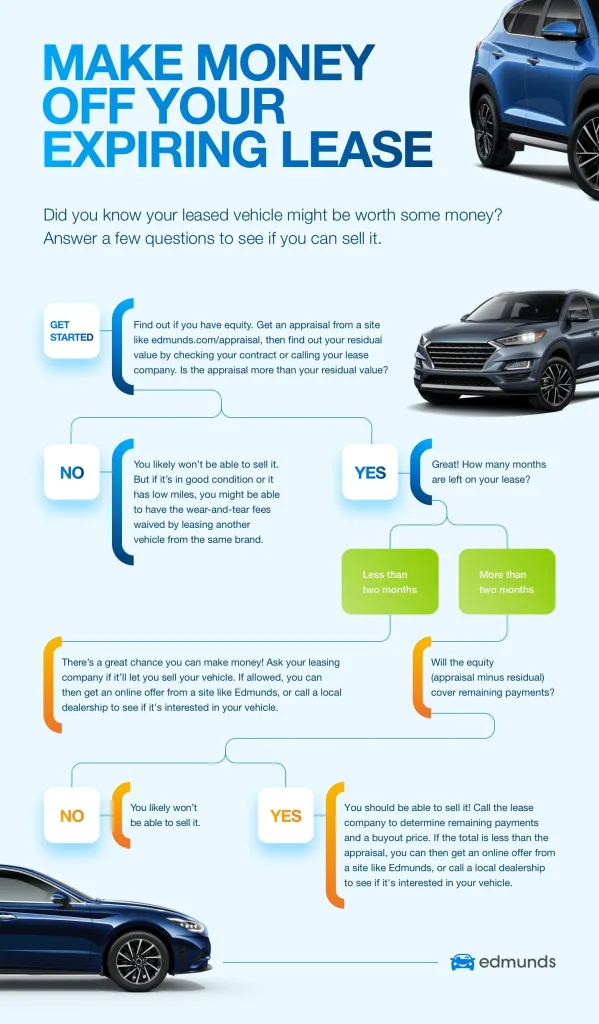
Buying the vehicle can make sense if the buyout price is fair and you like the car. The buyout amount is usually based on the residual value listed in your original lease contract, plus applicable taxes and fees.
What Are Mileage Limits?
Most leases include a mileage allowance.
Common lease mileage limits are 10,000, 12,000, or 15,000 miles per year. If you go over that limit, you usually pay an excess mileage fee at lease return.
This matters a lot in California because many drivers have long commutes. If you drive from Simi Valley to Los Angeles, Thousand Oaks, Burbank, Glendale, or the San Fernando Valley every day, your mileage can add up fast.
Before signing a lease, calculate your real yearly mileage. Guessing too low just to get a cheaper payment can cost more later.
What Is Wear and Tear?
Normal wear and tear is expected. Excess wear is not.
Small signs of normal use may be acceptable, but larger dents, deep scratches, cracked glass, damaged wheels, bald tires, interior stains, missing keys, broken trim, and accident damage can lead to lease-end charges.
Before returning the vehicle, clean it, remove personal items, check tires, fix minor issues if it makes financial sense, and review your lease-end inspection report carefully.
Is Insurance Required on a Leased Car?
Yes. Leased vehicles usually require full insurance coverage.
The leasing company will typically require collision and comprehensive coverage because it still owns the car. There may also be minimum liability limits required by the lease agreement.
California law has its own minimum insurance requirements, but a leasing company can require more coverage than the state minimum. Always get an insurance quote before signing a lease because insurance can change the true monthly cost.
Is Gap Coverage Included?
Sometimes gap coverage is included in the lease, but not always.
Gap coverage helps if the car is totaled or stolen and the insurance payout is less than the remaining lease balance. Many leases include some form of gap protection, but you should never assume. Ask the dealership or leasing company to show it in writing.
This is especially important if you put little or no money down.
Should You Put Money Down on a Lease?
Usually, it is better to put as little money down as possible on a lease.
A large down payment lowers the monthly payment, but it may not be protected if the vehicle is totaled or stolen early in the lease. You may not get that money back.
Instead of putting a huge down payment on a lease, many shoppers prefer to pay only the required drive-off amount and keep cash available for insurance, registration, fuel, maintenance, or emergencies.
What Fees Come With a Lease?
A California lease may include several fees.
Common lease fees include acquisition fee, registration, title, documentation fee, taxes, first payment, security deposit if required, disposition fee at the end, excess mileage, and excess wear charges.
The California DMV explains that vehicle registration fees can depend on vehicle type, purchase price or value, location, weight, special plates, and other factors. DMV also provides a fee calculator to estimate registration and licensing fees.
Always ask for the full drive-off amount and the total monthly payment including taxes.
Leasing vs Financing in California
Leasing is better if you want lower monthly payments, newer vehicles, warranty coverage, and flexibility every few years.
Financing is better if you want ownership, unlimited mileage, no lease-end inspection, and the ability to keep the car after payments end.
A lease can be smart if you drive predictable mileage and like switching vehicles. A loan can be smarter if you drive a lot or keep cars long term.
Neither option is automatically better. It depends on your budget, driving habits, credit, and ownership goals.
Can You End a Lease Early?
Yes, but it can be expensive.
Ending a lease early may involve early termination fees, remaining payments, negative equity, or other charges. Trading the lease early can also be complicated if the payoff is higher than the vehicle’s market value.
Before trying to exit a lease, ask for the payoff amount and compare it to the vehicle’s trade value or market value.
Do not assume you can walk away from a lease without cost.
Can You Buy Your Leased Car?
Yes, most leases include a buyout option.
The lease buyout price is usually listed in your contract as the residual value. At the end of the lease, you can pay that amount, plus applicable taxes and fees, to purchase the vehicle.
Buying your leased car may make sense if the vehicle is worth more than the buyout price, has low mileage, has been well maintained, or fits your needs long term.
It may not make sense if the car has problems, the buyout price is too high, or better used vehicles are available for the same money.
Is Leasing a Good Idea in California?
Leasing can be a good idea in California if you drive predictable miles, want newer technology, and prefer lower monthly payments.
It can be especially appealing for EVs and plug-in hybrids because technology, incentives, battery ranges, and charging features change quickly. Leasing lets you avoid long-term ownership risk on fast-changing vehicle segments.
But leasing can be a bad idea if you drive far more than the mileage allowance, park in tight areas where damage is likely, modify vehicles, or want to build long-term ownership equity.
What to Check Before Signing a Lease
Before signing, review the full lease agreement.
Check the vehicle price, money factor, residual value, term, mileage allowance, monthly payment, due-at-signing amount, taxes, fees, disposition fee, acquisition fee, excess mileage fee, wear-and-tear rules, gap coverage, and buyout price.
Also ask whether the payment includes taxes and whether registration is included in the drive-off amount.
For local shoppers, compare available new vehicle inventory, review used inventory, and submit a finance application to compare lease and purchase options.
FAQs About Leasing a Car in California
How does leasing a car work in California?
You choose a vehicle, agree to a lease term and mileage limit, make monthly payments, insure and maintain the car, then return it or buy it at the end of the lease.
Do you own a leased car?
No. The leasing company owns the vehicle. You are paying to use it for the lease term.
How long is a car lease?
Most leases are 24, 36, or 48 months, though some can be shorter or longer.
Do you pay tax on a leased car in California?
Yes. California generally taxes lease payments, and the rate can vary by city and county.
What happens if you go over lease miles?
You pay an excess mileage fee at lease return. The fee is listed in your lease contract.
Can you buy your leased car in California?
Yes, most leases allow a buyout. You usually pay the residual value plus applicable taxes and fees.
Is leasing cheaper than financing?
Monthly lease payments are often lower than finance payments, but leasing does not give you ownership unless you buy the vehicle later.
Final Thoughts: Leasing Works Best When You Know the Rules
Leasing a car in California is simple once you understand the structure.
You are paying to use the vehicle, not own it. Your payment is based on depreciation, lease charges, taxes, fees, mileage, and vehicle value. At the end, you return it, buy it, or move into another vehicle.
Leasing can be smart if you want a newer vehicle, predictable payments, and lower monthly cost. Financing is usually better if you drive a lot, keep vehicles long term, or want full ownership. The best choice is the one that fits your mileage, budget, insurance cost, and long-term plan.