




Simi Valley Chrysler Dodge Jeep Ram

Blog

2026 Jeep Cherokee SUV – A Reinvented Legend Returns

2026 Jeep Cherokee SUV

2026 Jeep Cherokee SUV – A Reinvented Legend Returns

The Jeep Cherokee has always been one of the brand’s most recognizable nameplates. Rugged yet practical, adventurous yet family-friendly, the Cherokee has defined what a mid-sized SUV can be. After disappearing from Jeep’s U.S. lineup in 2023, the Cherokee is making a dramatic comeback for 2026. This time, it arrives bigger, more efficient, and more modern than ever. At Simi Valley Chrysler Dodge Jeep Ram, we’re excited to introduce customers to this bold reimagining of a classic.


A Larger, More Rugged Design

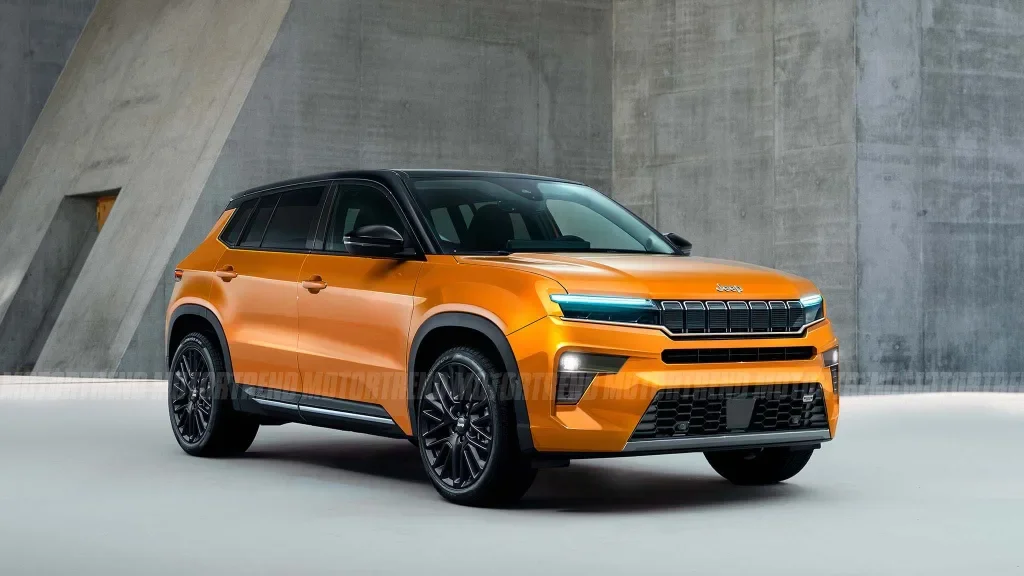
The 2026 Cherokee abandons the softer curves of its predecessor in favor of a boxier, upright silhouette that aligns it with Jeep’s latest design language. Compared to the 2023 model, it’s about five inches longer and 1.5 inches wider, giving it a stronger stance and more interior room.

Up front, the iconic seven-slot grille is shorter and squared off, flanked by slimmer LED headlights that sharpen the SUV’s gaze. Squared wheel arches and a taller hood add rugged personality, while vertical taillights at the rear nod to Jeep heritage. New wheel designs and fresh paint options, including earth-toned greens and sand-inspired hues, let buyers personalize their SUV to match city life or off-road adventures.

For drivers eager to get behind the wheel, our new inventory page is the best place to explore the latest Jeep arrivals.


Hybrid Power Only – Efficiency First

The biggest change for 2026 is under the hood. Unlike past models, the new Cherokee launches exclusively as a hybrid SUV. Its powertrain pairs a 1.6-liter turbocharged four-cylinder engine with two electric motors, producing a combined 210 horsepower and 230 lb-ft of torque.

This setup prioritizes fuel efficiency while retaining capability. Jeep estimates around 37 mpg combined, a massive improvement over the previous Cherokee. Drivers can also expect a driving range of about 500 miles on a single tank. Even towing hasn’t been forgotten, with a projected 3,500-pound capacity, making it capable of handling small trailers, boats, or campers.

The shift to hybrid power aligns with Stellantis’ broader electrification strategy, and it positions the Cherokee as a direct rival to the Toyota RAV4 Hybrid, Honda CR-V Hybrid, and Hyundai Tucson Hybrid.


Interior – Digital, Spacious, and Modern

Inside, the 2026 Cherokee feels like a brand-new vehicle. Jeep has focused on improving both space and technology. The longer wheelbase translates into more generous rear legroom and a larger cargo hold, with up to 68.3 cubic feet of space when the back seats are folded.

Technology is front and center. Drivers get a 10.3-inch digital gauge cluster, while the center stack houses a 12.3-inch touchscreen powered by Jeep’s Uconnect 5 system. Wireless Apple CarPlay and Android Auto come standard, along with a Wi-Fi hotspot and connected services. Trailhawk trims will also offer Off-Road Pages, giving real-time information on terrain, pitch, and power delivery.

The dashboard has been simplified with slim HVAC vents and fewer buttons, creating a cleaner, more upscale feel. Material quality takes a step up, too, with soft-touch surfaces, better stitching, and optional leather in higher trims.


Safety and Driver Assistance

Modern SUVs need strong safety suites, and Jeep is ensuring the Cherokee won’t fall behind. Standard and available features will include:

  • Forward and rear automatic emergency braking
  • Blind-spot monitoring with cross-path detection
  • Lane departure warning and lane-keeping assist
  • Adaptive cruise control with stop-and-go
  • Jeep’s Active Driving Assist semi-autonomous system for highways

Over-the-air software updates will allow Jeep to add or refine features after purchase, keeping the Cherokee relevant long after it leaves the lot.


Trims and Variants

The 2026 Cherokee will be offered in several trims to appeal to a wide range of drivers:

  • Base / Laredo – Affordable entry-level option with strong safety and infotainment features.
  • Limited – Adds comfort touches, premium audio, and more advanced driver aids.
  • Overland – A luxury-leaning trim with leather seating and premium finishes.
  • Trailhawk – The off-road champion, with all-terrain tires, enhanced suspension, skid plates, and advanced traction management.

This spread ensures that buyers can tailor the Cherokee to their lifestyle, whether that means urban commuting, family hauling, or weekend trail riding.


Pricing and Value

Early pricing estimates suggest the 2026 Jeep Cherokee will start at about $36,995 (USD) including destination charges. Mid-level trims like the Limited should land in the low-40,000s, while fully loaded Overland and Trailhawk models may climb to $45,000–$46,000.

That positions the Cherokee competitively against other hybrid SUVs, with Jeep banking on its heritage and capability to set it apart. Drivers interested in pre-ordering or exploring financing can start online with our financing center.


Market Position

The compact and midsize hybrid SUV space is among the most hotly contested in North America. Toyota, Honda, Hyundai, and Kia all dominate sales charts. Jeep knows it needs to offer something unique, and with the 2026 Cherokee, it leans heavily on brand DNA: authentic capability, upright design, and adventurous personality.

The Trailhawk trim, in particular, provides something no rival hybrid can match — genuine off-road credibility backed by Jeep’s engineering. That niche could prove invaluable for buyers who want efficiency but still value capability.


Production and Launch

The new Cherokee will be built at Jeep’s Toluca Assembly Plant in Mexico, with production scheduled to begin in late 2025. U.S. dealerships should see first deliveries in early 2026.

For Ventura County, Thousand Oaks, and greater Los Angeles drivers, Simi Valley Chrysler Dodge Jeep Ram will be among the first to showcase the Cherokee in person. Customers can also explore trade-in options to prepare for the upgrade.


Final Thoughts

The 2026 Jeep Cherokee SUV is more than a return — it’s a rebirth. With a larger footprint, hybrid-only efficiency, cutting-edge tech, and a more premium interior, Jeep has positioned the Cherokee to be a serious competitor again. It won’t just appeal to loyal Jeep fans; it’s aimed squarely at buyers who might otherwise consider a RAV4 or CR-V.

At Simi Valley Chrysler Dodge Jeep Ram, we see the Cherokee’s comeback as proof that Jeep is ready to adapt without losing its roots. For drivers who want a balance of efficiency, versatility, and authenticity, the 2026 Cherokee deserves to be on the short list.


2026 Jeep Cherokee SUV – FAQ

1) Is the Jeep Cherokee really coming back for 2026?
Yes. After a brief hiatus following its 2023 discontinuation, the Jeep Cherokee officially returns for the 2026 model year as a hybrid-only SUV. It’s larger, more efficient, and redesigned from the ground up to compete in the modern midsize crossover segment.


2) Where will the 2026 Jeep Cherokee be built?
Production will take place at Jeep’s Toluca Assembly Plant in Mexico, the same facility that has produced several other Jeep SUVs. U.S. dealerships, including Simi Valley Chrysler Dodge Jeep Ram, are expected to receive first deliveries in early 2026.


3) What engine and powertrain options will the 2026 Cherokee offer?
The 2026 Cherokee debuts as a hybrid-only SUV, featuring a 1.6-liter turbocharged four-cylinder engine paired with two electric motors. Combined output is estimated at 210 horsepower and 230 lb-ft of torque, delivering both strong performance and excellent fuel economy.


4) What is the expected fuel economy?
Jeep estimates around 37 mpg combined, significantly higher than previous gas-powered Cherokee models. It’s designed to compete directly with other hybrid SUVs such as the Toyota RAV4 Hybrid and Honda CR-V Hybrid.


5) How far can the 2026 Cherokee drive on a single tank?
With its efficient hybrid system, the new Cherokee is expected to achieve roughly 500 miles of total driving range, depending on driving conditions.


6) Will the 2026 Cherokee be available with all-wheel drive?
Yes. Select trims, including the Trailhawk, will feature Jeep’s advanced AWD system with terrain management, hill descent control, and off-road drive modes.


7) What trims will be available?
The lineup will include:

  • Base / Laredo – Core model with essential features and strong value.
  • Limited – Adds premium materials, comfort features, and tech upgrades.
  • Overland – More luxury-focused with upscale finishes and chrome detailing.
  • Trailhawk – The most capable off-road model, with lifted suspension, skid plates, and all-terrain tires.

8) How much will the 2026 Jeep Cherokee cost?
Pricing is expected to start around $36,995 (USD), with mid-trims in the low $40,000s and high-end Trailhawk or Overland trims reaching around $45,000–$46,000.


9) How much can the new Cherokee tow?
Despite its hybrid setup, the 2026 Jeep Cherokee is rated to tow up to 3,500 pounds, making it perfect for small trailers, boats, or light work use.


10) What’s new about the design?
The 2026 Cherokee features a boxier, more upright shape inspired by the larger Grand Cherokee. It’s five inches longer and 1.5 inches wider than the 2023 model, offering more cabin space, a squared seven-slot grille, slimmer LED headlights, and updated rear lighting.


11) How is the interior different?
The new cabin emphasizes space, tech, and quality materials. Notable features include:

  • 12.3-inch Uconnect 5 touchscreen
  • 10.3-inch digital gauge cluster
  • Wireless Apple CarPlay & Android Auto
  • Available leather seating
  • Improved cargo capacity (up to 68.3 cu-ft)

12) What kind of technology does it include?
Standard and available features include:

  • Wireless smartphone integration
  • Wi-Fi hotspot capability
  • Over-the-air software updates
  • Jeep Off-Road Pages (Trailhawk trims)
  • Voice command and navigation enhancements

13) What safety and driver-assist features come standard?
All 2026 Cherokee models are equipped with Jeep’s Active Safety Suite, featuring:

  • Forward and rear automatic emergency braking
  • Blind-spot and cross-path detection
  • Lane-keeping assist
  • Adaptive cruise control with stop-and-go
  • Highway semi-autonomous driving (Active Driving Assist)

14) Does the 2026 Cherokee use Jeep’s new Uconnect 5 system?
Yes. The 2026 model uses Uconnect 5, Jeep’s latest infotainment system, offering faster processing, improved graphics, and customizable profiles.


15) How does the 2026 Cherokee compare to the RAV4 Hybrid or CR-V Hybrid?
While the Toyota and Honda focus on comfort and efficiency, the Jeep Cherokee adds real off-road capability, higher ground clearance, and Trailhawk-specific hardware that gives it a true Jeep advantage.


16) When will it be available for purchase?
U.S. dealerships will begin receiving inventory in early 2026, with preorders opening in late 2025. Interested drivers can contact Simi Valley Chrysler Dodge Jeep Ram for early reservation details.


17) Will the Cherokee offer a plug-in hybrid (PHEV) version later?
While Jeep hasn’t confirmed it yet, a plug-in hybrid variant (Cherokee 4xe) is highly likely, given Jeep’s broader electrification plans for vehicles like the Wrangler and Grand Cherokee.


18) What colors will be available?
Jeep is introducing a palette inspired by nature, including Deep Moss Green, Sandstone, Bright White, Granite Crystal, and Fire Red Pearl, with two-tone roof options for higher trims.


19) What warranty coverage will the 2026 Cherokee include?
The 2026 Jeep Cherokee will come with Jeep’s standard warranty package:

  • 5-year / 60,000-mile powertrain warranty
  • 3-year / 36,000-mile limited basic warranty
  • 8-year / 100,000-mile hybrid component coverage

20) Where can I learn more or pre-order the 2026 Jeep Cherokee?
You can explore updates, reserve your vehicle, or check inventory at:
📍 Simi Valley Chrysler Dodge Jeep Ram
📞 805-387-9755
🔗 View New Jeep Inventory
🔗 Apply for Financing
🔗 Value Your Trade

The 2026 Jeep Cherokee SUV marks the start of a new chapter for Jeep — efficient, adventurous, and ready for anything Southern California roads throw its way.

Recommended Posts

Turbocharger Wastegate Problems: How Small Mechanical Faults Can Affect Boost Control

Turbocharger Wastegate Problems: How Small Mechanical Faults Can Affect Boost Control

Turbocharger problems are often associated with failure of the entire unit. Loss of power, unstable boost, or unusual noise under acceleration may suggest that the turbocharger itself is worn out. Yet boost control depends on more than the compressor wheel, turbine, and bearings. The wastegate regulates exhaust energy reaching the turbine, keeping turbocharger speed and boost pressure within the intended range. When its flap, shaft, linkage, or related hardware wears, the symptoms can resemble a larger failure. This is why a Wastegate Repair Kit may be relevant when the turbocharger core remains serviceable but its boost-control mechanism has localized wear. What Happens When the Wastegate Mechanism Wears Wastegate wear usually appears as changes in boost behaviour rather than one clear symptom. Excessive clearance around the flap or shaft can cause a metallic rattle, while poor sealing may let exhaust gas bypass the turbine too early. This can result in underboost, weaker acceleration, or inconsistent response across the RPM range. If the mechanism fails to open correctly, excessive boost may develop and trigger engine-management intervention. Typical symptoms include: Boost pressure differing from the expected target. Underboost during acceleration or sustained load. Overboost or boost-control warnings. Intermittent power delivery. Rattling near the turbocharger. Reduced response at certain RPM ranges. These symptoms do not confirm a wastegate fault. Leaks, actuators, sensors, control valves, hoses, software issues, or internal turbocharger damage can behave similarly. Diagnosis should compare commanded and actual boost while checking the wastegate's mechanical operation. Why Replacing the Entire Turbo May Be Excessive A turbocharger can develop localized mechanical wear without its complete assembly failing. Compressor and turbine wheels, bearings, shaft, housings, and lubrication systems may remain serviceable while the wastegate deteriorates. A precise repair separates the failed component from parts that are still usable, avoiding unnecessary replacement of the entire unit. The decision should follow a complete inspection. A technician should determine whether there is: Significant rotating-assembly damage. Excessive shaft movement or bearing wear. Damaged compressor or turbine wheels. Housing damage affecting safe operation. A fault limited to the wastegate mechanism. If the core remains sound and the fault is clearly localized, targeted repair may be appropriate. Complete replacement can still be justified by secondary damage, thermal distortion, severe corrosion, or extensive wear. The key is to establish the condition of the whole turbocharger first. When a Targeted Repair Is the Better Approach When diagnostics confirm localized wastegate wear and the rest of the turbocharger remains serviceable, targeted repair can be more logical than replacing the complete assembly. A Wastegate Repair Kit may allow worn components to be replaced while retaining sound original parts. Compatibility must be confirmed for the specific turbocharger design and application. Repair should begin with inspection rather than simple parts selection. The technician needs to identify why the mechanism stopped working correctly and which components have deteriorated. Particular attention should be given to: Flap and shaft condition. Mechanical play and seating surfaces. Linkage and actuator movement. Heat damage, corrosion, or distortion. Condition of the rotating assembly. A component that fits physically but does not reproduce the original geometry can create another boost-control problem. Part quality is also critical. A wastegate operates under high temperatures, vibration, repeated movement, and strong exhaust-gas forces, so correct dimensions and materials directly affect the function of the flap, shaft, and related components.

/What is the Most Common Problem with the Jeep Grand Cherokee

What is the Most Common Problem with the Jeep Grand Cherokee

The Most Common Problem with the Jeep Grand Cherokee: What Every Owner Should Know The Jeep Grand Cherokee has a reputation that’s equal parts rugged capability and frustrating reliability. It can tow, crawl over rocks, and haul the family in comfort. But if you talk to enough owners—or spend time digging through complaint databases—you’ll notice a pattern. One issue comes up again and again. The most common problem with the Jeep Grand Cherokee is electrical system failure. That’s not just a minor annoyance. Electrical gremlins can leave you stranded, drain your battery overnight, or cause a chain reaction of warning lights that makes you wonder if the whole SUV is falling apart. Here’s a closer look at what goes wrong, which models are most affected, and what you can do about it. WHY ELECTRICAL ISSUES TOP THE LIST Across multiple model years, electrical complaints dominate owner reports and NHTSA data. For the 2024 Grand Cherokee, owners frequently report engines losing power, batteries dying, exterior lighting malfunctioning, and infotainment systems freezing. But the problem isn’t new. Older generations have their own electrical headaches, especially the infamous TIPM. The TIPM Problem The Totally Integrated Power Module (TIPM) is a fuse box on steroids. It controls fuel pump operation, lighting, wipers, and more. When it fails—and it often does—you might experience: - A fuel pump that won’t prime or stops working - Wipers that run nonstop or won’t turn on - Random warning lights - Battery drain that kills the battery overnight Replacing a TIPM isn’t cheap, and diagnosing the issue can be a nightmare because the symptoms mimic other problems. Battery Drain and Infotainment Glitches Modern Grand Cherokees are rolling computers. That means parasitic battery drains, unresponsive touchscreens, and software bugs are common. Some owners have replaced batteries multiple times only to find the real culprit is a faulty module that never sleeps. OTHER COMMON PROBLEMS WORTH KNOWING While electrical faults are the most frequent, they aren’t the only issues. If you’re shopping for a Grand Cherokee, keep these in mind too. Transmission Trouble Rough shifting, delayed engagement, and occasional slipping into neutral are common complaints, especially in model years from 2005 through 2015. Some owners describe a “clunk” when shifting from park to drive. Engine and Cooling Issues The 2024 model has seen reports of stalling, overheating, and excessive oil consumption. Older models (2011–2014) have fuel-related stalling complaints, often at higher mileage. Suspension Recall Jeep recently recalled over 328,000 Grand Cherokees from 2021–2023 because rear coil springs could detach while driving. It’s the third recall for the same problem, which tells you something about persistence. MODEL YEARS TO WATCH Based on complaint data, these model years are often flagged as ones to approach with caution: - 2011 - 2012 - 2014 - 2015 - 2018 - 2021–2024 That doesn’t mean every single one is a lemon. But electrical failure rates on some of these years are up to 3.2 times the model’s median. If you’re buying used, a pre-purchase inspection by a mechanic who knows Jeeps is worth every penny. WHAT YOU CAN DO If you own a Grand Cherokee or plan to buy one: 1. Check for recalls using your VIN on the NHTSA website. 2. Scan for stored codes before buying. Electrical issues often leave ghost codes. 3. Test the battery and charging system—a weak battery can trigger dozens of false warnings. 4. Consider an extended warranty if you’re buying an older model with known electrical quirks. 5. Join owner forums to learn the specific workarounds for your model year. THE BOTTOM LINE The Jeep Grand Cherokee is still a capable, comfortable, and iconic SUV. But its Achilles’ heel is the electrical system. From TIPM failures to battery drains and infotainment glitches, these problems are the most common complaints among owners. If you can look past them—or budget for repairs—you’ll enjoy everything else the Grand Cherokee does well. Just don’t ignore the warning signs. Have you dealt with electrical issues in your Grand Cherokee? Share your story in the comments—it might help another owner avoid the same headache.

Freightliner Bumpers and Cascadia Fairing Panels for a Stronger, Sleeker Truck

Shop durable Freightliner truck bumpers and Cascadia fairing panels for sale. Precise-fit exterior components for 2008-2017 and 2018+ trucks with fast shipping and expert support. Keeping a Freightliner Cascadia in top condition is about more than the engine under the hood — the exterior body components play a huge role in how the truck performs, looks, and holds its value. Side fairings, step skirts, and front-end pieces all work together to cut drag, protect vulnerable systems, and give the rig a clean, professional presence on the road. Operators searching for quality freightliner bumpers for sale often find that upgrading the entire front and side profile delivers the biggest return. When you pair durable freightliner truck bumpers with well-fitted aerodynamic panels, your Cascadia gains both protection and efficiency in one smart upgrade. The Value of a Complete Exterior Upgrade A truck's exterior is its first line of defense and its calling card all at once. Aerodynamic fairing panels smooth the airflow around the fuel tanks and drive area, lowering wind resistance and helping every gallon of diesel go further. A solid front end absorbs impacts and shields the radiator and cooling system from road debris. Together these components reduce long-term repair costs while keeping the truck looking sharp mile after mile. Over time, that combination of efficiency and protection adds up to real savings, since a truck that burns less fuel and stays out of the repair bay simply earns more for its owner on every route. At tacoma-truckparts.com, the Cascadia selection covers front, middle, and rear fairing panels, step skirts, extensions, and complete sets for both driver and passenger sides. Whether you run a 2008-2017 model or a 2018-and-newer truck, there are pieces engineered to match your exact frame and factory mounting points. Precision Fit for Every Model Year Fitment is everything with exterior body components. Panels and front-end pieces built for your specific model year line up cleanly with existing hardware, so installation is straightforward and the finished surface sits flush and secure. Durable materials stand up to road spray, gravel, and constant vibration, keeping the truck looking its best season after season. Reinforced panels and aluminum step skirts add both function and a polished, professional finish that owner-operators take pride in. Choosing correctly-sized components also protects everything around them. Well-fitted fairings shield tanks, steps, and wiring from flying debris, while a strong front end guards the systems behind it. That kind of protection keeps your Cascadia earning out on the highway instead of sitting in the shop. Efficiency, Protection, and Uptime Downtime is expensive, which is why fast order processing and dependable availability matter as much as the parts themselves. Orders ship quickly, backed by knowledgeable support that understands the daily demands facing fleet managers and independent drivers alike. Being able to find the exact panel, skirt, or front-end piece you need without guesswork keeps maintenance simple and predictable. Investing in your Cascadia's exterior is a smart move for fuel economy, curb appeal, and long-term resale value. With aerodynamic fairings and dependable front-end components working together, your truck cuts cleanly through the wind, looks its best, and stays ready for the next long haul. A well-maintained, polished rig also builds trust with customers and makes a strong impression during inspections. Browse the full selection today and give your Freightliner Cascadia the efficient, protected, road-ready finish it truly deserves.