




Simi Valley Chrysler Dodge Jeep Ram

Blog

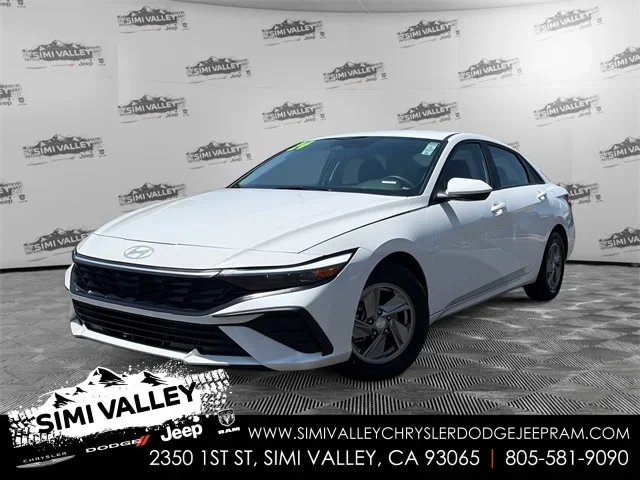
2024 Hyundai Elantra SE for Sale at Simi Valley Chrysler Dodge Jeep Ram

2024 Hyundai Elantra

2024 Hyundai Elantra SE for Sale at Simi Valley Chrysler Dodge Jeep Ram

If you’re searching for a reliable, fuel-efficient, and stylish compact sedan in Southern California, look no further than the 2024 Hyundai Elantra SE, now available at Simi Valley Chrysler Dodge Jeep Ram. Known for its sleek design, modern tech features, and impressive value, the Elantra SE remains one of the most attractive options in the used car market. Whether you’re commuting daily through Los Angeles traffic, heading to the coast, or simply looking for an affordable sedan with long-term dependability, this Elantra offers exactly what you need.


Why Consider the 2024 Hyundai Elantra SE?

The Hyundai Elantra has built a reputation as a compact sedan that balances affordability with quality. For 2024, Hyundai carried forward the model’s award-winning platform, ensuring that the SE trim retains the perfect blend of efficiency, safety, and comfort.

Some of the reasons shoppers gravitate toward the Elantra SE include:

  • Excellent fuel economy for both city and highway driving.
  • Generous standard safety features such as lane-keeping assist and blind-spot monitoring.
  • Modern styling with a sharp exterior design that stands out from typical compact sedans.
  • Affordability, making it an ideal choice for budget-conscious buyers and first-time car owners.

For buyers in Simi Valley, Thousand Oaks, and the greater Los Angeles area, the Elantra SE represents a dependable daily driver with plenty of modern touches.


Exterior and Styling

The 2024 Hyundai Elantra SE is designed to stand out in the crowded compact segment. It features Hyundai’s signature parametric-jewel grille and sharp body lines that give it a sporty, upscale appearance. Standard upgraded headlights and stylish wheel options add to the sedan’s premium look.

In a region like Southern California, where design is often as important as practicality, the Elantra’s confident styling makes it a smart pick for buyers who want something that looks more expensive than its price tag suggests.


Interior and Comfort

Inside, the Elantra SE offers a surprisingly roomy cabin for a compact sedan. Hyundai designed the interior with driver-focused ergonomics, meaning controls are within easy reach and visibility is excellent.

Highlights include:

  • Comfortable cloth seating with supportive cushions.
  • Ample rear-seat space, making it practical for passengers or family trips.
  • A well-laid-out dashboard with a modern digital interface.

Hyundai’s reputation for building interiors that feel more premium than their class rivals is fully on display in the Elantra SE.


Technology and Features

The 2024 Hyundai Elantra SE comes with a strong set of standard features that enhance both convenience and safety:

  • Backup camera with dynamic guidelines.
  • Bluetooth connectivity for hands-free calling and music streaming.
  • Touchscreen infotainment system with intuitive controls.
  • Blind-spot monitoring for safer lane changes.
  • Tire pressure monitoring system (TPMS) to help keep you safe on the road.

For many drivers, the fact that Hyundai packs these advanced features into even its entry-level trim makes the Elantra SE a standout choice in the used market.


Performance and Efficiency

The Elantra SE is powered by a 2.0-liter inline-4 engine that produces 147 horsepower, paired with an intelligent variable transmission (IVT). This setup delivers smooth acceleration and refined cruising, making it ideal for both city traffic and highway driving.

Fuel economy is a highlight, with the Elantra SE averaging:

  • Up to 33 mpg in the city
  • Around 43 mpg on the highway

This makes it one of the most fuel-efficient sedans in its class, saving you money at the pump while reducing emissions. For commuters in Simi Valley or daily drivers in Los Angeles, those numbers are hard to beat.


Safety and Reliability

Hyundai has earned strong ratings in safety, and the 2024 Elantra SE continues this trend. With features like forward collision-avoidance assist, lane departure warning, blind-spot monitoring, and a robust frame structure, the Elantra is designed to protect its occupants.

Additionally, this particular 2024 Hyundai Elantra SE available at Simi Valley Chrysler Dodge Jeep Ram has a clean history, with no reported accidents and single-owner use. For peace of mind, that makes it a particularly strong buy.


Vehicle Details – Available Now in Simi Valley

  • Model: 2024 Hyundai Elantra SE
  • Mileage: ~49,826 miles
  • Condition: Used – One-owner corporate fleet vehicle
  • Price Range: Around $16,880 – $17,856
  • VIN: (available upon request at dealership)
  • Location: Simi Valley Chrysler Dodge Jeep Ram, 2350 First St, Simi Valley, CA 93065

Why Buy From Simi Valley Chrysler Dodge Jeep Ram?

Choosing the right dealership matters just as much as choosing the right car. At Simi Valley Chrysler Dodge Jeep Ram, we pride ourselves on offering:

  • A wide selection of new and used vehicles across multiple brands.
  • Transparent pricing with no hidden fees.
  • Financing options tailored to fit your budget.
  • A full-service maintenance and repair department to keep your car running like new.

When you purchase the 2024 Hyundai Elantra SE from us, you’re not just buying a car—you’re gaining a dealership partner committed to your satisfaction.


Final Thoughts

The 2024 Hyundai Elantra SE is the perfect blend of practicality, modern design, and affordability. With excellent fuel efficiency, a comfortable interior, and advanced safety features, it remains one of the strongest contenders in the compact sedan category.

For buyers in Simi Valley, Thousand Oaks, Ventura County, and Los Angeles, this Elantra represents tremendous value—especially at a price point under $18,000. Add in its clean history and single-owner background, and you’ve got a sedan that’s both smart and dependable.

Don’t miss your chance to own this impressive 2024 Hyundai Elantra SE. Visit Simi Valley Chrysler Dodge Jeep Ram’s used Hyundai inventory today and schedule your test drive.


Recommended Posts

Turbocharger Wastegate Problems: How Small Mechanical Faults Can Affect Boost Control

Turbocharger Wastegate Problems: How Small Mechanical Faults Can Affect Boost Control

Turbocharger problems are often associated with failure of the entire unit. Loss of power, unstable boost, or unusual noise under acceleration may suggest that the turbocharger itself is worn out. Yet boost control depends on more than the compressor wheel, turbine, and bearings. The wastegate regulates exhaust energy reaching the turbine, keeping turbocharger speed and boost pressure within the intended range. When its flap, shaft, linkage, or related hardware wears, the symptoms can resemble a larger failure. This is why a Wastegate Repair Kit may be relevant when the turbocharger core remains serviceable but its boost-control mechanism has localized wear. What Happens When the Wastegate Mechanism Wears Wastegate wear usually appears as changes in boost behaviour rather than one clear symptom. Excessive clearance around the flap or shaft can cause a metallic rattle, while poor sealing may let exhaust gas bypass the turbine too early. This can result in underboost, weaker acceleration, or inconsistent response across the RPM range. If the mechanism fails to open correctly, excessive boost may develop and trigger engine-management intervention. Typical symptoms include: Boost pressure differing from the expected target. Underboost during acceleration or sustained load. Overboost or boost-control warnings. Intermittent power delivery. Rattling near the turbocharger. Reduced response at certain RPM ranges. These symptoms do not confirm a wastegate fault. Leaks, actuators, sensors, control valves, hoses, software issues, or internal turbocharger damage can behave similarly. Diagnosis should compare commanded and actual boost while checking the wastegate's mechanical operation. Why Replacing the Entire Turbo May Be Excessive A turbocharger can develop localized mechanical wear without its complete assembly failing. Compressor and turbine wheels, bearings, shaft, housings, and lubrication systems may remain serviceable while the wastegate deteriorates. A precise repair separates the failed component from parts that are still usable, avoiding unnecessary replacement of the entire unit. The decision should follow a complete inspection. A technician should determine whether there is: Significant rotating-assembly damage. Excessive shaft movement or bearing wear. Damaged compressor or turbine wheels. Housing damage affecting safe operation. A fault limited to the wastegate mechanism. If the core remains sound and the fault is clearly localized, targeted repair may be appropriate. Complete replacement can still be justified by secondary damage, thermal distortion, severe corrosion, or extensive wear. The key is to establish the condition of the whole turbocharger first. When a Targeted Repair Is the Better Approach When diagnostics confirm localized wastegate wear and the rest of the turbocharger remains serviceable, targeted repair can be more logical than replacing the complete assembly. A Wastegate Repair Kit may allow worn components to be replaced while retaining sound original parts. Compatibility must be confirmed for the specific turbocharger design and application. Repair should begin with inspection rather than simple parts selection. The technician needs to identify why the mechanism stopped working correctly and which components have deteriorated. Particular attention should be given to: Flap and shaft condition. Mechanical play and seating surfaces. Linkage and actuator movement. Heat damage, corrosion, or distortion. Condition of the rotating assembly. A component that fits physically but does not reproduce the original geometry can create another boost-control problem. Part quality is also critical. A wastegate operates under high temperatures, vibration, repeated movement, and strong exhaust-gas forces, so correct dimensions and materials directly affect the function of the flap, shaft, and related components.

/What is the Most Common Problem with the Jeep Grand Cherokee

What is the Most Common Problem with the Jeep Grand Cherokee

The Most Common Problem with the Jeep Grand Cherokee: What Every Owner Should Know The Jeep Grand Cherokee has a reputation that’s equal parts rugged capability and frustrating reliability. It can tow, crawl over rocks, and haul the family in comfort. But if you talk to enough owners—or spend time digging through complaint databases—you’ll notice a pattern. One issue comes up again and again. The most common problem with the Jeep Grand Cherokee is electrical system failure. That’s not just a minor annoyance. Electrical gremlins can leave you stranded, drain your battery overnight, or cause a chain reaction of warning lights that makes you wonder if the whole SUV is falling apart. Here’s a closer look at what goes wrong, which models are most affected, and what you can do about it. WHY ELECTRICAL ISSUES TOP THE LIST Across multiple model years, electrical complaints dominate owner reports and NHTSA data. For the 2024 Grand Cherokee, owners frequently report engines losing power, batteries dying, exterior lighting malfunctioning, and infotainment systems freezing. But the problem isn’t new. Older generations have their own electrical headaches, especially the infamous TIPM. The TIPM Problem The Totally Integrated Power Module (TIPM) is a fuse box on steroids. It controls fuel pump operation, lighting, wipers, and more. When it fails—and it often does—you might experience: - A fuel pump that won’t prime or stops working - Wipers that run nonstop or won’t turn on - Random warning lights - Battery drain that kills the battery overnight Replacing a TIPM isn’t cheap, and diagnosing the issue can be a nightmare because the symptoms mimic other problems. Battery Drain and Infotainment Glitches Modern Grand Cherokees are rolling computers. That means parasitic battery drains, unresponsive touchscreens, and software bugs are common. Some owners have replaced batteries multiple times only to find the real culprit is a faulty module that never sleeps. OTHER COMMON PROBLEMS WORTH KNOWING While electrical faults are the most frequent, they aren’t the only issues. If you’re shopping for a Grand Cherokee, keep these in mind too. Transmission Trouble Rough shifting, delayed engagement, and occasional slipping into neutral are common complaints, especially in model years from 2005 through 2015. Some owners describe a “clunk” when shifting from park to drive. Engine and Cooling Issues The 2024 model has seen reports of stalling, overheating, and excessive oil consumption. Older models (2011–2014) have fuel-related stalling complaints, often at higher mileage. Suspension Recall Jeep recently recalled over 328,000 Grand Cherokees from 2021–2023 because rear coil springs could detach while driving. It’s the third recall for the same problem, which tells you something about persistence. MODEL YEARS TO WATCH Based on complaint data, these model years are often flagged as ones to approach with caution: - 2011 - 2012 - 2014 - 2015 - 2018 - 2021–2024 That doesn’t mean every single one is a lemon. But electrical failure rates on some of these years are up to 3.2 times the model’s median. If you’re buying used, a pre-purchase inspection by a mechanic who knows Jeeps is worth every penny. WHAT YOU CAN DO If you own a Grand Cherokee or plan to buy one: 1. Check for recalls using your VIN on the NHTSA website. 2. Scan for stored codes before buying. Electrical issues often leave ghost codes. 3. Test the battery and charging system—a weak battery can trigger dozens of false warnings. 4. Consider an extended warranty if you’re buying an older model with known electrical quirks. 5. Join owner forums to learn the specific workarounds for your model year. THE BOTTOM LINE The Jeep Grand Cherokee is still a capable, comfortable, and iconic SUV. But its Achilles’ heel is the electrical system. From TIPM failures to battery drains and infotainment glitches, these problems are the most common complaints among owners. If you can look past them—or budget for repairs—you’ll enjoy everything else the Grand Cherokee does well. Just don’t ignore the warning signs. Have you dealt with electrical issues in your Grand Cherokee? Share your story in the comments—it might help another owner avoid the same headache.

Freightliner Bumpers and Cascadia Fairing Panels for a Stronger, Sleeker Truck

Shop durable Freightliner truck bumpers and Cascadia fairing panels for sale. Precise-fit exterior components for 2008-2017 and 2018+ trucks with fast shipping and expert support. Keeping a Freightliner Cascadia in top condition is about more than the engine under the hood — the exterior body components play a huge role in how the truck performs, looks, and holds its value. Side fairings, step skirts, and front-end pieces all work together to cut drag, protect vulnerable systems, and give the rig a clean, professional presence on the road. Operators searching for quality freightliner bumpers for sale often find that upgrading the entire front and side profile delivers the biggest return. When you pair durable freightliner truck bumpers with well-fitted aerodynamic panels, your Cascadia gains both protection and efficiency in one smart upgrade. The Value of a Complete Exterior Upgrade A truck's exterior is its first line of defense and its calling card all at once. Aerodynamic fairing panels smooth the airflow around the fuel tanks and drive area, lowering wind resistance and helping every gallon of diesel go further. A solid front end absorbs impacts and shields the radiator and cooling system from road debris. Together these components reduce long-term repair costs while keeping the truck looking sharp mile after mile. Over time, that combination of efficiency and protection adds up to real savings, since a truck that burns less fuel and stays out of the repair bay simply earns more for its owner on every route. At tacoma-truckparts.com, the Cascadia selection covers front, middle, and rear fairing panels, step skirts, extensions, and complete sets for both driver and passenger sides. Whether you run a 2008-2017 model or a 2018-and-newer truck, there are pieces engineered to match your exact frame and factory mounting points. Precision Fit for Every Model Year Fitment is everything with exterior body components. Panels and front-end pieces built for your specific model year line up cleanly with existing hardware, so installation is straightforward and the finished surface sits flush and secure. Durable materials stand up to road spray, gravel, and constant vibration, keeping the truck looking its best season after season. Reinforced panels and aluminum step skirts add both function and a polished, professional finish that owner-operators take pride in. Choosing correctly-sized components also protects everything around them. Well-fitted fairings shield tanks, steps, and wiring from flying debris, while a strong front end guards the systems behind it. That kind of protection keeps your Cascadia earning out on the highway instead of sitting in the shop. Efficiency, Protection, and Uptime Downtime is expensive, which is why fast order processing and dependable availability matter as much as the parts themselves. Orders ship quickly, backed by knowledgeable support that understands the daily demands facing fleet managers and independent drivers alike. Being able to find the exact panel, skirt, or front-end piece you need without guesswork keeps maintenance simple and predictable. Investing in your Cascadia's exterior is a smart move for fuel economy, curb appeal, and long-term resale value. With aerodynamic fairings and dependable front-end components working together, your truck cuts cleanly through the wind, looks its best, and stays ready for the next long haul. A well-maintained, polished rig also builds trust with customers and makes a strong impression during inspections. Browse the full selection today and give your Freightliner Cascadia the efficient, protected, road-ready finish it truly deserves.